in praise of bloggers

My second and third favourite sources of information in 2011 are audio:

• Audiocasts
• Audio books

I pretty much always have an audio book or two in progress, buying most of those from Audible.com. … Sadly not every book I want is available in audio.

Audio podcasts are still quite crude. The most evolved, however, are superb: RadioLab, This American Life, CBC Spark, Economist Editor’s Highlights, and On The Media. Almost all audio podcasts are still free.

But my main sources of information … my most trusted … my most detailed and nuanced … are blogs.

The best are labours of love by passionate, often amateur writers. Most bloggers are unpaid, spending thousands of hours focused on a specific topic simply because they love that topic.

more photos of bloggers

For example, the best Apple blog is Daring Fireball. I don’t pay much attention to any other.

I do whatever I’m told by Michael Geist when it comes to Canadian government regulation of the internet. A big election issue right now.

There are 4-5 essential blogs on gymnastics, but if I only was allowed to read one blogger it would be Blythe Lawrence.

If you read Kraig Becker, you’ll know more about outdoor adventure than you’ll ever need to know for one lifetime.

… Those are just a few examples. Leave a comment if you’ve got a blog that I should follow.

(blogger photos via Spark)

This Canadian Life

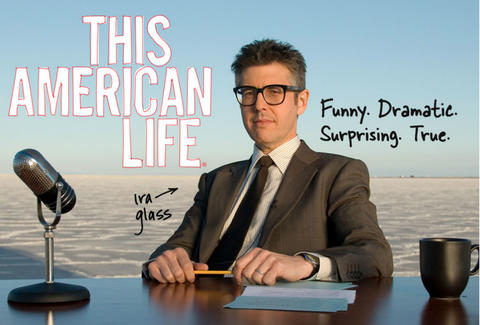
One of my favourite audiocasts is This American Life with Ira Glass.

One recent episode I loved.

#426:
TOUGH ROOM 2011
Originally aired 02.04.2011

This week we bring you backstage with comedy writers at The Onion. They start with over 600 potential headlines for their fake-news newspaper each week, and over the course of two days, in the very tough room that is their editorial conference room, they select 16 to go in the paper. …

It’s now airing on CBC Radio One on Sunday nights. I’m hoping that increases the Canadian audience.

The CBC, of course, is a great symbolic sacrificial lamb for conservative politicians. It may be cut in coming budgets.

Scientology fact-checked

NPR interviewed director Paul Haggis (who left the Church of Scientology after 35 years) in an audiocast titled The Church Of Scientology, Fact-Checked.

One of many Hollywood bigwigs in Scientology, the story of Haggis falling out with the secretive religion is big news after The New Yorker posted this story – THE APOSTATE – Paul Haggis vs. the Church of Scientology.

Haggis left the church mainly because some Scientologists supported California’s Proposition 8. Haggis felt it was discriminatory to gays and lesbians.

But his departure has blown up. The most important thread, in my opinion, is this detail about the life of L. Ron Hubbard:

… the founder of Scientology, had maintained that he was blind and a ‘hopeless cripple’ at the end of World War II — and that he had healed himself through measures that later became the basis of Dianetics, the 1950 book that became the basis for Scientology.

But checking American military records showed:

… there was no evidence that he had ever been wounded in battle or distinguished himself in any way during the war.

read more on the NPR blog – The Church Of Scientology, Fact-Checked

If Hubbard lied about that, what else is bogus about Scientology?

I’m disillusioned. :)

L. Ron Hubbard 1951

Leo Laporte in the NY Times

My man Leo got a nice shout out …

TWIT gets its name from Mr. Laporte’s flagship podcast, “This Week in Tech,” which is downloaded by a quarter of a million people each week. He produces 22 other technology-focused podcasts that are downloaded five million times a month. He also streams video all day long that captures his podcasting and a weekend radio show on computers, “The Tech Guy,” that reaches 500,000 more people through 140 stations. …

Talking Tech and Building an Empire From Podcasts

I’m a dedicated soldier in the TWIT army listening to perhaps 7hrs / week of his broadcasts from twit.tv.

Like almost everyone I subscribe via iTunes.

My favourite shows are This Week in Google and MacBreak Weekly.

in praise of Public Radio

I never listen to NPR. Instead I subscribe to my favourite National Public Radio shows as podcasts in iTunes.

My favourites:

On The Media
This American Life
Fresh Air
Pop Culture
Story of the Day
World Story of the Day

Roger Ebert:

… I’ve written before about the disintegration of journalism, of the lowered standards everywhere in today’s media. As a nation we once said, give us the facts and we’ll make up our own minds. Now we say, spare us the facts and make up our minds for us. We have grown impatient, and the national attention span shrinks until even a 10-minute video on YouTube can seem unendurable. …

Midnight at the oasis

In that post Ebert explains why he loves Public Radio. It’s as good as ever, a font of smart commentary with a positive world view.

… Recently some have claimed it is leftist. That baffles me. No one ever seems to cite something they heard that offended them. They just believe in general that it’s left wing. …

Click PLAY or watch a charming NPR “Rap” on YouTube. (only 4min 30sec!)

combining savings with lottery

I’ve always considered lottery tickets a government sanctioned tax on stupidity. About 50% of Americans buy them every year.

… Don’t tell me Americans get $60 billion entertainment value from them. Gambling is addictive.

But I’ve no rant on the topic. Often a percentage of that tax money goes to good works, including amateur sport.

But couldn’t we spend those misguidedly optimistic dollars more wisely?

Here’s one way – Prize-Linked Savings (PLS).

I learned about it on Freakonomics:

… PLS is a kind of savings account that pools some of the interest from all depositors and pays out a big lottery prize every month or so. It combines the thrill of the lottery with the safety of a savings account. It’s sometimes called a “no-lose lottery,” since a depositor is automatically entered into the lottery but can’t lose the original money she deposits.

And while PLS might play well in the poorest parts of Africa and Asia, there’s a group of researchers who feel that PLS is very badly needed right here in the U.S. …

Freakonomics Radio: Could a Lottery Be the Answer to America’s Poor Savings Rate?

The only problem, it’s illegal almost everywhere in the USA, aside from Michigan.

Here’s the first “Save to Win” winner, an 87-year-old Michigan woman who had deposited $75.

This is innovative thinking. The best way I’ve heard to encourage people to actually put some of their dollars into a savings account.

A similar savings scheme has been working in the U.K. for over 50yrs.

Freakonomics: A Rogue Economist Explores the Hidden Side of Everything is a 2005 non-fiction book by University of Chicago economist Steven Levitt and New York Times journalist Stephen J. Dubner.

Freakonomics Radio is an audiocast by the same two guys available from iTunes. I recommend it.

shout out for Climate Change activists

My buddy Morgen Hartford is on the road (by bike) …

… on a memorial journey through the Pacific Northwest. Honoring old friends, creating new connections. Learning about the systems that power and shape the way we live.

Here he is with a broken spoke on his most recent 1200mi ride.

His excellent blog – A Wild and Sacred Day – documents the trip.

Two of his causes are healthy food and Climate Action.

My main source of information from Climate Change activists is the excellent audiocast Living on Earth, Steve Curwood’s news, features, interviews and commentary on a broad range of ecological issues.

Personally I’m a Climate Change agnostic having done almost no research on the topic aside from reading The Skeptical Environmentalist.

My friend Brian Mason has done exhaustive research concluding that there’s almost no evidence (yet) that man has significantly altered climate. … My gut tells me that’s probably true.

Even if it is, Climate Change activists are doing far more good than harm. Improving Life on Earth. Kudos!

What inspired this post? … I started reading this book, Ectopia (1975) …

The book is set in 1999 (25 years in the future, as seen from 1974) …

Ecotopia, a newly formed country that broke from the USA in 1980. … The new nation of Ecotopia consists of Northern California, Oregon and Washington; it is hinted that Southern California is a lost cause. …

Though the book was a serious vision of ecologists in 1975, it reads as a most hilarious parody in 2010. Funny because the author didn’t intend it to be funny.

Cars are banned. Farms are run by collectives. Women run the government. They enjoy a 20hr work week. And marijuana.

Who today could believe that California would legalize marijuana?

… The link above is an Economist audiocast of Roger Salazar of Public Safety First and Ethan Nadelmann of the Drug Policy Alliance debating California’s proposition 19, by far the best analysis of the issue I’ve ever seen.

Stop Getting Ripped Off


Why Consumers Get Screwed, and How You Can Always Get a Fair Deal

I heard an interview with the author Bob Sullivan who has good advice for us. Especially regarding our mobile phones, banks, credit cards, insurance and vehicles.

… evade the financial traps big businesses set for unwary consumers—and shows you how to get the best possible deals every single time.

Today’s marketplace is full of hidden fees, fine print, and other booby traps designed to trip you up and take your money. You may be losing big even when you think you’re getting a steal! But with Sullivan’s keen guidance and sensible advice, you can save money and regain control of your financial life.

Clearly and concisely, Sullivan reveals

• why American consumers make such easy targets for corporate America (you’ll be stunned, for example, at how poor our math skills are)

• how Wall Street will skim off one third of your retirement money (avoid this trap with Sullivan’s new “Pitfall-Proof Pyramid”)

• the myths behind credit-card reward programs and “the 21st-Century Bank Account”

• the real numbers to focus on when buying a new car

• why you should spend more time shopping for your mortgage than your home

• the key questions you must ask before buying life insurance

• the secrets to saving for college and paying off student loans the right way

• the best deals on cell phones and pay-TV service

Stop Getting Ripped Off – Amazon

when did CBC radio get cool?

For decades I was a devoted listener of Canadian Broadcasting Corporation AM radio.

Commercial free talk radio was the best option for me … until the launch of audiocasts.

Now I listen only to these CBC programs, downloaded to me automatically as podcasts:

Definitely Not the Opera
Dispatches
Spark

Brian and co. just convinced me to subscribe to Wiretap starring Jonathan Goldstein. That’s easy to do from the iTunes store. And free.

WireTapArtistPoster

People are telling me that both Radio One and Radio Two have been much improved in recent months. Modernized. Much more hip. “Chasing a younger audience” (age-35+), some say.

Nice. I’ll have to give it another chance.

CBC Radio operates three English language networks.

CBC Radio One – Primarily news and information, CBC Radio One broadcasts to most communities across Canada. Until 1997, it was known as “CBC Radio”.

CBC Radio 2 – Broadcasts music, arts and culture programming, including opera, classical music, jazz and theatre. It was previously known as “CBC Radio Two”, and before that “CBC Stereo”.

CBC Radio 3 – Broadcasts a youth-oriented indie rock format on Internet radio and Sirius Satellite Radio.

Wikipedia

One more thing, Jonathan Goldstein’s most recent book: Ladies And Gentlemen The Bible!