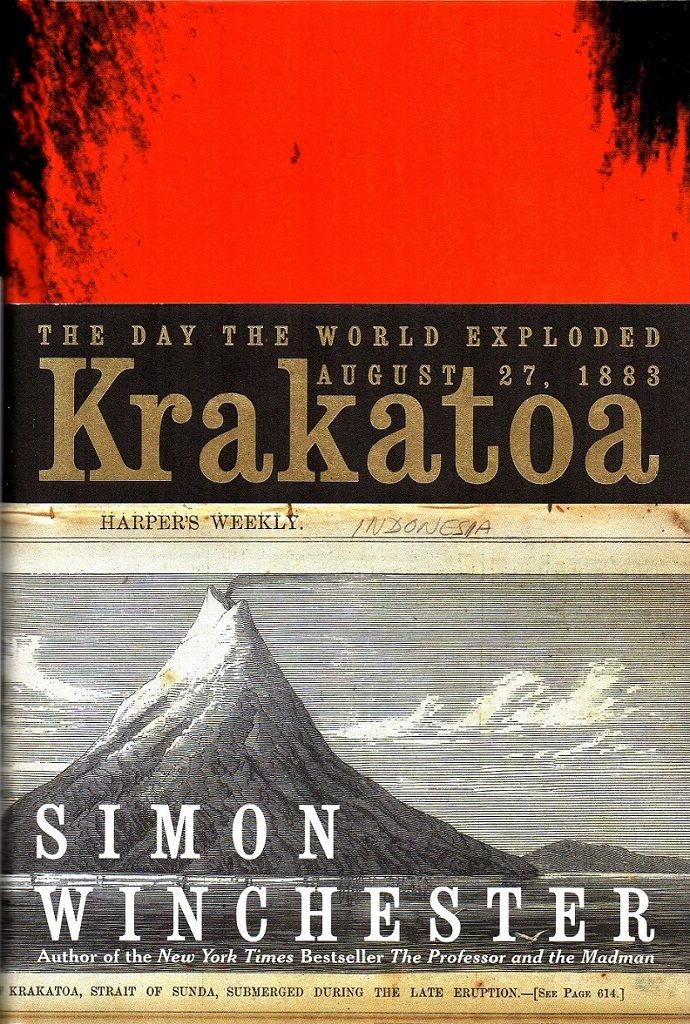
Krakatoa: The Day the World Exploded is a 2003 book by Simon Winchester covering the 1883 eruption of Krakatoa.
36,000 victims.
Underwater lines of communications were just starting to work well (after the introduction of covering them with rubber) making Krakatoa one of the first worldwide news stories.
I thought I’d read all the Jack Reacher books — but somehow missed the 7th, Persuader (2003).
And this is a good one.
Jack Reacher is working unofficially with the DEA to bring down a boy’s father, Zachary Beck, who is suspected of smuggling drugs under the pretext of trading in oriental carpets.
They stage a kidnap effort on Zachary’s son, Richard Beck.
Reacher rescues the boy gaining access to Beck by working as a hired gun/bodyguard.
I can’t compare it to anything else. Absurd comedy.
A poignant, charming novel about a crime that never took place, a would-be bank robber who disappears into thin air, and eight extremely anxious strangers who find they have more in common than they ever imagined.
New Year’s Eve in a small Swedish town.
In a robbery / hostage taking gone wrong, it’s all “Stockholm Syndrome” by the end.
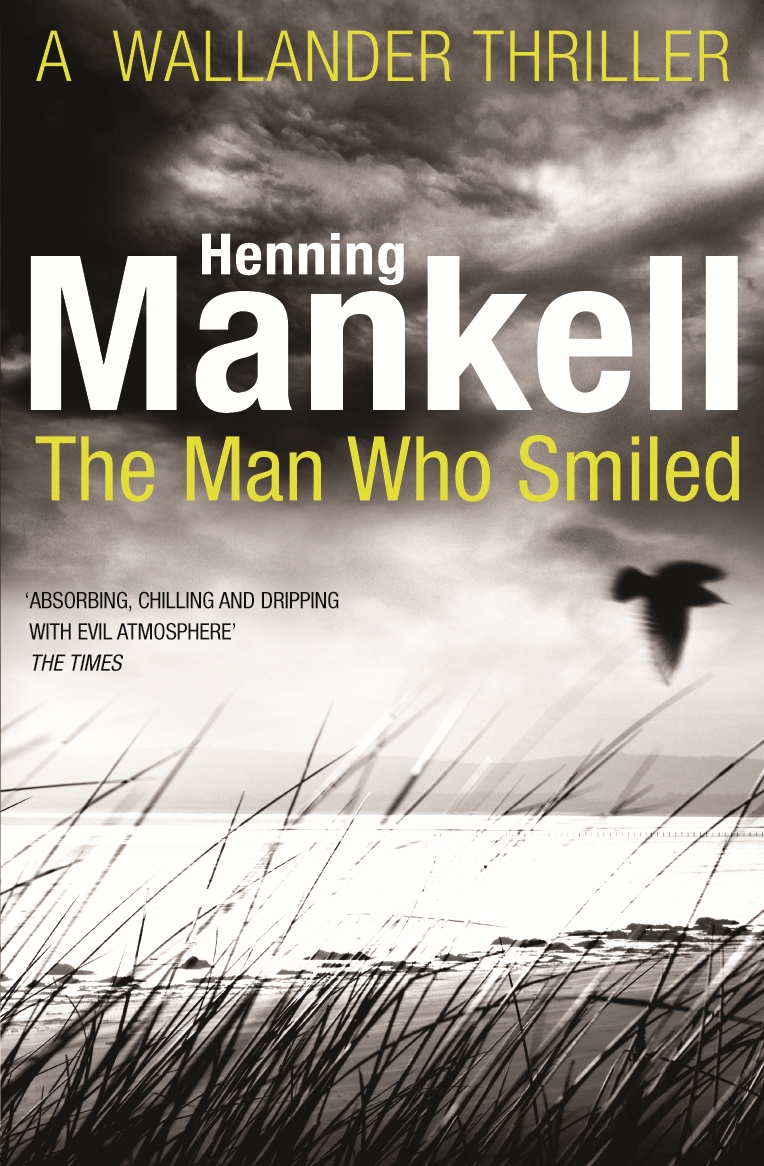
After killing a man in the line of duty (in The White Lioness), Inspector Kurt Wallander finds himself spiralling into an alcohol-fuelled depression.
He has just decided to leave the police when an old friend, Sten Torstensson, asks him to secretly investigate the recent death of his father in a car accident.
At first Kurt dismisses his friend’s suspicions as unlikely, but then Sten is found murdered in exactly the same manner as a Norwegian businessman shortly before.
Against his previous judgement, Kurt returns to work to investigate what he is convinced is a case of double murder.
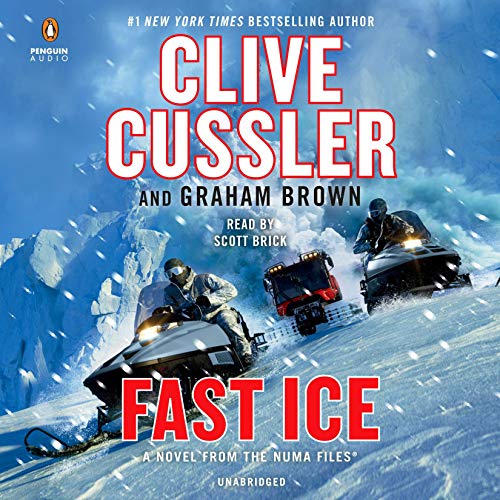
Fast Ice was published March 2021. Co-author Graham Brown.
18th book in the NUMA (the National Underwater and Marine Agency) series.
This is the first Cussler book I’ve read and can’t claim it’s good.
BUT I did find the plot fascinating.
In the early days of World War II, the infamous German Luftwaffe embark upon an expedition to Antarctica, hoping to set up a military base to support their goal of world domination. Though the military outpost never comes to fruition, what the Nazis find on the icy continent indeed proves dangerous…and will have implications far into the future.
In the present day, Kurt Austin and his assistant Joe Zavala embark for the freezing edge of the world after a former NUMA colleague disappears in Antarctica. While there, they discover a photo of the Luftwaffe expedition of 1939 and are drawn into a decades-old conspiracy. Even as they confront perilous waters and frigid temperatures, they are also are up against a terrifying man-made weapon – a fast-growing ice that could usher in a new Ice Age.
Pitted against a determined madman and a monstrous storm, Kurt and the NUMA team must unravel the Nazi-era plot in order to save the globe from a freeze that would bury it once and for all.
… orphan mapmaker Alina Starkov discovers she has an extraordinary power that could be the key to setting her country free from the darkness plaguing it …
There are treacherous forces at play, including a charismatic crew of criminals called the Crows, and it will take more than her new powers to survive it. …
The novel is set in a dystopian future in which some children are genetically-engineered (“lifted”) for enhanced academic ability.
As schooling is provided entirely at home by on-screen tutors, opportunities for socialization are limited and parents who can afford it often buy their children androids as companions.
The book is narrated by one such Artificial Friend (AF) called Klara. Although exceptionally intelligent and observant, Klara’s knowledge of the world is limited. …
This is his 8th novel. But my first Ishiguro.
Very skillful.
Publishers Weekly praised the “rich inner reflections” of Ishiguro’s protagonist, writing, “Klara’s quiet but astute observations of human nature land with profound gravity.”[6]
In her review for The New York Times, Radhika Jones notes that Klara and the Sun returns to the theme of The Remains of the Day as “Ishiguro gives voice to: not the human, but the clone; not the lord, but the servant.
In a positive review, Cherwell described Ishiguro’s novel as characterised by “elegance and poise”, praising the narrator Klara as “a memorable first-person narrative voice, simultaneously robotic and infantile, scrupulous yet naïve.” [8]





 Rick McCharles