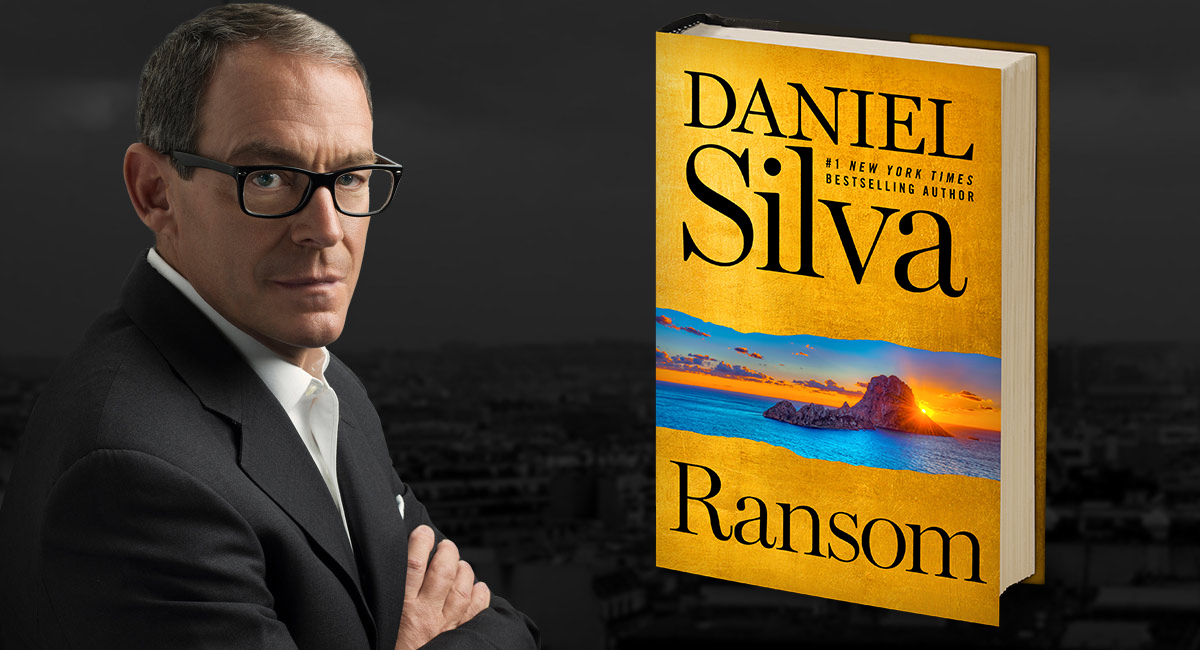
Ransom (2026) is latest in the fantastic Gabriel Allon series.
Excellent, as always.
No car chases. No gun fights.
Instead, believable, high-stakes tradecraft and classic suspense reminiscent of John le Carré.
It’s very up-to-date with references to Putin’s war against Ukraine. And believable technology.
It predicts the future of terrorists (Putin in this case) using drones to disable airports. To assassinate.
Legendary Israeli spy and master art restorer Gabriel Allon is reluctantly drawn out of his retirement after a prominent British real estate tycoon, Edward Knight, pleads for his help.
Knight’s glamorous socialite wife, Alice Winter, has vanished without a trace while vacationing with old university classmates in Ibiza.
As Allon launches his investigation using professional kidnap and ransom (K&R) strategies, he uncovers a web of deception.
What initially looks like a standard kidnapping unfolds into a massive international plot involving Russian bad actors who are laundering and manipulating money.
Silva has historically supported Israel and centered his long-running spy series on Gabriel Allon, a Jewish Mossad leader. He conspicuously mentions nothing about Israel in this book. It’s difficult to defend Israel right now after counting how many Palestinian children have been killed.
At the World Gymnastics Championships, many nations of the world come together. What do we have in common?
Gymnastics.
Ukraine and Russia are here. Israel and Iran.
It reminded me of that fantastic 2017 viral Danish television ad titled “All That We Share”.
More important than ever in 2026 where social media algorithms push controversial issues, driving people apart.
The video addresses societal divisions by placing diverse groups of people into taped-off “boxes” on a floor (such as high earners vs. those just getting by, new Danes vs. those whose families have always lived there, and religious vs. self-confident).
A moderator asks a series of personal and shared-experience questions (e.g., Who has been bullied? Who is in love? Who has seen a UFO? Who has saved a life?)
As people step out of their assigned boxes and mingle based on shared human experiences, the ad concludes with the message: “So maybe there’s more that brings us together than we think.”
But most interesting character is her niece Lucy, who’s in town visiting for Christmas holidays. A brilliant tech genius, computer hacker, and argumentative teenager.
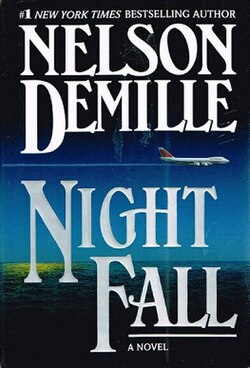
Scarpetta is called in to autopsy the body of convicted murderer Ronnie Waddell after his execution.
Several days after the execution, a young boy is discovered murdered in the fashion of Waddell’s earlier killings, with Waddell’s prints near the body.
Scarpetta, along with FBI Agent Benton Wesley and Detective Pete Marino, try to discover how a dead inmate could have possibly committed another murder after his death.
As the story progresses she seeks the assistance of her 17-year-old niece, Lucy, after she discovers a strange folder on her computer.
Kay Scarpetta is Chief Medical Examiner in Virginia. Nicole Kidman plays her in the TV adaptation. I couldn’t get through the 1st episode.
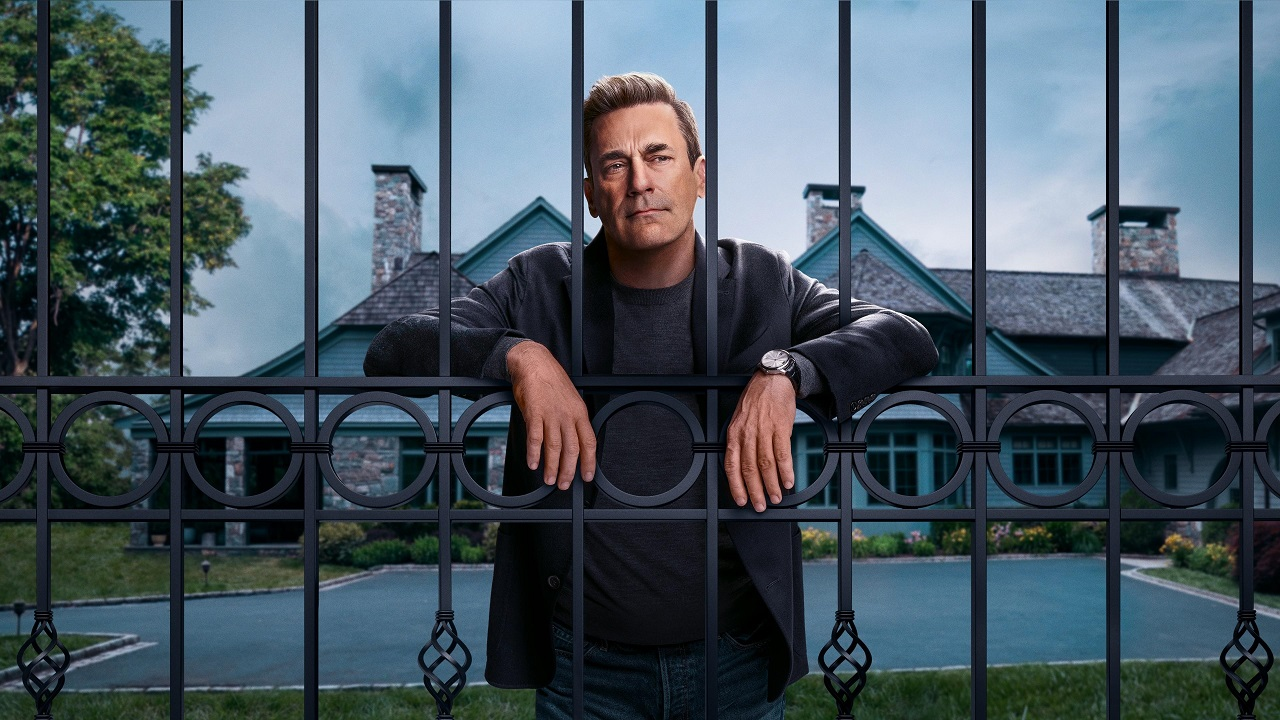
I’m no particular fan of Jon Hamm, but he’s perfect for this role.
Cast is great, in fact.
The season follows Andrew “Coop” Cooper (Jon Hamm), a former hedge fund manager in the wealthy enclave of Westmont Village who turns to burglarizing his affluent neighbors to maintain his lifestyle after losing his job and his marriage.
Things look really, really bad for Coop. Yet the ending is upbeat. The best part, I thought.
In general, I hate books, TV, and movies where rich, privileged people do incredibly stupid things. Like this show.
Best psychological thriller / murder mystery I’ve read in a while.
David Ellis really knows how to write these things.
He’s actually a an American Appellate Court Judge. And writes books in his spare time.
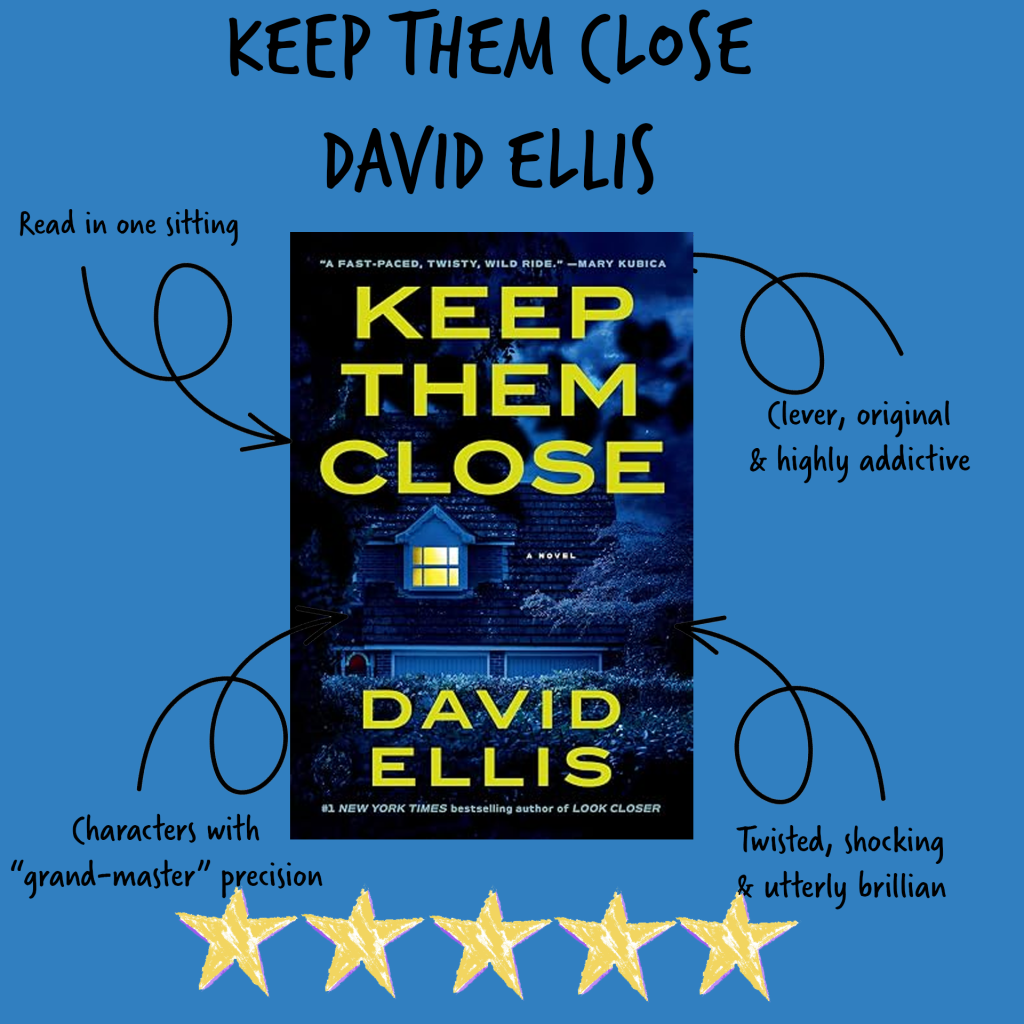
Keep Them Close (2026) centers on two fiercely loyal siblings, Allison and Luke, whose tight bond begins to fracture when Allison’s husband, Finley, is brutally murdered.
As the police investigation intensifies, it threatens to dig up a web of dangerous, long-buried secrets that the siblings share, including:
An illicit affair.
A decades-old accident that permanently altered their lives.
Layers of stunning deception.
Told through multiple points of view with fast-paced, short chapters, the novel forces both the characters and the reader to question exactly how far the siblings will go to keep their secrets hidden—and whether they can even trust each other anymore.
Like his previous book, I thought the ending was terrific. Uplifting and unexpected.
I read the original book in advance of the upcoming full-cast audio adaptation of Young Bond: SilverFin on October 29, 2026.
This might be good for young adults. But I found it too unbelievable, even for a James Bond story.
SilverFin is a 2005 spy novel written by Charlie Higson. It is the first book in the Young Bond series, which chronicles the adventures of Ian Fleming’s iconic superspy James Bond during his teenage years in the 1930s.
He wrote 4 more after this one.
Plot Overview
Eton College: The story begins in 1933 with a 13-year-old James Bond starting his first term at Eton College, where he deals with the rigors of school life, joins the school’s athletic ranks, and faces a cruel bully named George Hellebore.
The Scottish Highlands: During his Easter holiday, James travels to the remote shores of Loch Silverfin in Scotland to stay with his terminally ill Uncle Max and Aunt Charmain.
The Missing Boy: While there, James teams up with a local boy named Red Kelly to investigate the mysterious disappearance of Red’s cousin.
The Hellebore Secret: Their search leads them to a heavily guarded castle owned by George Hellebore’s father, Lord Hellebore. Inside, they uncover a horrific, illegal medical experiment involving Nazi scientists and a serum derived from eels designed to create unstoppable “supersoldiers.
In general, having a bad dictator-for-life (Putin, Xi) means most of the population will suffer. The dictator keeps most of the money for himself, family, and oligarchs.
This is what Trump is trying to do, emulating Putin, Xi, and Kim Jong Un.
BUT China has definitely proved to be the exception to the rule.
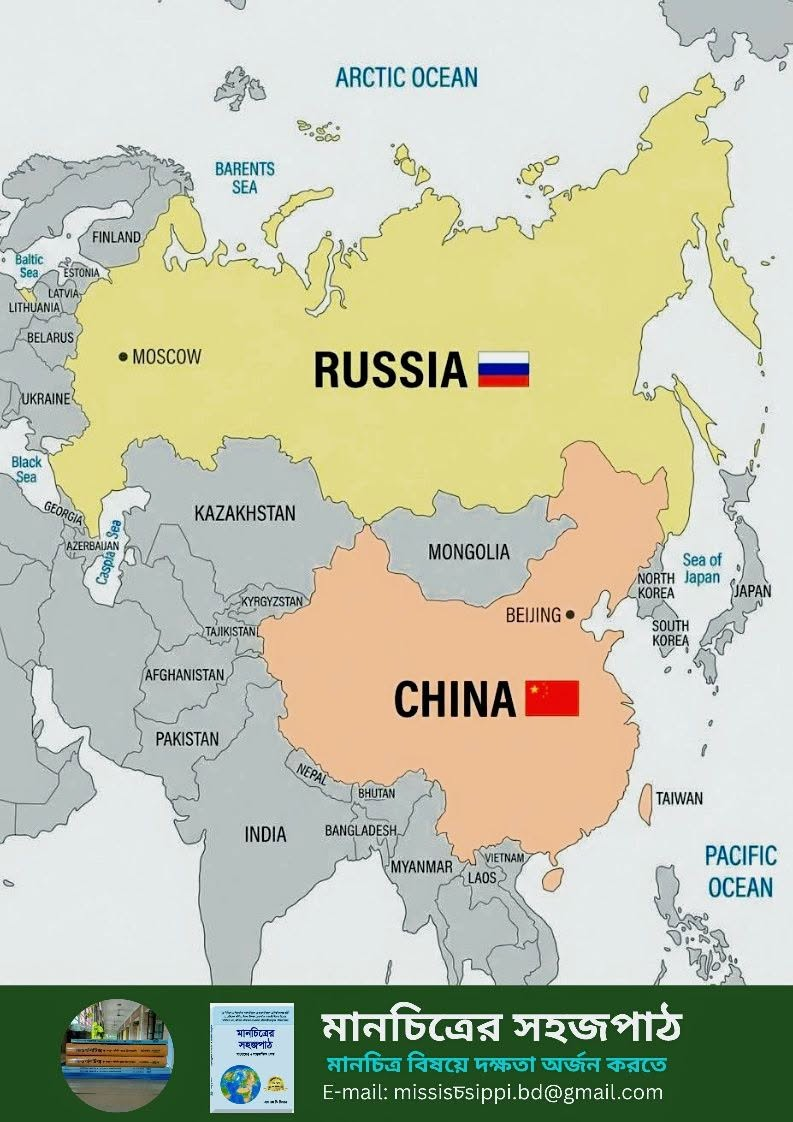
Over the past few decades, China and Russia have experienced one of the most stark economic divergences in modern history.
In 1990, the Soviet Union possessed a larger, more technologically advanced industrial base and far higher per capita income than an agrarian, impoverished China. By 2026, the tables turned entirely: China’s nominal GDP reached approximately $20.6 trillion (the world’s 2nd largest), while Russia’s GDP stood at $2.5 trillion.
—meaning China’s economy is now more than eight times larger than Russia’s.
It’s obvious to everyone that China has done more to improve life for the massive population than has Russia.
Yet Russia is 1.7 times the size of USA with massive resources. Russia is a huge economic disappointment, ranking behind Germany, Japan, United Kingdom, India, France, and Italy.
I’m surprised that China’s takeover of Tibet (1950 invasion), Macau (1999), and Hong Kong (1997) have gone as well as they have. I predicted worse outcomes.
Russian invasion of Ukraine will NOT result in a better quality of life for citizens.
I’ve been boycotting China in recent years. BUT will return in 2027 for the World Gymnastics Championships.