
James Quinn is senior director of strategic planning, the Wharton School, University of Pennsylvania. He posted a very gloomy projection on Prudent Bear:
The 6,000 sq ft McMansion buying, BMW leasing, $5 Starbucks latte drinking, granite countertop upgrading, home equity borrowing days are coming to an end. …
… the tremendous prosperity that began during the Reagan years of the early 1980’s has been a false prosperity built upon easy credit. …
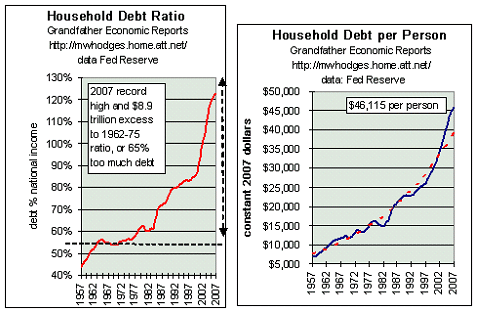
I have been accused by many of my friends and family as someone who sees the glass as half empty. I disagree with their assessment. I see the glass as it is. I find myself scratching my head trying to figure out why a society that always saved for a rainy day, consistently saving between 8% and 11% of their disposable income, now has a negative savings rate. …
In the past, the USA could have grown economically out of this kind of debt. That time is over.
… the gathering storm has arrived. It will be long, painful and destructive. Those who prepared for the storm by not taking on excessive debt and living above their means, will ride it out unscathed. Those who built their house on sand by leveraging up and living the “good” life, will see their house swept out to sea. The storm will pass and we will rebuild. Our country is resilient. …
There has been and will be resistance to the inevitable deep recession that is coming. The American consumer is not cutting back willingly. They are being dragged kicking and screaming towards the joys of frugality. The “material generation” needs to dematerialize. My biggest concern is that our politician leaders and their cronies running our government will continue to try and reverse the normal capitalistic course of recession and expansion. Companies need to fail, housing needs to find its bottom based on supply, demand and price. Those who gambled must be allowed to lose and suffer the consequences. …
It’s worth reading the entire impassioned post: The Great Consumer Crash of 2009
The USA must leave Iraq as soon as possible, whether they want to or not. The war has already cost each household about $20,000. From the graph above, it’s obvious families cannot afford this war.
Why anyone would want to vote for McCain — who wants to stay in Iraq for as long as it takes — is beyond me.
Obama may also be unable to soften the economic blow, but at least there is a chance with him.
 Rick McCharles