Two writers compete for the chance to tell the larger-than-life lie story of a woman who has stayed out of the public eye for decades. She’s the widow of a singer something like Elvis.
An interesting story. Plenty of romance.
Plenty of sex, as well.
I’d recommend it — even if you don’t normally read romance.
But even more so, Terry Gou, who, in 1974, founded FoxConn in Taiwan.
Incredibly ambitious, by 2012 Foxconn made up approximately 40% of worldwide consumer electronics production.
Just one of his many huge factories in China produces the bulk of Apple’s iPhone line and is sometimes referred to as “iPhone City”.
Needless to say, there are many abused workers in those plants. They don’t last many months on the gruelling production line.
Over the years, Gou and others steadily wooed Tim Cook and Apple to move manufacturing to China.
Today over 90% of Apple products are made in China. A huge risk for the company if authoritarian dictator-for-life Xi decides to invade Taiwan. Or shut down exports.
Attempts to move production to other nations have been mostly experiments. Or motivated by politics, not business.
In the meantime, Chinese engineers — many trained by Apple — are building cheaper, better Chinese phones in China. They no longer need Apple.
It’s a precarious situation.
Apple in China is a 2025 book uniquely looking at the company from the viewpoint of China.
In her May 15, 2025 review for The New York Times, Hannah Beech called Apple in China “smart and comprehensive,” praising Patrick McGee’s clever and chronologically organized timeline of how Apple’s expansion to China manufacturing facilities under then COO Tim Cook created a global success but also an “existential vulnerability” for the United States.
It feels very much up-to-date. They make many recommendations for improvement.
The authors are prominent American liberal pundits. This book evaluates progress in the USA from the left of centre point of view.
It examines the reasons behind the lack of progress on ambitious projects in the United States, including those related to affordable housing, infrastructure, and climate change.
My biggest takeaway is that governments should declare more one time EMERGENCY situations, in responding to things like natural disasters, bridge collapse, and even housing shortages. Rules and regulations make developments safer — but at too much cost. Red tape should be reduced as much as possible.
Cut and Thrust (2015) is 30th in the long Stone Barrington series.
Similar but different than the rest. A good one.
This one is quite political.
When Stone travels to Los Angeles for the biggest political convention of the year, he finds the scene quite shaken up: a dazzling newcomer—and close friend of Stone’s—has given the delegates an unexpected choice, crucial alliances are made and broken behind closed doors, and it seems that more than one seat may be up for grabs.
And amid the ambitious schemers and hangers-on are a few people who may use the chaotic events as cover for more sinister plans…
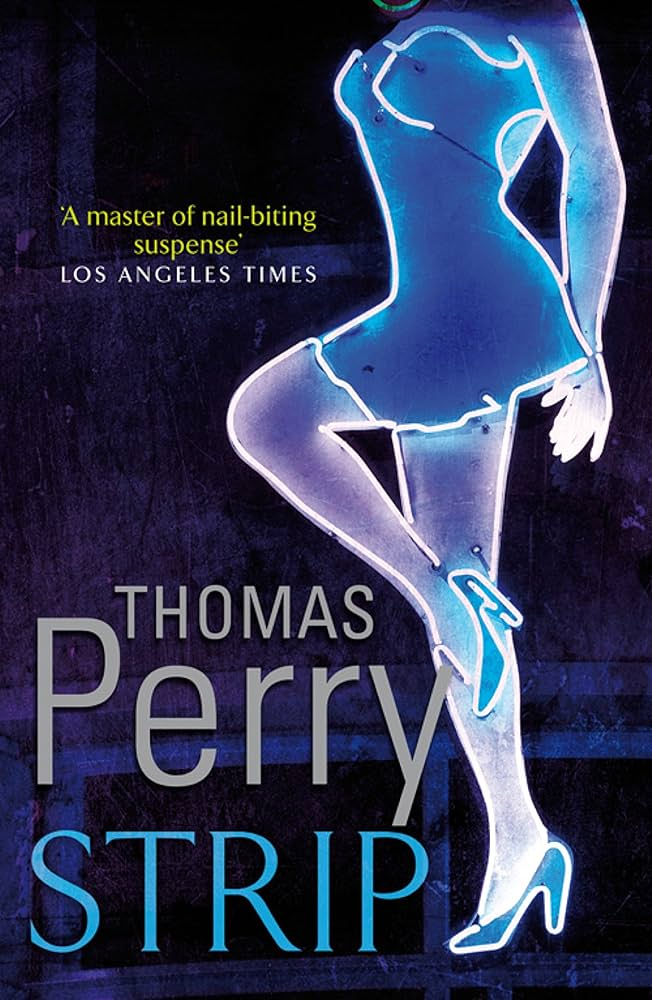
BUT, her husband’s mentor, plastic surgeon Dr. Richard Dahlman, is wrongly accused of murder.
Jane agrees to employ her expertise one more time.
Thus begins Perry’s latest, which soon begets layer upon layer of deception and intrigue. It seems that Dahlman himself, with a series of operations, had helped someone attain a new identity, and that he is being pursued not by the police but by men intent on killing him for what he knows.
But who are they?
Re-establishing some of her old creepy contacts, Jane becomes convinced the villains are in the business of frightening people into believing they are in danger, then collecting vast sums to help them vanish.
And now that the FBI is after Jane for Dahlman’s escape, she is beleaguered on two fronts. This is really a prolonged chase novel …
Too many family secrets were unearthed to be believable. By the end, I couldn’t care less about any of the characters.
P.I. Lew Archer is summoned to the Meadow Farms mansion of Californian oil millionaire, Homer Wycherly, just returned from an ocean cruise.
Asked to locate Wycherly’s daughter Phoebe, missing since she saw Homer off two months before …
For one Hollywood adaptation of a Ross Macdonald book, they wanted Frank Sinatra. It ended up being Paul Newman playing the role, changing the detective’s name to Harper rather than Archer for marketing reasons.
Invisible Prey (2008) is perhaps the BEST of the Lucas Davenport books I’ve read, so far.
The bad guys are interesting. Original.
Sandford starts every book with the bad guys.
The world of antique dealers fascinating.
What makes this book different than most murder mysteries is that it’s the villains themselves that end up solving the case.
In the richest neighbourhood of Minneapolis, two elderly women lie murdered in their home, killed with a pipe, the rooms ransacked, only small items stolen.
It’s clearly a random break-in by someone looking for money to buy drugs. But as he looks more closely, Davenport begins to wonder if the items are actually so small or the victims so random, if there might not be some invisible agenda at work here.
Gradually, a pattern begins to emerge — and it will lead Davenport to somewhere he never expected. Which is too bad, because the killers — and yes, there is more than one of them — the killers are expecting him.
I enjoyed seeing Kidd and Flowers make appearances.
I read The Magic Mountain (1924) when I was young — not much appreciating it at the time.
Philosophical prose inspired by his wife’s letters from a Sanatorium in Davos, Switzerland, where she was being treated for respiratory disease.
His wife was one impressive person, Katia Mann. A secular Jew while Hitler was rising in power, she later converted to her husband’s Lutheranism.
She and Thomas had 6 children, all interesting characters. This was impressive, as well, because Thomas was a closeted Gay man.
Likely I wouldn’t have much interest in Thomas Mann but for my friend Brian taking a University elective course on him.
In 2025, I somehow downloaded an historical fiction account of his life ➙ The Magician by Colm Tóibín.
His life was even more dramatic than his novels.
His two elder children, Erika and Klaus, were flamboyantly unconventional – promiscuously bisexual, precociously talented as actors and writers, but too politically reckless and financially feckless to make careers for themselves. There were drugs. There were scandals. Eventually there was another, more devastating suicide – Klaus’s …
Erika Mann marries WH Auden, not for sex (they are both gay) but for a British passport …
He escapes (Hitler) first to Switzerland, moving on to the south of France, where he frequents the cafes where other German exiles gather – social democrats bickering with communists – and finally to the US. He watches the second world war from transatlantic safety …
The 23rd book in the entertaining Stone Barrington series is a good one.
Unnatural Acts (2012) find the saddest of sad sacks, Herbie Fisher, the hero of the tale.
These comedies require suspension of belief. Somehow Herbie is positioned to be the next Stone Barrington. 😀
Another surprise to me was finding Stone’s latest romance not killedoff. That’s unusual.
When a hedge fund billionaire hires Stone Barrington to talk some sense into his wayward son, it seems like an easy enough job; no one knows the hidden sins and temptations of the ultra-wealthy better than Stone.
But as Stone and his erstwhile protégé, Herbie Fisher, probe deeper into the case—and an old one comes back to haunt him—he realizes that even he may have underestimated just how far some people will go to cover up their crimes, and commit new ones.