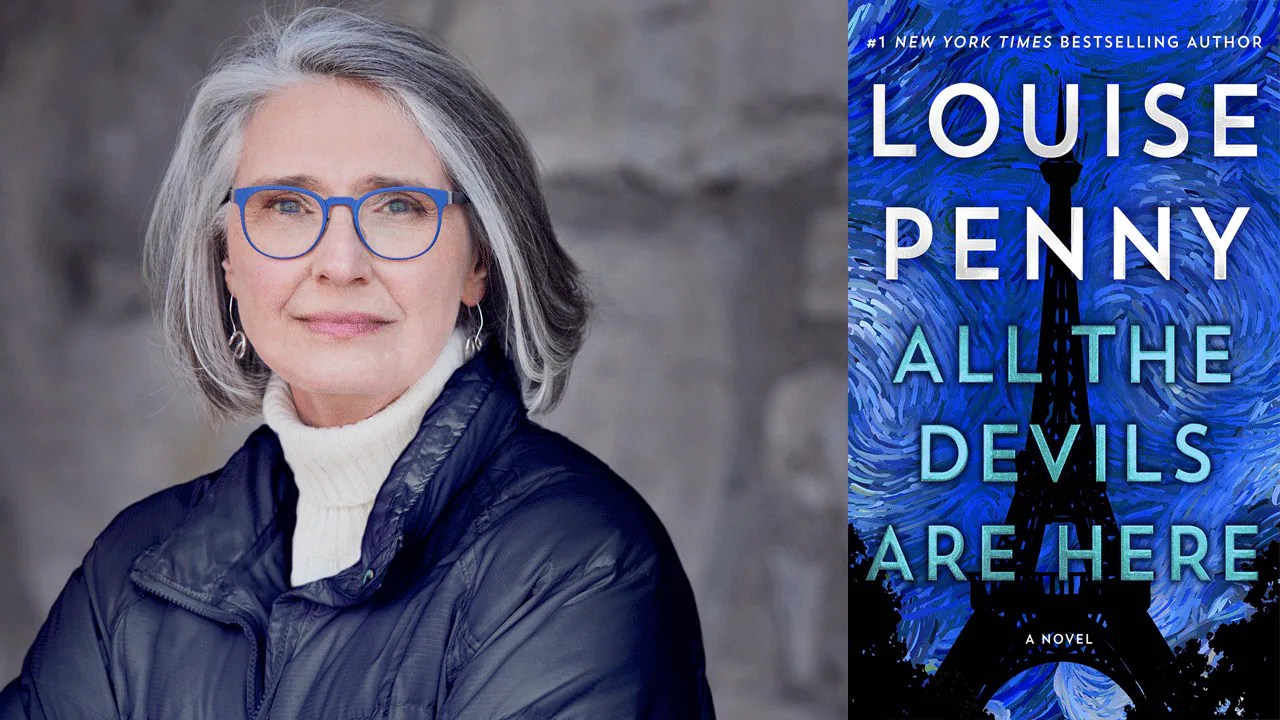
While the residents of the Québec village of Three Pines take advantage of the deep snow to ski and toboggan, to drink hot chocolate in the bistro and share meals together, the Chief Inspector finds his holiday with his family interrupted by a simple request.
He’s asked to provide security for what promises to be a non-event. A visiting Professor of Statistics will be giving a lecture at the nearby university.
While he is perplexed as to why the head of homicide for the Sûreté du Québec would be assigned this task, it sounds easy enough. That is until Gamache starts looking into Professor Abigail Robinson and discovers an agenda so repulsive he begs the university to cancel the lecture.
They refuse, citing academic freedom, and accuse Gamache of censorship and intellectual cowardice. …
On their first night in Paris, the Gamaches gather for a family dinner with Armand’s godfather, the billionaire Stephen Horowitz.
But the evening ends in horror when Stephen is knocked down and critically injured in what Armand is convinced is no accident, but a deliberate attempt on an elderly man’s life.
When a strange key is found in Stephen’s possession it sends Armand on a desperate search for the truth that will take him from the top of the Tour Eiffel, to the bowels of the Paris Archives. …
East of Edenis a novel by American author and Nobel Prize winner John Steinbeck. Published in 1952, the work is regarded by many to be Steinbeck’s most ambitious novel …
Steinbeck stated about East of Eden: “It has everything in it I have been able to learn about my craft or profession in all these years,” and later said: “I think everything else I have written has been, in a sense, practice for this.” …
I liked it less well than the author, but am still pleased to have made it through the lengthy, rambling saga.
Steinbeck was born in Salinas, California in 1902. In fact, he appears as himself as a small boy in this novel.
Racism is a fact in this era. But one of the two smartest and best characters is Lee, an American born Chinese servant.
The other character you want to spend time with is Samuel Hamilton, the patriarch of one family.
Steinbeck books frequently explore the themes of fate and injustice, especially as applied to downtrodden or everymanprotagonists. For example, Of Mice and Men.
The female characters are not nearly as important or well drawn as the men and boys.
The title comes from Genesis, Chapter 4, verse 16. The story of Cain and Abel.
Two sets of brothers are the main characters in this book. And one of the four is named Adam.
There are weird love triangles complicating both sets of brothers.
There’s something of a reimagining of the biblical story woven into a history of California’s Salinas Valley.
My two highlights reflecting back on this epic:
the STORY telling is memorable and entertaining
the philosophical discussions
James Dean played in one of the movie adaptations.
Turns out almost twenty of his books have been turned into films and TV series. But not all have been translated to English.
The pacing is slower than a typical American or British whodunnit.
But mathematician Tetsuya Ishigami and Manabu Yukawa, a physicist who often consults with the police, are two of the best fictional characters I’ve read in a long time.
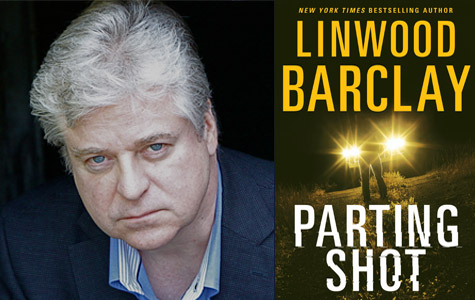
This is the first book I’ve read by Linwood Barclay, though he’s a Canadian.
It’s excellent.
The premise of the plot is fantastic. Private Investigator Cal Weaver is hired to help protect an 18-year-old who had run over a friend while blind drunk. Killed her. And had somehow been found not guilty in court because he (supposedly) did not understand the consequences of his actions because he was coddled by an overprotective mother.
Simultaneously, but apparently unrelated, Detective Barry Duckworth is dealing with a case of a young man abducted and tattooed by … aliens?
Both Duckworth and Weaver are fictional characters well worth spending time with.
In an era of many folk singer / songwriters, James got lucky when a friend gave a demo tape to Peter Asher, head for the Beatles‘ newly formed label Apple Records.
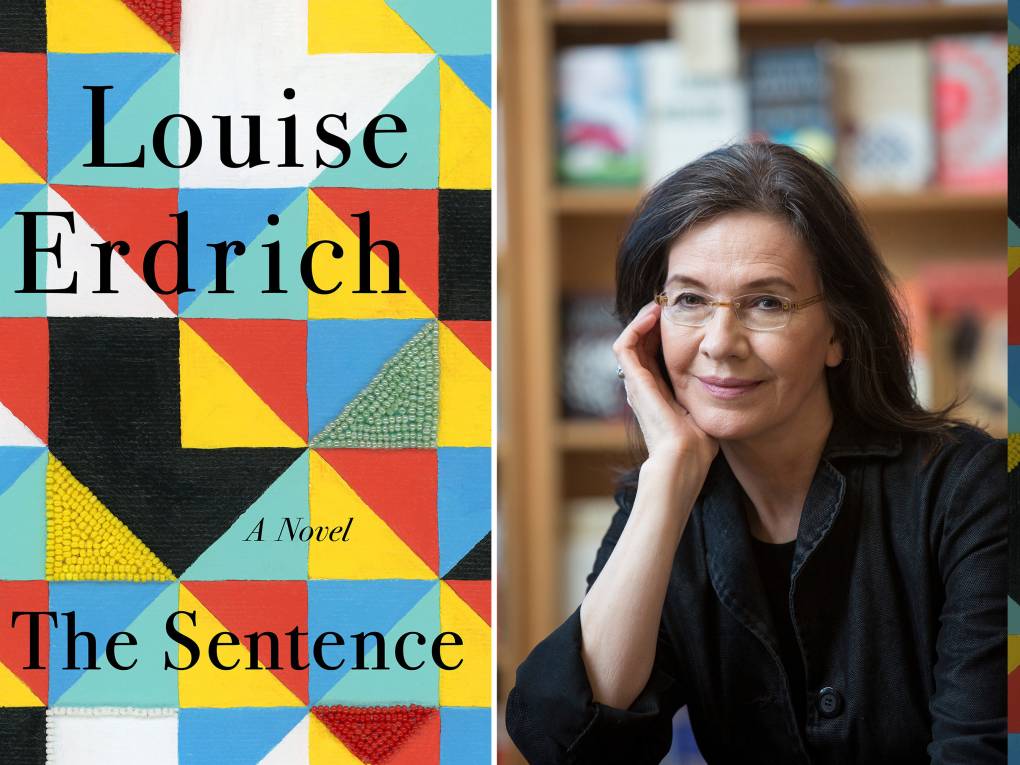
She is also the owner of Birchbark Books, a small independent bookstore in Minneapolis that focuses on Native American literature.
In The Sentence, the narrator, Tookie, works in a bookstore in Minneapolis that carries Native American literature. Tookie, like the author, is a Native American.
As a young woman, Tookie was sentenced to 60 years in prison. But later had her crime reduced to some years time served. That part of the book I found fascinating.
She became a serious reader in prison, one reason she ended up working in a bookstore — haunted by the ghost of a former customer — before the pandemic broke in March 2020.
I’d forgotten how confusing it was mid-March when we had no masks or gel yet. And didn’t know how serious it would become.
The story in Minneapolis following the murder of George Floyd was super interesting too. Her step daughter was out protesting. But Tookie was worried about looters burning down the bookstore.
Overall — however — I found the book too long and rambling.
It’s supposed to be mainly a ghost story. But I didn’t really buy the resolution of that.




 Rick McCharles