A long and slightly dated presentation to the 2005 TED conference …
Economist Statistician Bjorn Lomborg makes a persuasive case for prioritizing the world’s biggest problems, asking “If we had $50 billion to spend over the next four years to do good in the world, where should we spend it?”
His recommendations – based on the findings of the 2004 Copenhagen Consensus – controversially place global warming at the bottom of the list (and AIDS prevention at the top). Lomborg was named one of the 100 Most Influential People by Time magazine after the publication of his controversial book, The Skeptical Environmentalist which challenged widely-held beliefs that the environment is getting worse. … (Recorded February 2005 in Monterey, CA. Duration: 17:27)
Though I keep checking the tick box on my income tax form, I still don’t seem to be registered as a voter.
A special trip with copies of utitility bills, etc. might be needed for me to weigh in on the Canadian election.
Here’s how the polls stand:
Conservatives sinking?
Though I threatened the conservative M.P. in my riding to support someone else, the offending legislation I was railing against has been, for now, dropped.
If they allow me to vote, likely I’ll vote Conservative. They are the most fiscally responsible party. And we need fiscal responsibility right now.
There’s a panic mentality.
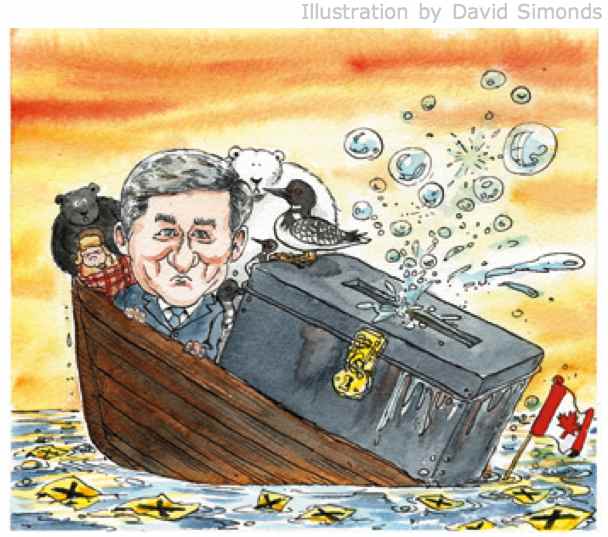
Economist magazine likes incumbent Conservative Prime Minister Stephen Harper. Here’s their article — a big shot in the arm for his party, sinking in the polls right now.
… the Toronto stock-exchange index tumbled another 401 points—making for a cumulative drop of 3942 points or 28.6% since September 1st—prices for oil and other commodities softened, and the Canadian dollar dropped. Outside the hotel, unionists belonging to the Canadian Auto Workers mounted a New Orleans-style funeral march, complete with brass band and a coffin to symbolise the 67,000 manufacturing jobs lost in the past year. …
Did Harper do enough to protect those stock holders?
… in relative terms, Canada is doing rather better than most other rich countries. Its banks have declared some losses from dabbling in American sub-prime mortgages. But they remain in “considerably better shape than their international peers”, according to Mark Carney, the governor of the Bank of Canada, the central bank. Banks continue to borrow and lend money. Late last month, Teck Cominco, a mining firm, managed to borrow $9.8 billion to take over Fording Canadian Coal.
The carnage on Wall Street has not threatened institutions, but it has rattled nerves. For most borrowers, credit has tightened. That has prompted Mr Carney to inject liquidity. On October 8th the Bank of Canada cut its benchmark interest rate by 50 basis points (to 2.5%) in a co-ordinated move with the other main central banks around the world.
The economy is still growing, albeit slowly. The growth is mainly in the resource-rich western provinces. The fall in commodity prices will certainly slow things down. The plunge in the oil price means that some of the $110 billion of projected investment in Alberta’s oil sands may be postponed. But Alberta’s government still ran a half-page ad in the New York Times earlier this month to try to lure American workers north. …
Canada is sitting pretty compared with the carnage in the USA.
But panic from those hurt by collateral damage from the USA may sink the Harper ship yet.
One pundit is getting a lot of heat (and website hits) as he documents the sky falling:
In May 2007 I wrote “Times are good, money is flowing, and Silicon Valley sucks” in a post about how, in my opinion, Silicon Valley was ripe for a downturn. This week, without any doubt, we got that downturn. It was different from the last downturn in that it wasn’t driven by the crazy bullishness of Silicon Valley venture capitalists and investment banks. This time, Wall Street and our government screwed everything up all on their own while we minded our own business and acquired our own instead of going public at crazy valuations. …
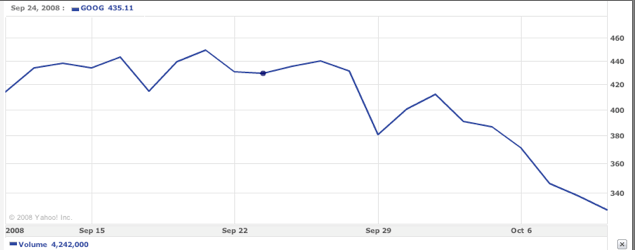
Remember when I said Google could go to $2000 from $1000.
Never mind.
The entire stock market is taking another drubbing today, and Google is no exception. Its shares tried to rally in the morning, but are now trading below the $329 they closed at yesterday. …
So far this economic crisis has had no direct impact on my own “portfolio”.
The poorest of the poor — Kate and myself — are trying not to gloat.
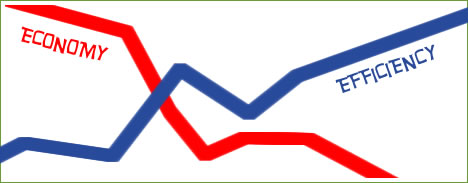
In one sense, this really is a “correction”. The waste and stupidity of a boom economy is not efficient. I recall when one bachelor friend bought a 10 bedroom, 4 garage house for himself … because that was the highest return for his money on investment.
But is that kind of inefficiency good for the planet?
… When money was relatively cheap, investors grew careless choosing their investments, most dramatically in structured mortgage products, but also in other sectors. Now investors are more likely to careful about where they put their money. …
McCain wisely stayed away from attacks Obama’s background and character. (In fact, he did not mention his loopy, loose canon V.P. candidate Sarah Palin even once.)
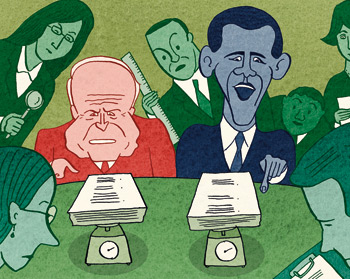
But which candidate has the best plan to “fix” the mess?
AS THE financial crisis pushes the economy back to the top of voters’ concerns, Barack Obama is starting to open up a clear lead over John McCain in the opinion polls. But among those who study economics for a living, Mr Obama’s lead is much more commanding. A survey of academic economists by The Economist finds the majority—at times by overwhelming margins—believe Mr Obama has the superior economic plan, a firmer grasp of economics and will appoint better economic advisers. …
The United States faces large and growing budget deficits mostly due to an aging population and rising healthcare costs. Unless we solve the problems caused by entitlement spending, there will be little money left to do anything else in the future. Over time, our standard of living, our national security, our standing in the world and the value of our currency could all be threatened. …
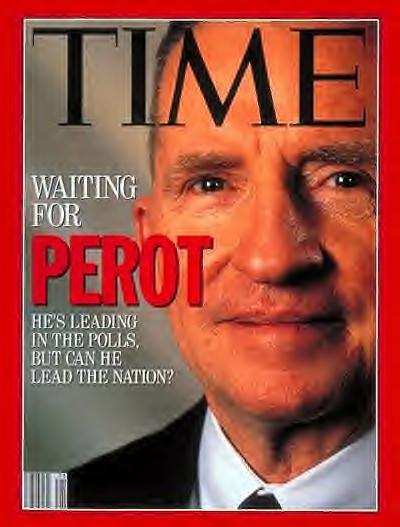
Instead of running for President, Perot’s laid out his ideas online in a series of simple charts. Here’s a sample:
Brian pointed out in a comment that Bill Clinton is more responsible than anyone else for the U.S. economic disaster. On his 1992 legislation:
… Fannie and Freddie increase their purchases of mortgages for low-income and medium-income borrowers … Operating under that requirement, Fannie Mae, in particular, was more aggressive and creative in stimulating minority gains. It aimed extensive advertising campaigns at minorities that explain how to buy a home and opened three dozen local offices to encourage lenders to serve these markets. Most importantly, Fannie Mae agreed to buy more loans with very low down payments–or with mortgage payments that represent an unusually high percentage of a buyer’s income. That made banks willing to lend to lower-income families they once might have rejected. …
It does sound like do-gooder Democrats messed with the free market and started this trend:
But did George Bush fix the Clinton mess when he got into office?
… But it was under Bush when the practice began to threaten the economy in a very real way and it was allowed to continue and even encouraged. It was also a mistake to expand the program after 2000 and that is all on Bush’s HUD crew. …
These people (the U.S. government) need to be stopped. Every time we get ourselves into an economic mess, there’s usually some milestone idiocy we can point back to as the government action that made the meltdown inevitable.
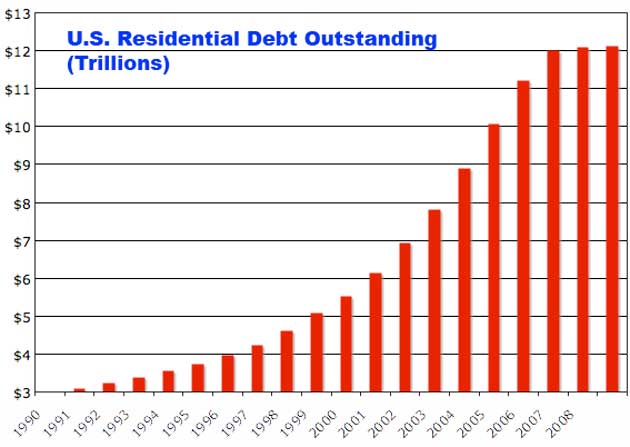
Take the current housing crisis that has now spread to the financial markets in general. The cause was too-easy credit that fueled a massive increase in housing prices as people bought houses they couldn’t afford with mortgages they weren’t able to pay off. …




 Rick McCharles