travelogue – the City of Joy – Calcutta

I arrived in the City of Joy. A wonderful day. Nothing was open. No vehicle moved. The beautiful new cable bridge, normally choked, deserted.

Nothing was doing — except cricket. Boys and men played everywhere, the space glorious.

They are mad for cricket here. You from Canada coming? You are seeing the CLASH India-Pakistan?

It is too dangerous for nuclear super-rivals to play on the subcontinent, so they play in Toronto. (Matches are planned soon in India. A disaster looms.)

You can quote me as a physical educator. If there is a more useless physical activity than baseball, it is cricket. I blame the British who inflicted this disease on all their colonies, except snowy Canada.

I strolled empty Calcutta for hours, clueless. Finally I saw the poster:

24 Hour National Strike against Globalization, Privitization, Unemployment, Indiscriminate Computerization, and Murderous Price Rise, etc.

In the Calcutta Telegraph the next day: Bengal Basks in Strike Glory. With blood on its hands, West Bengal stood … boastful of bringing life to a complete halt.

Bengal is a poor region with Marxist local governments. The Strike, protesting national government economic policies, was successful here while mostly ignored in the rest of the country. Everyone seemed pleased that 2 strike-breakers died in roadblock confrontations, and relieved that even more weren’t killed.

Next day Calcutta was back to normal; loud, polluted, ugly. One of the most densely populated cities on Earth.

The City of Joy is no joke. The poor migrate here when life in the floodplains becomes a death sentence.

There are few Westerners, mainly those in transit and a core of NGO volunteers. A vocal few defend the city, It has a soul. It’s the centre of the Arts.

Sudder StreetSudder Street

I stayed at the Salvation Army in the backpacker ghetto of Sudder Street. Two blocks away is New Market, the biggest in the city. In the mountains of garbage behind was a scene from Hell; dogs, humans, black pigs, and crows, all scavenging. In Calcutta the pigs and crows are thriving, the dogs and humans might be close to death.

I was reminded of a dusty bus stop in Nepal where I watched huge vultures, wings spread for balance, battle dogs and pigs for a buffalo carcass.

dogI’ve seen too many pitiful dogs; open-sored, limping 3-legged, squinting hopeful, but suspicious. Even one paraplegic, dragging useless hindquarters across the village meat market. I involuntarily compared these desperately poor Bengalis with pariah dogs. Pups and children appear quite healthy, then quickly deteriorate, a cumulative effect of disease, malnutrition, and bad water.

I’m painting the worst possible picture.

I visited the border of rural Bangladesh; green paddies, lush mango groves, fertile fields. There were no walking skeletons. Most often I’m impressed how happy are the poor, their simple lives. Some of the garbage dump architecture (Alex Frater) appears homely, and breezy. In Sri Lanka the beach shacks of the poor Tamils appealed more than the modern Sinhalese homes.

I didn’t visit the goonda-controlled slums, the bustees of Calcutta or Bombay. I’m reluctant to go with no greater purpose than picturesque poverty. (James Cameron)

I should make clear that the Indian peoples are bodily fastidious. While the streets are rank, teeth and gums are brushed, the body ritually scrubbed. Westerners are always struck by how much clothing is washed. The dhobi-wallahs, washers, are seen by every body of water, all day, every day, enthusiastically slapping the laundry clean on boulders.

Naipaul pointed out that the impoverished wash the most because they have so few clothes. The poorest women are conspicuous — they own just one sari and have no undergarments. Of course they wash and bathe at the same time.

It seems a contradiction that these ritually clean people are so unaware of the filth around them. I’m told that it is caste related. It is unclean even to notice shit underfoot.

Bridge

Everyday I’m asked, You are liking India?

I always respond, Great! Wonderful people! But it is very dirty, polluted. (I can point in any direction.) Locals always look puzzled at such an unfounded concern.

Most far-travelled backpackers would concur that India is the most rewarding destination.

The Indian peoples are fascinating and fanatic. Friendship assails the stranger. You are besieged with Indian company, all hopeful new pen friends.

I was the lone Westerner in town. A jolly smiling chap introduced himself and his pretty wife. Next morning I had breakfast at their home in the Police Lines — he was the Commissioner. This lovely, traditional Bengali family had come to know a number of Westerners. His last posting was in Nadia, home of ISKCon, the International Society for Krishna Consciousness. Hare Krishna, to you.

I’ve been befriended by English teachers, political activists, free-lance journalists, priests, and a travelling vegetable oil sales rep.

A proud father pushed his 3 year old through a crowded bus so that the Sahib might admire his prodigy’s knowledge of world capitals and political leaders, with just a little prompting. Only in India.

A tiny woman approached me at a bus stand; Roshan, a Parsi (originally from Iran), the first lady lawyer in Karnataka state. Vivacious, articulate, impressive. She had traveled all of India, providing us with a wealth of advice — even the price of tiger prawns on Varkhala beach! I assumed Roshan was that rarity, a single, academic career woman. Actually she had 9 children in 10 years, the youngest 14 and all still in school.

I was reading the autobiography of another Indian barrister, one M.K. Gandhi. Roshan’s life was even more exceptional.

Actually it’s a problem to meet the women of India. Few are forward enough, and speak English well enough, to engage.

I did meet an Islamic dentistry student studying at an Arab-financed university. She was horrified at what I was doing. Roaming India was her worst nightmare.

I travelled first class compartment with a lady journalist, a BBC correspondent from Myanmar. We were both en route to see the Dalai Lama. When I saw her next she had shaved her head and become a nun. (Not on my account, I’m sure.)

Bodhgaya, the most important pilgrimage in Buddhism. This is where Prince Siddhartha meditated beneath a tree until he achieved enlightenment. The moment of all awareness is depicted seated, with the right hand touching the ground, “calling the Earth to witness”.

Bodhgaya is a tiny enclave in the middle of Bihar state, India’s poorest. Dacoits (bandits) still loot pilgrim buses with impunity. These dusty Gangetic plains are where the historic Siddhartha was born, taught, and died (from eating poisonous mushrooms).

Around the ancient Bo tree temple, Buddhists from every sect have built. You can contrast the Thai, Japanese, and Korean monasteries. I stayed in a makeshift dungeon dormitory in the Burmese monastery where I had a fine reunion with backpackers I had met in Tibet.

Dalai LamaThe Dalai Lama did not disappoint. Larger than life, energetic, enthusiastic. He charmed the audience. A one-man-show.

He was very humble. In my knowledge and teaching of the Buddha, I might stand slightly taller than the pygmies.

He spoke in Tibetan. We listened to simultaneous translation on FM radio. Of his teachings I have little recollection as most were incomprehensible.

In fact, few of the thousands assembled each day under the huge bamboo supported tents had much idea what he was talking about. Certainly not the simple Tibetans. Perhaps the discourse was intelligible to the book-Buddhists, Westerners who have read every text on the subject.

No one complained. Like me they were happy to be present, listening to his laugh, his mellifluous voice. I read, wrote, and napped. It was tranquil. Even tranquilizing.

One of my few notes: Think of all sentient beings as your Mother.” Christians are only concerned for souls of man while Buddhists revere all living creatures.

His Holiness referred to the friends from the West asdepressed, self-obsessed. He advised we renounce acquisition, heaping-up. No clinging or despising.

Another note: Relinquish self-cherishing and self-grasping. That translation became a bit of run-on-fun.

We spent our evenings at the Bo tree, the most marvellous of all the Buddhist festivals I’ve seen. Thousands circumambulated the temple, smoky and fragrant, lit by tens of thousands of candles. Hundreds practiced the impressive prostration meditation. The murmur of mantras merged with the clamour of candle salesmen, mostly kids reaching through the fence.

The Dalai Lama called for a Prayer Night and a Peace March for the victims of the Iraq bombings. The mischievous ones will somehow escape. Only the powerless will suffer. He was diplomatic in his criticism of the U.S. and England. But he was the only diplomat in town. I felt badly for our American friend Michelle. Perhaps this is why so few Americans backpack.
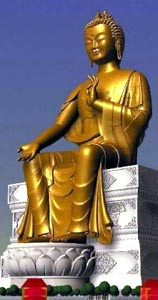
buddha statueThe best story in Bodhgaya is the Maitreya Project, anotherWorld’s Biggest Buddha. This one will be 152 metres high, seated! (The statue of Liberty is 46 metres.) A high-tech Buddha; elevators, assembly halls, telecommunication centre. Earthquake-proof, it must last 1000 years.

Undoubtedly it will be built. There is a lot of money in Buddhism these days. Perhaps Richard Gere, or the high lama Steven Segal, will lead the mega-project fund-raising.

The GREAT IRONY is that the Buddha specifically forbade his followers from making any image. Buddhism is not centred on any Gods but is a a personal philosophy, a code of morality:

  1) Right understanding (uninhibited by superstition or delusion)  

2) Right thought

  3) Right speech

  4) Right action

  5) Right mode of living (do no harm to living creatures)

  6) Right endeavour (self-discipline)

  7) Right mindfulness (alert, contemplative)

  8) Right concentration

Right.

Your pandit-wanna-be has gone South.

Namaste!

travelogue – Happy Holidays, Wish You Were Here – India

So, you think you can tell,
Heaven from Hell,
Blue skies from pain,
Hot ash from a cool rain,
Can you tell a green field,
from a cold steel jail,
a smile from a veil,
Do you think you can tell?

– with apologies to P.F.


My first Christmas away. Homesick?

I remember being homesick for my cat Cleo when I was about 10 years old.

After high school myself and 3 close friends toured Europe in an orange VW van. That still ranks as my best trip. Age 18 — a most excellent age for travel / discovery. I identified with characters in Michener’sThe Drifters.

Towards the end of our Grand Tour we resolved each to go do our own thing. I was quickly devastated. It seemed so pointless to travel and not have anyone close to share those experiences. I still feel that way at times.

I’m almost never homesick. But I often wish you were here.

These e-mail missives help me a lot. At least I can share an inkling.

For the holidays I thought I might tell you about some of my travel companions, about the kind of people I meet on the road.

I’ve evolved to the point of preferring to travel solo. This is not unusual. The majority of backpackers travel alone or as a couple. It is rare to find groups of 3 or more who can travel together for long.

Many ask, Don’t you get lonely?

Not lonely, as I am rarely alone. It is actually a treat when I get a day completely to myself.

Best I think is to travel solo but to rendezvous with friends en route. (When are you coming to meet me?)

Vikram Seth said that travelers who wander months require an attitude of mind capable of contentment with the present. Perhaps that’s true. But (as you know) budget travel is much easier than most imagine it to be. Almost anyone can handle it.

Of all the cultures I’ve observed, the main one is, of course, the backpacker culture. I’ve traveled with hundreds of different people from all over the world and met many thousands. There are a few I’ve really admired.

I also tend to gravitate towards expats living in these countries as they often know how things work behind the scenes. Always an eye-opener.

Where backpackers gather the talk is of cheap hostels, good restaurants, and places not to be missed. They always have some sort of warning for you. They always speak of the highlight of their trip.

They don’t have much in common — except a claim not to have children back home. There are a few people traveling with their kids, but the consensus is that the low-end travel circuit is not the place for children. Actually the kids thrive, but the parents are wracked with fears about what might go wrong.

The biggest surprise to new backpackers is whom I’ve dubbed the Israeli Army. In countries like India they are the most numerous nationality. Many Israelis travel after their mandatory 3 year military service in such numbers that I often wonder if there is anyone left in Israel.

I trekked with Alon from Tel Aviv who explained that the Army breaks into two main camps — the party types who go directly to Asia, and the nature loverswho head first for South America.

Israelis are notorious for being loud, aggressive, and cheap. Dozens of times I’ve seen some poor shopkeep hounded until he sells an item below cost. Israelis buy 7-day trekking permits for the 21-day Annapurna Circuit Trek and later claim they didn’t realize it would take that long. Networking, they know the cost of items all over the world. (Whenever I want to know the rock bottom price, the cheapest hotel, or the best value restaurant, I ask an Israeli.)

On the other hand, Israelis are often the most adventurous, informative, and fascinating backpacking companions — especially the ones travelling solo who despair of their terrible reputation. The men are world-wise, politically savvy cynics. The Israeli born women are often tough-sexy. Trained killers!

The other big surprise is the scarcity of Americans. It is rare to come across a Yank outside big name tourist destinations. I smiled when I heard of a Trek in Colombia which allowed every nationality EXCEPT Americans. (They make too good kidnap victims.)

I did find a lot of Americans in China. I always introduced them to locals as close friends of Bill Clinton. No one is as easy to embarrass as an American.

Many live up to the stereotype; loud, over-enthusiastic, Amerocentric. Those open-eyed enough to realize how the rest of the world sees them can be very good company. I enjoyed traveling with Julie from Wyoming. She was the first other person who, unprompted, said that she quite liked the Han Chinese people, that she didn’t blame them for the misdeeds of their government and hoped they wouldn’t blame her for the crimes of the USA.

Twice I met up with Dave, a Jesus Christ look-alike from New Jersey. A chronic traveller, his girlfriend had taken off somewhere without him, prefering to go solo. (They had reunited by the second time I bumped into him.)

I’ve travelled with some marvellous, respectful Japanese backpackers. Impressive in that people from that culture have so much difficulty getting intobackpacking and even more difficulty learning English, the lingua franca of travel. The Japanese are the rubes, constantly being taken advantage of, constantly getting ripped-off.

Hiro, who brilliantly hired a taxi to Tibet, disagreed with my assessment. While he felt that it used to be true that most Japanese didn’t know what they were doing, that now they are quite informed, that more women are travelling than men, and that I should understand that many of the Japanese have disgraced their families and forsaken careers to go on the road.

I was somewhat chastened by his rebuttal. And yet over and over again, hundreds of times, I’ve seen Japanese backpackers who look the part — dyed long hair, custom-torn jeans — but afraid to leave their guesthouse. For days.

A high percentage of backpackers are smokers. Bored smokers, I often think. Killing the plentiful down time with cheap smokes. A high percentage of slackpackers don’t get much done in a day. Most guilty of this are those on a strict, low budget.

No doubt the average age of backpackers is increasing. But age is rarely a consideration in travel companions. Destination, language, and budget all factor much higher.

I met a tough German woman, 55, who had been away from home cycling for over 4 years. She was bitter in having been turned back half way into Tibet. She planned to try again on a different highway.

There are more professional couples. I met a chain-smoking Swiss couple who were travelling on-line. Their journal was emailed via a palm-top computer. Photos were mailed home, scanned, and inserted.

Julio from Spain travels one year of every five. Next time he promised to bring his girlfriend who stayed home to run his small business. They will remember him in the tiny Tibetan village of Longmusi — he gave a Salsa dance tape to the disco there.

I always enjoy the company of the educated, understated Brits. I traveled off-and-on with Jess, an exception to the rule, perhaps the most intelligent, opinionated person I ever met. Brilliant and an original thinker, but somehow blinded, I thought, by a failed Catholic upbringing, a rage at the ruling aristocratic Protestant elite. (Is Canada the most classless place on Earth? I don’t give a damn how rich or connected you are.)

In some leap in understanding Jess venerates the poor and Godless. As an example he explained that the only intelligent folk he can find in San Francisco, where he now lives, are the illegal Hispanic (presumably lapsed Catholic) restaurant workers. Jess debunked the Tibetan monasteries we were visiting. I tried to point out the societal benefits of tradition, even religious tradition but he was unequivocal. I pictured him as the kind of dogmatist who thrived during the Cultural Revolution in China, burning the olds and establishing a new order based only on science and reason.

Jess despises the rich and powerful. Mockingly he reminded me that, It is easier for a camel to pass through the eye of a needle than for a rich man to enter the Kingdom of Heaven.

The French, the French, are a curious race — but they always have style. Fashionable dress is de rigeur even in the most remote jungle or mountain top. The women are often chic and beautiful. I’ll always remember one unsettling dorm night when a gorgeous French girl burst in late, drunk, tore off most of her clothes and lolled topless. She was en route to visit her brother who was attempting to be the first person to rollerblade around the world.

I spent some time with Sebastien, an Italian Buddhist who lived several years at the Labrang monastery, now the largest in the world. He had once done the prostration meditation, facing inwards, around the 3.5 km kora. That was 4 days, 10 hours per day. The best aspect he said was the camaraderie with the other pilgrims — that and the tremendous ab. workout.

Over the years he had grown disillusioned with the Tibetans, however. Buddhism is rapidly becoming a business and a career, not a calling. There is a story of a Kathmandu businessman who could not find anyone to buy his used Mercedes — until a Tibetan Rimpoche arrived and paid cash.

High lamas are often wealthy and can even marry.

I’ve met far more Canadians on this trip than ever before. I travelled with Jenny, a pretty Chinese Canadian who had just graduated from Princeton with a degree in Black American Literature. (Toni Morrison is at Princeton.) Jenny is polite, self-deprecating & considerate — just like most Canadians. All over the world we enjoy a terrific, sometimes undeserved reputation. Even self-righteous critics of the Great White North like myself get all patriotic abroad. At first I thought that Jenny didn’t carry a flag. Then I detected 3 very subtle Maple Leafs dyed into the fabric of her pack.

The closest friend I’ve met on this trip is Damian from Switzerland, a gregarious, outdoors enthusiast. We did 2 big treks in Tibet. Someone trying to describe the two of us said that it looked like Steven Spielberg was having breakfast with Keifer Sutherland.

I’ll keep in touch with Damian. But I’ve learned the hard way that it is impossible to stay in contact with past travelling companions. I often give out my own email, but I rarely promise to write.

kids
what do they think of us?

I have a ticket home booked for May ’99 … but I think that is probably too soon to return. I hope to extend the trip as long as health, enthusiasm, and cash hold out.

Thinking of you.

Happy holidays! Wish you were here.

PS

I’m next gone to Bodhgaya, India where I hope to see the Dalai Lama.

travelogue – I’ll Never Do It Again – I.N.D.I.A.

India, again.

I visited here once before.  The following is the gist of a letter I sent to friends after that LAST visit. I want to see how my impressions change this time.


1995

I saw India mainly through the eyes of V.S. Naipaul, one our best living writers. Though removed from his ancestral land by 100 years and half a world, Naipaul was compelled to brutalize India in his 1964 book, An Area of Darkness. He was condemned by many for a too critical analysis. Salmon Rushdie said that visiting India ruined Naipaul as a writer.

In 1976 Naipaul revisited the same themes in India: A Wounded Civilization. Still critical, but less so.

Naipaul is clean, precise, completely unsentimental. Maughmy. His observations ring true.

Indians defecate everywhere. They defecate, mostly, beside the railway tracks. But they also defecate on the beaches; they defecate on the hills; they defecate on the river banks; they defecate on the streets; they never look for cover. … the one thing we can and must learn from the West is the science of municipal sanitation.

They do uncoil anywhere and everywhere. It is a great mingling of cow, dog, goat and human faeces. Shit dust is in the air.

I don’t mention the other usual noxious filth, open sewers, the mountains of spent trash.

Where are the sweepers? Where are the Children of God?

And disease. I just left Gujarat State where BLACK PLAGUE broke out in ’94. The government advisedantibiotics, flight, and prayer.

What personally irks me is the amount of eye disease here, of every disgusting variation. I’m told that much of this is avoidable. I saw a shapely Hindu woman walking my way — and the progressive women of Bombay are allowed to look at and even smile at tourists. I hoped to meet her gaze. As she approached I saw that one eye socket was empty.

You can imagine how I appreciate the public hawking, farting, snotting, and nose picking. Loud and proud.

I entered the National Bank in one small town; employees were spitting gobs of red betel nut on the floor.

I agree with Naipaul that Hinduism is failing India in this modern age. (I much prefer tolerant Buddhism.) Massive inefficiency, nepotism, and injustice due to the Caste System persist. Fatalism is evident; people put up with their lot in hope of reincarnation to a higher caste. Marriage is still arranged by family within caste, even among the urban educated elite.

The Indian government practices reverse discrimination, allotting jobs to specified low castes. Well-intentioned but, reportedly, problematic. Seventy upper caste students burned themselves to death in protest during a highly publicized one-week period. (One low caste entrepreneur went door-to-door in the ritzy neighbourhoods selling fire extinguishers to worried parents.)

Naipaul relates the story of a foreign businessman who educated his intelligent untouchable servant. On leaving Delhi, the businessman placed the servant in a good job. On his return he found the man back cleaning latrines. The servant had been boycotted by his clan, barred from his smoking group in the evening. Alone and unable to marry, the man was forced back to his God-allotted caste.

Widow burning? Yes. And thousands of wives die inkitchen fires every year. The husband upgrades to a new wife and another fat dowry.

Naipaul painted a depressing picture: over-population, pollution, urbanization, persecution of minorities.

The tourist is harassed by touts, hacks, and beggars. Every second encounter with an Indian is a scam. Every financial contact an attempted rip-off. Even government officials short-change.

But then I thought that I had over-estimated Naipaul. His argument is eloquent, persuasive but, perhaps, wrong.

Benares

I arrived first in mystical Benares (Varanasi), holiest and most disreputable city of India, pilgrimage site of the dying. And me in the midst of some mid-life death and aging fixation. Where better to throw myself on a pyre?

Yet I had the opposite reaction. I became Mr. Gregarious, in love with life. Some kind of zealous minor prophet. A Jewish-Canadian yoga hippie and I spent a day being nice to hawkers and beggars. (What’s your name? How are you doing? Where do you live?) He rang a bell to cleanse the air of ill-feeling.

hippie

Our strange behaviour attracted the attention of a cool Indian sadhu and soon found ourselves in the Ghat Ashram of an equally cool Swiss-French Guru. We smoked a ritual bong and talked bullshit spiritualism for hours. These Hessian journeyers seek something higher and find, usually, diarrhoea. India does, though, seem to bring out the noble best in Western travellers. It did for me.

SadhuThese sadhus look great; ganja-eyed, painted, flowered, bangled, seeded and beaded; dreadlocks, rags, and fierce tridents for the Shivites. I have a guarded respect for the true Holy men of Hinduism, some of whom are officially declared dead by the courts before setting out. One ascetic did not leave his cave for over 50 years. Many sadhus, unfortunately, have fled debt, the law, or their families who are often left helpless.
At the Ashram a woman from Boston told us that they use the term sadhu loosely in Benares. Here it means anyone who hasn’t had sex yet today. She told us that American women with gold cards like to hang here with their Indian Gurus. I wondered if she was one of these sexual adventuresses.

I started listening to Enigma and lighting incense. I read on India.

India is impossible for a list-making sort. (Those who would have things organized in India might, as well, try to straighten a winding road.) There is no reliable information. Nothing is up-to-date. Yet in my new found Buddhist acceptance, I simply embraced the non-system. Nothing works in India and yet millions get where they are going anyway. OK.

camels

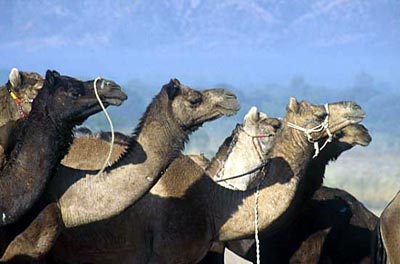
Leaving the wonderful little camel town of Pushkar, I simply stood in the middle of the highway at 11 PM waiting to see how I would reach the train station 15 km away. I was not surprised when the first car stopped. The enthusiastic dentist-gent was the Olympic Judge for Table Tennis and would be going to the Atlanta Olympics. We had much to talk about. I was soon sipping whiskey at his fine house. The driver got me to the train right on time (2 hours late) and directly to the sleeper car.

Everyone loves the trains. They move 10 million people every day and employ over 1.5 million workers. I sleep wonderfully on the train but I’m a neophyte compared with skinny Indians who can dead-sleep on concrete, any time, anywhere.

Naipaul wrote that Gandhi was a magnificent failure. That he glorified poverty. That he slowed progress. That he didn’t free India. And that Gandhi didn’t change India. I disagree.

Consider that India, without Pakistan and Bangladesh, is bigger than Europe (my statement here will be refuted later) and has more different cultures, languages, and climates. Consider that Punjabis, Sikhs, Gurkhas and the many other separatists are still part of India. Who is more to credit or blame than Gandhi?

Consider that soldiers of pop-cultural imperialismlike myself make little dent here. Coke was thrown out of India recently (though they are making a strong comeback now). The kids listen to nothing but Hindi. Bollywood rules. India has absorbed every invader so far except the British who escaped. Tourists wear Indian clothes, perform Puja, and decide on cremation instead of burial.

Naipaul wrote, India is poor and cruel. All Indians are implicated. Yet this place has millions of University graduates, a highly educated elite.

The Indian culture is strong, surviving even in wintry Saskatoon.”

After 50 years India remains the worlds largest democracy — a model for other developing countries.


1998

That was my last trip to India. I was a little brutal in my critique, don’t you think?

This time Darjeeling was my first stop. The guesthouse visitors book was full of comments like,This was our favourite place in India. Darjeeling is charming. But it is not India.

Darjeeling

Separatists here would call it Ghorkaland. To me it looked like Nepal; Himalayan lands wedged between Nepal and Bhutan. About 75% of the population speaks Nepali.

You’ve heard of the famous tea from 78 aging, failing plantations here. Darjeeling is a British construct, a Hill Station. High altitude, low latitude — perfect for tea and tourists.

The quaint legacy of the British; impressive, imposing, decaying public buildings; pastries and tea at Glennaries; botanical gardens; billiards at the Gymkhana (Tea Planters) Club.

I loved strolling the pedestrian mall on Observatory Hill. It is almost unchanged since the days of the Raj. The clock towers and fountains haven’t worked, though, since the Brits Quit. And of course they took the sign with them; Dogs and Indians not allowed on the Mall.

The Toy Train still works occasionally, hauling tourists up the hill. Gricers know that this steam line has 5 switchbacks and 4 full loops.

I came to see the magnificent views of Kachenjunga floating above the clouds.

I came too to visit the famous breeding centre for that most mythical of cat — the Snow Leopard.

snow leopard

Actually, the animal prison here is quite good specializing in local and endangered beasts. They’ve had success breeding Red Panda, Tibetan Wolf, and Siberian Tiger (huge!).

Automobiles here are cute, mostly Hindustani Ambassadors, the design unchanged from the British Morris Minor of the 50s. You feel like you’re on the set of some really old James Bond movie.

I rode a battered Land Cruiser farther North into Sikkim. They have inspirational slogans painted roadside.

Better late than The Late.

My favourite was Chop your own wood and it will warm you twice.

Next instalment the REAL India, the City of Joy.

Your pundit.

Rick

PS

I’m keen to read the new nasty book about Naipaul written by Paul Theroux, the most successful and controversial travel writer. I like Theroux for his amusing, paranoid worldview. Writers are like cannibals. People are their subjects.

Of course the untrustworthy Theroux doesn’t deserve to hold a candle to Naipaul.

travelogue – India

Racing through India in less than 4 weeks was frustrating, trying to do too much in a short time. …

India

My Lonely Planet tells me that India is a litmus test for travellers. I was excited arriving — but it wasn’t easy.

I bussed from Nepal via the unpleasant border town of Sunauli. Crossing can be a drama, but I was lucky this time.

002

Towns in the north of India are generally dusty and polluted.

003

Travellers come here to visit the Holy city of Varanasi (Benares).

I did too. And had a surreal experience, a good introduction to the sub-continent.

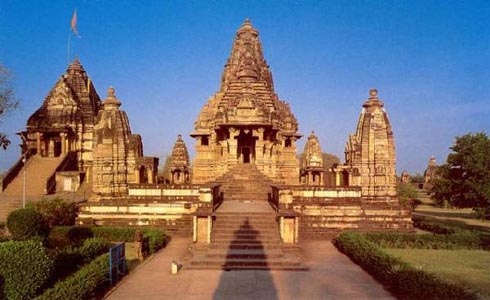
The famous temple city Khajuraho though, is lovely. A hot, dry, flat, peaceful little town.

10

It survived the Muslim invasions by being smack in the middle of nowhere.

I had a luxury room with tub at Yogi Lodge for $4 / night. Free yoga lessons from a master on the roof every morning. Breathing and stretching with a view of the temples.

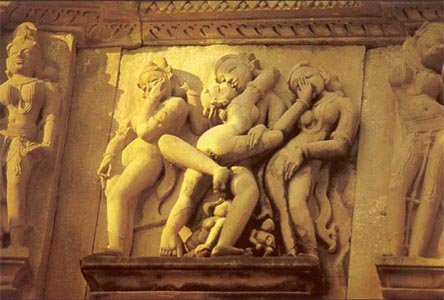
I was here like most other visitors to see erotic carvings. Actually they are carvings of daily life including loads of sex.

Unfortunately it is difficult to see the details of the Kama Sutra from below.

11

Entrance to the park cost me C$.02. Postcards were $.04 or less.

Prices have gone up in India. But it was cheap in 1996.

The craftsmanship (950 – 1050 AD) is amazing.

14

A desert climate preserved the works.

16

Already rushed, I decided to fly as much as I could to save time.

20India is not the country to see in a short visit.
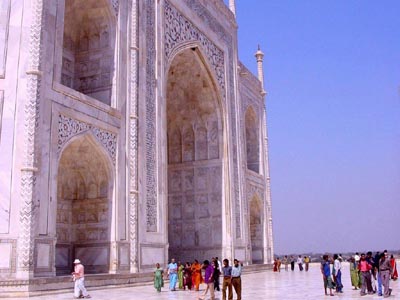
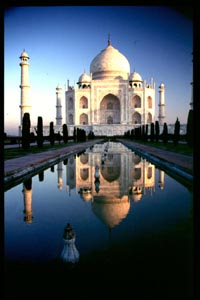
Highest priority was the Taj Mahal.

And it did not disappoint. 🙂

Even the most jaded traveller comes away impressed.

The detail is gorgeous; finely cut marble screens, astounding pietra dura, semi-precious stone inlaid in marble.

Experts from Iran, France, Venice and the rest of the world collaborated on construction.

The Taj looks great from any distance, in any light. I sat on the Taj Khema restaurant with a rooftop view, listening to a sitar player, and drinking (illegal) beer sold in teapots.

22

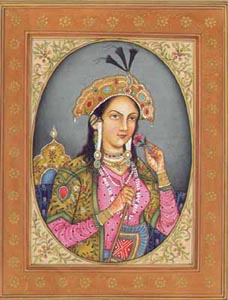
24Shah Jahan built the Taj as tribute to his wife of 17-years, Mumtaz. She bore him 14 children but died in childbirth.

The Shah is supposed to have considered building a black marble Taj for himself!


One of the great love stories of all time.

25

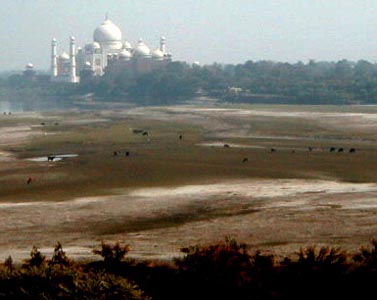
My favourite view of the Taj was from across the Yamuna river. The flood plain on that side was astonishingly undeveloped.

26

The Agra Red Fort, built by Akbar, greatest of the Islamic Moghul rulers, is much less visited than the Taj, but I was very impressed with it too.

26b

I played with monkeys for much of the time I was there.

27

The Taj seen from Agra Fort.

28

Shah Jahan was eventually deposed by his son, and spent the next 8 years, until his death, in the Red Fort prison. Jahan had the consolation of a view of the Taj Mahal from his window, which would comfort him until he joined his late wife.

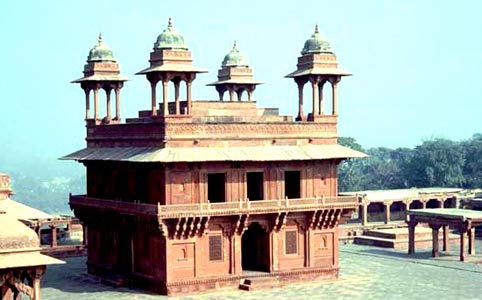
A short distance away is another astonishing site built by Shah Jahan, Fatehpur Sikri, a perfectly preserved abandoned city. Fantastic.

30

He housed his harem here, using slave girls as pieces on a giant parchisi board.

It’s a popular spot for weddings.

I bypassed Delhi to Rajasthan which I knew to be the place to be in India in 1996.

I arrived in Jaipur at 4 AM but was a bit disappointed with the famous Palace of Winds. It’s just a facade.

32

Much better was Jantar mantar (observatory) one of 5 such installations built by Jai Singh.

He was an inventor and an astronomy nut who built his own giant equipment for studying the sky. These devises were remarkably accurate.

34

I moved on to Udaipur to see the luxurious Lake Palace Hotel in the middle of Pichola Lake, formerly the residence of the rulers of Udaipur.

Impressive.

36udai

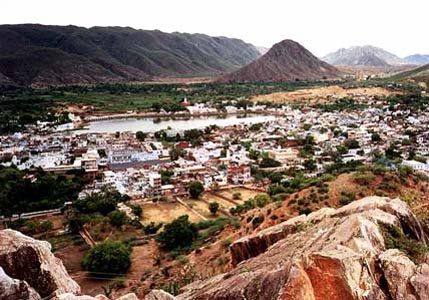
Best of all was Pushkar, a dreamy little pilgrimage town famed for it’s Camel Fair.

40

The colors and energy are wonderful. The air resonates with music from exotic rural instruments, melodious music, folk drama and dance. Villagers arrive in their most colourful garb. Sadhus meditate on the lakeside.

Pushkar has perhaps the only Brahma temple in the world today too.

42

The Rajputs are an indigenous warrier class with a strict code of chivalry and honour. They fought to the death. When all was lost the female children were burned in a pyre.

They reminded me of the proud Bedu of Arabia.

44
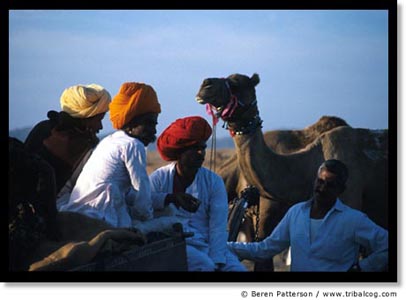
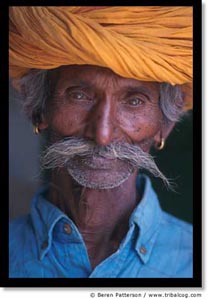
The Rajputs are the most visually impressive people I have ever seen. Men have pastel-coloured turbans and soup-strainer moustaches.

46

The women’s festival costumes are stunning.

48

I was embarrased to tell fellow travellers how long I had to travel India. (It was two and a half weeks, I believe)

I vowed to return to the Gates of India with more time. (Four months in 1999 as it eventually turned out.)

59

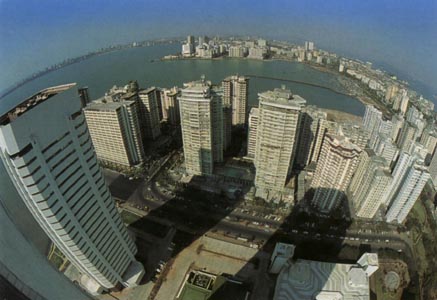
To the tourist, Bombay (Mumbai) is a modern, affluent, clean world city. I liked it staying at the Salvation Army close to the Taj Hotel.

The highlight of my stay was being offered an extra’s role in a Bollywood film. I was keen to go but, alas, I had a flight to catch.

60

Don’t go to India unless you have lots of time. It will just frustrate you.

And be sure to bring your Lonely Planet guidebook. It’s indispensable.

80jpg