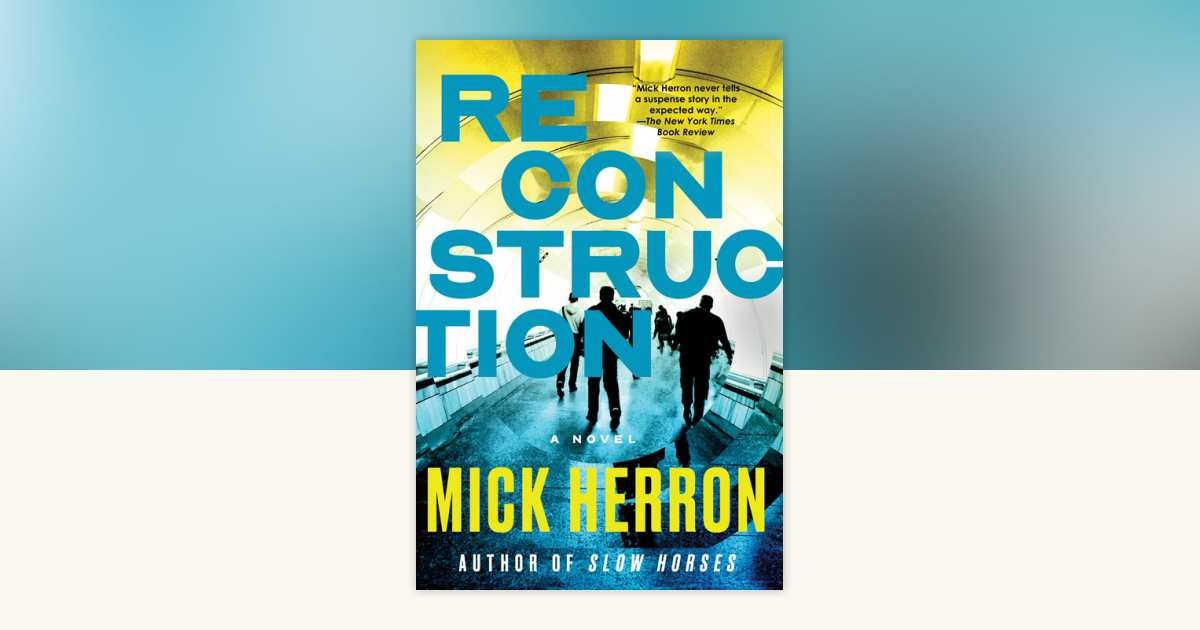
Carol Shields‘ 1995 novel is essential CanLit since it won the 1995 Pulitzer Prize.
Her “profound insights into human nature” make it essential. Or so they tell me.
… the fictional autobiography about the life of Daisy Goodwill Flett, a seemingly ordinary woman whose life is marked by death and loss from the beginning, when her mother dies during childbirth. Through marriage and motherhood, Daisy struggles to find contentment, never truly understanding her life’s true purpose. …
Ten years ago, the United States had the fastest and cheapest residential Internet service in the world. Today U.S. residential Internet service, especially broadband, is among the slowest and most expensive. Fortunately, this is likely to change as U.S. broadband Internet services become decidedly more competitive, both in terms of cost and available bandwidth. …
Japan went from being among the most expensive countries for residential Internet bandwidth a decade ago to absolutely the cheapest today. While some of this change can be attributed to technology improvements, most of the change can be attributed to competition, specifically the entry of Softbank BB into the Japanese broadband market. Softbank BB entered the Japanese market early this decade with loss-leader pricing that forced all the incumbent broadband suppliers to respond in kind, leading to a dramatic expansion of the Japanese broadband market where today residential 100-megabit-per-second service costs less than $20 per month. …
Korea, as it is often wont to do, followed Japan in terms of bandwidth pricing. More importantly the government of Korea made it a national priority to build out the residential Internet infrastructure at government expense. This was, ironically, in part inspired by the U.S. National Information Infrastructure plan, which was intended to accomplish the same end but failed miserably. Though they took full advantage of $150 billion in tax credits, the U.S. telcos simply did not build the network they had agreed to build, yet their model inspired more successful efforts in Korea, Singapore and other Asian markets.
Of the 30+ nations that can be judged to have residential Internet service superior to the U.S., in case after case that superiority can be attributed to government funding of infrastructure, to largely urban (short-distance) topologies, or to aggressive competition. …
Here’s the conventional wisdom for the United States:
… The heyday of the newspaper industry was the 1940s, but the percentage of Americans reading newspapers began to decline with the increased competition from radio and television. A growing population helped the absolute circulation numbers continue to increase until the 1970s, where it remained stable until the 1990s, when absolute circulation numbers began declining.
Readership aging. Readership in decline. Advertisers fleeing for Craig’s List. Electronic alternatives (e.g. Kindle) improving. …
Newspapers are not a horse on which one should bet the mortgage.
But Ron Shewchuk (long time print apologist) keeps prodding the dying horse, linking to articles like this:
There is plenty of evidence to support print media’s survival:
Most of the 10 largest newspapers are gaining, not losing, circulation. Nationwide, daily newspaper circulation is 50,827,454, down .1% from a year ago, according to the Newspaper Association of America. …
While readership is declining among 18-24-year-olds, it is declining slowly. The age group may place less value overall in print newspapers, but some will continue to read them. (There are even young people who prefer listening to vinyl instead of CDs.)
Local and national newspapers are also trusted more than web resources …
The readership decline is gradual and there are plenty of people who will continue reading newspapers, at least long enough for newspapers to make the adjustments necessary to find their new niche in the mostly-digital media landscape.
In one of the most unlikely scenarios anyone could have conceived, The Shark is back in contention at the British Open.
After a three year absence, two-time champion Greg Norman is making his return to The Open Championship this week at Royal Birkdale. It will be Norman’s 26th appearance in the event and first since finishing T60 at St. Andrews in 2005.
One of my best golf moments ever was watching Norman win the British Open in 1986. On Rocco’s Sony Watchman. While hiking in the Rockies.
BRILLIANT.
He and Tiger are my two favourite golfers. Ever.
Greg Norman will take a two-stroke lead into Championship Sunday after continuing his improbable run for a third Open title. The Shark showed the heart of a champion Saturday at Royal Birkdale, grinding out a stellar 2-over par 72 in winds gusting 40 miles per hour. The 53-year old World Golf Hall of Famer is the oldest player to lead a major after 54 holes and will be paired with defending champion Padraig Harrington in the final round.
With over 2 million tourists visiting Angkor Wat last year, it seems the era of Cambodia being “dangerous for tourists” is over.
But I was close to murderers myself in the capital Phnom Penh. (The average is 5 fatalities and 10 serious injuries in crime incidents each month in the city of 1 million.)
Mr Khim Sambor, a journalist for the Moneaksekar Khmer newspaper, and his son were tragically shot to death on the afternoon of 11 July 2008.
His paper is a Khmer language newspaper published in Cambodia with its headquarters in Phnom Penh. It is published by the Sam Rainsy party. The SRP is one of the main opponents to the ruling Cambodian People’s Party (CPP). In fact, Sam Rainsy himself is an outspoken government critic.
Since the election is coming up the end of July, many suspect it an assassination to stifle opposition to the CPP.
I was teaching gymnastics at the Olympic Stadium the same day. We finished at 5PM. The shots came from motorbike-riding assailants at around 6:30 PM in the street outside the Stadium. Father and son had been exercising.
photo - 2PM, July 11th, 2008
I’m not saying the CPP are responsible. But whoever is responsible is a supporter of the CPP, I would wager.
Sambor and his son are only the most recent of many opposition assassinations.
My condolences to the family.
more photos - Mourning ceremony for Khim Sambo and Son
Big argument at my folk’s house in Parksville, B.C.
The boys spotted a bird while fishing off Vancouver Island. And debate rages whether it was a Golden. Or a juvenile Bald Eagle. The two look very similar.
My hotel in the Cambodian capital is EXCELLENT. (Even the U.N. election watchdogs here right now deem it worthy.)
A frequent sponsor of the Cambodian Olympic Committee, they are probably only charging a cut rate $140$86 / night. Or something like that.
Across the street is the OKAY Guesthouse. The sweaty backpacker crowd are paying $1 / night for dorm bed with mosquito net and fan. $4 / night for a private room. $6 / night for private room with bath and T.V.
A can of Diet Coke is $4 at my hotel.
When I told my host that 10yrs-ago I stayed at the infamous Cloud 9 Guesthouse, he was mortified. “There’s no security there!”
No security. But much more FUN.
A truism so overwhelming as to be boring is the contrast between rich and poor in developing countries.
This guy and his family own a garbage cart.
The conspicuous rich (and how many could have actually earned these fortunes) MUST drive Toyota Land Cruisers or Lexus SUVs. It’s the #1 status symbol. And just to be sure you cannot miss seeing their status symbol, the companies now put the name in really big letters.
How embarrassing.
… HEY. Where’s my personal driver and Mercedes van? He’s LATE!
It’s tough to ponder life’s great questions at the 5 Star Hotel buffet breakfast table in Phnom Penh.
What with the distractions of personal pan seafood omelet, Dim Sum, fresh French bread, strong coffee, and all. My mind’s drawn to that huge tub of crispy bacon.