Those guys who made such a good living dealing in bad loans.
What are they doing now?
FUNNY.
(via Consumerist)

Those guys who made such a good living dealing in bad loans.
What are they doing now?
FUNNY.
(via Consumerist)
Does this sound like your job?
… At Kayabukiya Tavern, a restaurant just north of Tokyo, two Japanese macaque monkeys, one named Yat-chan and the other, Fuku-chan, fetch drinks and bring people warm towels to wipe their hands.
Dressed in waiter-like outfits, the duo are certified to work here. Customers love them and ply the monkeys with soya beans as tips. Because of animal rights regulations, the monkeys only work two hours a day, but according to this Mail-on line article, there are three more in training. Click on the video to see them in action. Some folks think the monkeys can understand drink orders.
Jon Stewart won, as usual.
But this year his protégé got one as well.
“I really look forward to the next administration, whoever it is,” Jon Stewart said as he accepted the best variety, music or comedy series award for “The Daily Show.” “I have nothing to follow that. I just really look forward to the next administration.”
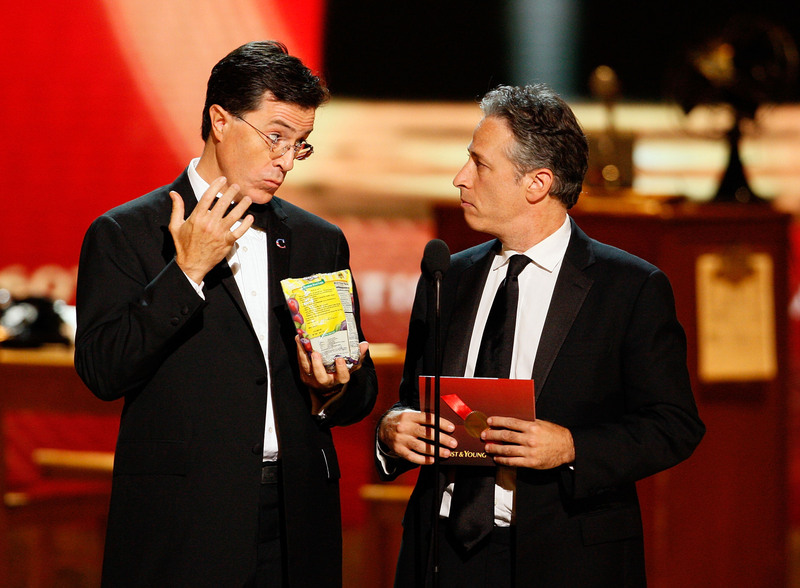
Later, Stewart and Stephen Colbert, whose “The Colbert Report” won a writing trophy, teamed to present an award — and exchange banter in which they used a package of prunes as a metaphor for the upcoming presidential election.
“America needs prunes. It may not be a young, sexy plum. Granted, it’s shriveled and at times hard to swallow. But this dried-up old prune has the experience we need,” Colbert said. …
Vodpod videos no longer available.
I laughed, but not nearly as much as for the first TV commercial.
Most everybody hates this one … except for Mark ‘Rizzn’ Hopkins.
Jon Stewart loves to expose blatant liars: Karl Rove , Bill O’Reilly and others.
The Olympics gets me all patriotic.
Click PLAY or watch our new anthem on YouTube.
I saw this linked from gymnast Kate Richardson’s Facebook page.
This is brilliant.
To hear the short audiocast from the Onion, click HERE.

 Rick McCharles