
Scientific American on Greenwashing:
Food-makers should have to prove the validity of their health claims …
In March the U.S. Food and Drug Administration issued warning letters to 17 food and beverage manufacturers concerning false or misleading health and nutrition claims on their products. It was an unusually expansive crackdown for the agency, whose regulatory power over food companies has declined over the past decades, thanks to Congress and the courts, which have tended to come down on the side of the food companies. …
In 2006 Europe began holding food makers to rigorous scientific standards. Since then, the European Food Safety Authority has rejected, on the basis of insufficient evidence, a whopping 80 percent of the more than 900 claims they have assessed thus far. …
Differences between the lenient U.S. system and the more restrictive European system are easily apparent. For instance, visitors to the Web site for Activia (www.activia.com)—a yogurt product from Dannon—will have a very different experience depending on which country they indicate they are from. The U.S. version prominently displays the product’s putative health benefits, asserting that it can “help regulate your digestive system by helping reduce long intestinal transit time.” …
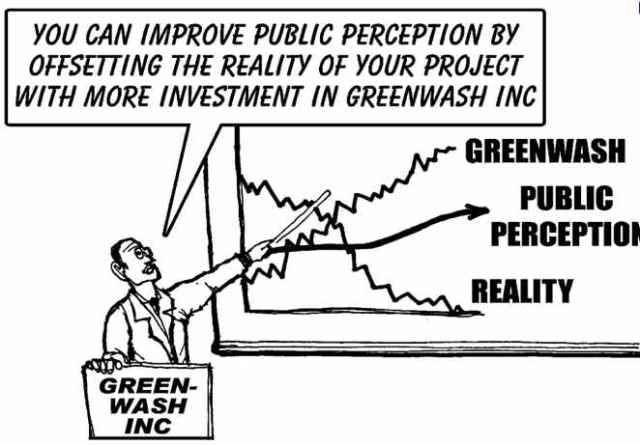
I assume over 80% of green packaging and health claims are tainted.
 Rick McCharles
According to the Alberta government, fish from the Athabasca river, particularly those with golf ball-sixed growths are very, very high in Omego-3 oils.
http://www.theglobeandmail.com/news/national/prairies/alberta-unveils-plan-to-study-oil-sands-impact-on-water-quality/article1723975/