Speaker for the Dead – a review

Meh.

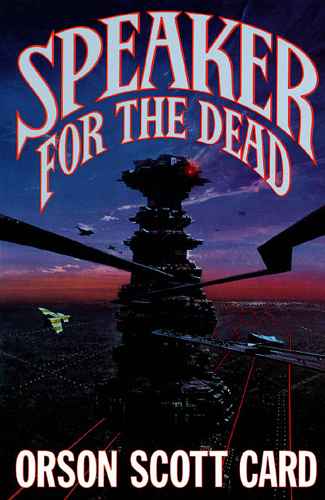
Speaker for the Dead (1986) is a science fiction novel by Orson Scott Card and an indirect sequel to the novel Ender’s Game. …

Like Ender’s Game, the book won the Nebula Award in 1986, and the Hugo Award in 1987, making Card the first author to win both these awards in two consecutive years. …

Some fascinating concepts, but overall I found it too slow and philosophical to hold my interest. I won’t continue with the series.

Ender’s Game is a masterpiece, though.

looking for Blade Runner in Japan

Many walk the Japanese Metropolis at night looking for neon urban dystopia — technology overwhelming civilization. … I do, at least.

Click PLAY or watch it on YouTube.

Twenty years ago I was quite culture shocked in this nation. But this time it seems clean, organized and friendly.

Welcoming.

Finally I got a taste of film noir. First night in Osaka, against advice at my hostel, I ran blindly along a riverbank.

Jets thundered overhead. Trains rumbled past every few minutes. It was dark. Pitch dark. Dogs raced by (well behaved, since they are Japanese). … A guitarist played “Hey Joe, Where You Gonna Go?“, alone. …

At the same time, on my iPod, I was listening to Blade Runner inspired Altered Carbon:

… hybrid of William Gibson’s Neuromancer and Norman Spinrad’s Deus X …

I was anticipating a Spinner spotlight.

… But it didn’t happen.

We’ll have to wait on the new Blade Runner movie, I guess, either a sequel or a prequel, with filming to begin no earlier than 2013. Without Harrison Ford.
____

Though it gets rave reviews, I agree with this guy. Altered Carbon’s nothing but “neckbeard wish-fulfillment”. Overrated.

Altered Carbon may well be a Hollywood film soon, too.

Dune Universe – flawed

I’ve spent hundreds of hours listening to all the books in the Dune franchise. Perhaps 16 novels (I lost count) … most read by Scott Brick.

It’s certainly the greatest plot I’ve ever known: the Butlerian Jihad (war against the machines), CHOAM, the spice melange, the Spacing Guild, the Navigators, Bene Gesserit, Missionaria Protectiva, the Imperial Sardaukar, the misnamed Holtzman effect for faster than light travel, Mentats, Kwisatz Haderach,

A great plot needs a great conclusion. I actually liked the ending in Sandworms of Dune though it was criticized as relying ..

… on at least four consecutive deus ex machina bailouts …

When Brian Herbert and Kevin J. Anderson took over, filling in details, their plot additions were equally good.

The best character in their books (as opposed to Brian’s father): Erasmus

Cymek and Erasmus - cover of Dune: The Machine Crusade (2003)

But Herbert and Anderson are too wordy. Too repetitive. They needed a more ruthless editor.

in praise of internet sharing

Despite fear mongering and pragmatic cautioning, people are sharing online like there’s no tomorrow.

I’m a big fan of journalism professor / internet pundit Jeff Jarvis, author of What Would Google Do?

His newest publication is Public Parts, the book. It touts the societal benefits of sharing:

… A visionary and optimistic thinker examines the tension between privacy and publicness that is transforming how we form communities, create identities, do business, and live our lives.

Thanks to the internet, we now live—more and more—in public. More than 750 million people (and half of all Americans) use Facebook, where we share a billion times a day. The collective voice of Twitter echoes instantly 100 million times daily, from Tahrir Square to the Mall of America, on subjects that range from democratic reform to unfolding natural disasters to celebrity gossip. New tools let us share our photos, videos, purchases, knowledge, friendships, locations, and lives. …

Click PLAY or watch an introduction on YouTube.

via my Gymnastics Coaching site

Bill Bryson – At Home

Bryson is one of my favourite authors. His latest book – At Home: A Short History of Private Life (2010) – just might be his best, yet.

From one review:

… At Home has a fairly simple structure. Bryson will wander around the Norfolk rectory where he lives and discover how each of the rooms came to have the purpose and contents that it does. He’ll also concentrate largely “on the events of the last 150 years” and be “painfully selective”.

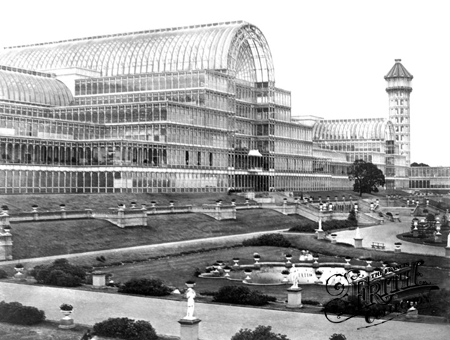
But as it turns out, this manifesto goes by the board even quicker than most. Two chapters later we’ve had spectacular set pieces on the construction of the Crystal Palace and the Great Exhibition. We’ve been told how assorted 18th and 19th-century clergymen invented the submarine, bred the first Jack Russell, wrote a history of dirty jokes and published the first scientific work on dinosaurs.

We’ve learnt that almost all of our food is Stone Age in origin and that the end of nomadism “happened all over the Earth, among people who could have no idea that others in distant places were doing precisely the same thing”. (“Dogs, for instance”, runs the typically striking paragraph-punchline, “were domesticated at much the same time in places as far apart as England, Siberia and North America.”)

… read more by James Walton on The Telegraph

Crystal Palace

Amazon – At Home: A short history of private life

Everyone will love this book.

Steve Wozniak autobiography

Steve Jobs and Warren Long are of the same era.

If Warren was not so involved in Gymnastics at Berkeley, he might have found himself at the Homebrew Computer Club, hanging out with Steve Wozniak and the other Bay Area geeks.

Stephen Gary “Woz” Wozniak (born August 11, 1950) is an American computer engineer and programmer who co-founded Apple Computer, Inc. (now Apple Inc.) with Steve Jobs and Ronald Wayne. His inventions and machines are credited with contributing significantly to the personal computer revolution of the 1970s. Wozniak created the Apple I and Apple II computers in the mid-1970s.

I read his charmingly simplistic (2006) autobiography, iWoz: From Computer Geek to Cult Icon: How I Invented the Personal Computer, Co-Founded Apple, and Had Fun Doing It, transcribed by writer Gina Smith.

It’s quite a different telling of the founding of Apple than any other I’ve heard. And you really get to love Woz after hearing the tale in his own words.

Wonderful are the stories of him and Jobs being pulled into a police car in their phone phreaking youth. Of their struggles to get together any money at all to pursue their passion for their dream of the personal computer.

Woz really did personally invent the ancient ancestor of current laptops. I believe him.

Wozniak discusses his main reasons for finally writing his autobiography was to dispel several myths that surround his history, and that of Apple Computer. Including:

He developed the Apple II almost independently, not with a lot of help from Jobs

He didn’t leave Apple; he is still, in fact, officially employed by Apple

He didn’t have a “falling out” with Jobs (except right after the development of CL 9) and is still friends with him

Wozniak ends his book with advice to others, particularly the youth, on how to develop their own inventions and encourages them to ignore the mainstream and follow their own passions and ideas.

Of the many thousands of Silicon Valley missed opportunities (including some for Warren) the success of Steve, Steve and Apple I attribute to:

– the excellent partnership of Steve and Steve
– Woz getting more things right in the earliest days than anyone else

When Woz was developing those first 2 Apple computers in his spare time, he worked for HP. They did not invite him to work on the HP prototypes. Idiots.

At the same time Steve Jobs worked for Atari, who did appreciate his skill set. Years later I was to buy my first computers, Atari. I had friends that bought Apple, but I couldn’t afford them at the time.

Warren bought the other competitor – the Commodore Amiga. Actually, Warren was mainly an Atari guy too. I misremembered.

Leave a comment if you’ve any personal nostaligia to add.

The Millennium Trilogy – a review

The Millennium series … bestselling novels originally written in Swedish by the late Stieg Larsson. Originally, ten books in total were planned, but only three were completed. The novels in the series, The Girl with the Dragon Tattoo, The Girl Who Played with Fire and The Girl Who Kicked the Hornets’ Nest, were first published in 2005, 2006 and 2007 respectively. …

The primary characters in the series are Lisbeth Salander and Mikael Blomkvist. Lisbeth is an intelligent, eccentric woman in her twenties with a photographic memory and poor social skills. Blomkvist is an investigative journalist with a history similar to Larsson’s.

An unlikely success.

Clearly Larsson was no skilled author. He breaks most of the rules on what makes a successful novel. Yet the series kept me engaged throughout. If a 4th novel is ever released, I’ll buy it too.

I liked that the books are unapologetically Swedish. But never have I read any books with so much unnecessary (infuriating) detail. If I had a krona for every coffee in those 3 books, … I’d have a lot of kronor.

A skilled murder mystery writer – Ian Rankin, for example – could make one excellent novel out of the 3 simply by eliminating every factoid and character unimportant to the actual story.

Why did any publisher accept those manuscripts?

Salander is a truly weird and fascinating character. Very original.

Also well done were the endings of each. I could not guess in advance on what would happen.

The exotic setting appealed to me, too.

I guess I recommend these books, if there is anyone out there who has not yet read them. No doubt you’ve already heard warnings about the scenes of violent sex.

Click PLAY or watch a trailer on YouTube.

Scandinavian TV and movie adaptations have already been released.

In the American movies, Daniel Craig will play Mikael Blomkvist, Rooney Mara Lisbeth Salander. The 3 films are slated for release in 2011, 2012 and 2013.

girl with the dragon tattoo

I’m in a cold, stark land.

The women are pretty, serious and tall. The men dour smokers. And tall.

It’s time I finally got around to trying the Stieg Larsson novel.

…One Reykjavík woman sums up the Icelandic psyche.

Detective Inspector John Rebus

When visiting Scotland I got into Rebus. Happily, Warren is a bit of a fan, too, collecting those that have been televised or turned into movies.

Detective Inspector John Rebus is the protagonist in the Inspector Rebus series of detective novels by the Scottish writer Ian Rankin, ten of which have so far been televised as Rebus. The novels are mostly set in and around Edinburgh. …

Rebus can be said to belong to a long tradition of paternal Scottish hard men. A natural leader whose gruff exterior and fierce will to succeed in his field belies a benevolent nature. …

In the Rebus television adaptations he was played by John Hannah in the first two series, but in the later series the role was taken over by Ken Stott to much acclaim. …

Hannah is a terrific actor, but I’d say Stott is much truer to the Rebus of the novels.

Stott as Rebus

Leave a comment if you’ve an opinion on the two actors.

libraries are dinosaurs

I love libraries. And spend a lot of time in them, everywhere I travel.

But as government monopolies, most are slow to innovate. In all you can spot outdated technologies and nonsensical policies.

The painfully slow introduction of digital media is the most conspicuous example. Librarians like to pretend they offer digital video and books … but to actually access those files can be a nightmare.

Libraries will be somewhat defunct, you see, once digital media is ubiquitous.

I’m pleasantly surprised to report that Signal Hill Library in Calgary, recently re-opened after renovations, has been vastly improved. It’s bright, welcoming and the electronic media access has been upgraded considerably.