A new character, an archeologist TV star, kept me interested in this one. I did enjoy the parts that involved the trove of Xian with its famous army of terracotta warriors.
Born in France, she’s spent a lot of time in England, Germany, Ireland and Canada.
A professional translator, she’s studied the language and culture everywhere she’s been. Also FOOD.
Now she’s written and recorded part 1 of her story. I recommend the audio version as Michèle reads it herself.
Crossing Borders and Cultural Divides is set in Europe in the 1950s, 1960s, and 1970s, a time when it became easier to cross European borders and settle in another country.
It is based on my life growing up in a French village, then working in England, and finally discovering Germany. Numerous details and characters allow the listener to understand the difficulties of learning a language and appreciate another culture enough to be able “to feel at home” in another country.
Tradition, wine, and oysters?
Rock ’n’ roll, tea, and fish and chips?
Or politics, beer, and sausages?
… Can she follow her heart for the English language and embrace an outlandish culture in Britain?
Or can she simply follow her adventurous streak and check out the intense culture, which is prevalent in Germany?
Can she take roots in a foreign environment?
Will she ever be able to bridge the cultural divides?
The book jumps forward and backward in time, starting with her first flight as a 15-year-old. To Beatlemania England. Her British pen friend there was already on the Pill, recently introduced.
A few years younger than Michèle, I was touring Europe with friends in an orange Volkswagen van in 1976 while she was motoring around the continent with a boyfriend.
The book ends abruptly in 1976. I want more. Happily, Michèle is already working on a second volume.
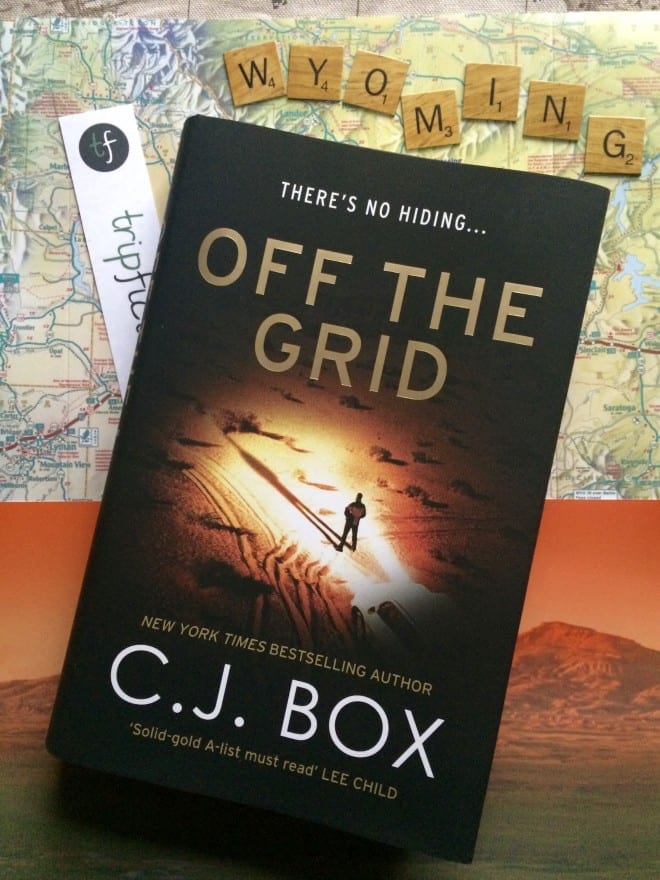
Joe Pickett always liked Butch Roberson—a hardworking local business-owner whose daughter is friends with his own. Little does he know that when Butch says he is heading into the mountains to scout elk, he is actually going on the run.
Two EPA employees have been murdered, and all signs point to Butch as the killer.
Soon, Joe hears of the land Butch and his wife had bought to retire on—until they are told the EPA declared it a wetland—and the penalties they charged Butch until the family was torn apart by debt.
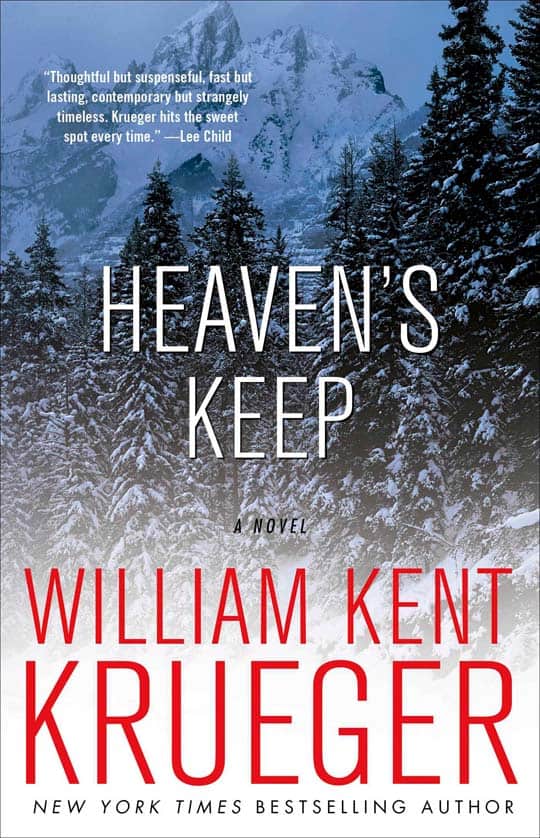
Back in the saddle as sheriff of Tamarack County, Cork O’Connor is lured to the nearby Ojibwe reservation on what appears to be a routine call — only to become the target of sniper fire.
Soon after, he’s called to investigate a mutilated body found perched above the raging waters of Mercy Falls. The victim is Eddie Jacoby, a Chicago businessman negotiating an unpopular contract between his management firm and the local Indian casino. …
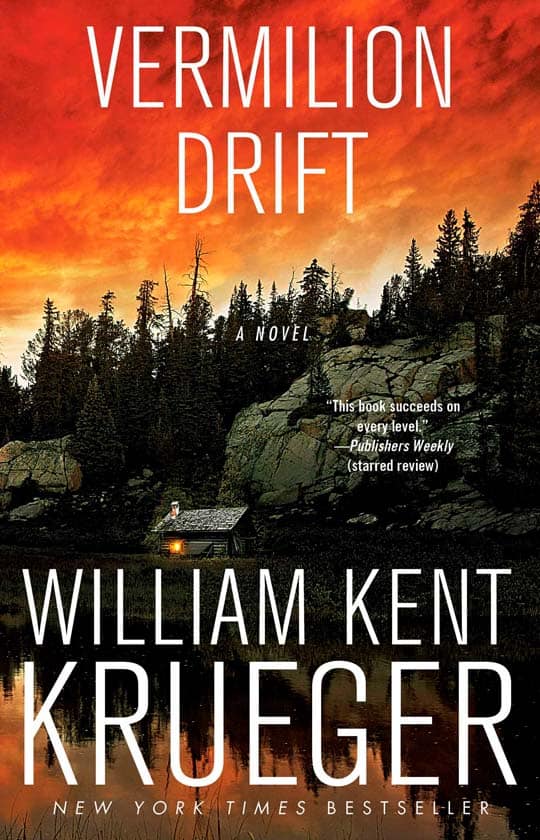
Book #11 in the series about Wyoming Game Warden Joe Pickett.
Each book is based around one big issue in Wyoming. This time it’s wind turbines.
When Earl Alden is found dead, dangling from a wind turbine, it’s his wife, Missy, who is arrested.
Unfortunately for Joe Pickett, Missy is his mother-in-law, a woman he dislikes heartily, and now he doesn’t know what to do—especially when the early signs point to her being guilty as sin.
But then things happen to make Joe wonder: Is Earl’s death what it appears to be? Is Missy being set up? He has the county DA and sheriff on one side, his wife on the other, his estranged friend Nate on a lethal mission of his own, and some powerful interests breathing down his neck. …
Though the writing is average … AND the book could have been shorter … the PLOT is excellent. It kept me going. I didn’t see the twist coming until close to the end.
… “The Plot” is her gutsiest, most consequential book yet. It keeps you guessing and wondering, and also keeps you thinking: about ambition, fame and the nature of intellectual property (the analog kind). Are there a finite number of stories? Is there a statute of limitations on ownership of unused ideas? These weighty questions mingle with a love story, a mystery and a striver’s journey — three of the most satisfying flavors of fiction out there.”
— The New York Times
Jacob Finch Bonner was once a promising young novelist with a respectably published first book.
Today, he’s teaching in a third-rate MFA program and struggling to maintain what’s left of his self-respect; he hasn’t written―let alone published―anything decent in years.
When Evan Parker, his most arrogant student, announces he doesn’t need Jake’s help because the plot of his book in progress is a sure thing, Jake is prepared to dismiss the boast as typical amateur narcissism. But then…he hears the plot.
… When he discovers that his former student has died, presumably without ever completing his book, Jake does what any self-respecting writer would do with a story like that―a story that absolutely needs to be told. …
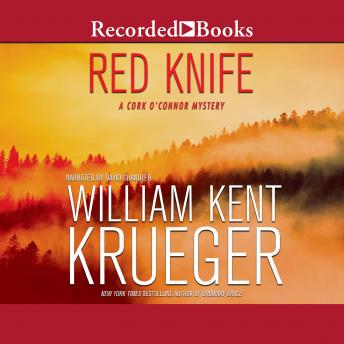
Another excellent murder mystery in the Cork O’Connor series.
The author was inspired by the true story of Dennis Hale, sole survivor of the wreck of a ship called the Daniel J. Morrell on Lake Superior in 1966.
In the novel, a similar ship wreck survivor plots revenge on who he thinks was responsible the disaster — wealthy industrialist Karl Lindstrom.
At the same time in Aurora, Minnesota (population 3,752), there is brewing controversy between Lindstrom’s logging company and the Anishinaabe tribe who consider the old growth trees sacred.