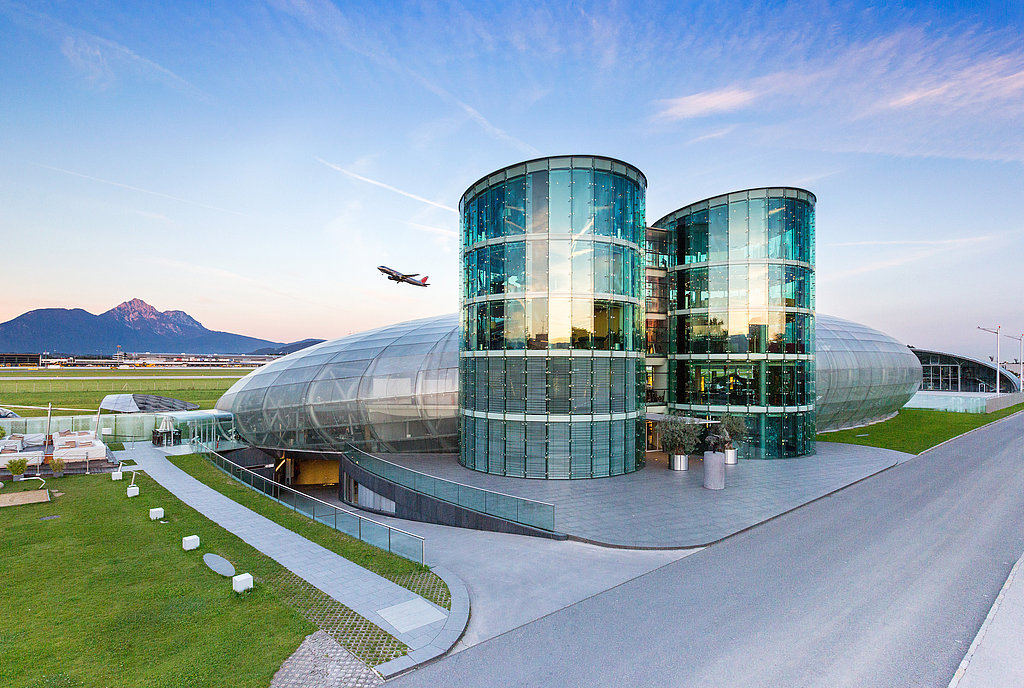
In 2018, Lonely Planet named Oslo one of the ten best cities in the world to visit, citing the Norwegian capital’s “innovative architecture and unmissable museums alongside cool bars, bistros and cafés“.
I learned about Gerd Vold Hurum, the secret 7th member of the Kon-Tiki expedition. She was key in organizing the expedition on shore. But never got famous. After all, Gerd was only a woman. 😕
Norwegians were the most successful of the Arctic and Antarctic explorers, I’d say, because they were smart enough to learn from native peoples. And understood the importance of dogs in crossing snow and ice.
Roald Amundsen’s team was the first to reach the South Pole on December 14th, 1911; five weeks later the polar party led by Robert Falcon Scott was second.
Amundson was a dedicated explorer. Life long. Arrogant and competitive.
Despite his hard man exterior, those who knew him well found a humorous, self-deprecating storyteller.
The word quisling has come to mean a citizen or politician of an occupied country who collaborates with an enemy occupying force – or more generally as a synonym for traitor.
I was surprised to learn his wife Maria lived in Oslo until her death in 1980. Never charged with any crime, despite the fact that she spent a lot of money supporting their opulent life style.
His team was woefully inexperienced and under-prepared. Heyerdahl himself couldn’t swim and was afraid of water.
He was hardly a candidate to join the ranks of the great Norwegian sailors. 😀
Yet he did.
The trip began on April 28, 1947. Heyerdahl and five companions sailed the raft for 101 days over 6,900 km (4,300 miles) across the Pacific Ocean before smashing into a reef at Raroia in the Tuamotus on August 7, 1947. The crew made successful landfall and all returned safely.
Without question, Thor was stubborn and brave. An adventure badass.
Nola is a mystery Nola is trouble. And Nola is supposed to be dead.
Her body was found on a plane that mysteriously fell from the sky as it left a secret military base in the Alaskan wilderness. Her commanding officer verifies she’s dead. The US government confirms it. But Jim “Zig” Zigarowski has just found out the truth: Nola is still alive. And on the run.
Zig works at Dover Air Force Base, helping put to rest the bodies of those who die on top-secret missions. Nola was a childhood friend of Zig’s daughter and someone who once saved his daughter’s life. So when Zig realizes Nola is still alive, he’s determined to find her. Yet as Zig digs into Nola’s past, he learns that trouble follows Nola everywhere she goes.
Nola is the US Army’s artist-in-residence-a painter and trained soldier who rushes into battle, making art from war’s aftermath and sharing observations about today’s wars that would otherwise go overlooked. On her last mission, Nola saw something nobody was supposed to see, earning her an enemy unlike any other, one who will do whatever it takes to keep Nola quiet.
Together, Nola and Zig will either reveal a sleight of hand being played at the highest levels of power or die trying to uncover the US Army’s most mysterious secret-a centuries-old conspiracy that traces back through history to the greatest escape artist of all: Harry Houdini.
And Svein Finne is back, perhaps Harry’s biggest nemesis.
Harry Hole started drinking again and was kicked out of his home by his wife Rakel.
… Everything changes when one morning he wakes up covered in blood without remembering what happened the previous evening and, a short time later, he discovers that a murder had taken place that night. …
This book is long and complex.
Important to the plot are favorite characters including Kaja Solness, Katrine Bratt, and Bjørn Holm.
And new likeable characters including Sung-Min Larsen, an ambitious one-time student of Harry’s who works for rival law enforcement agency Kripos, and who looks as if he has his eye on Harry’s job.
… Roar Bohr (great name), sharp-shooting ex-special forces in Afghanistan, with a rifle, post-traumatic stress disorder and a score to settle with the man who raped his little sister. …
Publishers Weekly criticized the novel for having an “enormous number of characters, backstories, subplots, and themes” but nonetheless praised its “well-orchestrated” ending.
All together over 22 days, I covered the west coast from the Lyngen Alps to the Storseisundet Bridge over 2 summers. Of course not all of that was on bicycle. Some was train and much was on ferries. Perhaps 20 ferries, most of them free for cyclists.
Day 11 — July 11th, 2023
I caught the long, free ferry from Lofoten to Bodø, a town I really like. The jumping off point for Lofoten.
I’d spent quite a few days there over my 3 visits to Lofoten.
Like Canada, Norway is a land of lakes. Hydroelectricity.
Waterfalls are everywhere.
There are even more electric cars. About 80% purchased recently are at least hybrid. But that might drop as subsidies are withdrawn.
Expensive, I avoid restaurants in Norway, instead cooking for myself on a camp stove.
A rare exception was getting this burger with onion rings while waiting for a ferry. I wanted to charge my electronics, not always easy while cycling.
Ferries are excellent in Norway. In a land of fjords and bad weather, they have to be.
You can sleep. Eat. Charge batteries. All while enjoying amazing vistas.
Most often it’s overcast in Norway. But that’s quite comfortable weather for cycling. Not too hot. Not too cold.
Day 13 — July 13th, 2023
This was the only day I could go shirtless.
Here we are crossing the Arctic Circle.
Still north of most of Iceland, Alaska, and Yukon.
We stopped at the Grønsvik coastal fortress, Lurøy. Much like others I had seen around the world — but this one was built by Hitler’s troops.
The Nazis occupied Norway from 9 April 1940 until the end of the war in Europe, 8 May 1945.
You can understand why Norweigans don’t want Putin occupying Ukraine.
Unfortunately, the museum was closed.
I considered camping here — but ultimately moved on.
Day 14 — July 14th, 2023
The day began in lovely weather.
In a few sections, many sheep opted to rest on the pavement. As trucks zoomed by, they were mostly not bothered.
It later turned out to be my rainiest day in 2023.
Actually, over many summer weeks in Norway, I’ve had very little hard rain. Wind is a bigger problem for the cyclist.
The north is relatively dry compared with Bergen, wettest city in Europe. So I’m expecting more rain as I ride south.
I booked a room in Sandnessjoen for about US$85. My favourite site is booking.com (Priceline) as it’s working far better than any other I’ve tried. Even for hostels.
In 22 days I paid for accommodation only 3 nights. And of 19 nights in the tent, almost all were excellent. Free and easy tenting in Norway is what lifts it to the top of my best bikepacking destinations anywhere list. 😀
I got the room mainly to finalize a change in plans. Rather than continue cycling through Norway and on to the Faroe Islands and Iceland, I’d — instead — fly to Munich and house sit for a friend who’d be on holiday in Canada visiting family.
In fact, Germany is my #2 bikepacking destination after Norway.
I had to book a train to Oslo with bike. Accommodation Oslo. Flight Oslo to Munich. Etc.
My favourite street art of this trip I found in Sandnessjoen
When I saw hard rain coming, I decided to set up up the tent and have a siesta. Wait it out.
Unfortunately, this wood pile yard was infested with no-see-ems. I couldn’t leave the tent.
Overall, there are very few biting insects on the west coast of Norway.
Happily, a cyclist going the other direction tipped me off to an excellent shelter campsite a short distance from the route. Perfect. And no bugs.
Day 17 — July 17th, 2023
Packing up the tent and bike in the morning typically takes about an hour. Including several cups of coffee. 😀 ☕️
Bike and gear excellent. My load a bit heavier than average for Norway.
Uneventful.
A long cycling day.
Not many photos.
I was beginning to lose motivation.
Day 18 — July 18th, 2023
My least happy day.
Few photos. Again.
The roads are narrow. And local traffic was getting busy as I approached Steinkjer. Trucks, trucks, and more trucks. Many northern roads are not busy — but when they are, you realize you have no shoulder.
Steinkjer was the first rail station since Bodø. I decided to catch the train to Trondheim.
Waiting was a friendly German cyclist who was on a 5 month bikepacking trip, finishing close to the Russian border where he’d start a hotel job in September.
He was backtracking to Trondheim due to a mechanical problem with the bike. Bicycles are still notoriously unreliable. They break down a lot.
Happily, I’ve had no problems with my bike in Europe.
The name Hell stems from the Old Norse word hellir, which means “overhang” or “cliff cave”. It has a more common homonym in modern Norwegian that means “luck”.
We arrived Trondheim in the early evening.
Camped in a city park across from the golf course. Totally legal and normal in Norway. 🙏
Day 19 — July 19th, 2023
I caught the private fast ferryTrondheim to Kristiansund, planning to finish my cycling at the famed Atlantic Ocean Road.
Kristiansund is quite charming. A small city with still a fishing village vibe.
This impressive church appealed, so I found my way around the harbour to check it out.
I finally rode up to the start of the 5.7km NO CYCLING undersea tunnel, hoping to find some way to cross to the Atlantic Ocean Road.
No luck. I saw no taxi. No bus. No sign. Nothing.
Defeated, I set up my tent in a nearby city park. After scaring away a deer. 😀
Day 20 — July 20th, 2023
First thing in the morning I cycled BACK to the tunnel and found 2 Norwegian cyclists waiting on a bicycle taxi. Happily, they invited me along.
The 3rd book (2021) in the P.T. Marsh series is easily the best yet.
… a troubled small-town police detective faced with three interwoven crimes that reveal sinister secrets about his community–and the deaths of his family …
In the years since the mysterious deaths of his wife and child, P.T. Marsh, a police detective in the small Georgia town of Mason Falls, has faced demons–both professional and personal.
But when he is called to the scene of a school shooting, the professional and personal become intertwined, and he suspects that whoever is behind the crime may be connected to his own family tragedy.
As Marsh and his partner Remy investigate the shooting, they discover that it is far from straightforward, and their search for answers leads them to a conspiracy at the highest levels of local government–including within the police force. …
Rachel Jenner is walking in a Bristol park with her eight-year-old son, Ben, when he asks if he can run ahead. It’s an ordinary request on an ordinary Sunday afternoon, and Rachel has no reason to worry—until Ben vanishes.
Police are called, search parties go out, and Rachel, already insecure after her recent divorce, feels herself coming undone.
As hours and then days pass without a sign of Ben, everyone who knew him is called into question, from Rachel’s newly married ex-husband to her mother-of-the-year sister.
Inevitably, media attention focuses on Rachel too, and the public’s attitude toward her begins to shift from sympathy to suspicion. …
One of the hottest best sellers right now, The Covenant of Water is an ambitious, well researched novel.
Abraham Verghese is a Professor of the Theory and Practice of Medicine and Vice Chair of Education at Stanford. The medical detail in this book is accurate. Part is set in a leper colony.
Spanning the years 1900 to 1977, The Covenant of Water is set in Kerala, on South India’s Malabar Coast, and follows three generations of a family that suffers a peculiar affliction: in every generation, at least one person dies by drowning—and in Kerala, water is everywhere.
At the turn of the century, a twelve-year-old girl from Kerala’s long-existing Christian community, grieving the death of her father, is sent by boat to her wedding, where she will meet her forty-year-old husband for the first time.
From this unforgettable new beginning, the young girl—and future matriarch, known as Big Ammachi—will witness unthinkable changes over the span of her extraordinary life, full of joy and triumph as well as hardship and loss, her faith and love the only constants.
A shimmering evocation of a bygone India and of the passage of time itself, The Covenant of Water is a hymn to progress in medicine and to human understanding, and a humbling testament to the difficulties undergone by past generations for the sake of those alive today. …