Happily, the audio book is read by one of my favourites — Dick Hill — of the excellent Jack Reacher and Harry Bosch series. Hill has 542 audio books, last time I checked.
Inspector Kurt Wallander is called out to a seemingly senseless and brutal murder on a Swedish farm.
Wallander is forty-two-years-old. His wife left him unexpectedly 3 months earlier. He’s constantly worried about his estranged daughter. And unsure whether his own elderly father can continue living alone out on another farm.
Also, he’s gaining weight.
Uncoordinated. Accident prone.
Near broke.
Troubled, to say the least.
Author Henning Mankell was a left-wing social critic and activist.
(clustered regularly interspaced short palindromic repeats)
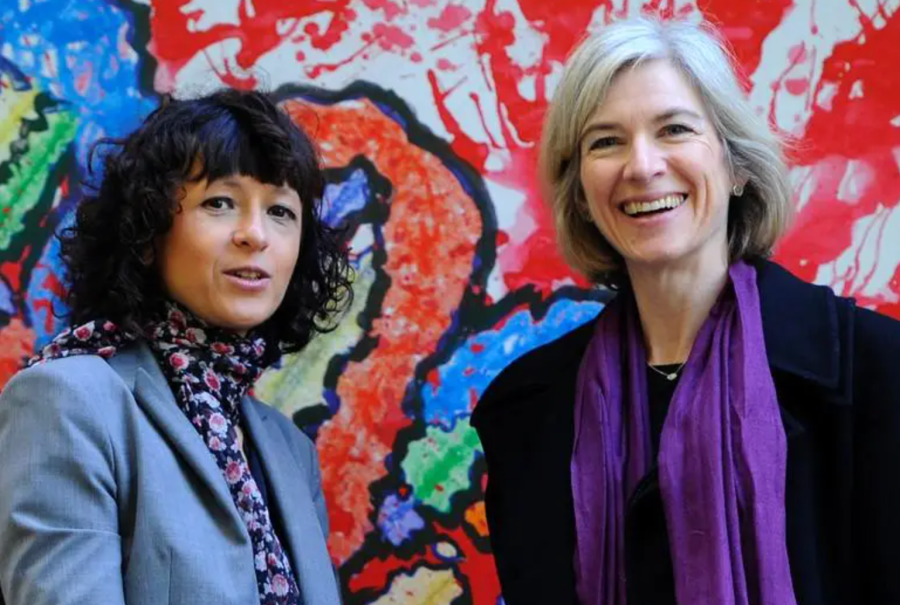
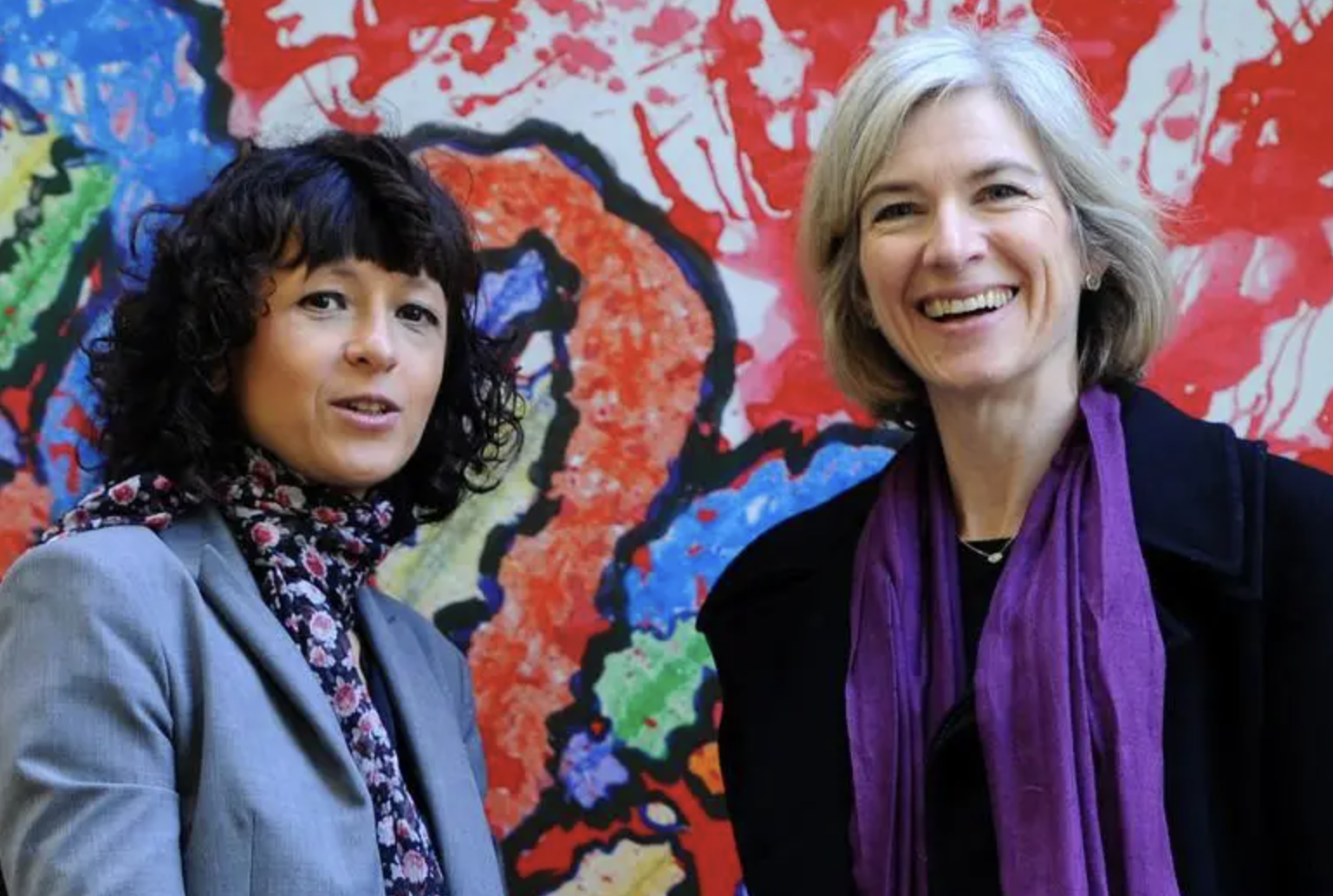
Emmanuelle Charpentier and Jennifer Doudna won the 2020 Nobel Prize in Chemistry for their contributions in the development of a method for genome editing.
It’s called the CRISPR/Cas9 genetic scissors.
Based on how bacteria fights off virus attackers, in future CRISPR will be used to fight coronavirus variations.
Most people my age know about Watson and Crick’s discovery of the double-helix structure of DNA. But I certainly couldn’t explain anything about CRISPR before reading this book.
Once again, Walter Isaacson made a complex story entertaining with this 2021 biography:
The bestselling author of Leonardo da Vinci and Steve Jobs returns with a gripping account of how Nobel Prize winner Jennifer Doudna and her colleagues launched a revolution that will allow us to cure diseases, fend off viruses, and have healthier babies.
When Jennifer Doudna was in sixth grade, she came home one day to find that her dad had left a paperback titled The Double Helix on her bed. She put it aside, thinking it was one of those detective tales she loved. When she read it on a rainy Saturday, she discovered she was right, in a way. As she sped through the pages, she became enthralled by the intense drama behind the competition to discover the code of life. Even though her high school counselor told her girls didn’t become scientists, she decided she would.
The development of CRISPR and the race to create vaccines for coronavirus will hasten our transition to the next great innovation revolution. The past half-century has been a digital age, based on the microchip, computer, and internet. Now we are entering a life-science revolution. Children who study digital coding will be joined by those who study genetic code. …
After helping to discover CRISPR, Doudna became a leader in wrestling with these moral issues and, with her collaborator Emmanuelle Charpentier, won the Nobel Prize in 2020. Her story is a thrilling detective tale that involves the most profound wonders of nature, from the origins of life to the future of our species.
Most worthy — perhaps — is Feng Zhang. But he and his boss Eric Lander come off as BAD GUYS in this book, unethical in their collaborations.
ONE bit of good news. When COVID-19 was announced early 2020, both Zhang’s and Doudna’s companies changed research priorities towards developing CRISPR-based coronavirus tests. Both were successful and both hope to make simple at-home tests ready for market in 2021: Sherlock and Mammoth.
The most entertaining of the CRISPR giants is geneticist George Church. When the movie is made, he’ll be the fan favourite.
Emmanuelle Charpentier is an intriguing personality, as well. I’d read her biography.
This is a book about the women of Australia in the early 1840s.
I liked best the story line of Mathinna, the orphaned daughter of the Chief of the Lowreenne tribe, who was adopted by the new governor of Van Diemen’s Land (Tasmania).
Seduced by her employer’s son, Evangeline, a naïve young governess in early nineteenth-century London, is discharged when her pregnancy is discovered and sent to the notorious Newgate Prison.
After months in the fetid, overcrowded jail, she learns she is sentenced to “the land beyond the seas,” Van Diemen’s Land, a penal colony established by Great Britain. Though uncertain of what awaits, Evangeline knows one thing: the child she carries will be born on the months-long voyage to this distant land.
During the journey on a repurposed slave ship, the Medea, Evangeline strikes up a friendship with Hazel, a girl little older than her former pupils who was sentenced to seven years transport for stealing a silver spoon.
Canny where Evangeline is guileless, Hazel — a skilled midwife and herbalist – is soon offering home remedies to both prisoners and sailors in return for a variety of favors. …
Duffy is now a father. Less self-destructive than ever.
He’s cutting down on booze and cigarettes.
Belfast, 1988.
A man is found dead, killed with a bolt from a crossbow in front of his house.
This is no hunting accident. But uncovering who is responsible for the murder will take Detective Sean Duffy down his most dangerous road yet, a road that leads to a lonely clearing on a high bog where three masked gunmen will force Duffy to dig his own grave. …
The series is about an artificial construct designed as a Security Unit, which manages to override its governor unit, thus enabling it to develop independence.
It calls itself Murderbot, and likes to watch unrealistic soap operas. …
And finds herself offered a chance to reinvent her life by going back and making different major life decisions.
Some include Nora becoming a glaciologist, Olympic swimmer, and rock star.
Haig put together this construct to talk philosophically about regret, hope and second chances. The author is a a champion of mental health causes. Instead of preaching medical science, he puts the same messages across in an entertaining narrative.
I found the book very uplifting.
Between life and death there is a library, and within that library, the shelves go on forever.
Every book provides a chance to try another life you could have lived. To see how things would be if you had made other choices
. . . Would you have done anything different, if you had the chance to undo your regrets?”
Duffy is less self-destructive. AND gets a cat. AND might become a father.
Reader Gerard Doyle does an excellent job in the audio book.
Duffy is a Catholic cop in 1980s Northern Ireland during the Troubles.
When journalist Lily Bigelow is found dead in the courtyard of Carrickfergus castle, it looks like a suicide. But there are just a few things that bother Duffy enough to keep the case file open.
Which is how he finds out that she was working on a devastating investigation of corruption and abuse at the highest levels of power in the UK and beyond.
And so Duffy has two impossible problems on his desk: who killed Lily Bigelow? And what were they trying to hide?