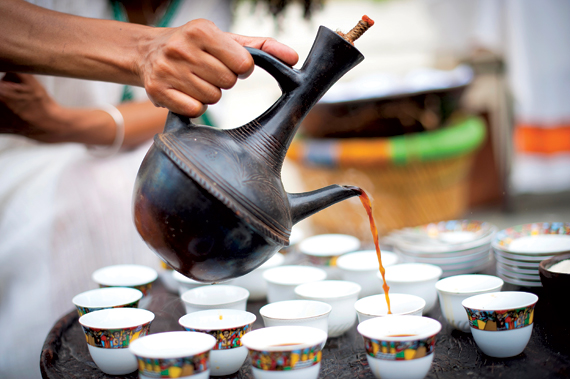
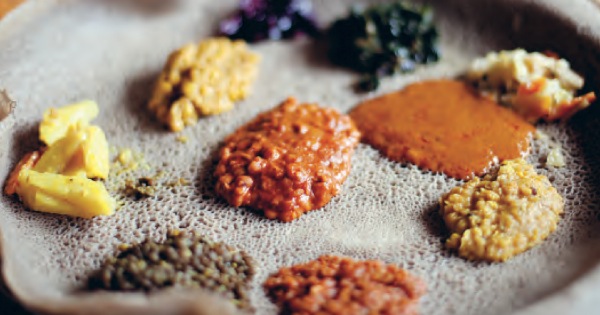
Ethiopian cuisine characteristically consists of vegetable and often very spicy meat dishes, usually in the form of wat, a thick stew, served atop injera, a large sourdough flatbread, which is about 50 centimeters (20 inches) in diameter and made out of fermented teff flour.
Ethiopians eat exclusively with their right hands, using pieces of injera to pick up bites of entrées and side dishes. Utensils are rarely used …
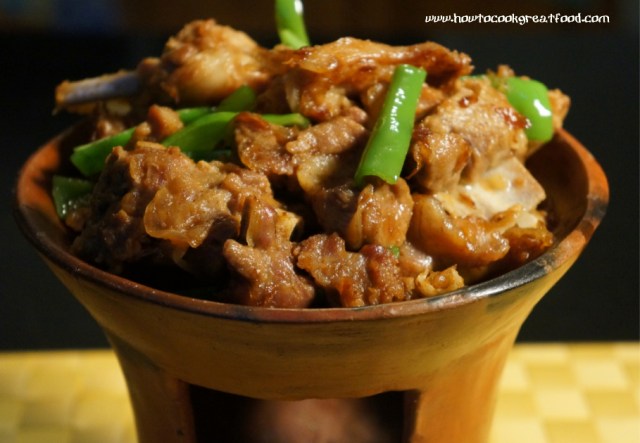
Meat along with vegetables are sautéed to make tibs. Tibs is served in a variety of manners and can range from hot to mild or contain little to no vegetables. There are many variations of tibs, depending on type and size or shape of the cuts of meat used. …
I enjoyed Ethiopian food, being completely ignorant of the unique cuisine before traveling there.
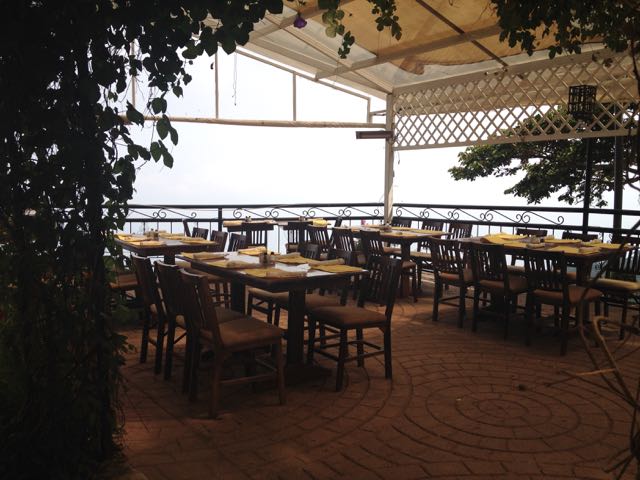
Whimsical looking (Gaudi meets Mad Max) restaurant that was planned by a Scots woman, Susan, and her Ethiopian business partner, Habtamu, and opened in October 2011. It has a gob-smacking location on a little hillock standing on a rock promontory to give in-cre-di-ble 360 degree views and is surrounded by rock gardens and flowers (Ben means hill in Scots Gaelic and Abeba means flowers in Amharic).
The menu is one of the most imaginative in Ethiopia (you should try the tuna pate drizzled in lemon juice with tiny home-made oatcakes and their savoury home-made bread is delicious) and reasonably priced.
Get up early and go to Ben Abeba for breakfast to see the sun rise over the valleys. This is a terrific spot for watching brightly coloured weaver birds investigating the variegated seed sources in this restaurant’s garden and you are on the same level as soaring birds such as lammergeier, falcons and eagles. …
But it’s often sold out in high season despite the high cost, averaging $500 / day.
Uganda, Rwanda, and the Democratic Republic of the Congo are the only countries where it is possible to visit mountain gorillas.
However, there are “Western Lowland Gorilla tours” in Congo. Uganda has “habituated” some mountain gorillas to tourism. In Congo, wild gorillas may not be nearly as enthusiastic to see you and your camera.
Congo Travel and Tours offers a 6-day wild gorilla trip for $2200 – $3000. Too expensive for this unemployed drifter.
Instead I signed on for their 1-day Lésio Louna Gorilla reserve tour for about $500.
A Québécois hotel manager, Michel Auclair, in Brazzaville, Hotel Africa, was my guide for a 13-hour-day out to Lésio Louna.
It took over 3 hours to drive the 100km+ to the Reserve. Some of the highway, built by the Chinese, is excellent. Some near impassable.
Toyota 4-wheel drives are astoundingly good vehicles.
I enjoyed the car touring.
Here’s viewpoint, the first good look.
Blue Lake
First stop was the gorilla orphanage. A 4yr-old and 3yr-old are kept separate from the rest. They are still being bottle fed.
The elder is dominant. He had his bottle then goofed on the dock for the entertainment of tourists.
The younger gorilla was careful to stay clear of the dock, fearing abuse from his only companion.
This dynamic plays out every meal. Eventually the younger got his meal supplement.
A highlight of the day was lunch at Blue Lake. Very few tourists make it here.
Though I hate swimming, I loved swimming in this crystal clear water, warm all year.
Hippos sometimes make it to the lake exit, but we saw nothing but fish in the lake itself.
In Africaanything edible is quickly killed. We saw very little evidence of wildlife.
lizard
Deer are grazing these ideal valleys, however. Birds and giant insects were the main attraction for us.
My camera did not have enough zoom at the Orphanage.
Happily, we visited Sid by boat.
Sid lives alone on an island (gorillas don’t swim), though he’s still disinterested and/or disgusted with the tourists that visit. On a bad day he throws things at them. Today he simply ignored us.
Sid, now about age-30, suffered something like Polio when he was young. This left him stunted, less muscled than a normal male gorilla, a target for the others. He’s kept alone for his own safety.
bread was his favourite dinner food
The other 30+ gorillas at Lésio Louna, former orphans, live in the wild, in 3 family groups. It’s possible to take a boat tour to see them, but you have to be lucky to catch a glimpse.
This truly is paradise, yet very few tourists get here each year.
Late in the day we departed the reserve. A bad idea — you don’t want to drive in Africa in the dark. The dangers at night are too numerous to list.
Michel stopped for manioc (cassava), however, purchasing 10 large bundles for his hotel restaurant and staff.
Loudly competing vendors literally threw the bundles into the back of his vehicle.
I was surprised to learn manioc came from South America. Like so many of the staples of the world.
Michel and I were both happy with the day. He planned to return sometime and overnight at the Orphanage with his girlfriend.
typical African sunset
Unfortunately we arrived back to Brazza to a Saturday night traffic jam. It took 90 minutes to inch our way perhaps 2km through the poor side of town. It’s a bleak district. No water. No toilets. No power.
Drivers were irritated. It got pretty ugly at times.
During the long day I learned much about the many, many problems of this nation from an expat trying to make some progress. He has no confidence at all in Congo. And will soon leave.
What’s keeping him here?
His African girlfriend. His good reputation as a builder, manager and deal maker. And some big projects in the works. There IS opportunity for a businessman in Africa.
Patan, Kathmandu … was initially designed in the shape of the Buddhist Dharma-Chakra (Wheel of Righteousness). The four thurs or mounds on the perimeter of Patan are ascribed around, one at each corner of its cardinal points, which are popularly known as Asoka Stupas. Legend has it that Emperor Asoka (the legendary King of India) visited with his daughter Charumati to Kathmandu in 250 BC and erected five Asoka Stupas, four in the surrounding and one at the middle of the Patan. The size and shape of these stupas seem to breathe their antiquity in a real sense. There are more than 1,200 Buddhist monuments of various shapes and sizes scattered in and around the city.
The most important monument of the city is Patan Durbar Square …
I arrived at dusk, my favourite time of day. Ticket takers were happy to collect the $5 entry fee … then told me that the museum and some of the other attractions had just been locked up. 😦
Still, it was lovely watching the light fade over antiquity from my rooftop restaurant.
Bhaktapur is easily the best of the 3 major Kathmandu former capitals. Patan is a pale second best.
Pho is a Vietnamese noodle soup consisting of broth, linguine-shaped rice noodles called bánh phở, a few herbs, and meat. Pho is a popular street food in Vietnam and the specialty of a number of restaurant chains around the world. It is primarily served with either beef or chicken. …
In the aftermath of the Vietnam War, Vietnamese refugees brought pho to many countries. Restaurants specializing in pho appeared in numerous Asian enclaves and Little Saigons, such as in Paris and in major cities in Canada, the United States, and Australia …
my first Pho in Vietnam $2
Fresh. Tasty. Safe. 🙂
Though I’ve been to KFC (twice in Hanoi, once in China) I’ll make more of an effort to try the local staples.
I arrived Hanoi very early morning, via the soft sleeper night train from Nanning, China. And slept well on the train, especially after drinking half a Coke Zero bottle of red wine chatting with a young Frenchman who’d traveled by train all the way from Europe. The trans-Siberian express was an excellent experience, he told.
Unfortunately we twice had to troop out of our sleeper cars hauling luggage for two inefficient border crossings.
Showing up at Little Hanoi Diamond hotel at 5:30an is normal. All kinds of tours arrive and depart the Old Quarter Hanoi early morning. I found this one hotel amongst hundreds of alternatives with Tripadvisor. Booked with Little Hanoi directly. $15 / night including a wonderful breakfast and all the Vietnamese (hot) coffee I can drink all day long.
I spent 18 days in Nanning, China. As in most subtropical climates, the local food is spicy.
First night Dvora and I headed for the famed night market.
The fresher, the better. Some of the delicacies on offer were still wiggling.
I’m not very adventurous at the best of times. And most visitors in China find the taste of the seasonings used here odd. This was the last time I ate street food.
Most of my meals were provided at the World Gymnastics Championships cafeteria. The self-serve dishes had names like:
Bone Soup with White Gourd (Rib, Soybean, Mushrooms)
Purple Sweat Potato
Braised Beef in Wine (Beef Knuckle Meat, Carrots, Wine, Onion, Celery, Flour, kitchup and Vanilla)
Hakka Braised Pork (Soybeans, Streaky Pork)
Stir Fried White Fungus with Macadamia Nut and Celery
Catering to palates from all over the world, most were quite bland. All were overcooked as many foreigners fear getting sick from the food in China.
I tried a bite of most everything. Except for stews. Who knows what actually in this?
Some offerings were interesting and colourful, thought I often could not identify what they were.
Sadly, I have to report that my very favourite cafeteria food was European white bread with New Zealand Anchor butter.
Watermelon and melon for desert as sweets in all of Asia are NOT to my liking.
After our first restaurant had a rat run between the tables, I ended up instead buying groceries at Wal-Mart (Coke Zero from Atlanta and Sultana biscuits from Singapore) and snacking in my room.
My go to meal in downtown Nanning was a delicious Chicken sandwich at … McDonalds.
Hopefully I’ll be a bit more adventurous in Vietnam.