2017 nonfiction by American journalist Jessica Bruder about the phenomenon of older Americans (mostly White) who, following the Great (George W Bush) Recession from 2007 to 2009 and onward, adopting transient lifestyles travelling around the United States in search of seasonal work.
Bruder encounters an array of appealing characters. They are portrayed with respect and admiration. Some have become friends for whom she has a deep affection. …
The best part of Jessica Bruder’s story is when she goes to work with the houseless at a sugar beet plant. Then at an Amazon warehouse. Brutal.
Reducing your possessions to just those you can carry with you is Voluntary (or involuntary) Simplicity.
My kind of people.
In fact, campground host sounds to me like not a bad gig.
Nina Morgan’s blood-stained car was found a decade ago on a lonely Florida road. Forensic evidence suggested she’d been murdered, although her body was never found.
Her disappearance left her infant children to the care of their father.
Once a pilot, mother, wife, and witness to a gruesome crime, Nina had to flee her old life to save her family.
She reinvented herself as Leah Trenton, a guide in the Allagash Wilderness in northern Maine.
She never expected to see her children again, but now tragedy has returned them to her—only they have no idea that she’s their mother—and delivered all of them back into danger. “Aunt Leah” will need some help, and an old ally has a suggestion: an enigmatic young hitman named Dax Blackwell.
Dakota and Elle Fanning will star in the planned movie as the sisters — which would be excellent casting, IF they were French. They were born in Georgia.
This book reminded me of Beneath a Scarlet Sky by Mark Sullivan, the story of a young Italian man helping Jews escape over the Alps.
(clustered regularly interspaced short palindromic repeats)
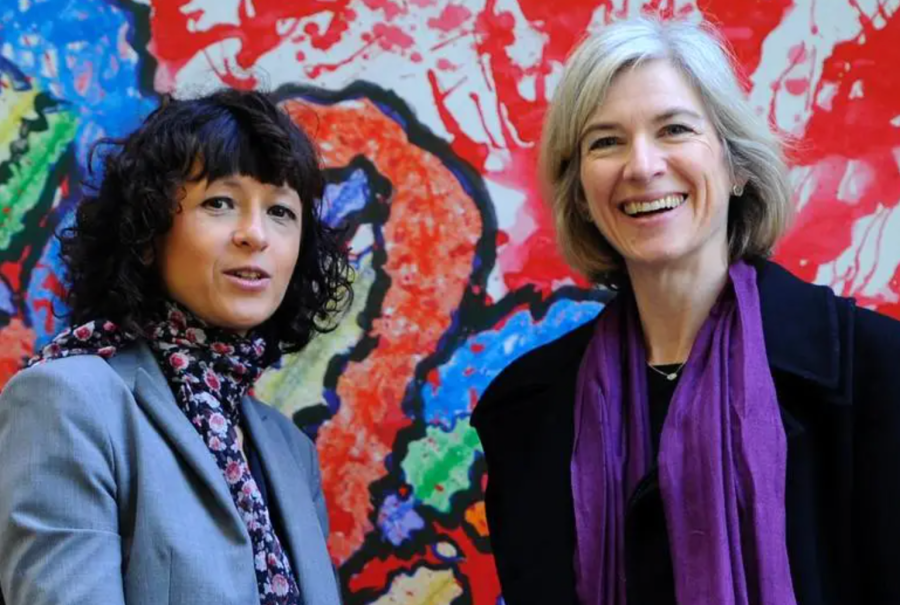
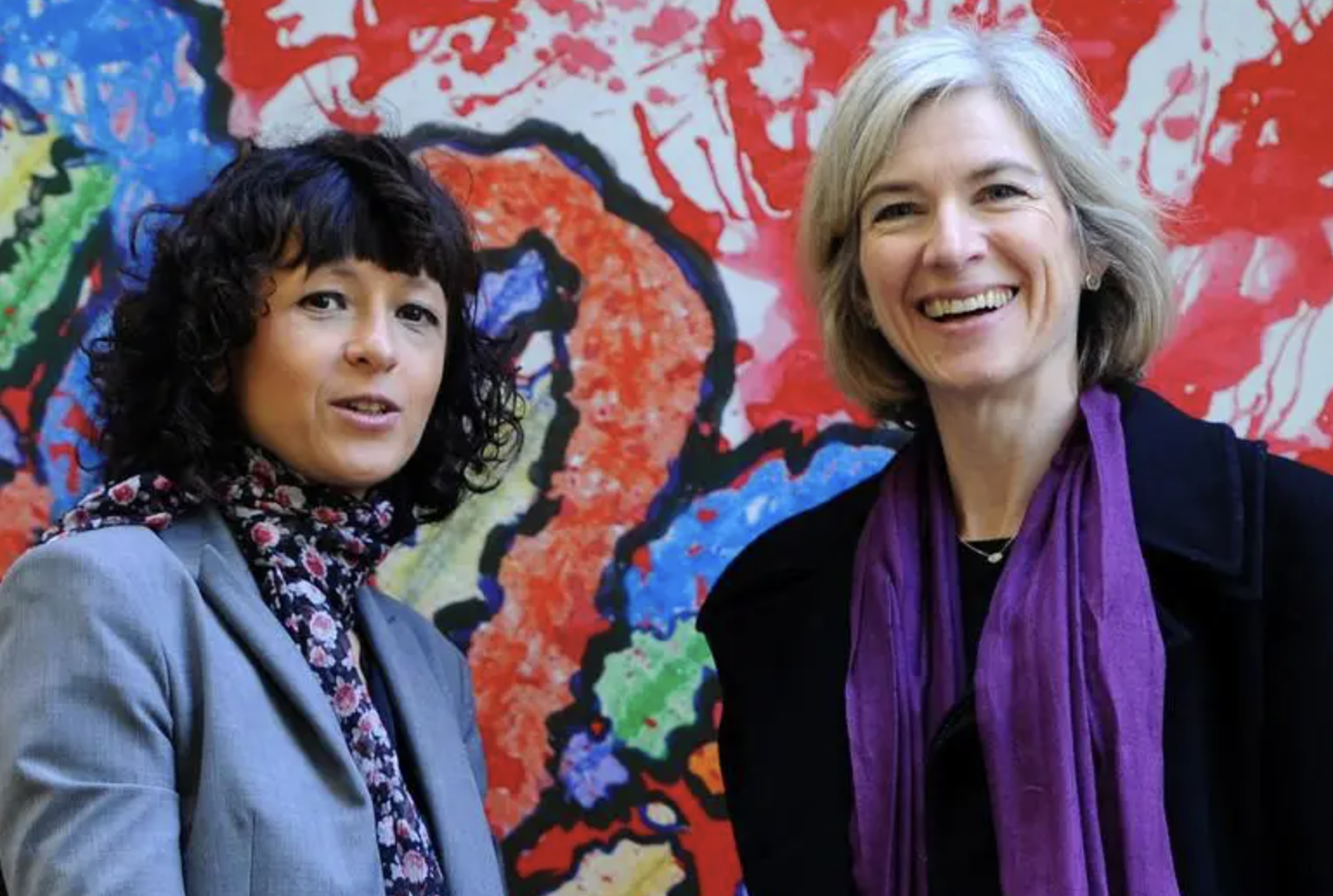
Emmanuelle Charpentier and Jennifer Doudna won the 2020 Nobel Prize in Chemistry for their contributions in the development of a method for genome editing.
It’s called the CRISPR/Cas9 genetic scissors.
Based on how bacteria fights off virus attackers, in future CRISPR will be used to fight coronavirus variations.
Most people my age know about Watson and Crick’s discovery of the double-helix structure of DNA. But I certainly couldn’t explain anything about CRISPR before reading this book.
Once again, Walter Isaacson made a complex story entertaining with this 2021 biography:
The bestselling author of Leonardo da Vinci and Steve Jobs returns with a gripping account of how Nobel Prize winner Jennifer Doudna and her colleagues launched a revolution that will allow us to cure diseases, fend off viruses, and have healthier babies.
When Jennifer Doudna was in sixth grade, she came home one day to find that her dad had left a paperback titled The Double Helix on her bed. She put it aside, thinking it was one of those detective tales she loved. When she read it on a rainy Saturday, she discovered she was right, in a way. As she sped through the pages, she became enthralled by the intense drama behind the competition to discover the code of life. Even though her high school counselor told her girls didn’t become scientists, she decided she would.
The development of CRISPR and the race to create vaccines for coronavirus will hasten our transition to the next great innovation revolution. The past half-century has been a digital age, based on the microchip, computer, and internet. Now we are entering a life-science revolution. Children who study digital coding will be joined by those who study genetic code. …
After helping to discover CRISPR, Doudna became a leader in wrestling with these moral issues and, with her collaborator Emmanuelle Charpentier, won the Nobel Prize in 2020. Her story is a thrilling detective tale that involves the most profound wonders of nature, from the origins of life to the future of our species.
Most worthy — perhaps — is Feng Zhang. But he and his boss Eric Lander come off as BAD GUYS in this book, unethical in their collaborations.
ONE bit of good news. When COVID-19 was announced early 2020, both Zhang’s and Doudna’s companies changed research priorities towards developing CRISPR-based coronavirus tests. Both were successful and both hope to make simple at-home tests ready for market in 2021: Sherlock and Mammoth.
The most entertaining of the CRISPR giants is geneticist George Church. When the movie is made, he’ll be the fan favourite.
Emmanuelle Charpentier is an intriguing personality, as well. I’d read her biography.
John … claims to be a Cro-Magnon (or Magdalenian caveman) who has secretly survived for more than 14,000 years. The entire film is set in and around Oldman’s house during his farewell party and is composed almost entirely of dialogue. …
Almost a home movie, a budget of just US$200k.
The most impressive man John ever met was … the Buddha.


 Rick McCharles