travelogue – Ganden to Samye – Tibet

Flying into Tibet the mountains loomed like icebergs above the clouds. In the intense morning sunlight I couldn’t tell where the clouds ended and the snow began.

Yes I flew, ensuring that the PRC, the liberators of Tibet, got a good chunk of my cash. Blast!

I should have tried to make it overland.

Julio from Spain made it. Men delivering a new jeep to Lhasa knocked on his hotel door at midnight offering to bring him along. No problem. Only 20 hours. Another guy hired a taxi! Two others managed to find an illegal local bus — but they waited 1 1/2 days to depart. Local buses in China only leave when they are full.

As advised, I went immediately to bed on arrival in Lhasa. You need time to accommodate to the altitude gain. I awoke to the snapping of prayer flags and hotel laundry.

Dusk is my favourite time of day. I waited to see the Potala Palace in this light.

It is magnificent; rising sheer and vast, sloping walls, trapezoid windows and doors, solid, imposing, of massive proportions, white, ochre, and gold.

The Potala is an inspiring fortress — enduring, like Tibetan Buddhism. Certainly one of the greatest works of man.

At a rooftop full moon party later, drunk backpackers asserted the superiority of Lhasa over Kathmandu. It is natural to compare two of the world’s most mythic cities.

Lhasa is much less developed, less polluted, and does not yet suffer a plague tourist population like Nepal. This is the end of the high season in Tibet. Four jets arrive every day. Yet you don’t see many tourists. Most are German, French, American suitcasers who move in overweight tour buses from one quick photo-op to the next. They are whisked back out of sight to Hotels in the more expensive Chinese section of town.

The government loves fat tour groups paying US$100+ / day. Tours are all booked through the despised CITS (China International Travel Service).

Backpackers are nothing but trouble for the authorities here. They dwell only in Tibetan hotels, eat only at Tibetan restaurants. They stay longer, try to learn the language, and are vocal advocates for Tibetan independence. They do everything they can to thwart the system. (Bhutan, by the way, won’t even allow individual travellers into the country.)

Tourism in Tibet consists of travel from one impressive, damaged monastery to the next. It is a confusion of sights, smells, and sounds. Tibetan pilgrims in traditional colourful costume push purposefully through corridors, candle-lit galleries, halls and chapels. They drag prayer beads along closed rooms, press their heads against dragon-shaped door knockers. They make offerings of scarves, money, and chang (foul beer).

They mumble mantras, circumambulate, and prostrate. There are different strange and unique traditions at each shrine. The smell is rancid butter and fragrant burning juniper. They also burn small prayer papers, sending the prayer and smoke up into the wind. (It must work. I had one flutter by me while I was on top of a mountain far from any temple.)

Most impressive are the devout rural women who make religious pilgrimage for weeks or months during the winter. They are beautiful; walking with their prayer wheels, weather-beaten faces, butter-oiled hair plaited into colourful ornaments.
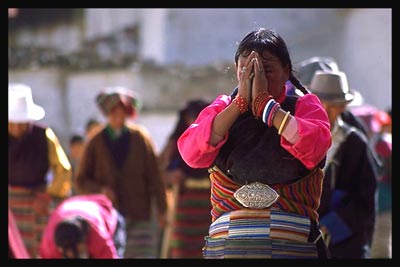
prayer

Tourists traipse along behind, befuddled, peering at the banners of faded silk, tankas, & mandelas. Trying to recall if the next statue is King Songtsen Gampo or Padmasambhana. To me this cluttered religion is much more Hindu than Buddhist.

Tourists love to watch the monks playing out their rituals. A highlight is the religious music, all drums, bells, and trumpets (some carved from human thigh bones).

Ganden Monastery to Samye Monastery Trek

  • Ganden — 4500 metres
  • Shuga La — 5240 metres
  • Chitu La — 5040 metres
  • Samye — 3600 metres

We spent 6 nights on this hike crossing a number of high passes. Altitude is the critical factor. Fortunately we had perfect weather. This is the end of the best trekking season in Tibet — clear and sunny — you can see to the horizon in every direction. This is really BIG SKY country! But early winter storms can blow in any time now, closing the passes.

Like many of the great walks of the world, this second most popular trek in Tibet offers rich variety; high snowy peaks, lush alpine meadows, and desert-like environs.
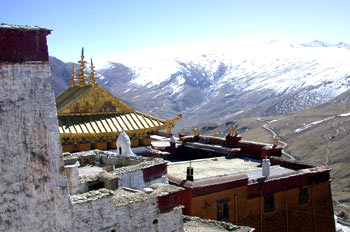
monastery in Ganden
monastery in Ganden

The sprawling ruins of Ganden remain a stunning sight. This is my favourite monastery so far, built high on a cliff in a natural amphitheatre. The location is remote, but not too remote for the Red Guard who bombed it to rubble in 1959. Later the idiotic Cultural Revolution, little more than vandalism and looting, finished the job.

Monks were turned out, or sent for re-education, or thrown in jail. We met an 83-year-old monk who had been imprisoned for 22 years for not renouncing the Dalai Lama. (He had been one of those responsible for bringing the young boy King his food.) The old monk implored us to take the message back to our countries, to pressure the Chinese government.

Ganden, after 2:30 PM when the tour buses depart, was wonderful. We 3 backpackers were all who remained, staying at the monastery guesthouse.

Fantastic views from the ridge, and a platform where sky burials are performed. The skull is crushed, the corpse chopped into pieces and then mixed with tsampa flour before being fed to the eagles. Scattered are bits of bone and skull, dragged off by the mangy dogs who fight and die around every monastery. Buddhists, of course, won’t destroy them. (Many believe dogs are reincarnations of fallen monks.)

Tibet is one of the few places I can recall which is getting better and not worse for tourists. The embarrassed Chinese government is making slow but steady restoration of the great monasteries. Indeed, in some the construction workers seem to out-number the monks, the work songs drown out the chanting.

For the 2 high passes we hired a Yak to carry our packs. The Tibetan guide appeared finally with a small horse instead. This proved to be a big mistake as the horse was unable to handle the tough terrain. We insisted on carrying our packs at the worst section, fearing for the life of our pony.

We managed the passes better than our horse, suffering only altitude headaches. (Early warning sign that your brain is not getting enough oxygen.)

This late in the Fall even the Yaks had abandoned the high grazing. We saw no Western faces for 5 days. A few tough lady Tibetan pilgrims headed for Samye passed by without tents, with bad shoes, subsisting only on tsampa and butter tea. Unbelievable. They asked us for directions as they have no maps.

At Chitu La we had a boil-up lunch at the headwaters of a tributary of the mighty Brahmaputra river. The change in scenery as we descended was amazing. In summer it is out of the Garden of Eden (as described in our guide book), but we thought it even prettier in the Fall. The leaves were changing colour.

On a whim we trudged up to Yamalung Hermitage, a tiny meditation retreat on top of a mountain. It is manned by an old monk, a young nun, and the birds and picas they feed. This is a holy pilgrimage site — the revered Indian tantric sorcerer/magician Guru Rimpoche meditated here. He was invited in the 8th century to subdue demons plaguing the country.

I had a chance to emulate him, to meditate the night in a cave. But, fearing bats, I instead slept on the roof of the Hermitage, toasty, buried in blankets and a huge Tibetan coat, watching the sky wheel. At this altitude the nights are frigid, though the the sun is scorching mid-day.

In Samye my favourite memory was scrambling in the beautiful river flood plain sand dunes in the late afternoon. The light! I might have been in the shifting Sahara. The only human footprints were my own.

Camping, hiking is, I think, the best retreat. Life is elemental. Perhaps being this close to nature is being close to God.

PS

We eluded the disinterested police (our Trek was completely illegal) and celebrated well on our return to Lhasa!
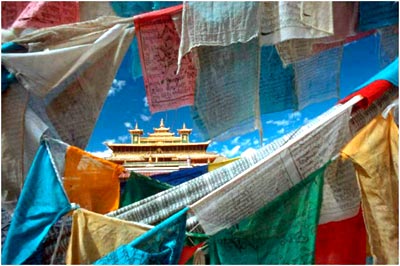
monastery in Samye
monastery in Samye


travelogue – I want to be a waiter – China

I find myself in Xi’an, the world’s largest and richest city — in the 8th century. Coming here I’ve broken at least 3 backpacker laws:

  • I’m visiting a TOURIST ATTRACTION (Terracotta Warriors)
  • I’m BACKTRACKING (2000 km!)
  • I’m FLYING (to Tibet)

In my attempt to get to Tibet by bus I had gotten as far as Dunhuang in the Gobi desert and I was feeling invincible. It was tempting to fill my daypack with dry noodle soup, dehydrate, and climb on anunofficial bus. This is a buck-passing nation where special requests are invariably turned down, but where blatant trespassing is seldom challenged.

But the odds were stacked against me. Not manyillegals are making it through to Lhasa this year.

For another thing, I was sick. After urging other travellers to eat everything, and bragging that no one gets sick in China, I was sick for a week. Actually I was functionally healthy — I could travel and sightsee, but for days I was eating mainly yogurt, rice, eggs & coconut juice.

I had forgotten that China is a Galapagos Island for germs. One billion plus people and comparatively little travel in and out.

Actually traveller’s diarrhoea is not common here. This is a most sanitary and civilized country with boiled hot water endlessly available in huge thermos bottles.

The main worry is chronic bronchitis. Public spitting, coughing, chain-smoking, pollution, and overcrowded conditions all contribute to world record levels of respiratory infection. Public nose-playing and nasal evacuations don’t help. In the morning it sounds like an emphysema ward.

PREVENTION in China is to CLOSE the windows! Almost every traveller is stricken.

I travelled part of the Silk Road, the ancient highway along which camel caravans carried goods into and out of China.

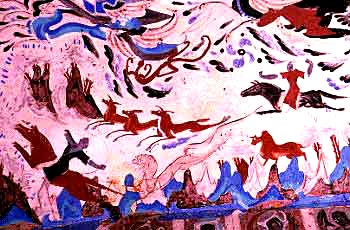
In Dunhuang are the famed Magao Caves, featuring the most impressive & best-preserved Buddhist cave art in China & by far my favourite artworks on a yearlong tour. Dating from about 300 BC, these are works of itinerant monks travelling the Silk Road, spreading the message of Buddha out of India.

cave painting
cave painting

Dunhuang is a desert oasis; cultivated fields with mountainous rolling sand dunes forming the backdrop. This was my first chance to scramble up really HUGE dunes. I went at sunset. Climbing dunes is unbelievably hard work. Bouts of 10 or 20 deceptively backsliding steps. The ridge seemed unreachable. Suddenly I stepped over the top — almost falling down the other side.

Under the star-studded desert sky I assumed that I would have the dunes to myself. But an owl kept doing fly-bys, checking out the intruder. I think he was looking for nocturnal lizards. Bats, as well, flitted by, awaiting insects blown up the side of the dune.

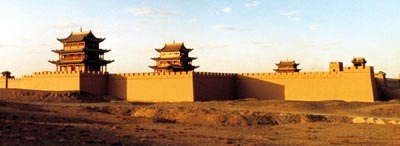
Next day I stood on the head of the dragon, the western terminus of the Great Wall of China which snakes 5000 km from the tail at the east coast. Used more as an elevated highway for moving men and equipment across mountainous terrain, I can understand why the Chinese didn’t want claim to the wastelands beyond.

The Jiayuguan Fort (& the Great Wall here) have been rebuilt for tourists & both are impressive.

We shot crossbows from the Fort wall into dummy horse & riders.

fort

When I failed to find illegal transport to Tibet, I backtracked to Lanzhao. There I walked the appropriately named Yellow River, also aptly calledChina’s Sorrow for the millions it has drowned. Chiang Kaishek breached the banks deliberately in 1938 to slow Japanese invaders for a week or two. Over 1 million perished in that flood.

We had been forewarned that Lanzhao was an unattraction; a massive urban construction site best skirted. But we loved this young, booming, liberal, alive city on the edge of nowhere. It is the first place in China that I might call hip.

In a country suffering from a stupefying lack of diversity, Lanzhao looks to be different. There are weird, cool boutiques and a night street life that is FUN. Nowhere else have I felt the revolution of rising expectations as strongly. It is great that there are no foreigners here. No tourism. They are doing it on their own.

Modernization is moving from East (Beijing, Shanghai, Hong Kong) to West.

I speculate that INNOVATION may come out of the West. For example, the pioneering agricultural reforms started in the WILD West in Sichuan. Called the Responsibility System, the government doled out parcels of land to individual farmers on condition that a percentage of the crops be sold back to the State. This innovation swept through China and was later applied to industry.

It seems that China is on the right track despite the stop-go reforms of the doddering collective leadership. Deng (To get rich is Glorious) Xiaoping was the first Communist leader to realize that the government need merely get out of the way for China to move forward.

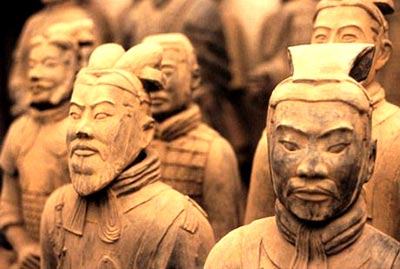
I write from Xi’an, where the 6000 life-sized terracotta warriors and horses are still arrayed in battle formation. Magnificent. These were funerary objects, as in Egypt, to help the first Emperor of a united China defeat his enemies in the afterlife.

statues

Big Chinese cities like Xi’an are certainly at their best in the early morning. Older folks are out practicing Tai Chi, some with real swords. Others join ballroom dance groups, charming to watch. Some shuffle-jog in bad shoes.

Sweepers are busy. These cities are like movie theatres — you throw everything on the ground — next morning all has been swept clean.

All men in China now aspire to a Chinese Dream; an obedient wife, a son, a respectable paunch, a pager, a whack of keys hooked on to the belt, and a dangling American cigarette.

I bought beers for an English teacher who told me that he had 2 children, a daughter and then a son. He explained that when his son was born he went to the authorities to make a written confession, apologize, and to request to atone for his mistake by paying a fine. In his case it was about US$1000. If his second child had been a girl he might have given her up for adoption, or not registered her and later sent her to be married in a rural area. (There are too few wives for husbands in rural China due to female infanticide.)

The teacher understands that men and women are equal in the West. But the reality in China is that the parents must have a son to take care of them in old age. A daughter won’t do this as she is a possession of her husband’s family. This is the old age security system in China.

There’s the rub. As the rich get richer, the poor will definitely get poorer. There is no socialist safety net in China; nothing to compare with a true workers paradise like the Socialist Republic of Saskatchewan.

In China both school and health care operate on a cash basis.

I spoke with an intelligent, articulate student entering his 4th and last year of English study in Beijing. He was the first from his village to go to University. His family and his village borrowed his tuition money. The student was working hard towards being able to pay back the huge debt.

When I asked him what he aspired to do with his degree he replied proudly, I want to be a waiter in an expensive foreigner’s Hotel!


the colours, the colours!

my favourite place in China


Sweeping grasslands. Yaks and sheep in the tens of thousands. The most amazing thing I’ve seen in China! It made me long to have been there with the Buffalo in North America.

Wild-eyed, spiky-haired Mongol nomad cowboys ride into town, filthy, big knifes dangling. They are unabashed gawkers, some having rarely seen a Westerner before … except on TV.

Backpackers love to go where there are no suitcase tourists, to locales not yet ruined by too many visitors. A sad, true paradox.

Especially in China, the famous tourists stops here you would find crowded, littered, expensive, and tacky.

So I went to Langmusi, the most Tibetan place outside of Tibet. This is a simple and remote little town visited only by Buddhist pilgrims and a few backpackers. The locals are excited that next year, when the hospital opens, the town will have running water.

Life is simple. We live on wood stove baked apple pie with Yak yogurt. We drink eight-flavour tea (different fruits and berries) sweetened with slow disolving rock sugar.

At this, our favourite tiny Muslim restaurant, little daughter does her math homework (diligently, but incorrectly), son slurps his second bowl of noodles, and big-nose tourist reads Dostoyevsky.

Later the kids help me with my Mandarin. About 70% of Chinese speak Mandarin, and about 95% of backpackers. After a month in China I am the worst except for Julio from Spain, who doesn’t know a word. We often sit dumb and dumb.

The other major dialect is Cantonese, spoken in the South. The two can’t understand each other but they share the same written language. You need to know between 2000 – 3000 characters to read a newspaper. In 1954, in the interest of universal literacy, about 2000 characters were simplified. However, more and more Chinese want a return to the elegant full-form pictograms.

In 1958 the central government adopted Pinyin, a system of writing using our Roman alphabet. This was (somewhat) helpful for foreign devils but to most Chinese Pinyin looks like gobbledegook. They can’t read it.

Why do I mention all this? The bottom line is that the traveller in China must be able to speak conversational Mandarin or they are doomed.

I am doomed.

monksThe thing to do here is to praise the colourful ethnic minorities and criticize the Han oppressors. But that hasn’t been my experience. The Chinese I have met are kind and tolerant of minorities, even weird backpackers. It is a pleasure to travel in a land with so few rowdy young males. The men are almost gentle.
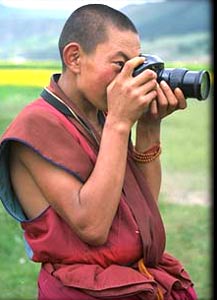
The Muslim people in China are often strikingly handsome, photogenically pretty. They are hard-working and well educated, but keep a low profile. The call to prayer is not amplified. It’s been this way since the 1870s when the Chinese put down the last Muslim rebellion, killing millions and laying waste to entire cities.

The thing to do especially (to spite the ruthless Chinese police state, despite Brad Pitt) is to promote Tibet, Tibetans, and Tibetan Buddhism. The Tantric Buddhism here, as you know, is bizarre and mystical, heavily influenced by the pre-Buddhist Bon religion. It is characterized by mantras (sacred chanting), yantras (sacred art), and secret initiation rites. It is terrifically compelling.

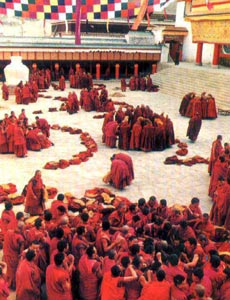
And the colours, the colours! Red robed monks. Washed, stained yellows, brick reds, browns, and bright blues. What spectacle!

Westerners decry the Chinese liberators of Tibet. We hate that the spiritual leader and 100,000 Tibetans were driven to exile. We mourn the 1.2 million Tibetan deaths and destruction of much of the Tibetan cultural heritage.

Wrong rumours still flourish that Tibetan women are made sterile in Chinese hospitals after their first child.

And backpackers particularly hate the extortionary cost of travel into Tibet. Like me, they are constantly seeking ways to enter Tibet illegally, to get one up on the Chinese authorities.

First I travelled to Little Tibet, Xiahe, in Gansu Province. It can be otherworldly. Outside of Lhasa, this is the leading monastery town. Once part of Tibet, at its peak it housed 4000 monks studying the hard sciences like Astrology and Esoteric Buddhism.

Several times the monk population has been decimated. But in 1999, I count 2000 monks here — and the number is increasing.

Amazingingly, there are pictures of the Dalai Lama here! The authorities don’t like it but, so far, the photos haven’t been removed. Soldiers are visible in town, even in the monasteries.

But Beijing , in reality, doesn’t have much influence this far West.

The Tibetans are striking. Especially when the Dalai Lama himself sits down beside you in the bus. (Well, it looked like him.) Tibetans often greet you by sticking out their tongue. Demons cannot disguise their forked tongues, you see.

I had always assumed that Tibetan cheeks were ruddy from wind and sun — but it appears to be genetic! I’d always assumed that the smudged faces and grimy clothing were due to a lack of water in Tibet — but it appears to be cultural. There is plenty of water in Xiahe, but most of the Tibetans are dirty.

The population here is 10% Muslim, 45% Chinese, 45% Tibetan. Many of the Tibetans have lice but none, I’m certain, of the Chinese or Muslims do. (I can’t vouch for all of the backpackers.) Many Tibetans live and sleep in their huge heavy robes and coats. They just don’t wash much. And the toilets are the filthiest I’ve suffered.

monkIt is hilarious to watch Buddhist monks playing ping-pong, shooting baskets, or watching TV. For young students this is an exalted boarding school.
It is harvest here too. A beautiful time of the year. Most of the grains have been cut. Everything is done by hand. Cabbage, corn, and sunflowers are still up.

Yesterday, about 7 vehicles ahead of my bus, a potato truck overturned, falling over a cliff. The driver must have fallen asleep, I was told. Only about 5 sacks of potatoes roadside survived.

Motor vehicle accidents are by far the greatest risk in these countries.

I’m en route to Golmud to check-out the worst bus ride on Earth to Lhasa. (That claim is hotly disputed.) It’s 38 – 75 hours with 2 scheduled stops and a series of unscheduled flat tires, breakdowns, landslides, avalanches.

If I don’t like what I see in Golmud, I’ll consider my options.

PS

The Songpan fire resulted in 130 displaced families. I saw at least 2 people badly burned, & 1 soldier down from smoke inhalation. Locals told us that no one was killed. Others said that 1 child had died.

PPS

The numbing, spicy detergent taste in Sichuan food is “huajiao”, literally flower pepper. You can’t avoid it. Later I found I started to acquire a taste for it (in very small quantities).

Many locals offered us a chance to try the Sichuan Hot Pot, dipping skewers into hot spicy oil. Apparently I dodged a bullet. It is said that no non-Sichuanese can tolerate that dish.

PPPS

It turns out that Maotai (white alcohol) is a brand given out only as a special gift, costing between 300 – 500 Yuan. The locals drink a version costing 38 Yuan. Only backpackers buy the 6 Yuan rotgut.


travelogue – all this breathing in – China

Paul Thereaux said of China, I rarely saw an example of man’s insignificance against the greater forces of nature.

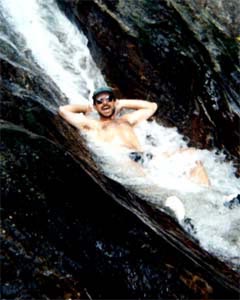
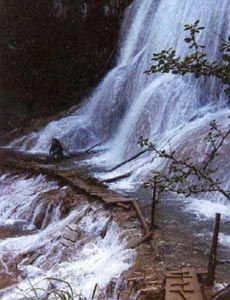
waterfallOnly in China would you find a huge gorgeous waterfall criss-crossed with rickety wooden walkways, some washed away, others about to go. These walkways do provide access for Buddhist monks practicing waterfall meditation, contemplating in caves or standing in freezing spray. And they do provide me a magic moment. Sitting warming in the morning sun directly above a waterfall is a strange, wonderful experience.
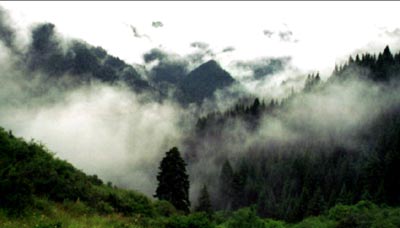
I seek out these magic moments, choosing exotic and unique places to visit. When travelling, the pursuit of magic is my full-time job.

Magic can happen at home in the real world, of course. I remember writing a respected friend about Craik, Saskatchewan on a cold, windy October night. I saw a field ablaze with giant bonfires.

Fantastic.

I wandered between the dozens of fires. Beautiful. The fire burned so clean. Canary yellow! I never saw such a fire colour. The heat thrown was unbelievable.

The farmer was lighting misshapen haystacks from a truck with a portable acetylene torch.

Burning’ flax straw. Damned stuff won’t rot, he told me with rural verbal economy.

He was the performance artist; me the astounded city slicker. He was understated; me hyperbolic.

This morning, though, I am wondering if this backpacking thing is a self-indulgent conceit. It’s great, but am I being irresponsible, not focusing on more weighty life matters? Running away?

Yet I thrive on the backpacking trail. I see others distressed, wearing down. But I never seem to tire. The road is bliss though, admittedly, ignorant bliss. All this breathing in. Living in the moment. After all, both Hinduism and Buddhism teach that real life is but an illusion, anyway.

Like everyone else, I loved Songpan. It’s a bustling little town in the foothills of the Tibetan plateau. Yaks, farmers, and Tibetan cattle herders clop down the main street. Peddlers hawk exotic mushrooms and animal pelts, some with the blood still dripping. Officials parade self-important in cheap uniforms. They butcher animals right on the road in the dirt and the flies.

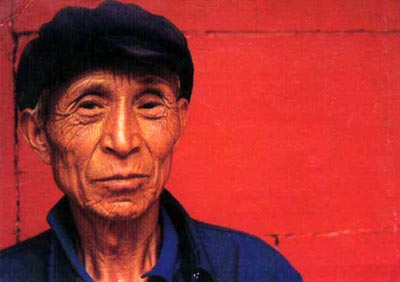
Some of the ethnic minorities still wear traditional costumes of fur and bright cloth. Tourists are charmed by modern clothing; local men are ruddy cheeked Tibetans dressed like Chicago gangsters; local women wear fancy pant suits. Informal wear is dress slacks and, inexplicably, a sweater vest. Older men stick to the conservative Mao jacket and cap.

China man

After all the dull brick and concrete of post-Communist China, Songpan is real. Wood and stone. Everything ihand-made. The main street was being reconstructed with a beautiful carved wooden facade, anticipating a coming tourist boom.

It’s hard to believe that I’m in China. At first glance this could be Alberta, pristine valleys and forests.

Songpan has long been a jumping off point for Chinese tour groups but it is only in the last 8 years that it has become a must for backpackers. They come for the Tibetan horse trek.

We spent 4 days on stunted horses. This was a first for me — travel on horseback, spending time with horse people. Our Muslim guides were the highlight.

The guides speak a dialect of Mandarin, but with the horses they use a completely different language, perhaps a former tongue. They are firm but patient. It’s true that horses are just like children, always testing the limits of how far they can go. We loved that the horses were allowed to graze free during the night, though it usually took 2 hours or more to collect them in the morning. We were surprised that they don’t name horses here, referring to them only by their colour.

The guides are great wilderness cooks; baking, making noodles, adding greens and wild mushrooms from the forest.

They are happy, laughing, hooting & singing all day long. They can drink Maotai all night and suffer no hangover. Dennis (a young German who spent the trip trying to smoke the local ganja, used here only as pig fodder) agreed that these horse guides have a superior quality of life than our own back home.

We later had dinner with the family of our 20 year old guide who was a little embarrassed about being poor. Ten of us sat comfortably about the wood stove, source of heat and food for all. We gorged on steamed buns stuffed with spicy meat and vegetables or potatoes. The house was soot-blackened, impossibly tiny, and very homey. Everyone participated equally in the lively family conversation. Moma still spits on the earth floor but the rest of the family has been educated not to spit, at least not when foreigners are around.

The horse trek is a tourist gig but still 2 or our party of 6 fell off their horses, and one of the guides got hung-up in a tree. The guides laughed about that one for days. The trail is really rugged with passes over 3800 metres.

There is no pollution over the Tibetan plateau. The air is clean. There were birds in number, animals in the wild. In China!

Songpan foothills
foothills of Tibet near Songpan

We were moved when we saw a farm woman carrying a huge Yak yoke. Like Christ carrying his cross.

All this breathing in.

On our return to Songpan town, I noticed smoke over the main street. Walking closer I could see flames licking the roof tops. Fire! Panic. The street was jammed. Shopkeepers desperately tried to carry goods to safety. Passers-by like myself tried to help, but in the chaos there were too many people, too much clutter.

A motorcycle cop arrived with 2 hoses, but it took at least an hour before any river water was pumped. The Chinese-made hose couplings would not stay sealed.

Residents fled carrying valuables, chasing pot-bellied pigs out on to the street. Chinese good luck firecrackers sounded in huge bursts. Explosions like bombs. Fuel tanks?

Women and girls sobbed in desperation. Men shouted and acted in brave but irrational ways. There was no organization, no leadership. Not even when the fire truck arrived, or when the army arrived.

Would the whole town burn?

I ran back to the guesthouse but it had already been locked, everyone turned out. Back at the terrible blaze the best way I could help was to stay out of the way. Others threw roof tiles at the advancing fire, or splashed mud and ditch water on their homes.

The failing sun cast a surreal eerie light. Thick smoke. These tears.


travelogue – grow rice or starve – China

The most famous rice terraces in the world are in the Northern Philippines. But I heard that the Dragon’s Back rice terraces near Longsheng were even more magnificent. They are amazing, precipitously strung up 800 metre peaks.

But why build these agro-engineering wonders in such difficult terrain?

The Han Chinese make up more than 93% of China’s population. The clever Han have displaced most of the other ethnic minorities, driving most of them into inhospitable mountains or desert. For the ethnic Yao people, who live on these peaks, it was grow rice or starve.

We stayed up high, nestled in the rice paddies in tiny Sang An village. There are 10 beautiful, traditional wooden guest houses, but we were the only 4 guests on the night we stayed on the mountain.

rice terrace

We lived at Wilson’s Cafe. Wilson (short English names easy for tourists to remember) is a Han Chinese who opened here a month ago to take advantage of the expected tourist boom. Because Wilson is the only person in the village who speaks English, he will now get all the western tourists. For this he is hated, having only one friend.

Wilson was a good host & will persevere. He wants to get rich, as do all the Chinese I’ve spoken with. For one thing, he is already 26 and not yet married.Women only want to marry a rich man, he told us.

Wilson is quite the entrepreneur. He learned English only by talking to tourists while working as a waiter in Yangshou. The staff is paid a pittance. There is no tipping in China. Wilson moved to the special economic zone to work (illegally?) in a big factory. But that work was too hard.

After 4 trips up to the Yao village, Wilson moved up permanently. He will quite likely be very successful. He likes living on the Dragon’s Backbone, exploring waterfalls, but it is boring for him when there are no excited, enchanted tourists to entertain.

I would love to have stayed on the rice terraces longer, perhaps walking 3 hours higher up the mountain to a more remote village, or setting-up my tent. (Wilson advised against the tent. Only 10 days earlier a very poisonous snake bit a village girl.)

I would love to have stayed for the Festival that was just starting. It was a family reunion. Each household must cook a duck and a fish. They were well into the beer by 9 AM. There were ducks everywhere!

I would love to have spent more time exploring the picturesque villages where small children carry the babies; where old men sit serene smoking long pipes; and where everyone else is busy doing leisurely rural chores.

But this is China. So I had an airline ticket that had to be purchased 3 days in advance and which could not be changed.

I flew to Chengdu, the frontier capital of Sichuan province & the last big city before the remote West and North. Most tourists like Chengdu. Somehow the smog is less offensive, the diesel exhaust less choking.

Chengdu is laid-out like Beijing with wide communist-style boulevards. I admired the big white Mao statue.

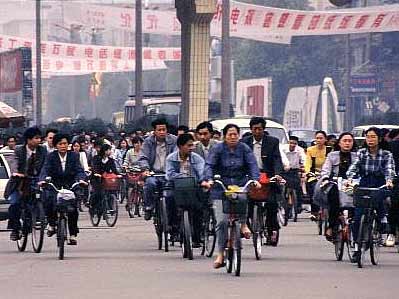
Unlike Beijing, Chengdu still has bicycle lanes so I got the chance to lose myself in the throng of bikes as I had seen so many times on TV.

Chengdu

This time it was me who was incompetent — at pedal navigation. I am too slow, too nervous; always over-compensating. Even old rickshaw men and little children move easily with the ebb and flow.

Chengdu is a big Chinese city but still has itinerant barbers, dentists, cobblers, cycle repair men. Unemployment is the big concern for the Chinese now. More and more will be driven to become street vendors.

The people’s park is a funny Socialist throwback. Fishing ia stocked pond is very popular. You pay for each fish caught, then take your catch home for lunch.

Last night we wandered the side streets, finally choosing a local roadside eatery at random. We were certainly the first and last western tourists this place will serve. Obviously, the Sichuan food was authentic — and toxic. I’ve never tasted that kind of poison before. (battery acid?) It was scary.

But the tourist Sichuan food is wonderful!

China is a great place for the gastronomical adventurer. And China is a great place for masochists. There is a wealth of travel horror talk. I can chip in to tell the tale of the 2 rats which kept me up, on guard, all night. (I changed rooms to another across the hall at 4:30 in the morning.)

But that’s nothing. Rue the tall German who fell into the roadside, bus stop toilet pit — neck deep. (I’ll be on that bus tomorrow.)

Getting anything done in China is difficult. Though the country is changing rapidly, there is a great leftover of deadbeats in do-nothing jobs. Heads on desks, they are useless.

Until they are swept away, in this country (as in Egypt) a tourist needs a fixer. This is a guy who speaks excellent English, who knows everything, knows everyone, who has connections, and who can deliver.

The tourist must find the best fixer and then pay his commission gladly.

In Chengdu, Sam was my fixer. Sam explained that Chinese mind their own business. They would never ask, Is it OK if I smoke?, or, Is the TV too loud?.

Chinese queue, walk and bike (and drive) to suit themselves. In a crowded country this is, perhaps, not a surprising cultural trait. It is actually good for us weird space-alien foreigners — even the Chinese children are taught to try to ignore us.

Sam arranged it so that early this morning we could see the famous, clumsy Panda bears. The Giant Panda Breeding Research Base, a rare class act in this country, just opened for tourists in 1995. We watched Longlong and Nono romp, push, and play. Log roll down the hill. Headstands and shoulder rolls. Climb up and slide down the slide. We were told the Pandas are on a comeback. No problem with illegal hunting … not since 1990 when two men found with 4 Panda skins were executed.

Sam has arranged my ticket north to Songpan, which is getting rave reviews. Guides take you on a Tibetan Pony trek through peaceful foothill valleys. Tibetan gear and tents, food, and everything else is provided. Of course an all-inclusive adventure like this is expensive. About C$9 / day plus Maotai and beer.

No e-mail up there, I hear. You can’t even cash a traveller’s cheque.

Tamdil!

travelogue – officials dumfounded – China

From the China Daily, August 18, ’98:

Officials were dumbfounded and embarrassed at Shanghai International Studies University when all of the students who passed the rigourous entrance exams turned out to be female. At that University males make up only 32% of the student body.

At Beijing Foreign Studies University the percentage is down to 25% male.

Teachers blame this disastrous trend on an enrolment selection based only on ability, a system which is disadvantageous to male students who are usually more active in thinking and have broader interests.

China is undergoing massive, uncontrollable metamorphosis. Many of the old values are being swept away. Confusion (not Confucius) reigns as everyone struggles to see how they fit in the new unplanned economy.

Mao had a dream of creating a perfect society, ending inequality, hunger, class injustice. Yet theGreat Leap Forward and the Cultural Revolutionkilled as many as 40 million.

What will be the cost of this latest revolution? Who can say. China lives in interesting times.

My travel, however, from Hong Kong into China was speedy and efficient. En route I adopted Asuka, one of the many confused Japanese backpackers found wandering this lonely planet. The most hapless travellers are Japanese.

Guangzhou (Canton) is another booming Asian megalopolis with little to see and few saving graces; loud, crowded, and under continual reconstruction. We wisely stayed on Shamian Island, formerly the French and British concession which the invaders held after defeating the Chinese in the Opium wars. Shamian is a quiet enclave of decaying colonial buildings now being somewhat gentrified.

At the hostel we got what we thought was the best possible advice for moving on out of the Special Economic Zone surrounding Hong Kong. My travelling companions of convenience were five; Asuka, two pretty (Chinese speaking) girls from Berlin, and a young Dutch couple.

It seems I always travel with this Dutch couple on these trips. The Dutch are still great travellers, speaking 3-4 languages. And they are so polite I’ve come to think of them as the Canadians of Europe.

It wasn’t long into the trip before we began to feel we had been duped. The Ferry which could take as little as 5 hours wasn’t moving very quickly. It bobbed 20 hours before depositing us at some little bus stop. After two hours wait in the heat, we were finally shuttled over … to another bus terminal where we gladly took up residence in an air conditioned waiting room. It wasn’t long before a shrieking lady (it seems all of the petty tyrants here are women) kicked us back out into the terminal. The waiting lounge was locked, empty. After another few hours we were directed to another bus which bumped along for 8 hours. All totalled it was 33 hours, quite a typical bout of travel in China. (My guidebook suggest I estimate an average of 25 km / hour.)

Travel is a struggle in China. All modes of transport are problematic. And the country is huge.

That said, I must admit that both the ferry and the bus were most comfortable. Not luxurious, but clean and functional. The boat had boiling hot water constantly available for tea and noodles. The bus was a sleeper — the seats recline into beds. I relaxed, chatted, snoozed, and read. The passing landscape was fascinating.

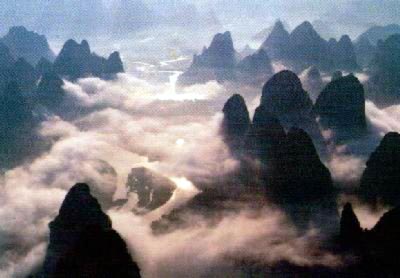
I write from the legendary backpacking Mecca of Yangshou. For thousands of years poets and painters have eulogized the stunning limestone karst peaks here which thrust up unexpectedly from green paddies. A rural green green scene, with picturesque farms, water buffalo, rivers and canals, ducks, dragonflies. No mosquitoes! Few birds(?). The men work or smoke. The boys swim all day. The womenfolk do all family chores.

I love places like Yangshou, small towns that somehow have become famous as retreats for low budget vagrants like myself. It has much in common with Pushkar (India), Dahab (Sinai), and even Pokhara (Nepal). Relaxed & comfortable.

Western-style cafes have names like Minnie Mao’s,McBlues Bar, and Hard Seat Cafe. They offer Bob Marley, banana pancakes, and western movies. It’s not the real China — but who cares! I can hop on a bike and be back exploring the real China in 15 minutes.

Everything is quite inexpensive. My bed costs about $4 /night. This bubble will burst, though. In 1995 the first 3 star hotel opened. One day this town will be as expensive and commercial as Guilin, the destination it displaced. The backpackers will move on to one of the more remote villages.

My first day I floated down the beautiful Li river on a tire tube. Another day we boated down the Li all day (magical, mystical mountains) and then cycled back to town.

I read somewhere that the Chinese have the only culture with absolutely no food taboos. Anything can and will be eaten somewhere in China.

Our guide Li (while she was making us lunch in her village) explained that dog is winter food, snake best in summer, but that pigeon and rat are good any time. We played with her pet kitten while getting this news.

All fine restaurants have fish, birds, and animals displayed live (if you can call this living) out front to show how fresh the food must be. We are constantly confused by which shops are restaurants & which are pet food stores. (Tip — the restaurants have a bigger selection.)

Li made us real farm food. She was particularly proud of her pumpkin flower stuffed with meat. All the dishes were delish. Li and I added strong pickled ginger as a garnish.

She took us by bike through the backroads and rice paddies. She showed us all of the different crops; they grow anything and everything.

We stopped at the “peanut oil factory”, a little hut where mom and dad run the crushing machine, little daughter sweeps away the husks, and the odd spider drops into the oil. Li explained the life of the farmer, the system of the schools, her family life — this was the most interesting part of my day.

I feel very comfortable with the people here. They are intelligent, hard working, and relaxed-happy. I like the loud, energetic, but good-natured arguments in the middle of the street. A big crowd always gathers quickly. (No doubt the gossip and politics of the village are Hell!)

I also feel quite safe here. (Crime is understandably low!) Yet I’ve seen few police or soldiers anywhere.

Yangshou is great. But as my obligatory bout of Asian Flu is almost finished, I’ll be setting off soon for Western Sichuan where they stay up late shouting, drinking Maotai, and where they still spit the chicken bones on the floor. One more night to enjoy a cheap local beer at the open riverside restaurant lit only by candles. (This is the one favoured by the locals.)

I’m going to miss this place.

– Laowai McCharles

CHINA

travelogue – have you eaten? – China

Into China — Life by Misadventure?

BankNei Ho Ma from Hong Kong. I’m gearing-up for China which by all accounts is a grim road for the backpacker. On arrival in the mainland, many tourists are stumped at the squatter door trying to decipher which pictograph means “Men’s”. No English is written or spoken where I’m going.

Heads-up is that Tibet is no fun. I’ll start for West China via the comparatively easy Southern tourist route.

(Comparatively easy. China is an emerging nation, but more than 30 million people still live in caves here.)

For now I’m in Hong Kong where life is easy although a mite expen$ive. The main hostel here is high on a lush mountain top; gorgeous butterflies (some look like birds), praying mantis, dragonflies, juicy snails are everywhere. They found a snake in the air conditioning the other day.

As I sat painting out the corporate logos on my gear, I was reminded again that these slackpacker hangouts are far superior to any 5 Star hotel. We have a comfy self-serve kitchen, plenty of interesting company from all over the world, good ambiance. And INFORMATION. Where to go. How to get there. What to avoid.

Best is the magic view over the Hong Kong harbour. This vista reminds me of the Taj Mahal in that you can watch over it for hours, as the light changes. It is a sort of Vancouver harbour with weird, impressive skyscrapers crowding the water like in Chicago.

An inexpensive treat is the Star Ferry ride between Kowloon (mainland) and Hong Kong island.

The food is great. I lucked into possibly the best Chinese buffet in town. At the famous Peninsula Hotel? No, it’s a mall basement smorg where the shirtless downtown construction workers come to eat lunch.

I also dropped into the annual Hong Kong Food Expo (along with 200,000 friends) where I sampled many strange and unappetising products.

“Roast butter squid, sir?” All had at least triple the necessary packaging.

These Southern (mostly Cantonese speaking) Chinese are familiar. They immigrated all over the world. My impressions of the people?

  • They are very slightly built. I’m a stocky, lumbering, light-eyed foreign devil, in comparison. The women are amazingly skinny. The youth do seem to be growing much larger fuelled on KFC and MacDonald’s.
  • Asian peoples love to talk on cell phones. They love to ring-up from noisy and crowded locales. (Paul Thereaux claims the Chinese have a national deafness.) My theory is that they feel obliged to call each of their extended family members at least twice every day.
  • Young couples love to nuzzle in public. (Or perhaps I’m just noticing.)
  • The Chinese are very poor walkers; unskilled in navigation by foot, apparently unaware and unobservant of others. The many unnecessary collisions are ignored … except by Canadians who are obliged to say “Sorry” even when not at fault.

Hong Kong seems to be booming despite the Asian Flu. It turned out to be a gold mine to put a free-enterprise enclave (with a maximum 15% tax rate) right beside a totalitarian superpower. There are wonderful opportunities for crime / business.

And after every great crime, there is a fortune.

Hong Kong reminds me of Calgary during the oil boom; frenzied consumers will buy anything regardless of cost, quality, or utility. Every local I spoke with told me that the recent Chinese takeover from the British was a bad thing, but no one could give me any particular reason why.

For my last days in Hong Kong I moved over to mountainous Lantau Island to tent and test my gear. Lantau has a fantastic, impossible 1-lane roadway with 2-direction traffic. The white-gloved bus drivers baby huge Isuzu buses around the corners with skill and concentration! The Chinese bashed this road through where no road should be. To prevent erosion huge man-made rock walls are needed. I watched as craftsmen carved natural-looking rock out of the poured rough concrete.

Fulfilling job, I think.

Nearby sits the world’s largest Bronze Buddha. About once a week in Asia I visit the Worlds largest _______  _______ Buddha. (fill in the blanks with any two adjectives.)

buddhaAs I sat and read and watched my big Buddha buddy backlit by the setting sun, I realized I was ready to try China. The next morning I climbed the highest mountain, had a boil-up breakfast of tea and noodles with peanuts, and took in one last exhilarating view of Hong Kong.
Wish me luck!

– Taipan McCharles


travelogue – voluntary simplicity – philosophy

Tomorrow I depart for Asia. I don’t seem to have any particularly convincing answer to the question, Why are you going? …

(One of Rick’s favourite posts.)

For the complete travelogue & photos jump to the permanent webpage in Rick’s travelogue archive. OPEN icon

travelogue – Colombia

Colombia is one of the most intriguing & memorable countries I have visited.

I heard many horror stories — but my experience there was wonderful. Friendly people. Great towns & cities. Wonderful people.

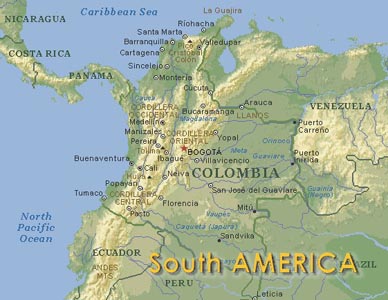
I travelled to Colombia from Venezuela.

02

Colombia? Why go to Colombia?

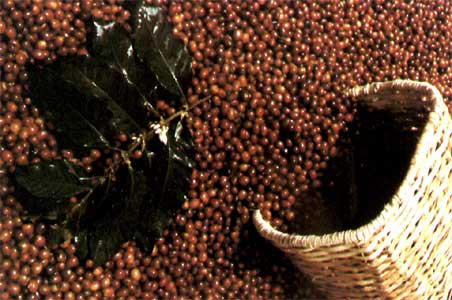
Colombia is the number 2 coffee producer in the World. Café con leche was available everywhere for about C$.10 — that is reason enough!

In Venezuela, I had heard of an amazing hike to a lost jungle city just across the border in Santa Marta, Colombia. But it was almost impossible to get there by land from Venezuela. The border rife with smugglers, kidnappers, paramilitary, banditos & crooked cops.

Colombia is poor, Venezuela rich — hence the tension.

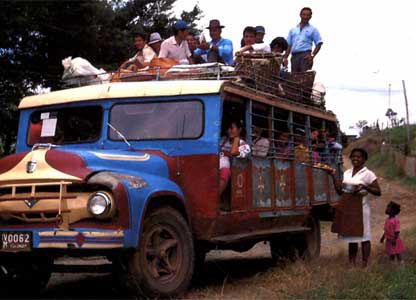
03truck

Somehow I managed to cross a 50k no-mans-land on a series of buses and taxis. I would have been detained at at least one of a dozen check stops except that a businessman took me under his protection.

I was vastly relieved to reach a fortress of a hotel on the Colombian side of the border.

10

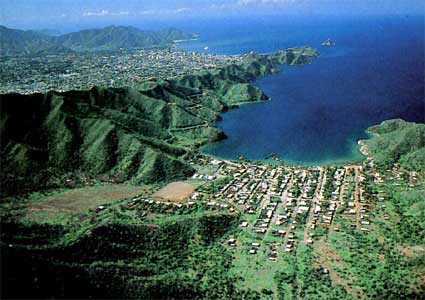
Santa Marta, the oldest city in Colombia (1525), is pretty & undeveloped. Backpackers love this place. Cobble-stoned houses, overhanging balconies, churches and military fortresses. Kids, dogs, pool halls, power failures and loud music.

It is the jumping off point for the Lost City trek.

I was psyched.

jlost_riverSix-day return treks to the ruins of La Ciudad Perdida are only allowed through a government agency. Guides arrange transport, food and accommodation — essential because the area is a significant marijuana and coca-growing region.
I, like the other backpackers in Santa Marta, was nervous about making the trip.

A selling point, however, was that hikers of all nationalities were allowed to trek except Americans — they make too attractive kidnap victims.

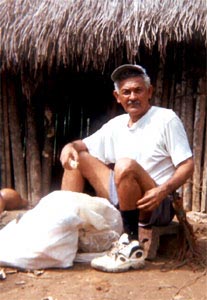
k_guideOur guide was most famous and experienced having made the trip over 500 times since the Lost City had been rediscovered in 1976.
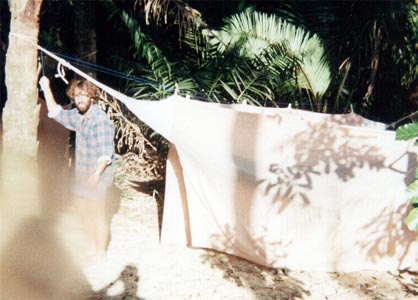
I carried my tent on the trek, much to the consternation of my old guide. He insisted we sleep in hammocks in the South American tradition.
k_lost_hammock

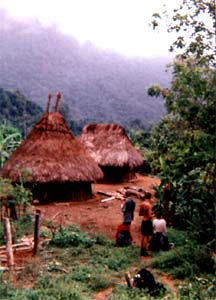
We visited a number of traditional villages en route. The guide was welcomed warmly everywhere we went.

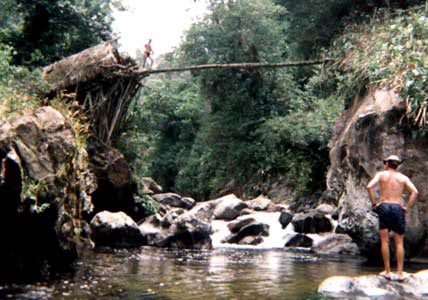
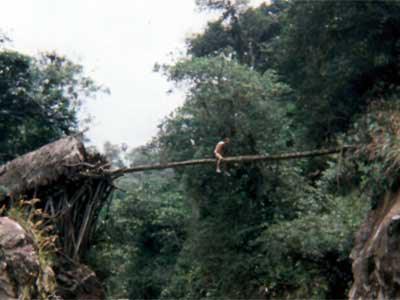
A log bridge provides a crossing when the water is higher. As a gymnast I volunteered to walk across as if it were a balance beam.

klost_log_bridge

OK. Not quite like a balance beam.

klost_log_c

The Lost City is remote & difficult to access.

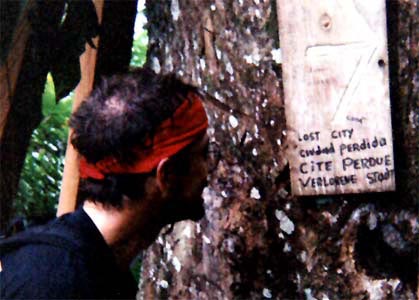
I was disappointed to see a sign showing the route. 🙂

klost_sign

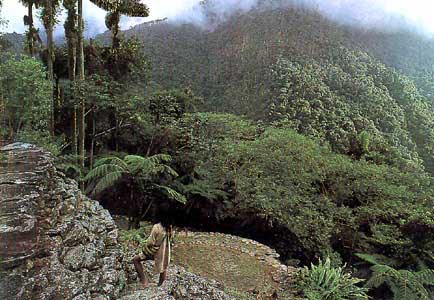
Finally, atop the steepest coastal mountain range in the world, we reached The Lost City.

lost_city

It is very Indiana Jones. Mysterious & enigmatic.

The site is pre-Hispanic. In fact some artifacts there date from 500 B.C.

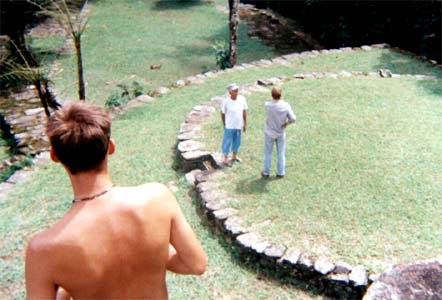
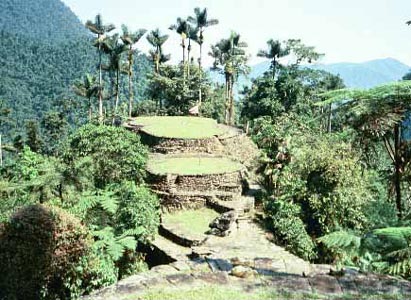
It’s less a city, than an entangled net of tiled roads, terraces and small circular plazas supported by walls on the sharper mountains.

lost_city3

The site begs the question; why here?

Access to the coast is near impossible.

Theory is that the native inhabitants had a variety of climates, ranging from the hot to cold temperatures. Consequently, they had access to a great variety of game & wild fruit.

Rediscovered by grave robbers, the hundreds of overgrown stone terraces which once held a city have been restored.

lost_city_terrace

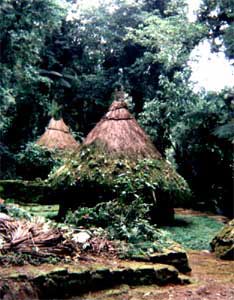
Huts like these have been restored only in a few places.

lost_huts

On a king’s throne in the Lost City.

lost_throne

Colombia is strongly Catholic. I found these trees evocative.

lost_trees

On the return, in a native village, we were shown trees growing a date rape drug — borrachero, I believe it is called — a soporific often used too, in South America, on hapless tourists.

lost_village

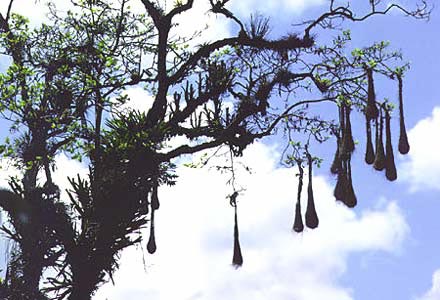
Oropendulas (related to blackbirds and orioles) are communal nesters. Each male builds its own hanging nest, which are then grouped together in a favorite tree. The same tree may be used for many generations. Their name comes from the gold (= “oro” in Spanish) color on their tails, and the pendulum-like nest..

m0oropendula_nest

A couple of days walk from the highway, a vendor had set up shop for our handful of hikers — the only gringos on the moutain.

m1lost_coke

On the trip up the mountain we were cautious & nervous — worried about narco-trafficers, slick trails, moss, suckers & vines, toads & snakes, thunder & lightening, mud & dark.

We removed our shoes at every creek crossing.

On the way down we were confident & relaxed, shirtless, splashing in every waterway to cool off. One of the hikers was savvy enough to bring a snorkel!

mrick_river

The Lost City was a terrific hike. We loved it.

The danger and adrenaline added to the allure.

At one point on the track, I stopped to watch a wasp paralyze a much larger spider, then lay her eggs on the spider’s back.

mriver2

Just like National Geographic.

Survivors. Lost City trek, Colombia, 1997.

nsurvivors

In 2003 a group of 8 hikers like ours was kidnapped. One escaped almost immediately, but others were held for over 100 days.

Colombia should be one of the world’s most exciting destinations. Unfortunately, guerrilla war, cocaine cartels & kidnapping scare most tourists away.

It was unsafe in 1997. But Colombia worsened in 2002 when the government cut off peace negotiations with the Marxist rebel organization FARC (Revolutionary Armed Forces of Colombia).

Colombia is charmingly undeveloped & non-Western. Many women in South America want to be voluptuous. They sashay sexy.

p40l

I was impressed with the confident swagger of the women. They need not turn down their eyes from every man who checks them out.

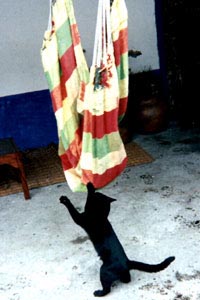
My hiking guide — who had finally convinced me of the advantages of a hammock over my tent — took me to the market to purchase an authentic, quality Colombian double hammock.

p41hammock_cat

I still use it, even sleeping outside in minus 40 degrees Celsius Canada.

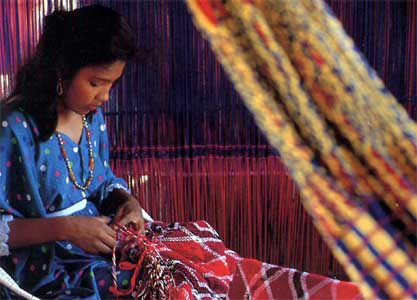
Hammock quality varies widely. Cheaper ones fall apart quickly.

p42making

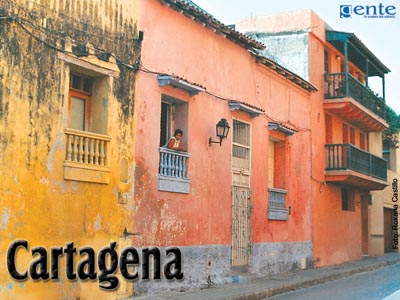
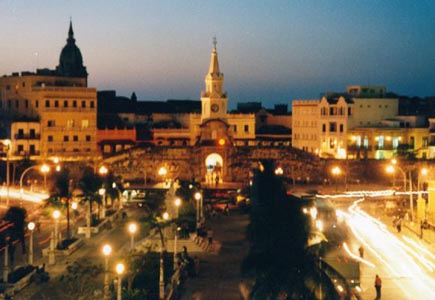
From Santa Marta, I travelled down the coast to Cartagena, every tourist’s favourite spot.

s2

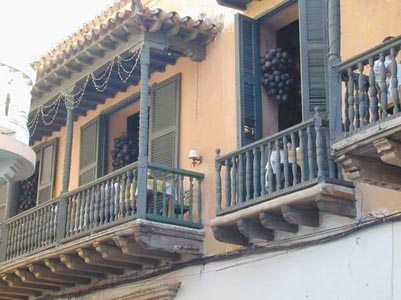
You might be in Europe. Overhanging balconies are much photographed.

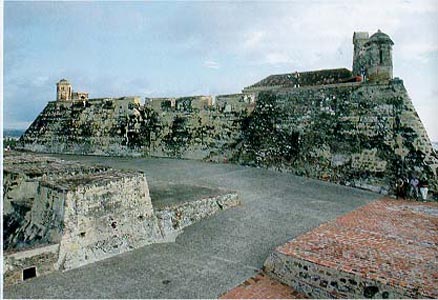
Cartagena is an old city with a big colonial fortress. The main tourist attraction is the clear sea.

s3

I saw the movie The English Patient in a huge, beautiful theatre here. The locale added to the romance of the film.

Colonial architecture, churches & plazas are lovely.

s7

San Felipe castle, Caragena, Colombia.

s5

To connect to a flight out of the country, I travelled to the capital for a couple of days.

zw

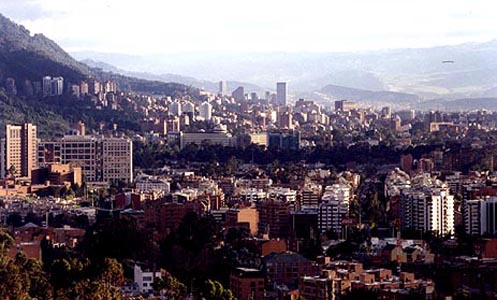
Bogotá is a city of modern architecture, a vibrant and diverse cultural and intellectual life, splendid colonial churches and brilliant museums. It is also a city of Dickensian waifs, beggars, shantytowns, drug dealers and traffic jams. This amazing mixture of prosperity and poverty, Maseratis and mules, makes it one of the world’s most chaotic, fascinating and aggressive metropolises.

I was totally impressed by the Museo del Oro (Museum of Gold) which contains many relics of pre-Colombian history.

Colombia should be one of the prize backpacker destinations in the world. The people are terrific. The coast dramatically beautiful. The rainforests, mountains and beaches wonderful.

zza

But drug kingpins and corrupt politicians have made it almost impossible. In 2003, more than 3000 people were abducted.

I would love to return some day. When it is safer.

Departing South America I was stung by crooked airport officials for about US$10.:-(

Adios.

travelogue – Venezuela

Lost overnight in the Andes, rafting an unknown river & fishing for piranha, Venezuela was memorable.

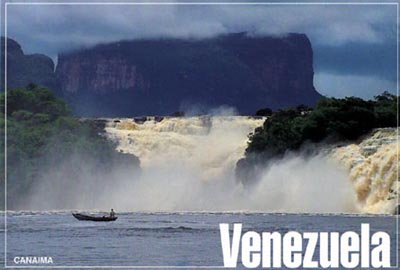
I’d heard of Angel Falls, the world’s highest. And heard of strange flat-topped mountains.

0canaima

I had originally planned to fly to Peru to hike — but two Swedish dope smokers in Trinidad convinced me that Venezuela was an even better hiking destination and was only a few kms away. I could almost SWIM!

0map

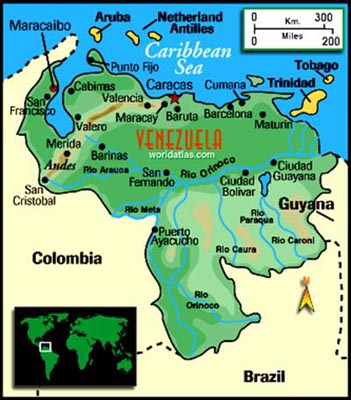
Caracus was not recommended. And it was the wrong time of year for Angel Falls. So I connected directly to Merida in the Andes. A good decision.

Venezuela and surrounds are famous for beautiful women. (Tourist bumpf emphasizes this.)

On my flight to Venezuela was the most beautiful woman I had ever seen. An auspicious start.

0mb_venezuela

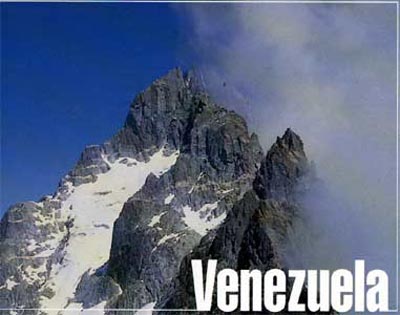
Merida is rightly acclaimed as one of the best mountain destinations in the world. The small town sits at the foot of the highest mountain in Venezuela.

0pvenezuela_mtns

Unhurried and bohemian, backpackers love Merida.

1_2523

They all stay near a small park with a magic view of the mountains. I felt fate had brought me here when I saw gymnastics equipment outdoors down the street from my hostel. Local strong men and a few tourists work out there with Andean inspiration.

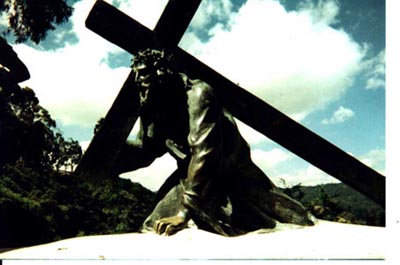
Not much of a photographer, I did snap this with a disposable camera, one of my favourite travel shots, in a Merida graveyard.

1_2524christsm

South America was still strongly Catholic when I was there in 1997.

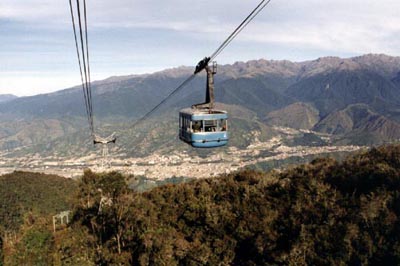
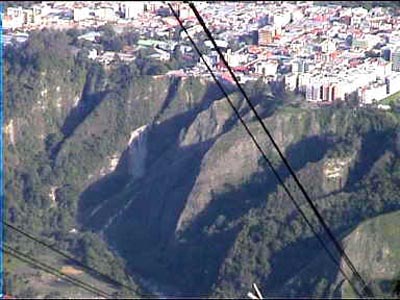
The main attraction, Merida boasts the world’s highest (4765m) and longest (12.5km) cable car. Unfortunately, in the 1980s a car on the top crashed killing an undisclosed number of tourists. The last section of the ride up was never repaired.

2543

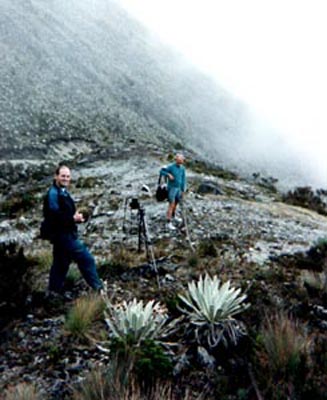
Still, I could ride to 4000m and hike from there. Overnight camping is technically illegal so almost no one knew where I was going as I headed up the mountain.

Merida sits on a flat messeta, a high terrace between 2 parallel rivers. Stunning. The short airport runway is right in the centre of town.

2_2542

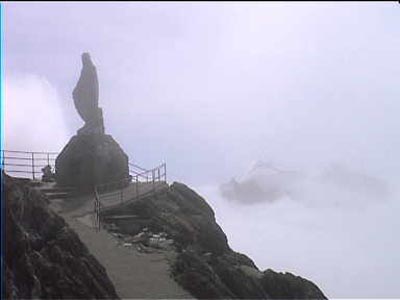
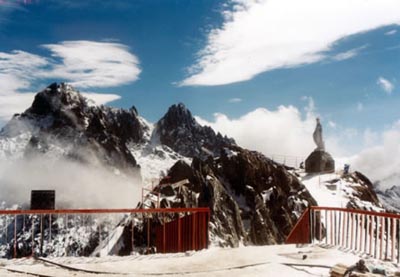
The Virgin of the Snows, a statue of Mary high atop a mountain in Venezuela. I would not visit Mary — instead camping away from this, the usual tourist route.

2_2575

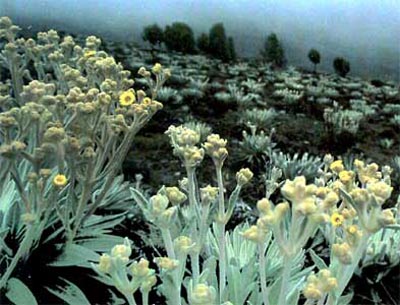
The vegetation and scenery is amazing — so different than any other alpine area I had seen.

2_35plants

Tourists examining the fallen cables, untouched since wind blew them down in the 1980s.

2_3cables

Excited, I planned to tent solo for 1 night in the Andes. My dinner would have a Spanish theme: crusty bread, cheese, anchovies and a bottle of rough red wine.

I climbed a ridge. The vista was magic with clouds blowing in and out. I dropped my pack at the first possible tent site & continued up looking for a better spot. The terrain was steep, exposed & rugged. Not many options for a tent.

2_4_fog

I knew that at the top of the mountain was The Virgin of the Snows, a statue of the Virgin Mary. She led me on.

30jpg

On a whim I decided to kiss the Virgin — once the day hiking tourists had departed for the day.

I was careful to note landmarks on my way up so I could return to the pack. Unfortunately they all disappeared in the clouds.

Blast.

Lost in the Andes above 4000m. I vainly searched for the ridge back down to my tent, pack and sleeping bag. Finally, as night fell, I resolved to take refuge in a grotto beneath an overhanging rock. I had water but no food.

For 10 hours I huddled shivering, calculating the probability of death from hypothermia in just a t-shirt and fleece pants. I’d like to tell you I learned something from this experience — but I didn’t. It was a drag.

At first light I tried another long route down. What a relief when, four hours later, I bumped into an elderly Swiss couple on the trail! They gave me a cookie & directions. I had been hopelessly lost.

To add insult to injury, officials on the cable car wanted to arrest me for camping illegally.

Lesson learned? Never leave your pack.

My legs were ruined from sprinting around the mountain.

What to do? I signed up for a 5-day rafting tour thinking it would give my legs time to heal up.

On the drive to the start our group stopped for lunch at a lovely ranch with stone buildings.

40

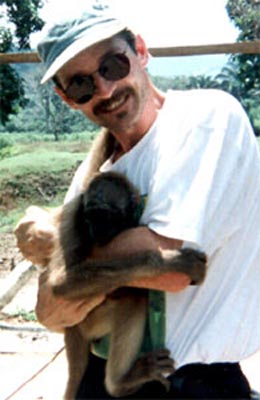
We played with the pet monkey.

41

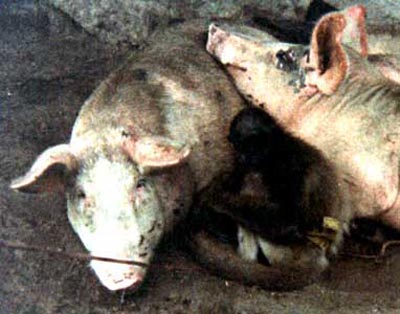
I felt sorry for the lonely monkey. For company he hung out with the farm pigs.

42monkey

Our crazy Dutch guide was the highlight of the trip. He married a Venezuelan woman but complained that she did nothing but watch Spanish soap operas on TV.

guide_ray

We came upon a dead sting ray in the river. The guide cut some flesh from the huge creature and had us fish for Pirayna — we caught them instantly in only 3 inches of water. The river is teeming with them!

The tiny fish are all teeth. But we still roasted them over an open fire as an appetizer.

Our guide convinced us to try rafting a NEW river. It was nice to be certain we would not see any other tourists on the trip.

We had 3 Germans, 1 Israeli, 2 Brits, 2 Canucks — typical of eco-adventure tour groups. This was a good one. Very relaxing.

raft_crew

Los Llanos (the plains), is Venezuela’s greatest repository of wildlife surpassing even the biomass of Amazonia. Imagine Alberta suddenly close to the equator.

I was there at the best time, the end of the dry season. Wildlife is forced to the major rivers where gringo tourists float.

It’s lovely country but prone to malaria. We saw farmers spraying DDT from backpack tanks to keep mosquitos down. DDT is not banned in Venezuela.

raft_llanos

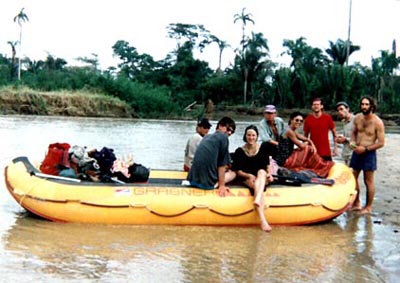
Trying to get to the river from the dirt road was an adventure. We had to carry raft overhead through a plantation.

raft_put

Putting in.
Putting in.

Something was eerie on the river, though. It took me a couple of days before I realized there are no water birds in Venezuela. There’s a lurker at every river bend ready to take any bird that alights.

raft_put3

We swam with the piranha and other beasts of the rivers many times a day without a second thought.

Our guide had never floated this river. Each day he searched out a camp site.

One night we stayed at this traditional cattle ranch, sleeping in hammocks. Another night we strung hammocks in a simple shelter providing shade for stock animals.

ranchTerrific trip. Great fun.

venezuela_raft

The worst thing about Venezuela?

Terrible food! Inedible, really. Our tour took us to the most famous steak restaurant in the country. It was awful.

z

The coffee was fantastic, however, & available everywhere for something like C$.10 a shot.

In Venezuela I first heard of an amazing hike to a lost city hidden in the jungle. Unfortunately it was in Colombia, one of the most dangerous countries in the world. (Eight hikers were kidnapped on that hike in 2003. One escaped, the rest survived over 100 days in captivity.)

I instantly resolved to go for it.

First I had to climb back up the mountain to retrieve my pack. It was exactly where I had left it 6 days before.

On to Colombia!