It took a couple of tries before I found the right road, walking 1.5km from the centre of Gondar.
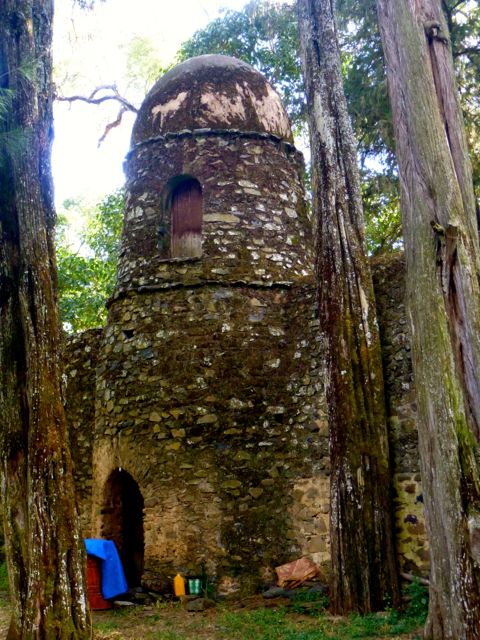
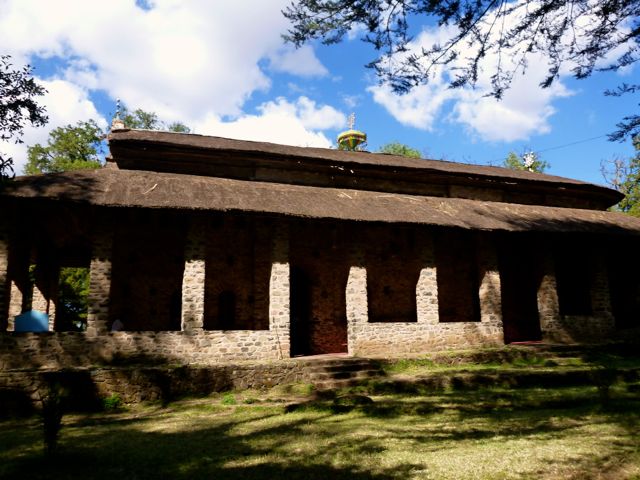
It looks as much a fortress as a church.
High, thick walls.
12 guard towers. (Each representing one of the twelve apostles.)
It’s small but solid.
Churches like this were once quite common in this area, but this is the only one of that era to survive Sudanese destruction.
I listened in as a tour guide explained the paintings and detail inside. Simple, but striking.
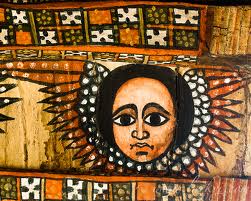
The walls depict biblical scenes and saints and the ceiling is covered with the faces of hundreds of angels. Icons of the Holy Trinity (three identical men with halos) and the Crucifixion have pride of place above the entrance to the Holy of Holies.
I walked the outside of the perimeter wall finding homeless people asleep. And a graveyard in disrepair.
Further from town is a big dam. I made one attempt to start walking in that direction, but a neighbourhood gentleman advised me to turn around. Walk back to town.
I’m not sure what the problem might be. But I heeded his advice. And turned back.
But it does not look like a giant shopping mall, as so many of the other new airports do.
The BIG news, however, is that people flying Qatar Airlines with layovers of over 8 hours currently get a complimentary hotel room at the airport. I met an Irishman who just took advantage of the promotion.
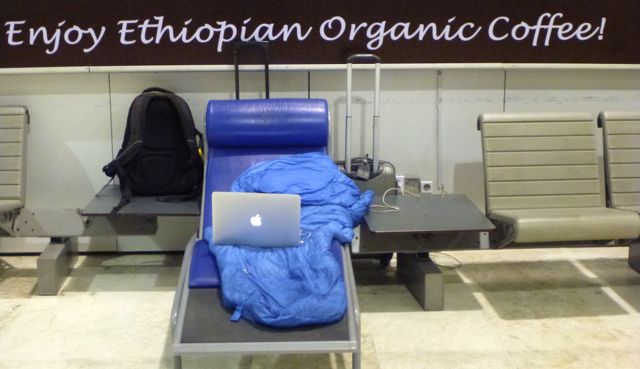
Sounds good to me. I sleep over in airports a number of days each year.
Rick’s “bed” in Addis Ababa airport
… Hamad International Airport was originally scheduled to open in 2009, but after a series of costly delays, the airport finally opened on April 30, 2014 …
Hamad International Airport has been designed to cater for a projected ongoing increase in the volume of traffic. The airport has an initial annual capacity of 29 million passengers, three times the current volume. Upon completion, it will be able to handle 50 million passengers per year, although some estimates suggest the airport could handle up to 93 million per year, making it the second largest airport in the region after Dubai. …
Click PLAY or watch it on YouTube. The Qatar Airlines CEO is something to see.
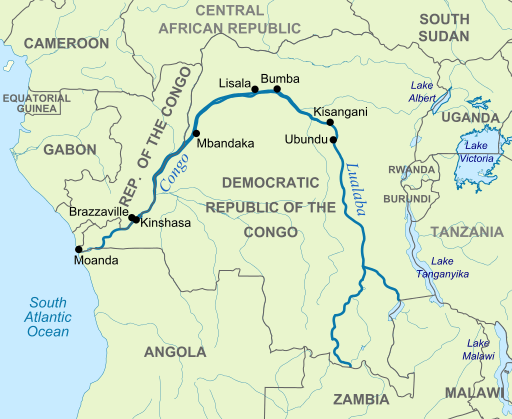
Brazzaville is the capital and largest city of the Republic of the Congo and is located on the Congo River. As of the 2007 census, it has a population of … about 2 million in total …
The populous city of Kinshasa (more than 10 million inhabitants in 2009), capital of the Democratic Republic of the Congo, lies just across the Congo River …
Brazzaville is named after the Italian (but French-naturalized) explorer Pietro Savorgnan di Brazza, the man who first discovered the Republic of Congo. Di Brazza was a gentle man, known for his non-violent methods and opposition to colonial exploitation. His body was returned in 2006, interred in a new gleaming memorial.
Brazzaville is the only African capital to have retained its colonial name.
French control over the (Brazzaville) area was made official by the Berlin Conference of 1884. The city became the capital first of the French Congo, and then of French Equatorial Africa.
Brazza was the capital of ‘Free France’ for a number of years in the World War II. Charles De Gaulle stayed here in exile during World War II.
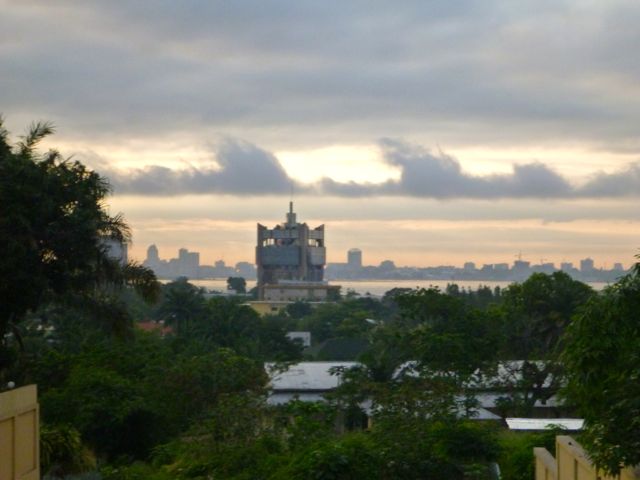
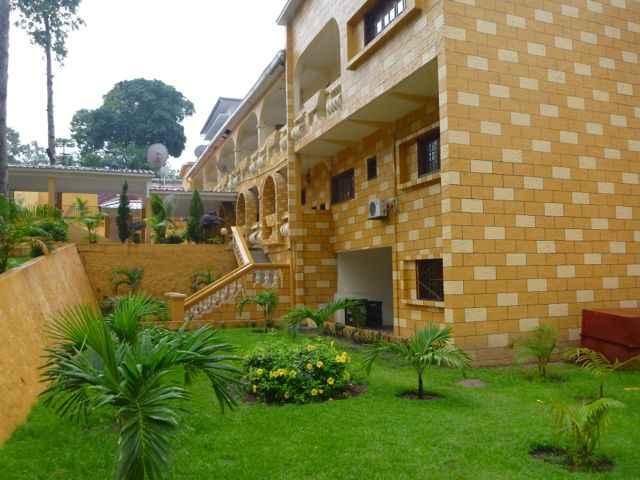
Here’s my hotel …
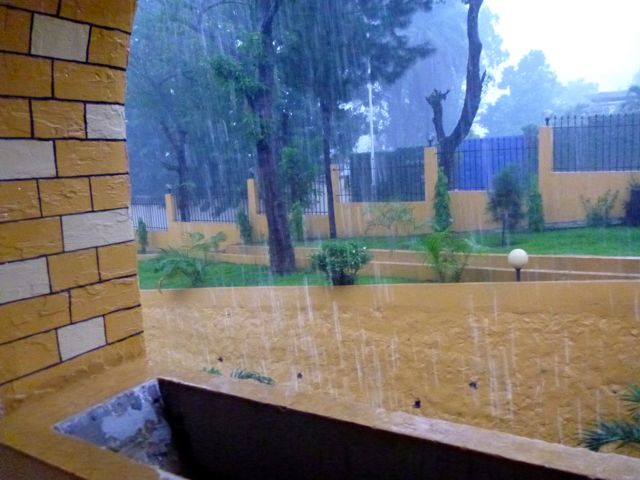
… it’s the rainy season.
There are surprisingly few stray dogs. This family lives in the fire hall.
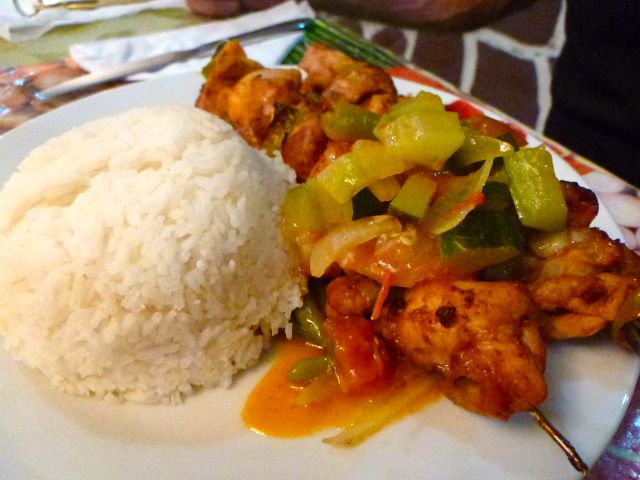
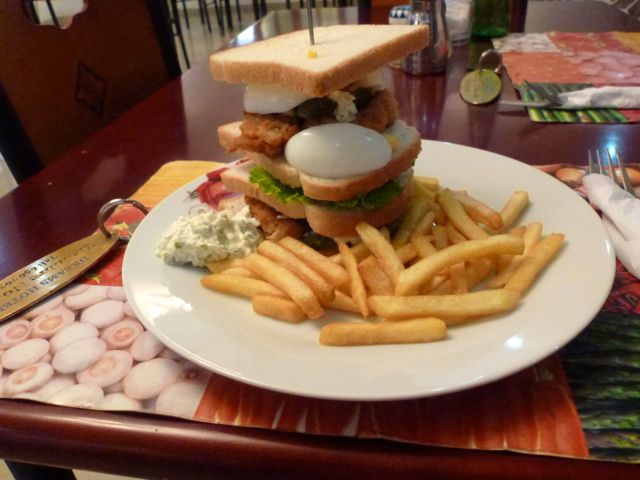
Traditional food is good. Western food … interesting.
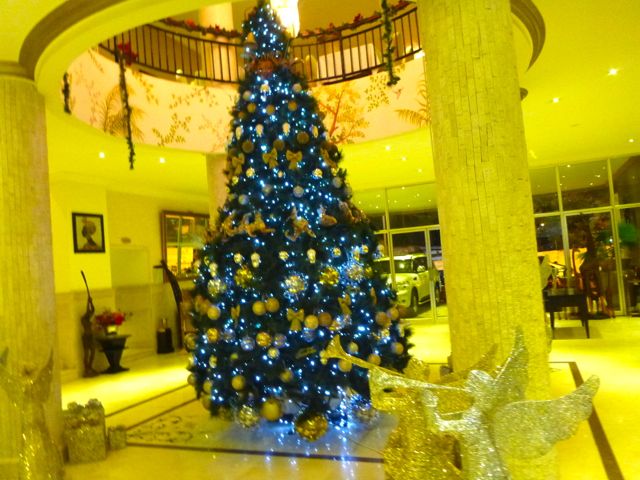
I’d not thought once of Christmas when I walked on to this scene in a fancy Brazzaville, Congo hotel.
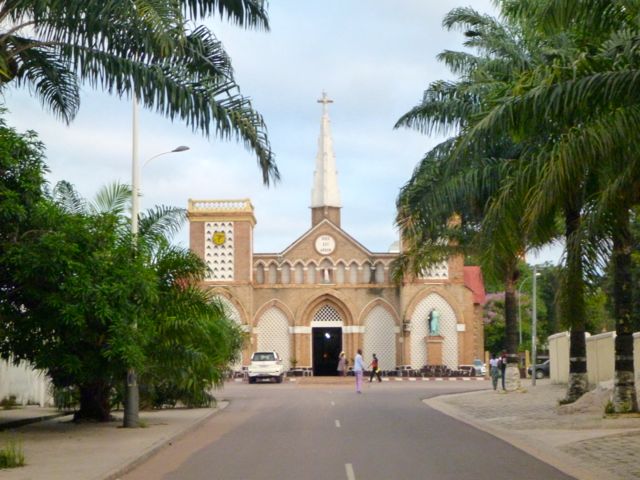
Brazzaville has some lovely churches and cathedrals.
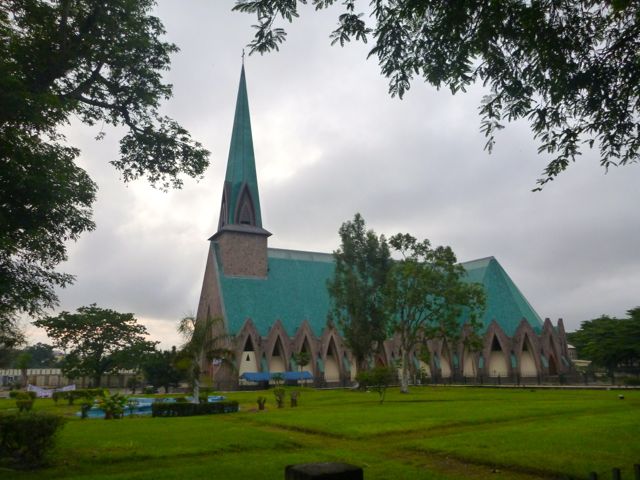
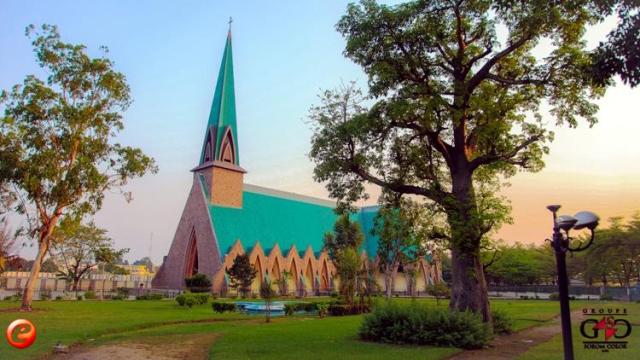
Basilique Sainte-Anne of the Congo, built by Roger Erell, 1949, is considered one of the most beautiful modern churches in the world. My photo does it no justice.
But it’s often sold out in high season despite the high cost, averaging $500 / day.
Uganda, Rwanda, and the Democratic Republic of the Congo are the only countries where it is possible to visit mountain gorillas.
However, there are “Western Lowland Gorilla tours” in Congo. Uganda has “habituated” some mountain gorillas to tourism. In Congo, wild gorillas may not be nearly as enthusiastic to see you and your camera.
Congo Travel and Tours offers a 6-day wild gorilla trip for $2200 – $3000. Too expensive for this unemployed drifter.
Instead I signed on for their 1-day Lésio Louna Gorilla reserve tour for about $500.
A Québécois hotel manager, Michel Auclair, in Brazzaville, Hotel Africa, was my guide for a 13-hour-day out to Lésio Louna.
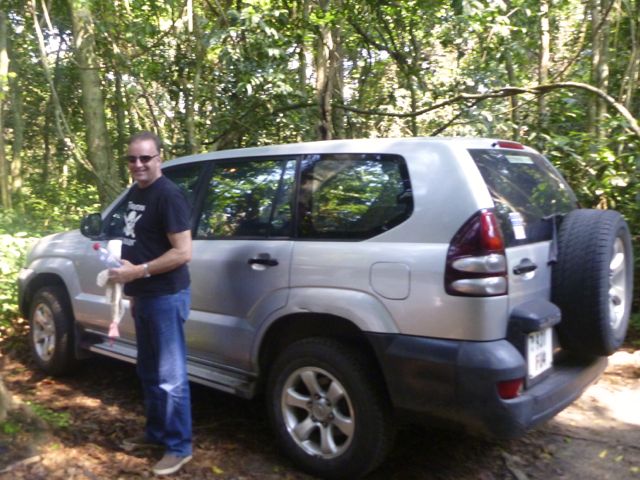
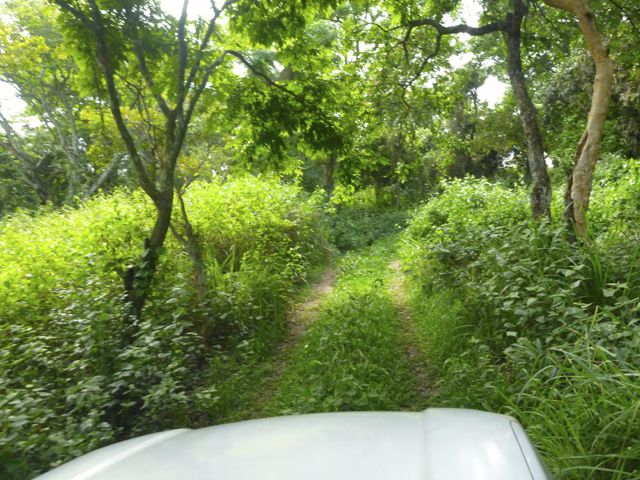
It took over 3 hours to drive the 100km+ to the Reserve. Some of the highway, built by the Chinese, is excellent. Some near impassable.
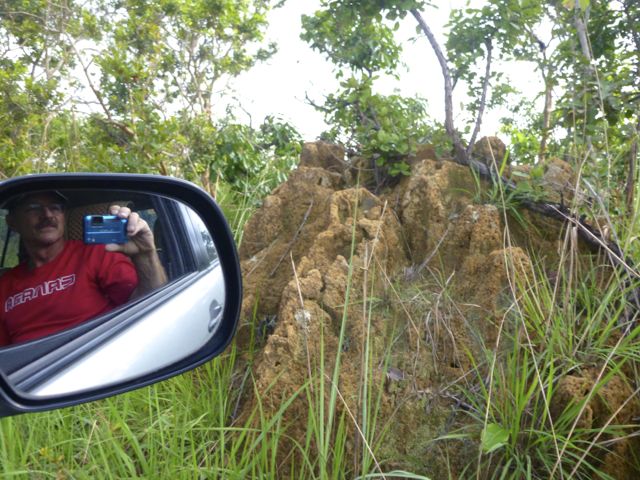
Toyota 4-wheel drives are astoundingly good vehicles.
I enjoyed the car touring.
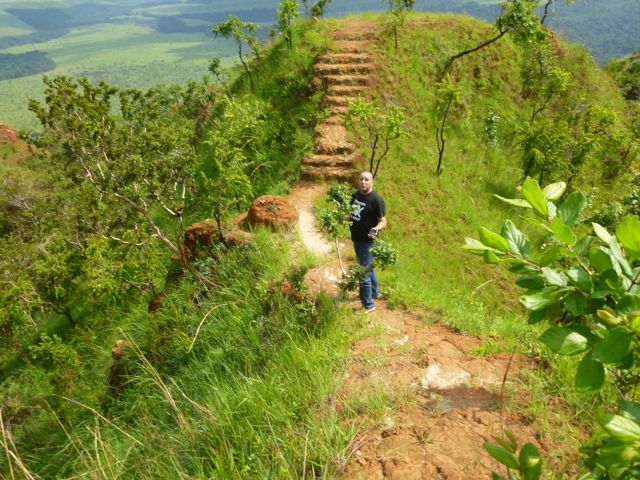
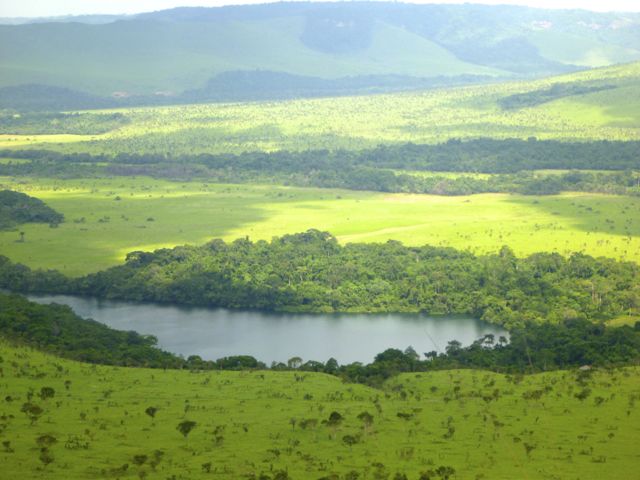
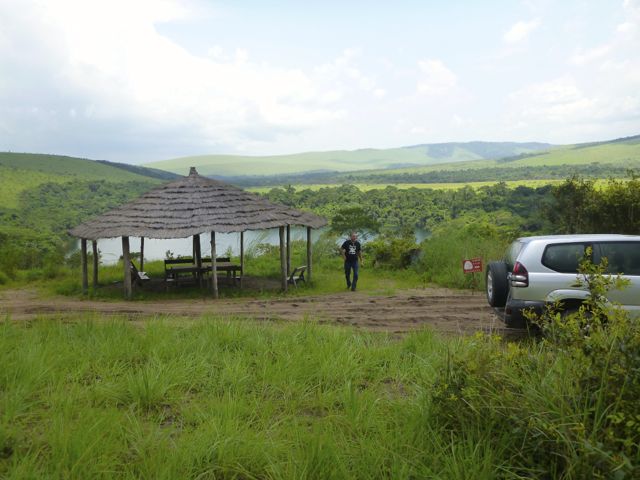
Here’s viewpoint, the first good look.
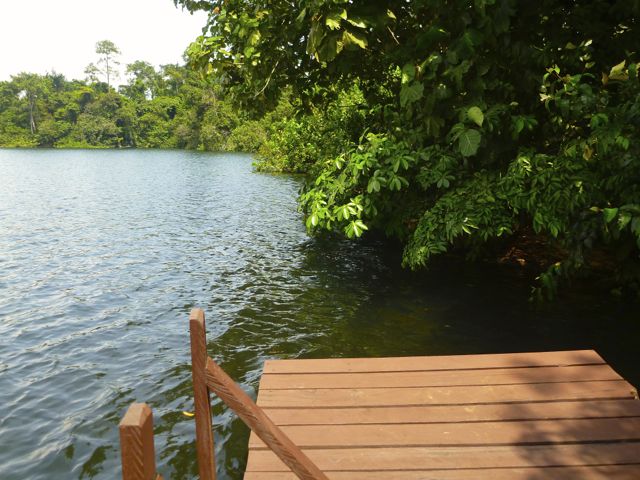
Blue Lake
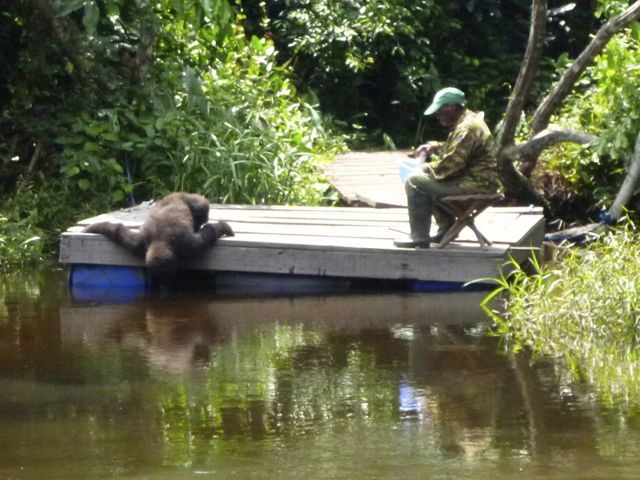
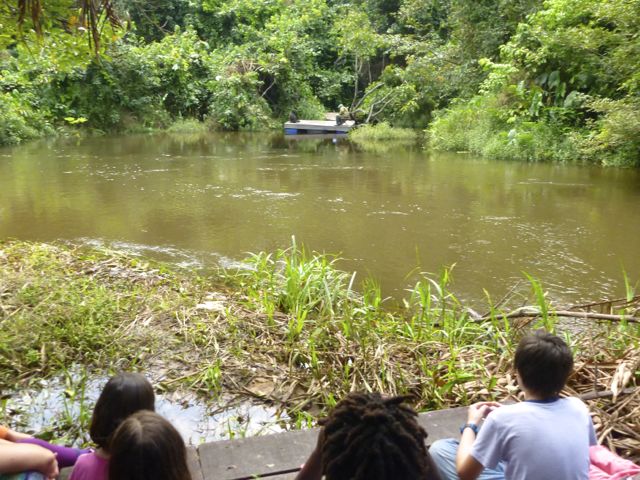
First stop was the gorilla orphanage. A 4yr-old and 3yr-old are kept separate from the rest. They are still being bottle fed.
The elder is dominant. He had his bottle then goofed on the dock for the entertainment of tourists.
The younger gorilla was careful to stay clear of the dock, fearing abuse from his only companion.
This dynamic plays out every meal. Eventually the younger got his meal supplement.
A highlight of the day was lunch at Blue Lake. Very few tourists make it here.
Though I hate swimming, I loved swimming in this crystal clear water, warm all year.
Hippos sometimes make it to the lake exit, but we saw nothing but fish in the lake itself.
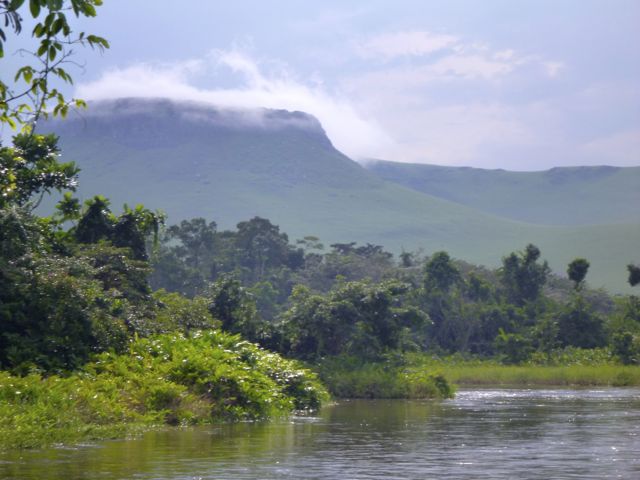
In Africaanything edible is quickly killed. We saw very little evidence of wildlife.
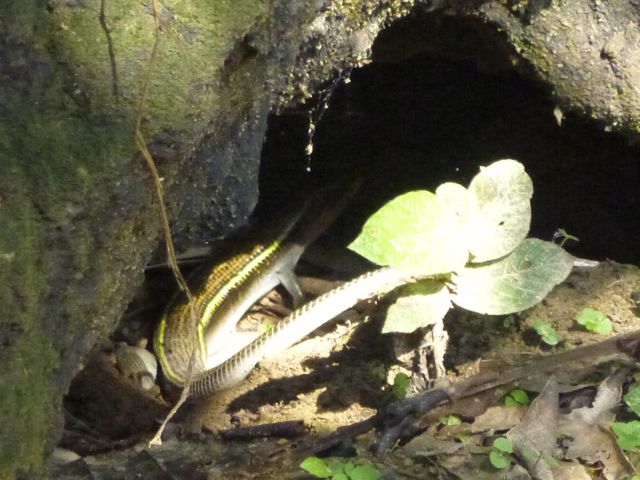
lizard
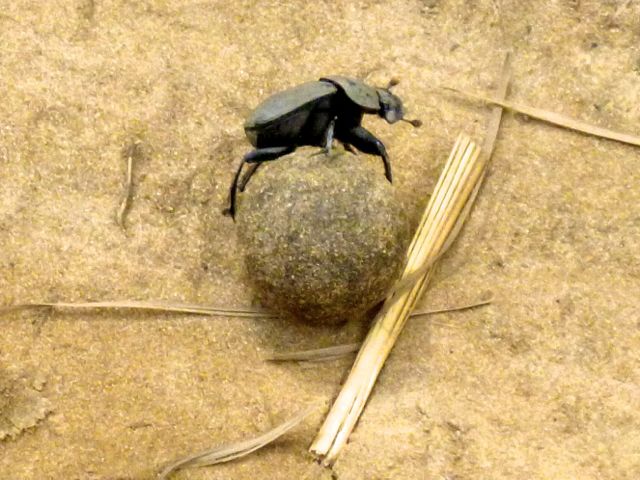
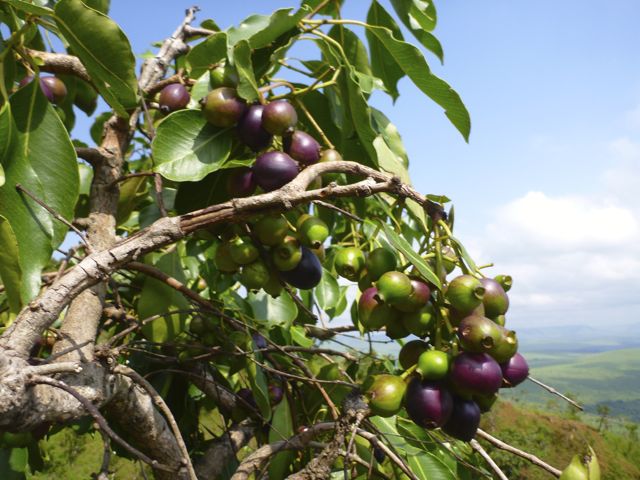
Deer are grazing these ideal valleys, however. Birds and giant insects were the main attraction for us.
My camera did not have enough zoom at the Orphanage.
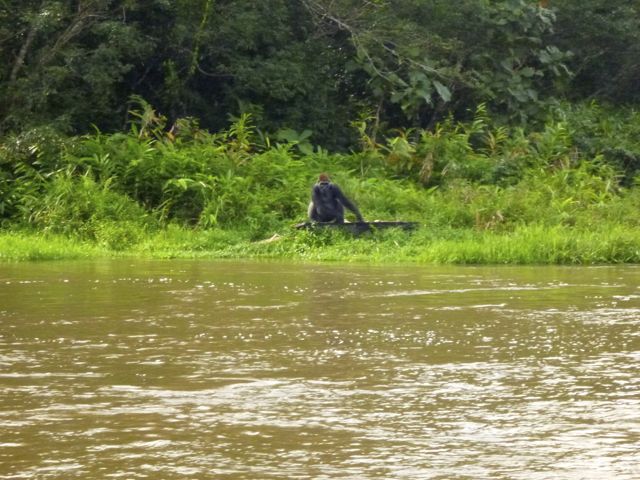
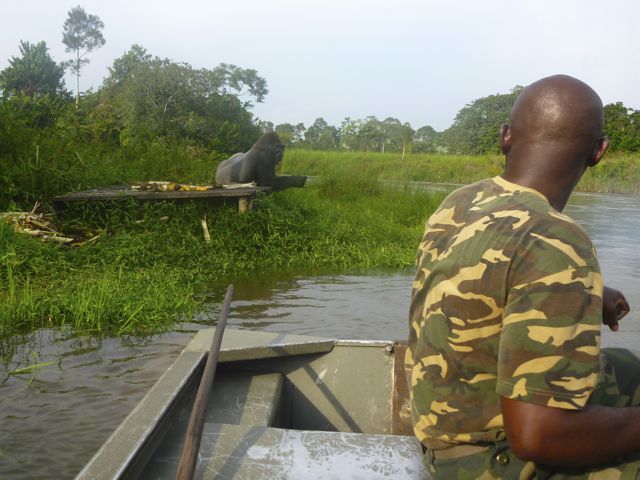
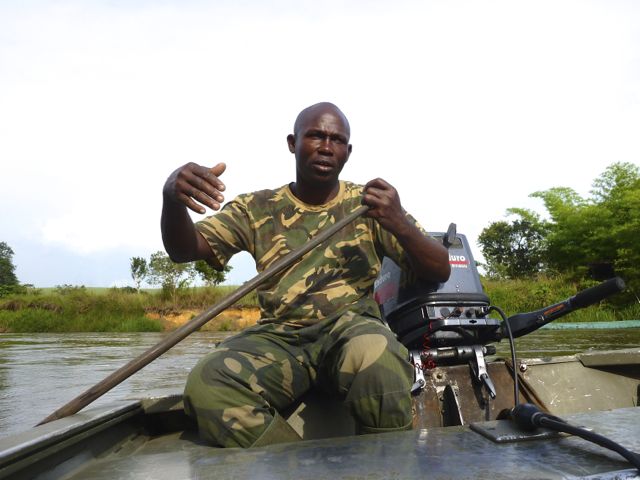
Happily, we visited Sid by boat.
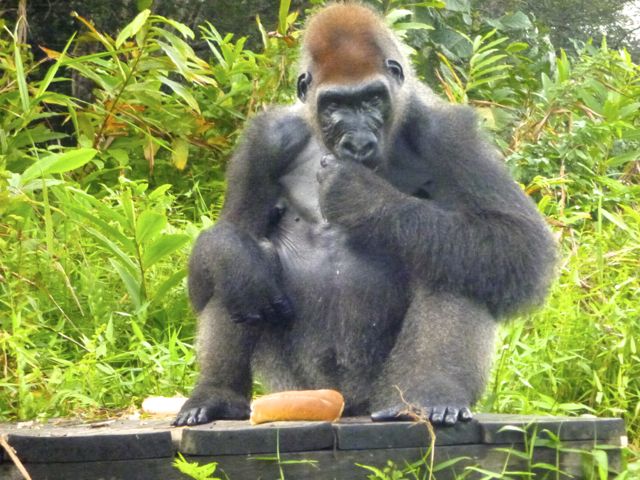
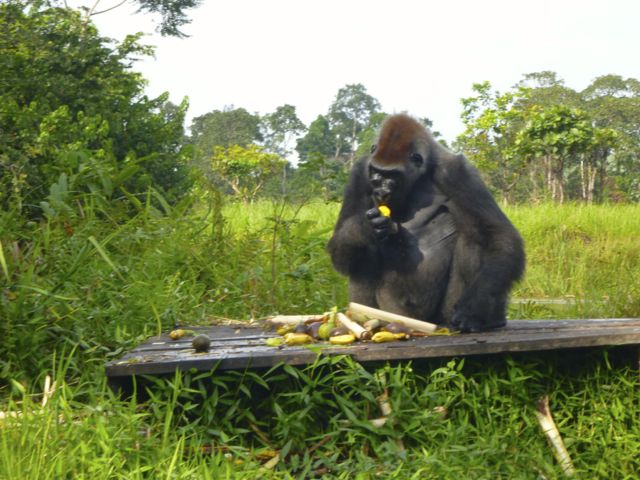
Sid lives alone on an island (gorillas don’t swim), though he’s still disinterested and/or disgusted with the tourists that visit. On a bad day he throws things at them. Today he simply ignored us.
Sid, now about age-30, suffered something like Polio when he was young. This left him stunted, less muscled than a normal male gorilla, a target for the others. He’s kept alone for his own safety.
bread was his favourite dinner food
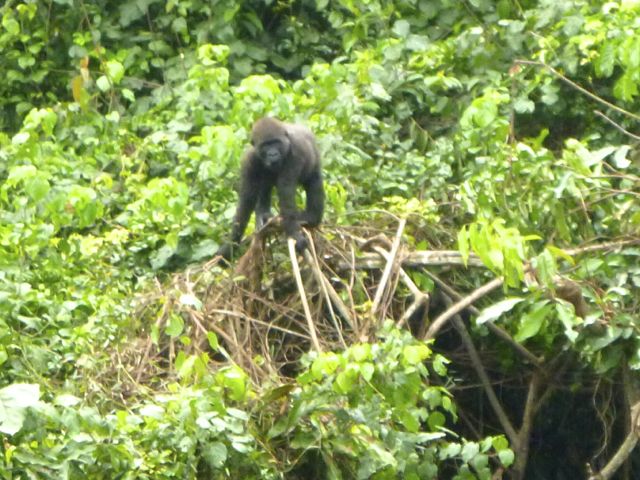
The other 30+ gorillas at Lésio Louna, former orphans, live in the wild, in 3 family groups. It’s possible to take a boat tour to see them, but you have to be lucky to catch a glimpse.
This truly is paradise, yet very few tourists get here each year.
Late in the day we departed the reserve. A bad idea — you don’t want to drive in Africa in the dark. The dangers at night are too numerous to list.
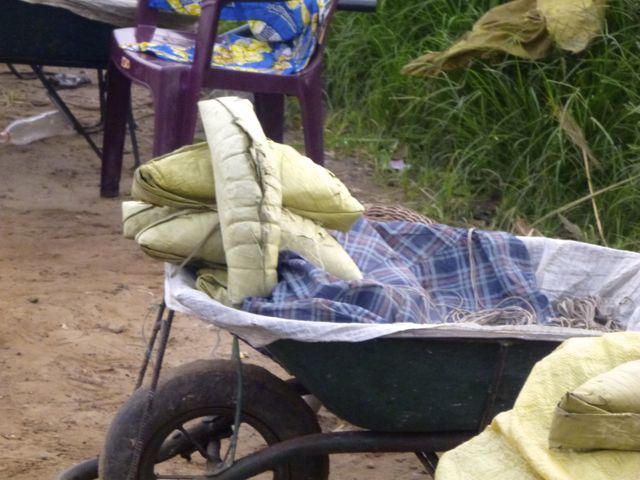
Michel stopped for manioc (cassava), however, purchasing 10 large bundles for his hotel restaurant and staff.
Loudly competing vendors literally threw the bundles into the back of his vehicle.
I was surprised to learn manioc came from South America. Like so many of the staples of the world.
Michel and I were both happy with the day. He planned to return sometime and overnight at the Orphanage with his girlfriend.
typical African sunset
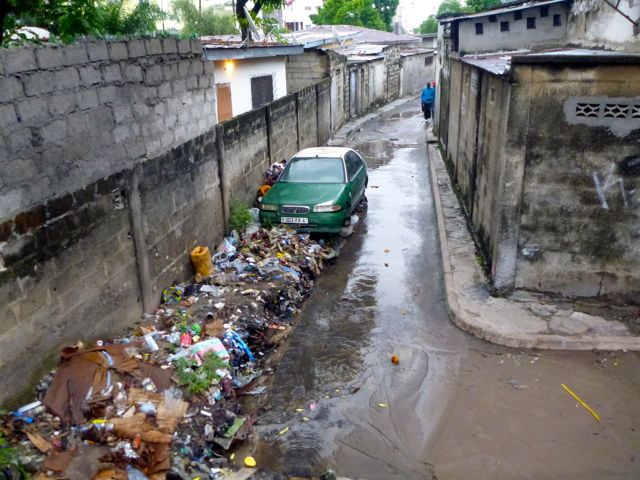
Unfortunately we arrived back to Brazza to a Saturday night traffic jam. It took 90 minutes to inch our way perhaps 2km through the poor side of town. It’s a bleak district. No water. No toilets. No power.
Drivers were irritated. It got pretty ugly at times.
During the long day I learned much about the many, many problems of this nation from an expat trying to make some progress. He has no confidence at all in Congo. And will soon leave.
What’s keeping him here?
His African girlfriend. His good reputation as a builder, manager and deal maker. And some big projects in the works. There IS opportunity for a businessman in Africa.
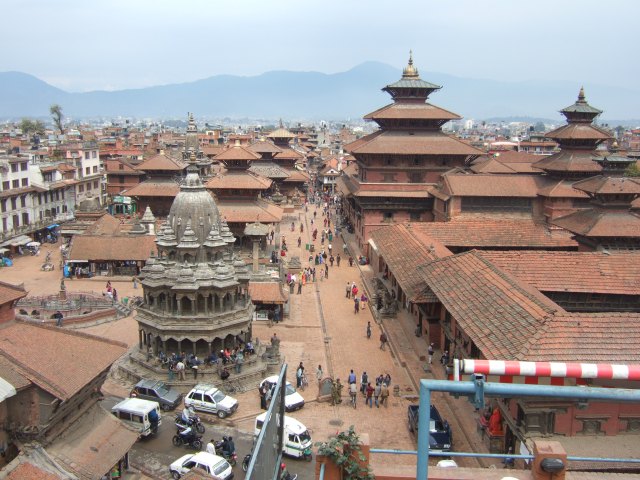
Patan, Kathmandu … was initially designed in the shape of the Buddhist Dharma-Chakra (Wheel of Righteousness). The four thurs or mounds on the perimeter of Patan are ascribed around, one at each corner of its cardinal points, which are popularly known as Asoka Stupas. Legend has it that Emperor Asoka (the legendary King of India) visited with his daughter Charumati to Kathmandu in 250 BC and erected five Asoka Stupas, four in the surrounding and one at the middle of the Patan. The size and shape of these stupas seem to breathe their antiquity in a real sense. There are more than 1,200 Buddhist monuments of various shapes and sizes scattered in and around the city.
The most important monument of the city is Patan Durbar Square …
I arrived at dusk, my favourite time of day. Ticket takers were happy to collect the $5 entry fee … then told me that the museum and some of the other attractions had just been locked up. 😦
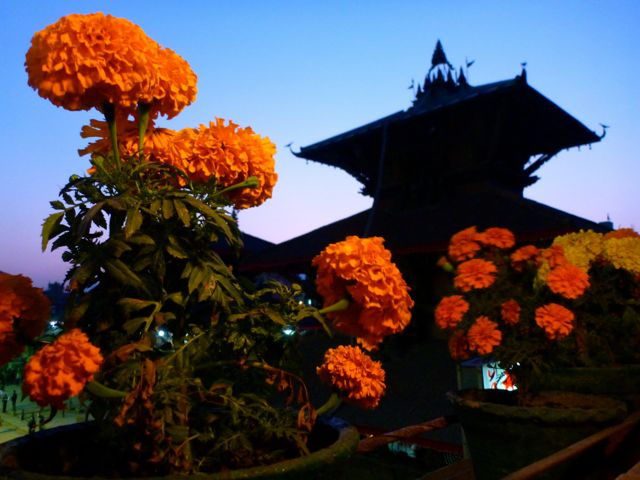
Still, it was lovely watching the light fade over antiquity from my rooftop restaurant.
Bhaktapur is easily the best of the 3 major Kathmandu former capitals. Patan is a pale second best.









 I was surprised to learn manioc came from South America. Like so many of the staples of the world.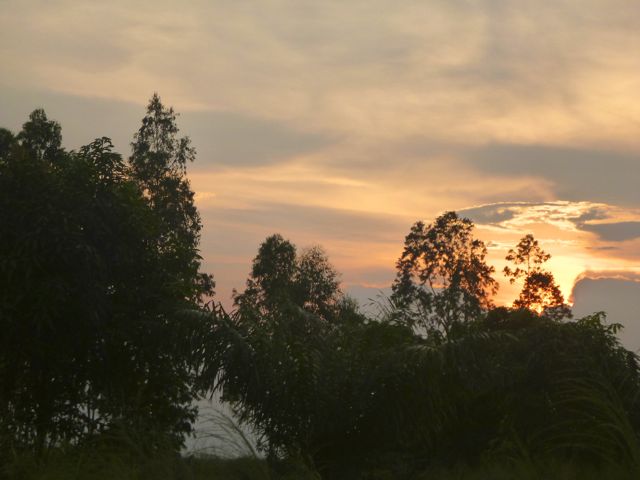

 Rick McCharles