Cost is about USD $61. Expensive for a hostel bed, but not expensive compared with other options in Vancouver. A friend got a room in a Richmond AirBnB for not much more, however.
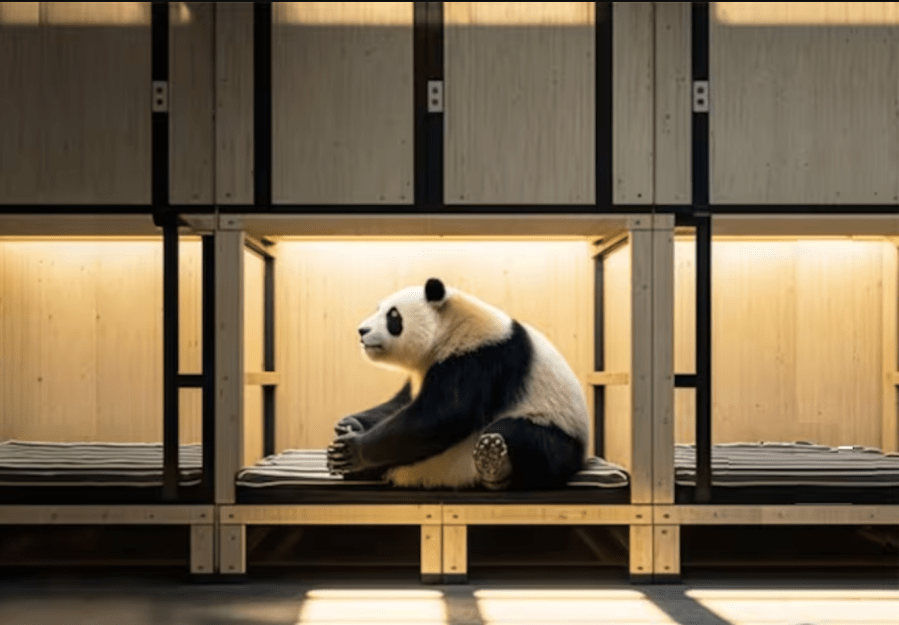
It’s one big room full of independent bunk beds. A bit crowded.
Luggage storage is convenient. First item free, second piece will be charged at $5 per night per item. HOWEVER — they won’t store a bike or bike box. I had to take a taxi back to the airport and check it into airport luggage storage. (Maximum 48 hours).
… a writer and adventurer, and an enthusiast for all things endurance challenges, particularly in the mountains.
Whether it be a race or a solo adventure, her desire to push her limits has led her to numerous corners of the world.
In 2021 she completed a global challenge to run, solo and unsupported, across a mountain range on every continent, including three world-first traverses. She’s also competed in long-distance bikepacking races, including becoming the two-time first woman in the Silk Road Mountain Race and first woman in the inaugural Atlas Mountain Race – considered two of the toughest off-road bike races.
Outside of her personal pursuits, she is on a mission to get more people outside and challenging their own comfort zones, particularly women and girls, which she has championed by launching a book called Tough Women: Adventure Stories.
Having grown up in Calgary, I’d done a LOT of hiking in the Canadian Rockies in the SUMMER.
But for the past 3 years I’ve stayed in Banff for Spring skiing and Spring hiking.
Hiking in March / April was NEW to me.
Each time I stayed in the Samesun Hostel, the best overall of 3 good hostels in Banff.
I learned the hard way trying Sundance Canyon that micro spikes are essential for hiking ice. I backtracked to town and bought Yaktrax. An excellent product.
In fact, she doesn’t believe women are at any disadvantage in ultra-endurance sports. BUT most races are 90% men, 10% women.
Lael has a BIG YEAR planned for 2023 again racing the Tour Divide and Arizona Trail.
Her current goal is to encourage more girls and women to cycle. To that end, she documents her races even at risk of being disqualified as she was in the 2019 Tour Divide.
Foolishly, many ultra-endurance races don’t allow video crews, considering them psychological support. That’s true, of course. BUT those races should encourage ALL to have media support people.
AND he names names. These are some of the women he follows:
Ann Johansson – Mairawa – Cycled Sweden to Tajikistan and Sweden to Thailand Anna Kitlar – Bikexploring – Cycled North America, Asia to Europe, Africa Anne Westwards – Anne Westwards – 1.5 years through Asia and the Middle East Astrid Domingo Molyneux – Cycling Full Circle – 2 years through Europe, the Middle East, Asia and North America Blanca Fernandez – Blanca on a Bike – Cycled London to Asia, now travelling Africa Blandine – Kick The World – 5 years, 57000km, 37 countries Barbara Graf – Caretaker – Long bicycle journeys all over the world Carmen Mickley – Vegan Cycling – 41,250km, 31 countries, three continents, three years Cinderella Servranckx – Cycling Cindy – 50000km across 45 countries Dervla Murphy – Full Tilt – Ireland to India on a bicycle… in 1963! Check out her book on the experience. Dorothee Fleck – Women’s Cycling Guide – 12 years, 98 countries, 180,000km by bike Eleanor Moseman – Wander Cyclist – 2 years, 26,000km, China, Mongolia & Central Asia Emily Chappell – That Emily Chappell– Europe to Asia, North America and currently focussing on ultra-endurance cycling Ewa Świderska – Ewcyna – Travelling by bike around the world since 2013 Fredrika Ek – The Bike Ramble – 1000 days around the world, 51000km, 45 countries, 25 years old Gaëlle Bojko – Bike to the Blocks – One year around Europe, Lake Baikal in Siberia (lots of snow!) Genevieve Fortin – On The Bike Again – Has cycled dozens of countries since 2006 Heike Pirngruber – Push Bike Girl – Travelling by bike around the world since 2013, an amazing photographer Helen Dainty – Hels on Wheels – Cycling for six years (so far!), three continents, 43 countries on the bike Helen Lloyd – Helen’s Take On – 45 countries, 45,000km, four continents Hera van Willick – Wild Awake – Cycled extensively in Europe, Asia, North & Central America Hyojin “Jin” Jeong – Universe With Me – 80000km around the world since 2011 Ishbel Holmes – World Bike Girl – Cycled 20 countries over three years Jeannette Gagne – A Voyage of Mysterious Me – Cycled to the “North Pole”, in Oceania and currently in Africa Jenny Graham – JennyGrahamIs – Fastest woman to cycle around the world (124 days) Joanna Kaszewiak – On By Ways – Europe to Asia by bike, bus and plane Josie Dew – Josie Dew – 35 years of solo adventures, author of seven bicycle touring books Jude & Astrid – Foons On Bikes – Australia to the UK, then the UK to South Africa Juliana Buhring – Juliana Buhring – Around the world in 152 days, ultra-endurance extraordinaire Kate Leeming – Breaking The Cycle – Lots of big bike expeditions since 1993 Lael Wilcox – Lael Wilcox – Extensive touring experience with her ex-partner, more recently has won ultra-cycling events solo Leana Neimand – Leana Neimand – Around the world since 2007, 89 countries, seven continents Loretta Henderson – Solo Female Cyclist – Cycled five continents, 51 countries, author of a book for solo women cyclists Louise Sutherland – Louise Sutherland – Cycled 60,000 kilometres through 54 countries in the 1940s through to the 1970s Lydia Leibbrandt – Lydia Leibbrandt – The Netherlands to China as a 20-year-old Mareike Dorf – Mina Travels The World– Cycled Europe, the Americas, Asia, Australia and NZ Marielle Jauring – The Biking Viking– 39000km across Australia, NZ, USA and Canada Martina Gees – Colorfish – Five years, 25 countries, 60,000km in multiple continents Mirjam Wouters – Cycling Dutch Girl – Cycling all over the world, now with a toddler! Nicole Heker – Unlearning By Bike – 22 countries, 377 days, Thailand to Spain Phoebe Tan – Riding Cyclette – Northern Europe to South East Asia Sarah Outen – Sarah Outen – London to Russia’s far east, also long-distance ocean rower and kayaker Snezana Radojicic – Snezana Radojicic – Cycling around the world since 2011 Tara Weir – Margo Polo – 21 countries, 37,000km, extensive travels through Asia in particular, but also Aus, NZ & N.America Valentina Brunet – Valentina On Wheels – 25000km from Vietnam to Italy
More:
Anna Kortschak – A Thousand Turns – Alaska to Argentina (Europe too!) Anna McNuff – Anna McNuff – Bolivia to Patagonia and 50 states of the USA Anna-Luisa Becke – Radmaedchen – Canada to Guatemala, 10000km, 10 months Cynthia Valladares – En Bici al Fin del Mundo – Ecuador to Patagonia as a 24-year-old Hilde Green – Working On My Calves – 30,000km bike trip from Alaska to Argentina Juli Hirata – Juli Hirata – Alaska to Argentina Kate Rawles – Carbon Cycle Kate – Brazil to Patagonia on a bamboo bicycle she made herself Leah Manning – Cycle South Chica – Cycled from the USA to Argentina Maria Garus – Solo Woman Cyclist – Alaska to Argentina, 24000km, 33 months Stefania Cioldi – She Is Around – Cycled about South America with a very cute cat Sissi Korhonen – Strangerless – Argentina to Mexico over three years Wiebke Lühmann – Pack and Tri– Colombia to Argentina over six months as a 23-year-old
This over-the-top video by Bashir Abu Shakra won the 2022 Skypixel Drone Grand Prize. It features some stunning footage from the Alps, Brazil, and Mongolia.
We ate most of our meals at the house. One restaurant blowout was hosted at Zac’s.
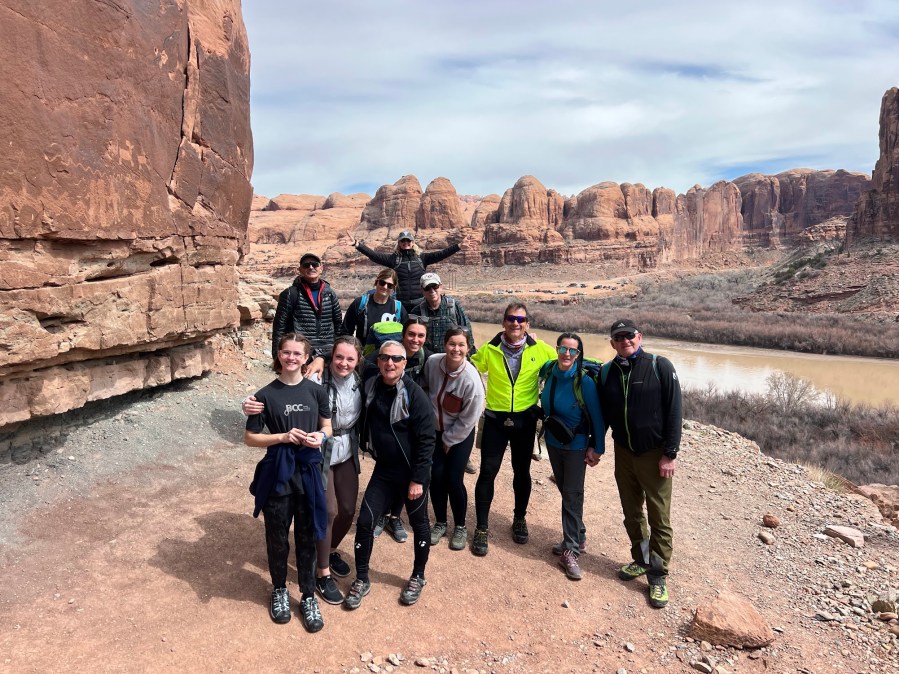
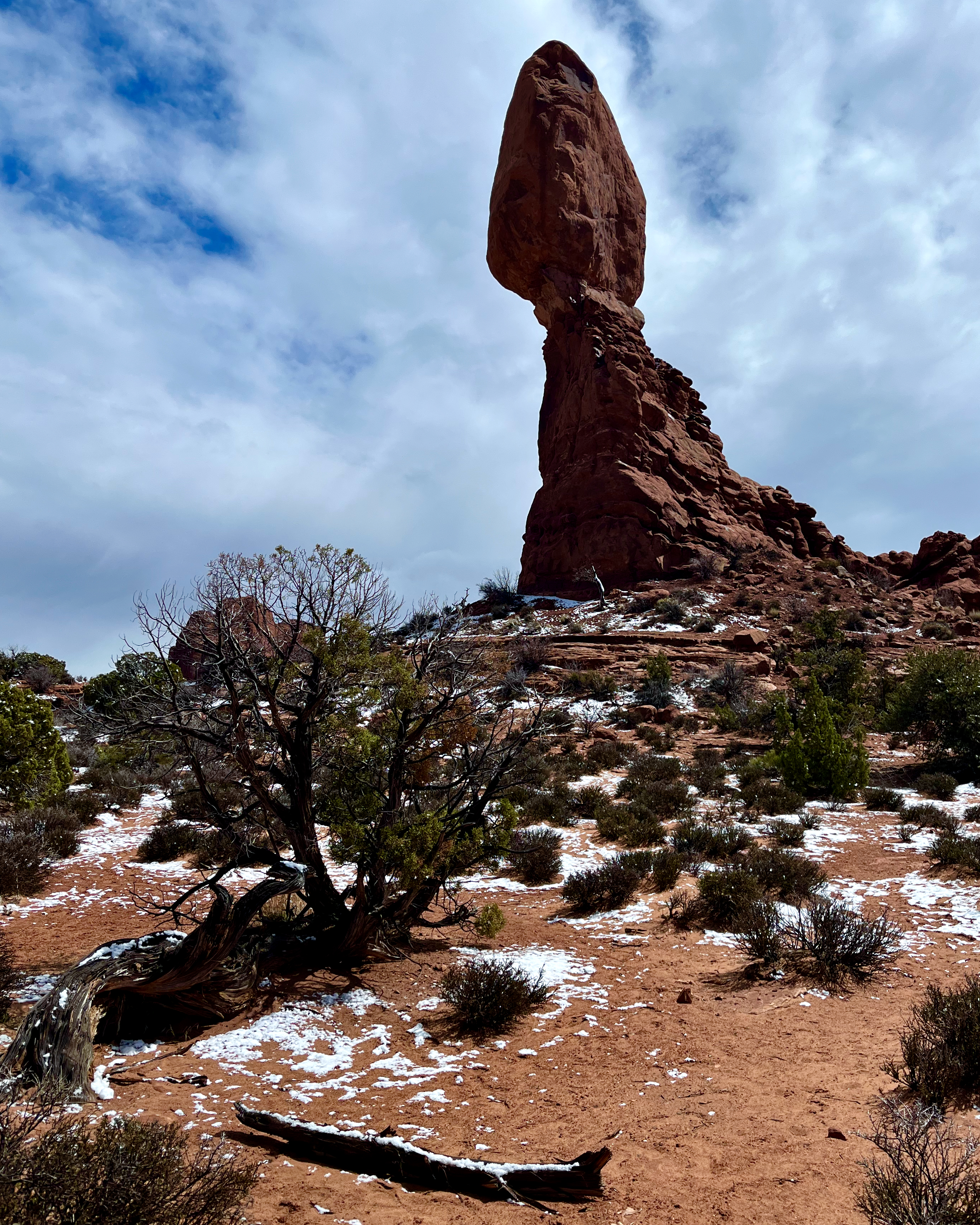
The infamous mountain bike circuit is called Slickrock Trail. I survived it in 2007 and did NOT want to risk a second time. BUT some of our group cycled it safely. Jeni and I hiked Slickrock.


 Rick McCharles