Sweet or salty light weight nothings. Buy them on the beach. They were invented in 1955. Sold out of the Globo bakery in Botafogo, hence the name.
I found them too bland.
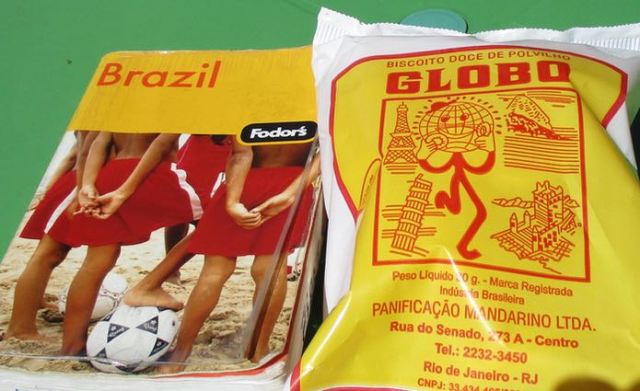

Sweet or salty light weight nothings. Buy them on the beach. They were invented in 1955. Sold out of the Globo bakery in Botafogo, hence the name.
I found them too bland.
The weather still overcast, I thought I’d do this mandatory Rio tourist attraction at dusk, my favourite time of the day. Then stay to see the lights.
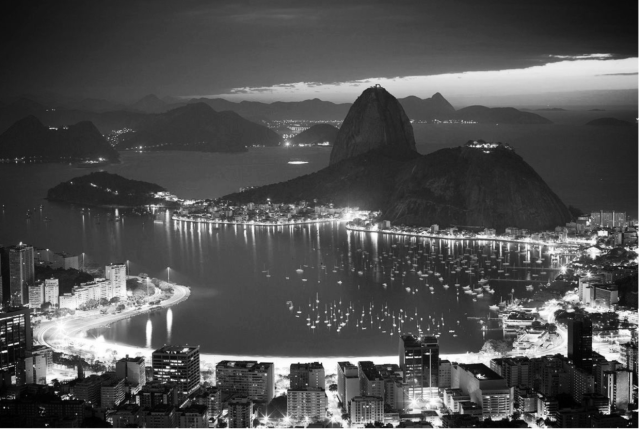
There are two cable cars with at stop in-between.
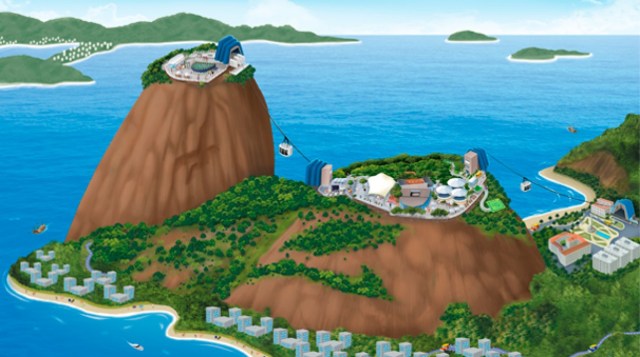
You can actually hike to the top of the first hill, but would need a guide and mountain climbing equipment for the second. Cost is the same whether or not you hike – $22 in 2016.
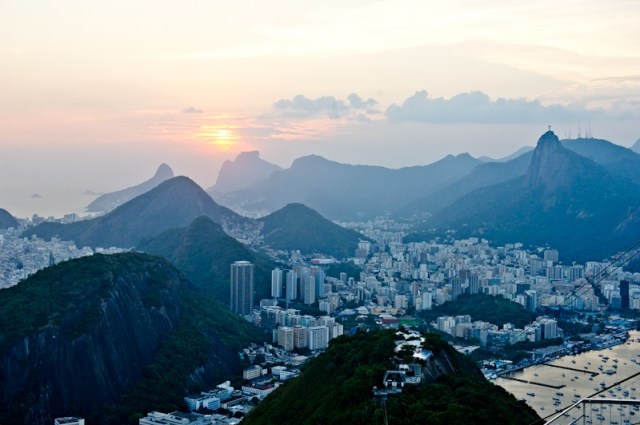
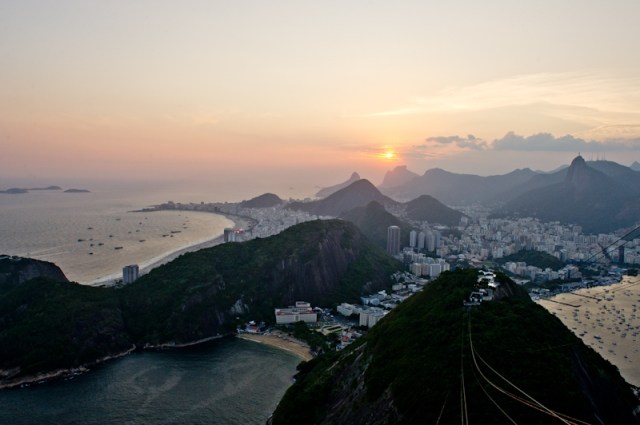
The cableway was envisioned by the engineer Augusto Ferreira Ramos in 1908 who sought support from well-known figures of Rio’s high society to promote its construction. Opened in 1912, it was only the third cableway to be built in the world. …
… In 1951, an accident occurred in which one of the two cables snapped, leaving 22 people dangling on one cable. One mechanic aboard, Augusto Goncales, climbed out and slithered down to Urca station and helped to build an emergency car to go back up and rescue the other passengers, 12 women and girls, 6 men and 3 children, in an event which took about 10 hours …
related – interactive map
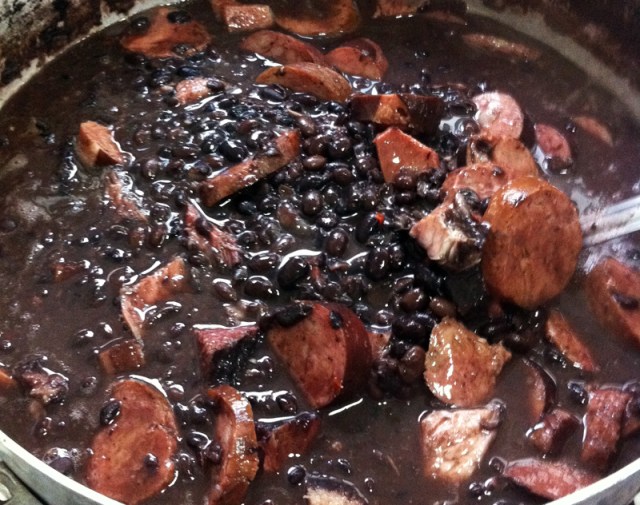
A stew of beans with beef and pork, which is a typical dish in Portugal and former Portuguese colonies, such as Brazil, Macau, Angola, Mozambique and Goa.
Feijoada is available everywhere in Brazil. I passed it up on the buffet table many times as it tastes better than it looks.
🙂
I spent 5 nights in two hostels in a superb Rio location just above Copacabana beach.
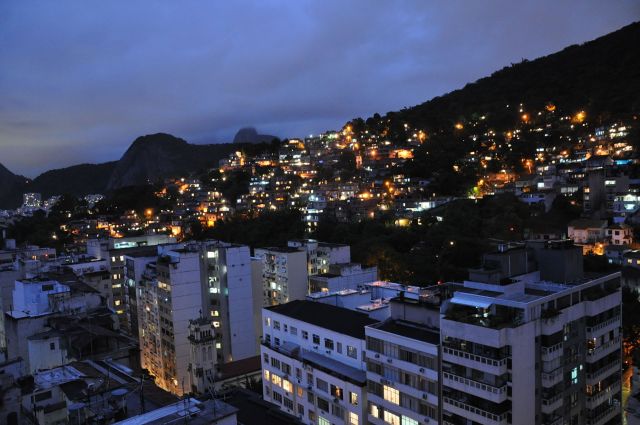
The better of the two is Lisetonga Hostel. Not great for Brazil, but very good for Rio where accommodation is expensive. By comparison my dorm bed cost around $10. Including breakfast.
Some nights I lay in a hammock atop the open air building listening to the sounds of the vibrant community.

Saturday and Sunday nights are crazy LOUD. Everyone is on the streets.


Though the views are great, it’s a steep uphill or downhill to get anywhere in this favela.

Motorcycle taxis can be found at the base of every favela access road. If you can’t walk, you ride.
The Morro da Babilônia is a favela in the Leme neighbourhood of Rio de Janeiro built on a steep ridge separating Copacabana beach from Botafogo. …
Babilônia has been controlled for years by drug traffickers linked to the Terceiro Comando (Third Command) organization, which imposed its rules by force on the community. In addition to controlling the illegal drug trade, the gunmen monopolized other services like the supply of cooking-gas cylinders and imposed rules on the population such as the times when they could come and go … In June 2009, police occupied the area without firing a shot. The intention is to make Babilonia into a model community by installing Police Pacification Units …
… in 2009 the neighbourhood started to become more and more popular among tourists. There are at least 10 hostels …
Police are everywhere in Babylon.
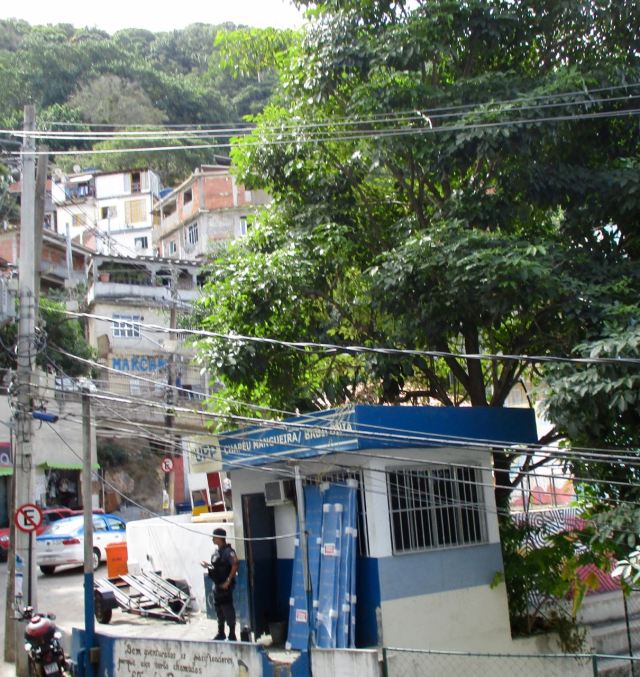
Women, children and tourists walk the streets any time of day or night. It looks as safe as any city street to me.
I only drink coffee in the morning. And the coffee at my hotel in Rio was awesome. Hot rich milk mixed with dark rich coffee.
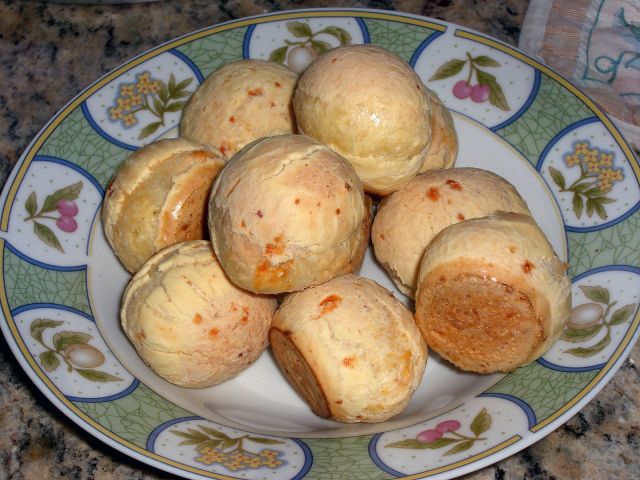
Near the end of my stay the restaurant greeter brought me some as you shouldn’t leave Brazil without tasting them. 🙂
Pão de queijo (“Cheese Bread” in Portuguese) is a small, baked, cheese roll, a popular snack and breakfast food in Brazil. Pão de queijo originated from African slaves like many other Brazilian foods. …
On a quiet Sunday I made the long walk and back.
One highlight was Theatro Municipal.
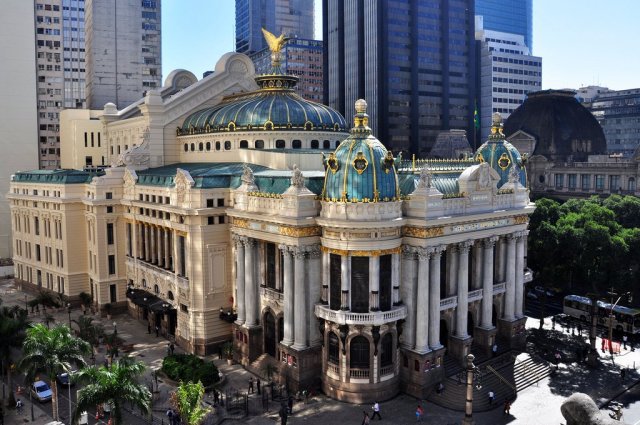
The building is designed in an eclectic style, inspired by the Paris Opéra of Charles Garnier. The outside walls are inscribed with the names of classic Eurocentric & Brazilian artists. It is located near the National Library and the National Fine Arts Museum, overlooking the spacious Cinelândia Square.
Arcos de Lapa (Carioca Aqueduct) was hosting free music. But there were not many people in attendance aside from the many homeless who sleep on the streets there.
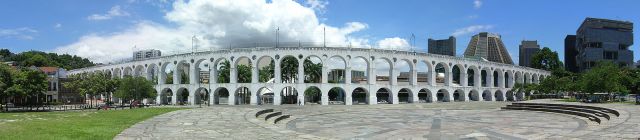
The aqueduct was built in the middle of the 18th century to bring fresh water from the Carioca river to the population of the city. It is an impressive example of colonial architecture and engineering.
Sunday is a good day to go downtown as there’s very little traffic. On the other hand, almost everything is closed for the Sabbath.
The beaches are busier. But not busy in early May.
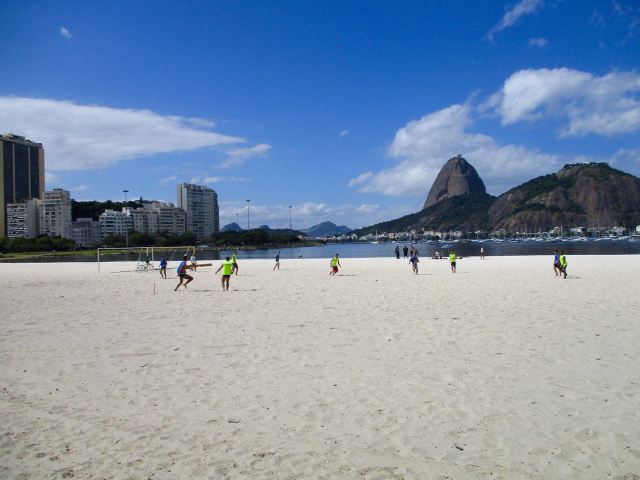
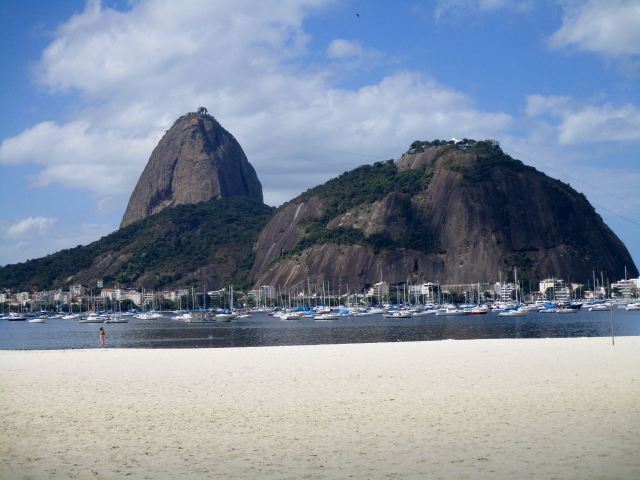
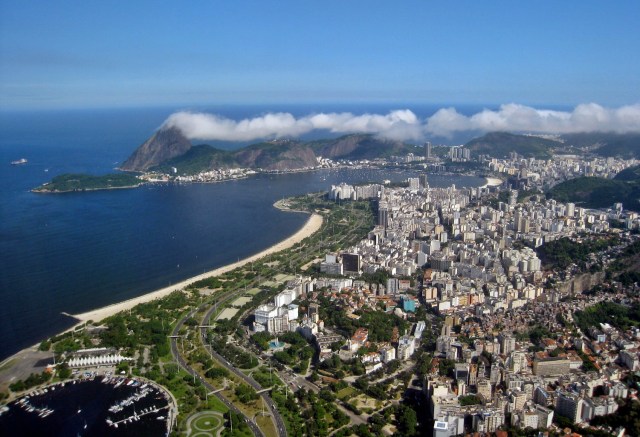
The Flamengo beachfront area is dominated by the Brigadier Eduardo Gomes Park, built by Lota de Macedo Soares on nearly 300 acres (1.2 km²) of land reclaimed from the bay and completed in 1965.
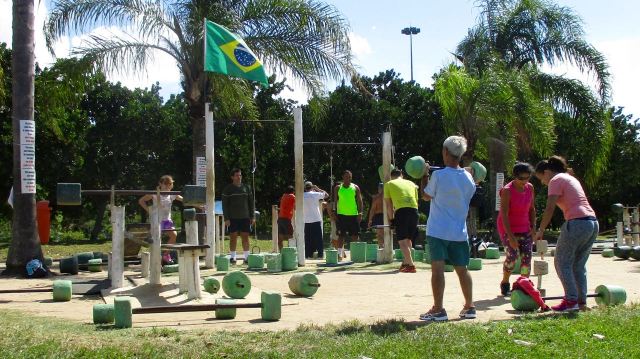
Outdoor fun and fitness everywhere you look.
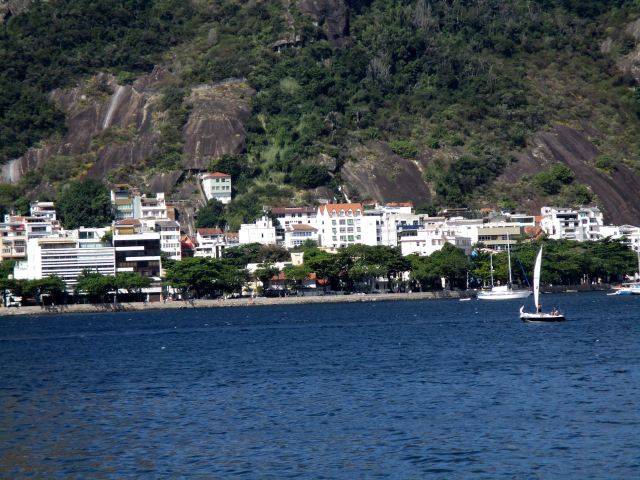
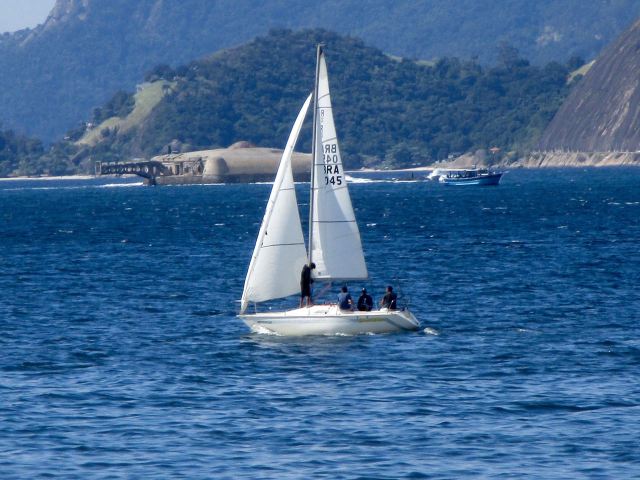
I’d planned to rent a bike to explore this part of Rio. All the rental shops were closed on Sunday, however. Some please ask Pope Francis why some businesses can open on the Holy Day, others not. 🙂
One of my favourite Rio tourist attractions. Unique. Quirky. And very Rio. 🙂
Escadaria Selarón, also known as the ‘Selaron Steps’, is a set of world-famous steps in Rio de Janeiro, Brazil. They are the work of Chilean-born artist Jorge Selarón who claimed it as “my tribute to the Brazilian people”.
In 1990, Selarón began renovating dilapidated steps that ran along the front of his house. At first, neighbours mocked him for his choice of colours as he covered the steps in fragments of blue, green and yellow tiles – the colours of the Brazilian flag. It started out as a side-project to his main passion, painting, but soon became an obsession. …
There are 250 steps measuring 125 metres long which are covered in over 2000 tiles collected from over 60 countries …

You’ve seen the steps if you’ve seen this video – Beautiful with Snoop and Pharrell.
(The artist) Jorge Selarón was found dead on the Escadaria Selarón near his home on January 10, 2013, at the age of 65. Police did not rule out homicide, saying he had received death threats. Later in 2013, police has said the main line of investigation was suicide, considering allegations from friends that he was depressive.
The Girl from Ipanema … is a Brazilian bossa nova jazz song. It was a worldwide hit in the mid-1960s and won a Grammy for Record of the Year in 1965. It was written in 1962, with music by Antônio Carlos Jobim and Portuguese lyrics by Vinicius de Moraes. English lyrics were written later by Norman Gimbel.
The first commercial recording was in 1962, by Pery Ribeiro. The 1964 single featuring Astrud Gilberto and Stan Getz became an international hit. …
Click PLAY or watch Gilberto & Getz on YouTube.
The song was inspired by Heloísa Eneida Menezes Paes Pinto (now Helô Pinheiro), a seventeen-year-old girl living on Montenegro Street in Ipanema. Daily, she would stroll past the Veloso bar-café, not just to the beach (“each day when she walks to the sea”), but in the everyday course of her life. …
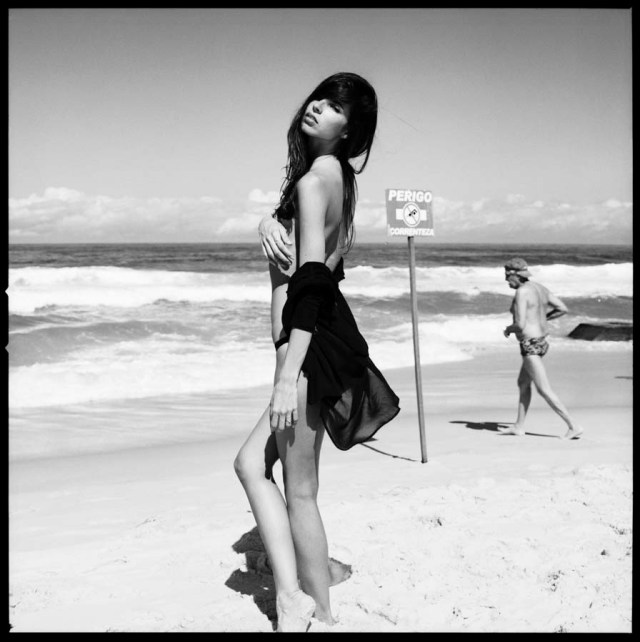
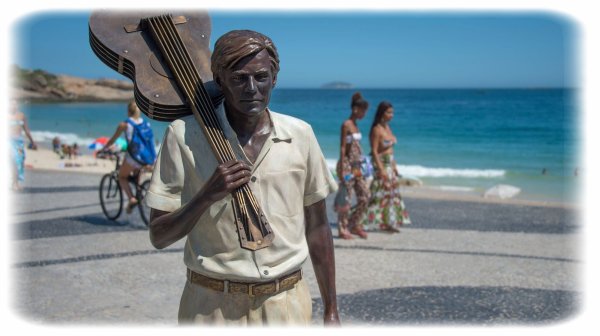
related – A Tom Jobim Statue was placed in Ipanema Beach in 2014, 20 years after his death.
I love Botanic Gardens. The favourite, I recall, is Royal Botanic Gardens, Melbourne.
But it’s Jardim Botânico, Rio de Janeiro, Brazil that tops one list of the 10 Best Botanical Gardens In The World.
There are around 6,500 species (some endangered) distributed throughout an area of 54 hectares, and there are numerous greenhouses. The garden also houses monuments of historical, artistic and archaeological significance. …
A 750 m line of 134 palms forms the Avenue of Royal Palms leading from the entrance into the gardens. These palms all descended from a single tree, the Palma Mater, long since destroyed by lightning …


more of my photos
Well worth visiting. Stay for coffee or drinks.


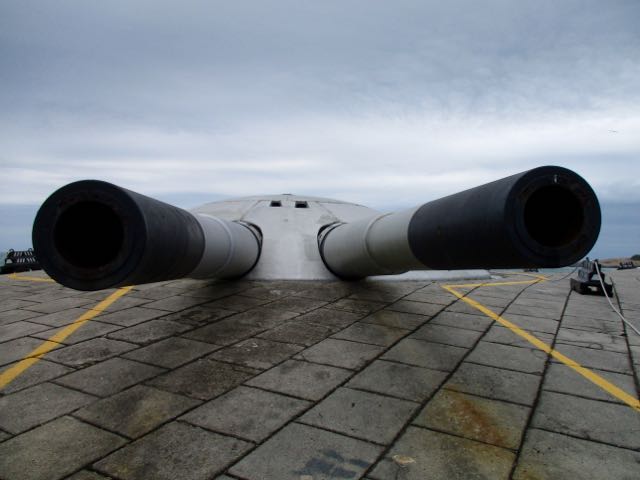
Fort Copacabana is a military base at the south end of the beach that defines the district of Copacabana, Rio de Janeiro. The base is open to the public and contains the Museu Histórico do Exército (Museum of the History of the Army) and a coastal defense fort that is the actual Fort Copacabana.
… At the entrance to the base there is a guard in the uniform that was current when the fort was opened in 1914.
For the 2016 Summer Olympics, the fort is scheduled to host the cycling road race (start and finish), marathon swimming and triathlon events.
The museum is only in Portuguese. Up top on Canon’s Dome was my favourite part.