is mainstream media dead?

A theme on this blog is the steady decline of BIG media.

And the rise of independent voices: blogs, podcasts, social networks.

But one of the big media players is thriving. National Public Radio in the USA.

nprlogo

Why?

… NPR’s ratings have increased steadily since 2000, and they’ve managed to hold on to much of their 2008 election coverage listenership bump (with over 26 million people tuning in each week so far in 2009), unlike many of their mainstream media counterparts.

Compared to cable news, where most networks are shedding viewers, and newspapers, where circulation continues to plummet, NPR is starting to look like they have the future of news all figured out. Or at least, they appear to doing a lot better at it than the rest of the traditional media.

But what is NPR doing differently that’s causing their listener numbers to swell? They basically have a three-pronged strategy that is helping them not only grow now, but also prepare for the future media landscape where traditional methods of consumption (TV, radio, print) could be greatly marginalized in favor of digital distribution. …

This reviewer sees NPR doing 3 things right:

  • A Focus On Local
  • A Focus On Social Media
  • A Focus On Ubiquitous Access
  • Of the three, the third is most important to me.

    Read the entire article on Mashable – Why NPR is the Future of Mainstream Media

    As a non-profit, NPR is less tied to the old media bias of shareholders, perhaps.

    I’m a regular listener, subscribing to a number of their audiocasts.

    new 1TB external hard drive backup

    My new Iomega eGo Desktop Hard Drive, USB 2.0, 1TB.

    eGo

    Amazon – US$124.95

    I got mine at London Drugs in Canada for C$179.

    The excellent Apple Time Machine software makes backing up my laptop a breeze.

    This backup stays safely home. I’ll take my OLD 500GB LaCie Rugged backup drive on the road with me, dedicated only to hauling around video.

    updated my flickr photos …

    I used Google’s Picasa software to scan my computer and backup drive for ALL images.

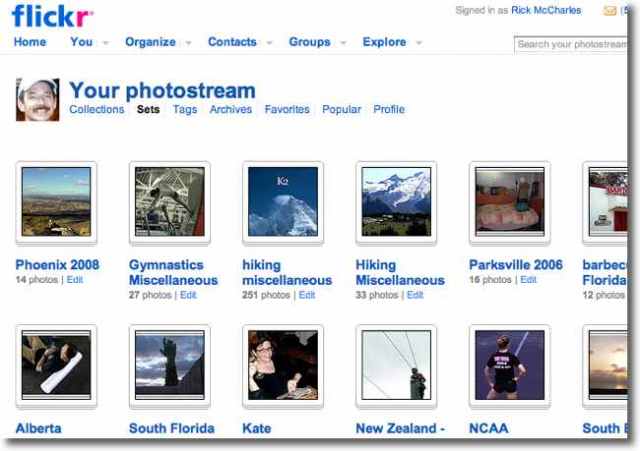
    Next … uploaded many of those to flickr as a backup in the cloud.

    flickr-sets

    See all 21,000 photos on flickr

    If you don’t have time to look at them, try the SEARCH function.

    One day I’d like to have a system where all the original photos on my computer are automatically backed up and archived in the cloud.

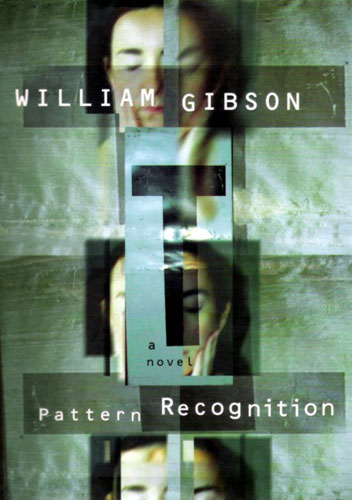
    Pattern Recognition by William Gibson

    The man most identified with the cyberpunk genre of literature is never boring.

    Pattern Recognition is a novel by science fiction writer William Gibson published in 2003. Set in August and September 2002, the story follows Cayce Pollard, a 32-year-old marketing consultant who has a psychological sensitivity to corporate symbols. The action takes place in London, Tokyo, and Moscow as Cayce judges the effectiveness of a proposed corporate symbol and is hired to seek the creators of film clips anonymously posted to the internet. …

    pattern_recognition

    Amazon – Pattern Recognition

    It’s quite good.

    My only caveat in recommending Gibson is to suggest you read his books soon after publication.

    He’s keen to reveal cutting trends in technology in his stories. This book highlighted Netscape and Hotmail.

    hmmm

    Google News still sucks

    Google News is one of the greatest innovations ever on the internet. There are other News aggregaters, but I never visit any of them.

    But it’s hardly improved at all since being introduced.

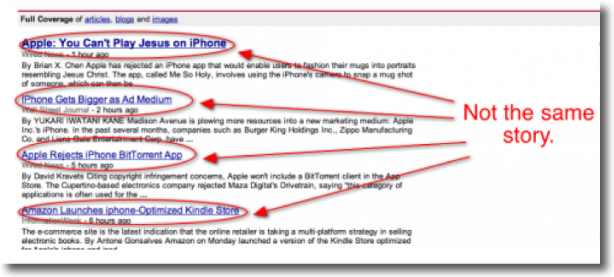
    MG Siegler on TechCrunch gives examples of the many problems.

    I’m sorry, but for as good as Google is at organizing the world’s data, Google News absolutely sucks.

    read more … Google News Gets An Update. Still Sucks.

    google-news-sucks

    He feels the service will not improve without more human editing.

    Many call Google Search a parasitical business model, including Jim Spanfeller, President and CEO of Forbes.com.

    There are other critics. Some publishers of the 25,000 news sources included in Google News want Google to start paying something for the content.

    MiFi – Personal Hot Spot – WiFi to go

    The latest in technology from the Times’s David Pogue

    Someday, we’ll tell our grandchildren how we had to drive around town looking for a coffee shop when we needed to get online, and they’ll laugh their heads off. Every building in America has running water, electricity and ventilation; what’s the holdup on universal wireless Internet?

    pogue.600

    Getting online isn’t impossible, but today’s options are deeply flawed. Most of them involve sitting rooted in one spot — in the coffee shop or library, for example. (Sadly, the days when cities were blanketed by free Wi-Fi signals leaking from people’s apartments are over; they all require passwords these days.)

    If you want to get online while you’re on the move, in fact, you’ve had only one option: buy one of those $60-a-month cellular modems from Verizon, Sprint, T-Mobile or AT&T. The speed isn’t exactly cable-modem speed, but it’s close enough. You can get a card-slot version, which has a nasty little antenna protuberance, or a U.S.B.-stick version, which cries out to be snapped off by a passing flight attendant’s beverage cart.

    A few laptops have this cellular modem built in, which is less awkward but still drains the battery with gusto.

    But imagine if you could get online anywhere you liked — in a taxi, on the beach, in a hotel with disgustingly overpriced Wi-Fi — without messing around with cellular modems. What if you had a personal Wi-Fi bubble, a private hot spot, that followed you everywhere you go?

    Incredibly, there is such a thing. It’s the Novatel MiFi 2200, available from Verizon starting in mid-May ($100 with two-year contract, after rebate). It’s a little wisp of a thing, like a triple-thick credit card. It has one power button, one status light and a swappable battery that looks like the one in a cellphone. When you turn on your MiFi and wait 30 seconds, it provides a personal, portable, powerful, password-protected wireless hot spot. …

    AWESOME – US$60/month – details on NY Times – Wi-Fi to Go, No Cafe Needed

    Click PLAY or watch it on YouTube.

    new Robert Sawyer book – Wake

    My brother feels his friend Robert J. Sawyer could win another Nebula or Hugo for his latest release, the first in a three part series: Wake, Watch, Wonder.

    The WWW trilogy.

    This book is accessible even to young readers. The main character is age-15.

    But the issues addressed are fascinating: the infrastructure of the World Wide Web, part of the web becoming aware, primates gaining intelligence. Pandemic out of China as well as the battle between bloggers in China and their repressive government.

    When I read a book and find myself saying, “Why didn’t I think of this?”, I know it’s a brilliant plot.

    Caitlin Decter is young, pretty, feisty, a genius at math—and blind. Still, she can surf the net with the best of them, following its complex paths clearly in her mind. But Caitlin’s brain long ago co-opted her primary visual cortex to help her navigate online. So when she receives an implant to restore her sight, instead of seeing reality, the landscape of the World Wide Web explodes into her consciousness, spreading out all around her in a riot of colors and shapes. While exploring this amazing realm, she discovers something—some other—lurking in the background. And it’s getting more and more intelligent with each passing day…

    Amazon – Wake

    wake-cover

    Sawyer takes up where Michael Crichton, who died in 2008, left off. Making the cutting edge issues of real science interesting to the general public.

    The main difference is that while Crichton’s books always end in catastrophe, Sawyer’s look at both the positive and negative side of new technologies.

    This one is highly recommended. As are all of Sawyer’s books.

    Eat food. Not too much. Mostly plants.

    My favourite Nutrition author — Michael Pollan — has a book I can recommend.

    In-Defense-of-food.jpg

    Amazon – In Defense of Food: An Eater’s Manifesto

    … Pollan proposes a new (and very old) answer to the question of what we should eat that comes down to seven simple but liberating words: Eat food. Not too much. Mostly plants. By urging us to once again eat food, he challenges the prevailing nutrient-by-nutrient approach — what he calls nutritionism — and proposes an alternative way of eating that is informed by the traditions and ecology of real, well-grown, unprocessed food. Our personal health, he argues, cannot be divorced from the health of the food chains of which we are part.

    In Defense of Food shows us how, despite the daunting dietary landscape Americans confront in the modern supermarket, we can escape the Western diet and, by doing so, most of the chronic diseases that diet causes. We can relearn which foods are healthy, develop simple ways to moderate our appetites, and return eating to its proper context — out of the car and back to the table. Michael Pollan’s bracing and eloquent manifesto shows us how we can start making thoughtful food choices that will enrich our lives, enlarge our sense of what it means to be healthy, and bring pleasure back to eating.

    Pollan’s last book, The Omnivore’s Dilemma, launched a national conversation about the American way of eating; now In Defense of Food shows us how to change it, one meal at a time. …

    michaelpollan.com

    via my Gymnastics blog

    Moon and Lonely Planet – best guidebooks

    On a recent trip Gadling blogger Brenda Yun and friends compared the 4 main travel guidebooks to Cuba:

    Lonely Planet Cuba by Brendan Sainsbury
    Moon Handbook Cuba by Christopher P. Baker

    Frommer’s Guide to Cuba by Susan Boobbyer
    The Rough Guide to Cuba by Matthew Norman & Fiona McAuslan

    Frommer’s and Rough Guide were worst, as usual.

    Moon and LP best. As usual.

    9788408069218LP reinvented the travel guidebook genre. Others were forced to copy them. Or lose market share.

    Here’s the most common criticism of Lonely Planet. It’s too popular.

    Conclusion

    Based on Christopher P. Baker’s wealth of experience in Cuba, Moon is a sure thing. Sainsbury’s Lonely Planet Cuba is also a rich and trusty companion. …

    I think it’s worth mentioning that too many people carry the Lonely Planet guidebook around — not just in Cuba but around the world. In Cuba, it’s the only one I saw in at least five different languages (the content is the same). While useful, Lonely Planet is suffering from a unfortunate hipster effect: the same restaurants, hotels, and sights are becoming overrun by “budget backpackers,” and travelers are relying too heavily on LP-specific travel tips and suggestions. …

    Travel guidebooks: Choosing the one that’s just right

    Get the basics from Lonely Planet. Look for alternative ideas in Moon.

    Twitter Eats World: Global Visitors Shoot Up To 19 Million

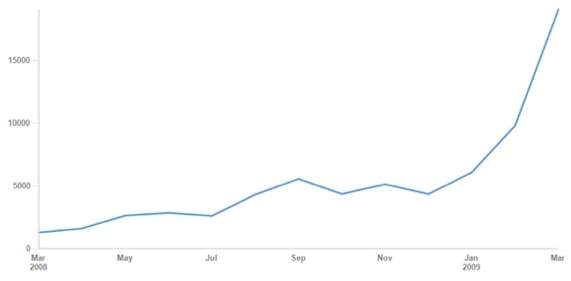
    Twitter’s march towards world domination continues apace. This morning comScore released its global numbers for March, 2009. Worldwide visitors to Twitter.com increased 95 percent in the month of March from 9.8 million to 19.1 million, according to its estimates. This compares to 9.3 million visitors in the U.S. alone. …

    If Twitter can keep this rate of growth up, it should cross 50 million visitors by summer.

    TechCrunch – Twitter Eats World: Global Visitors Shoot Up To 19 Million

    twitter-trends

    Twitter is cryptic and useless for most people.

    Avoid it if you can. (Though you might want to grab a twitter name now, while there are still many availlable, just in case.)

    I have:

  • https://twitter.com/besthike
  • http://twitter.com/GymCoaching
  • http://twitter.com/McCharles
  • Actually, once you follow 50 or more people, it can be interesting. I’m starting to like Twitter despite its many failings.

    I have not started using any of the Twitter clients, as yet. But I’m leaning towards trying Seesmic Desktop.