nuclear radiation in Japan

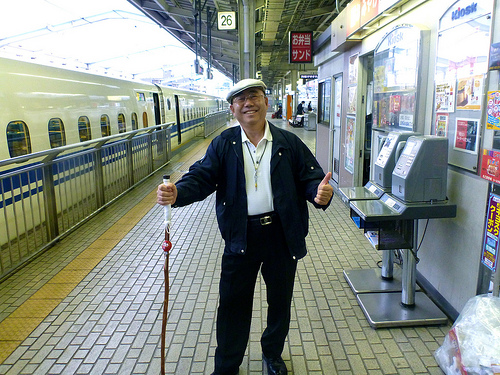
A nation that can run Bullet Trains safely bungles Nuclear Power. Surprising.

The Fukushima Daiichi nuclear power plant disaster has been a tourism & public relations disaster too, of course.

There’s as much confusion as information. Bloomberg cites the highest radiation levels yet, while the Financial Times tells that levels around Greater Tokyo have fallen.

Politicians are driven to publicity stunts like this — drinking a glass of water taken from puddles inside the damaged plant.

Personally I’ve not been worried at all for my safety over 7wks here.

The government is handing over $64 billion to Tokyo Electric Power. Part goes for compensation to 89,000 people.

That company needs to be nationalized, temporarily, at least. Japan needs power.

This is what gives me nightmares.
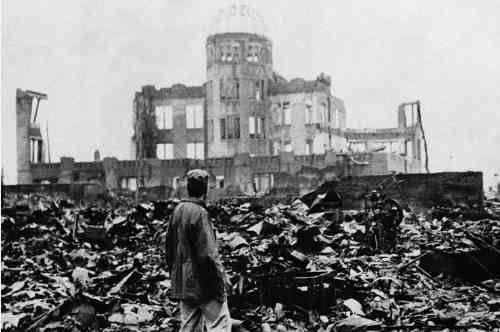

more photos of Hiroshima on The Big Picture

If you want to worry about something, worry about what will happen when some dictator or terrorist uses a nuclear weapon. It would be highly unlikely that the attacked nation would not retaliate in some way shape or form.

If you had told me when I was age-20 that I’d be visiting Hiroshima at age-54, I’d have laughed out loud. I was convinced that the world would be destroyed by now, by Nuclear war.

… yet somehow the planet has lasted this long.

Hiroshima had been left largely untouched by American bombing campaigns; that was, however, intended to ensure a more accurate measurement of the atomic bomb’s effect.

On Monday, August 6, 1945, “Little Boy” was dropped … directly killing an estimated 80,000 people. By the end of the year, injury and radiation brought total casualties to 90,000–140,000.

For those killed immediately (mostly women and children), it was a fast death. For the rest — horrific.

Three days later a second bomb was dropped on Nagasaki. Another 80,000 were dead by the end of the year.

details on Wikipedia

… I’ve always wondered whether it was necessary to drop the second bomb so soon after the first. Yet it was another 6 days before Japan surrendered. Emperor Hirohito requested an end to the war personally.

Another big factor in the Japanese surrender was the Soviet Union launching surprise attacks at the same time.

Actually, the USA had a timetable for more bombs. We’re lucky that only two were used.

… Secretary of War, Henry L. Stimson, had honeymooned in Kyoto and argued to keep it off the list for as long as possible. One small blessing.
03 /11/11 Earthquake in Japan

I was enjoying a Tokyo restaurant with Shiro when the seat began to sway and shake — my first earthquake. (Actually I’d slept through a couple in the past.)

That was nothing, he told me. … Happens all the time.”

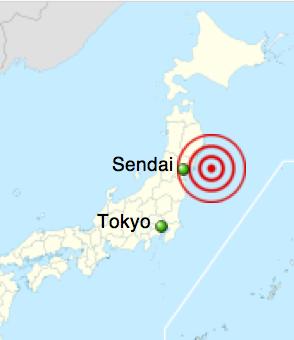
… the Great East Japan Earthquake (東日本大震災) … Friday, 11 March 2011 … was the most powerful known earthquake ever to have hit Japan, and one of the five most powerful earthquakes in the world overall since modern record-keeping began in 1900.

One minute before the earthquake was felt in Tokyo, the Earthquake Early Warning system … sent out warnings of impending strong shaking to millions. It is believed that the early warning by the Japan Meteorological Agency (JMA) saved many lives. …

… A 400 km (250 mi) stretch of coastline dropped vertically by 0.6 m (2.0 ft), allowing the tsunami to travel farther and faster onto land …

Earthquakes are scary. One woman told me she ran out into her yard and hugged the biggest tree.

But the damage was mostly caused by the tidal wave. Over 230,000 vehicles were destroyed. More than 90% of the deaths were from drowning. Here’s a glimpse of what happened in one coastal town.

Click PLAY or watch it on YouTube.

Life is short. Be thankful every day you have without earthquake. Especially if you live near a fault line.

And don’t forget the people in Japan.

thank you Risshō Kōsei Kai

One of my first gymnastics coaches, Shiro Tanaka, invited me to attend a Buddhist English language festival in Tokyo hosted by the International Buddhist Congregation, a division of Rissho Kosei-kai. IBC offers an English language service every Sunday.

Here’s the Great Sacred Hall, only one building of what’s almost a small city in their Tokyo Headquarters.

Though I have studied the Buddha, I didn’t know much about Japanese Buddhism. The RKK teachings are not as strict as what’s practiced in Thailand, by comparison, more welcoming to lay people.

“Buddhism for Today”

We stayed at the excellent Pilgrimage Hall residence. Pilgrims.

Here’s a statue of co-founder Nikkyo Niwano (1906–1999). He’s remembered for his interfaith work, his calls for global peace and disarmament.

… As of 2010 there are over 240 churches and centers in 20 countries. Membership currently stands at 6.5 million members, with the majority living in Japan. …

All good. Shiro feels the organization should have more Canadian members, though.

A special thanks to Reverend Suzuki who gave me a personal summing up of the RKK teachings.

See more photos of our two days at RKK with the IBC.

The Lady and the Monk

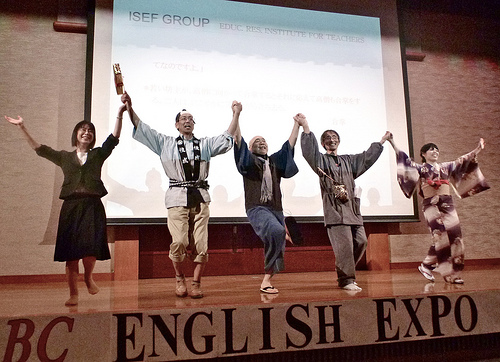
For a National Cultural Holiday in Japan — my host Shiro Tanaka wrote and acted in a comic skit performed at a Buddhist English language festival.

The short play was intended to make a Buddhist parable more memorable by being FUNNY. It worked. Especially when Shiro mixed up the order of his lines.

Click PLAY or watch it on YouTube.

Hosted by the International Buddhist Congregation, part of Rissho Kosei-kai. IBC offers an English language service every Sunday.

We stayed at the excellent adjacent Pilgrimage Hall at no cost.

curtain call

Thanks Shiro and IBC for inviting me.

on the road with Shiro

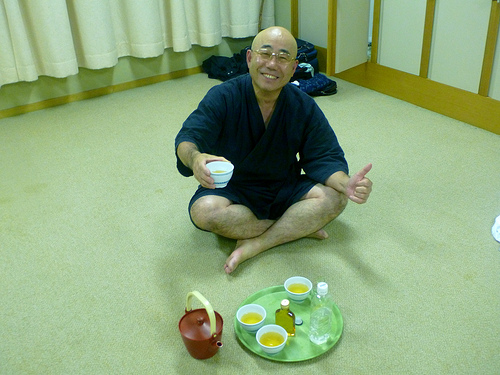
This is my old mentor / gymnastics coach Shiro Tanaka. He was up at 4:30am today, getting ready for our road trip.

It’s a National Cultural Holiday in Japan — Shiro wrote and acted in a comic skit performed at a big Buddhist English language festival.

Hilarious.

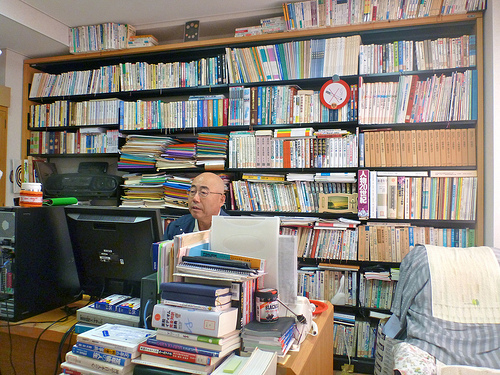
Here’s the professor at work at University of Osaka where he’s been the past 25yrs.

He’s looking to the future. Retiring in about 2yrs. HELLO from Shiro to all his old friends.

… good day in Wakkanai, Japan

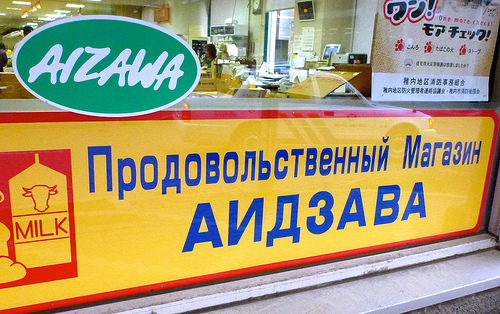
Things had not been “clicking” for me during my first few days in northern Japan. Amongst many other problems, most signage in
Wakkanai (稚内市) is in Japanese and Russian, not English.

These folks live closer to Siberia than Tokyo, I reckon.

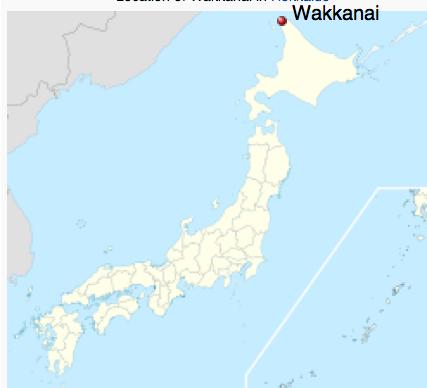
With miscalculated bravado, I’d traveled to remote Wakkanai to hike Rishiri-Zan volcano, a short ferry trip off the northern tip. … That didn’t happen. … I arrived a month too late.

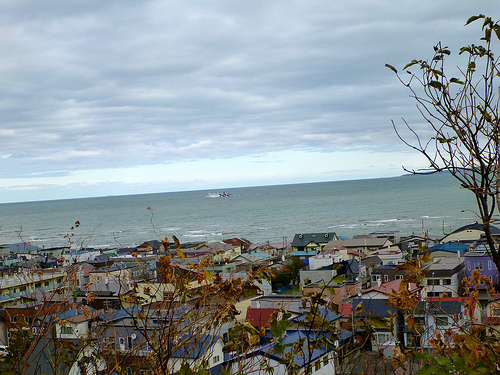
Instead, with nothing else on my itinerary, I hiked the town of Wakkanai itself discovering, unexpectedly, all sorts of attractions.

The Autumn colours were evocative.

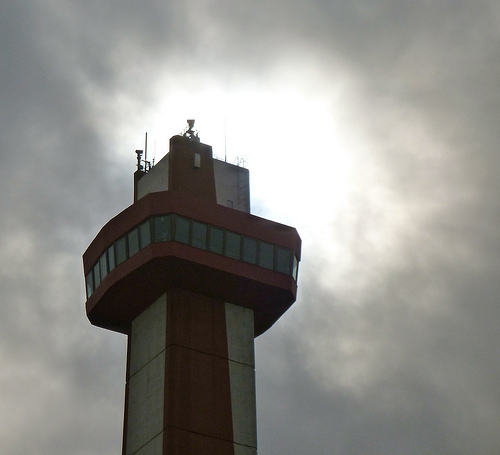
I was quite taken with the “tourist attractions” around the Wakkanai Kōen (稚内公園) park and the Motoe Hiraku tower.

In the Spring there are 4,000 wild cherry trees here to picnic under, a passionate Japanese pass time.

You might mis-assume I traveled to the far north to “collect” some geographical bragging point — but the furthest north is Cape Sōya, 30km away. (I was too cheap to pay for the bus ride there.)

Perhaps you’ve heard of Cape Sōya in connection with the 1983 incident where the Soviets shot down Korean Airlines flight 007.

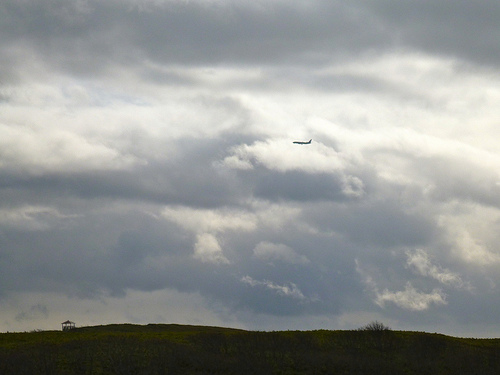
A passenger flight just like this one. It might be 007 en route to Seoul.

After seeing all the “tourist” attractions, I went walkabout on animal trails over the peninsula to walk back along the shoreline.

So … happily and unexpectedly I had a wondrous day, all the more memorable for the challenges.

See more photos from my day hike of Wakkanai.

____

who owns Karafuto/Sakhalin?

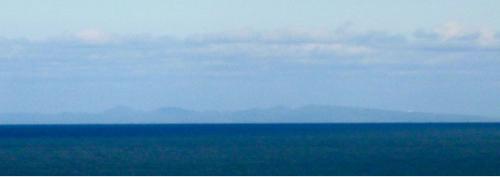
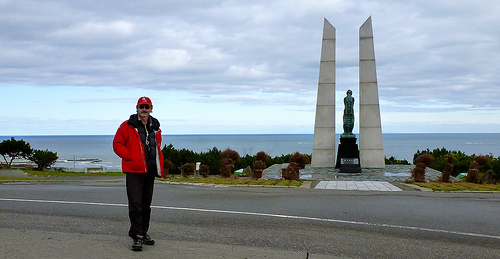
You really can see Russia from Wakkanai, the tip of northern Japan.

You’ve heard of the islands disputed by Russia and Japan.

That’s the largest, Karafuto/Sakhalin, on the horizon directly behind this memorial.

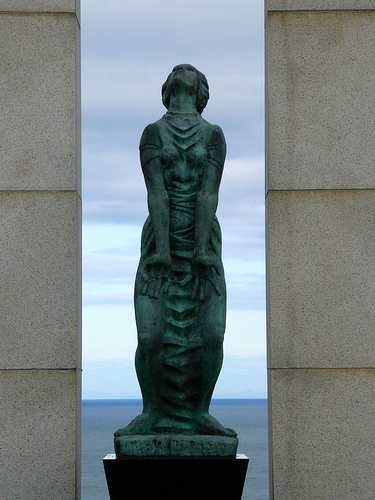
The Statue of Nine Women commemorates one symbolic war story, that of 9 women working at a telegraph station who committed suicide with potassium cyanide tablets rather than be taken by the invading Russians.

August 1945, in accordance with Yalta Conference agreements, the Soviet Union took over the control of Sakhalin. Perhaps 400,000 citizens were displaced to Japan. So today it’s functionally Russian, as well as politically Russian.

Lesson of the story — If you declare war on Russia, don’t lose.

Actually, ownership of the big island had been in dispute long before that. It’s complicated.

related – wikitravel – Wakkanai

blundering northern Japan

The guidebooks all tell you to rent a car if you want to explore on the north island Hokkaidō.

The guidebooks are right.

Trains run all over the island, but actually connecting from one to the next on the local lines is tricky.

It IS easy, however, to get to the northern tip of the country, Wakkanai (稚内市).

You CAN see Russia from here, Sarah. (The island of Sakhalin.) But not when it’s grey and miserable. And it’s always grey and miserable in Wakkanai from what I’ve seen. And windy. And cold.

The further you get from Tokyo, the less English. Not even train stations have much English. But this town is bilingual — Japanese and Russian. There is a ferry from here to the mainland.

Without help I wandered the town at night in the drizzle unable to find any of the 3 hostels — all had closed for the winter, as it turned out.

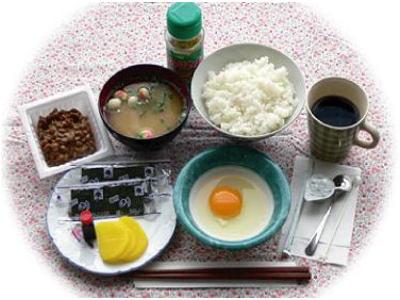
I ended up in less cheap business accommodation, Petit Hotel Joy Wakkanai. Hot shower, fast internet and traditional Japanese breakfast.

… just about to go check the feasibility of a day trip to some nearby islands, for hiking.

That will be a disaster — if I go — guaranteed.

flushed off the mountain, again

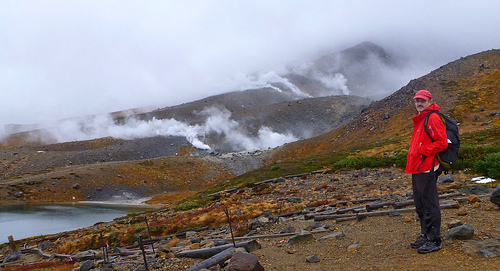
Here I am at Sugatami-ike in Daisetsuzan National Park, an impressive look-out over the fumaroles.

This volcano is LIVE.

From there the top of the volcano was shrouded. Myself and Kim from Belgium were the only hikers bold (stupid) enough to climb higher.

We might have made it to 1900m before being driven off the mountain by wind and freezing, horizontal rain. The summit is about 2200m.

Happily, there was a hot springs and gourmet dinner awaiting me below in Japan’s best and most expensive alpine hostel.

This ain’t the usual hostel grub.

more photos … or read my hiking trip report

If it’s raining in the morning, I’ll hop back on the train until I find better weather.

Sapporo the city, not the beer

Even by bullet train it’s 10hrs from Tokyo to Sapporo in the north.

I am overnighting in an internet cafe. Private cubicle with free drinks included for about $16 for 6hrs. Quite comfortable.

Tomorrow I will try for Daisetsuzan National Park, the largest in the country. More bears than people.

Unfortunately it is too late in the season to get much hiking done. But I’ll give it a go.

Might be offline for a couple of days.