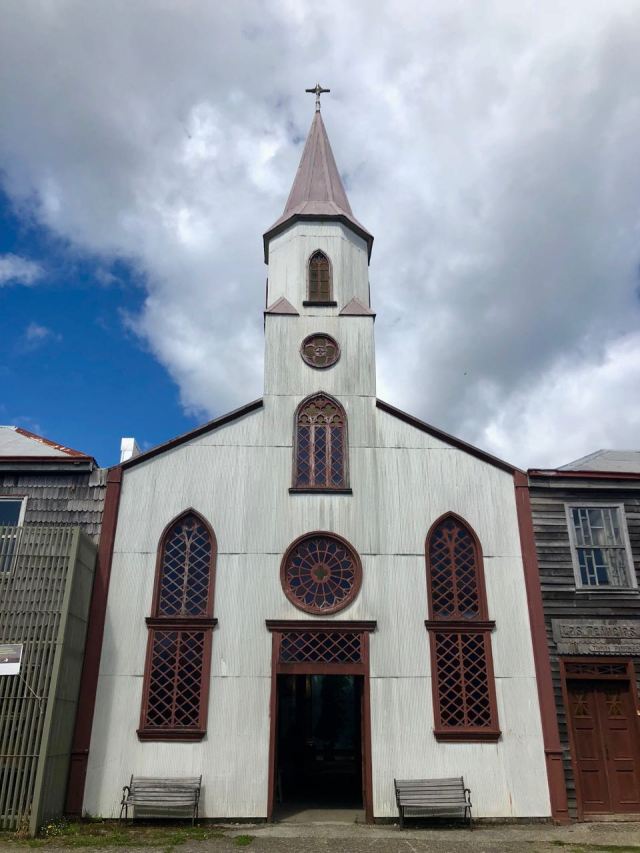
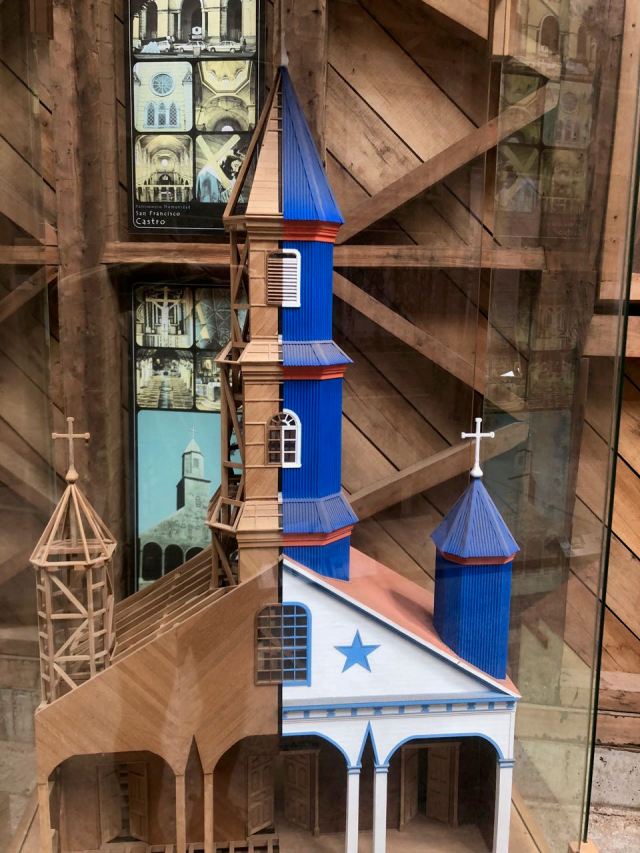
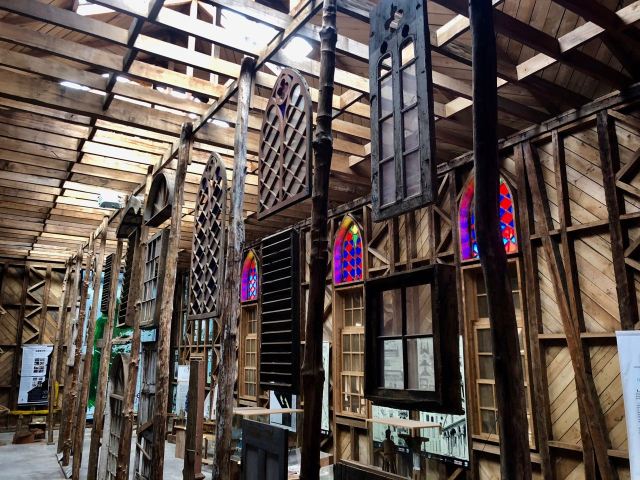
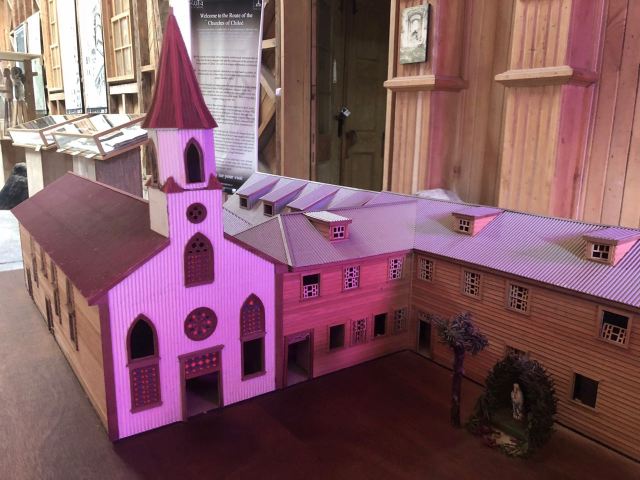
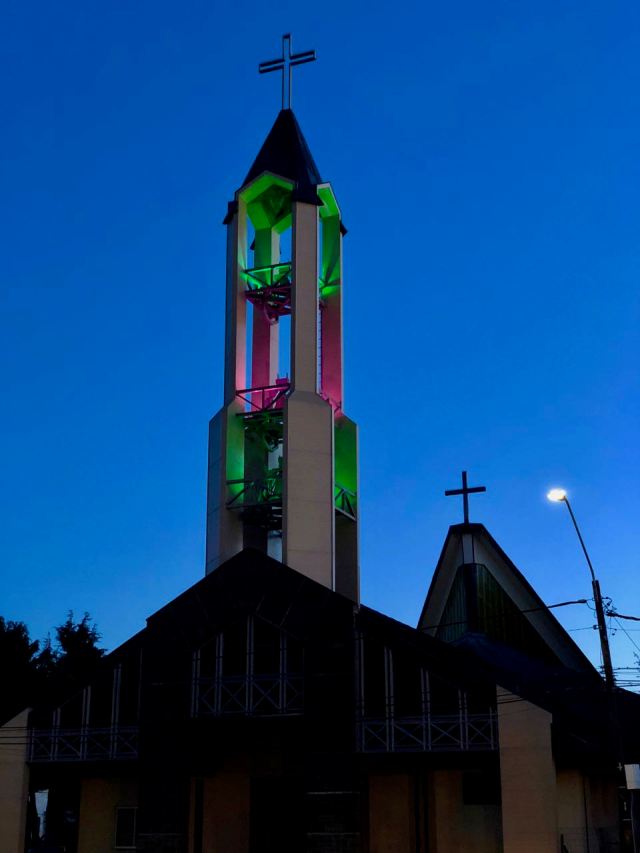
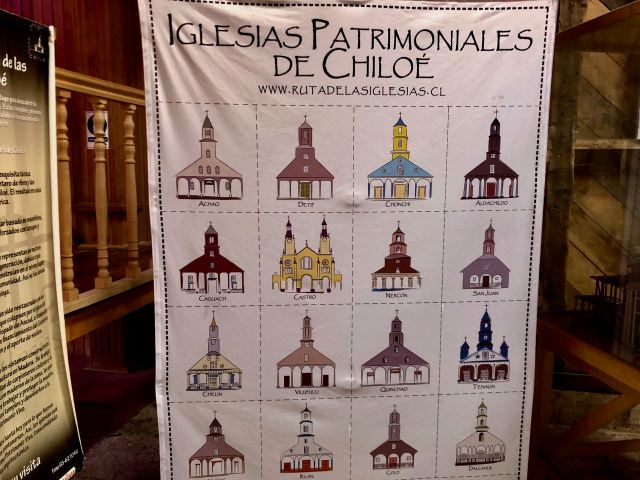
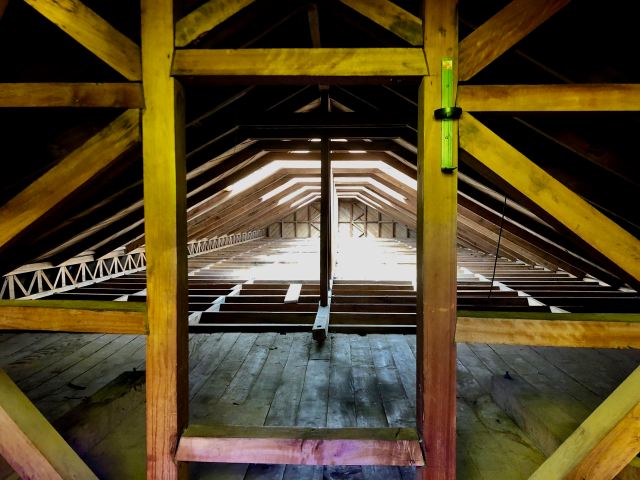
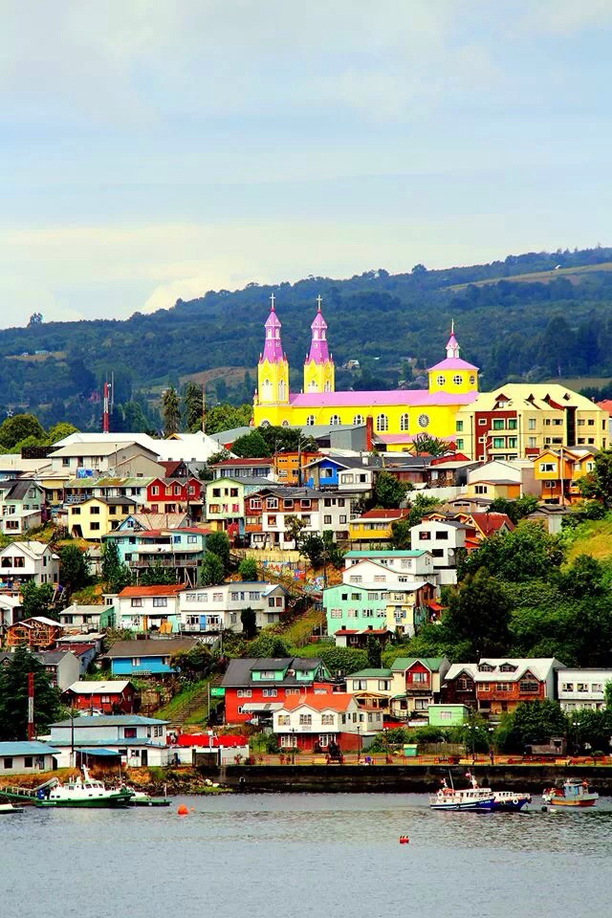
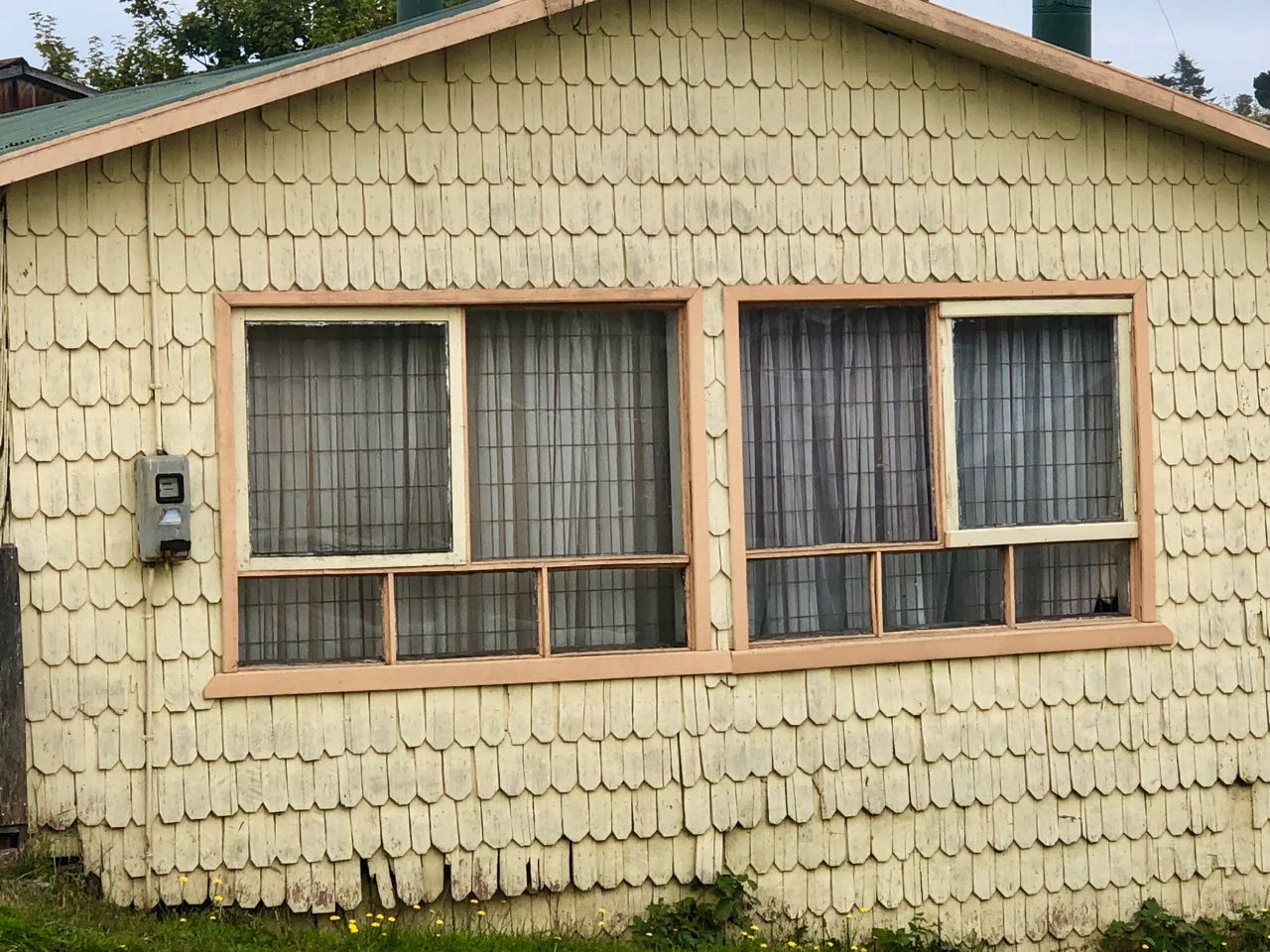
Unlike classical Spanish colonial architecture, the churches of Chiloé are made entirely in native timber with extensive use of wood shingles. The churches were built from materials to resist the Chiloé Archipelago’s humid and rainy oceanic climate. …
Tourists in Chile historically did not want to visit the island of Chiloé (place of seagulls). It rains there 10 months of the year.
Darwin was here for 6 months in 1834. Hated the rain. But did name the Darwin’s fox.
But when the sun shines, it’s beautiful. A bit like Vancouver Island. Both are temperate rain forests.
Castro
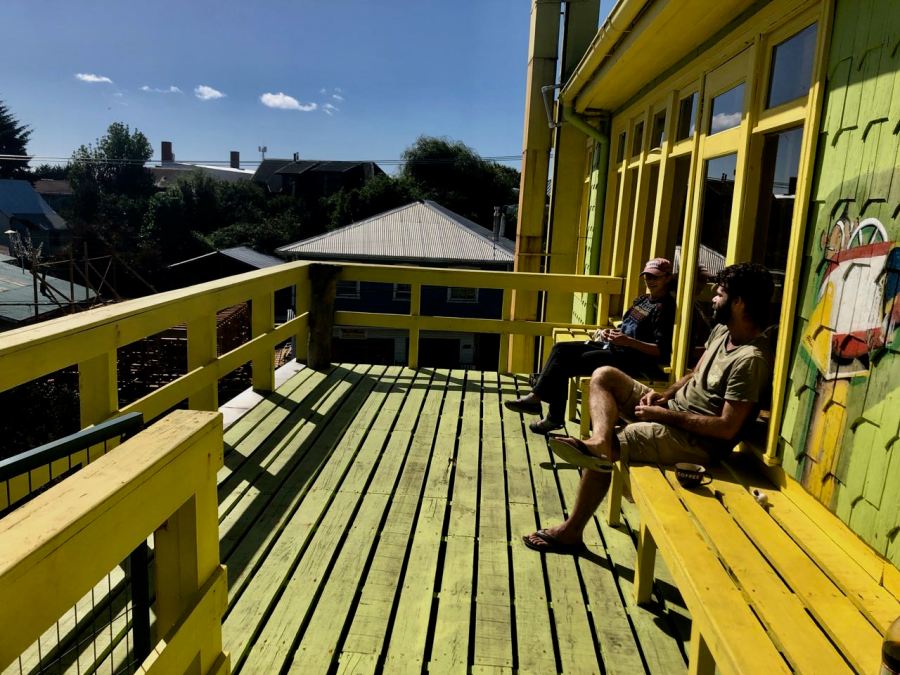
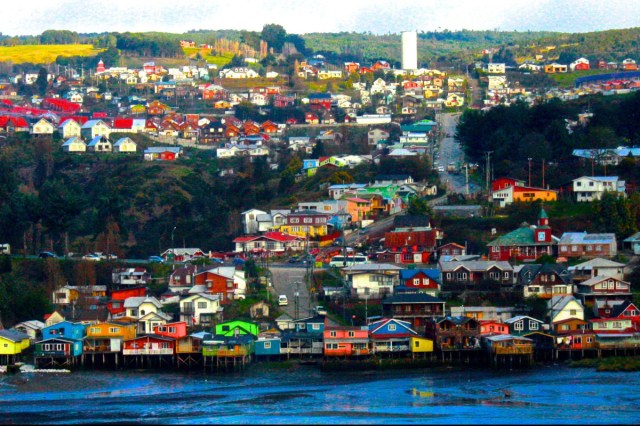
In many bleak climates people use bright colours. After a few winters they fade and chip. Everything is made of wood.
I’d been interested in Chiloe only because it’s so weird. I hopped on a bus (south) on a whim, actually. And was really happy I did. It’s a very cool and unusual place. And I got good weather.
Castro is the largest city. Fishing — especially salmon farming — is an important industry.
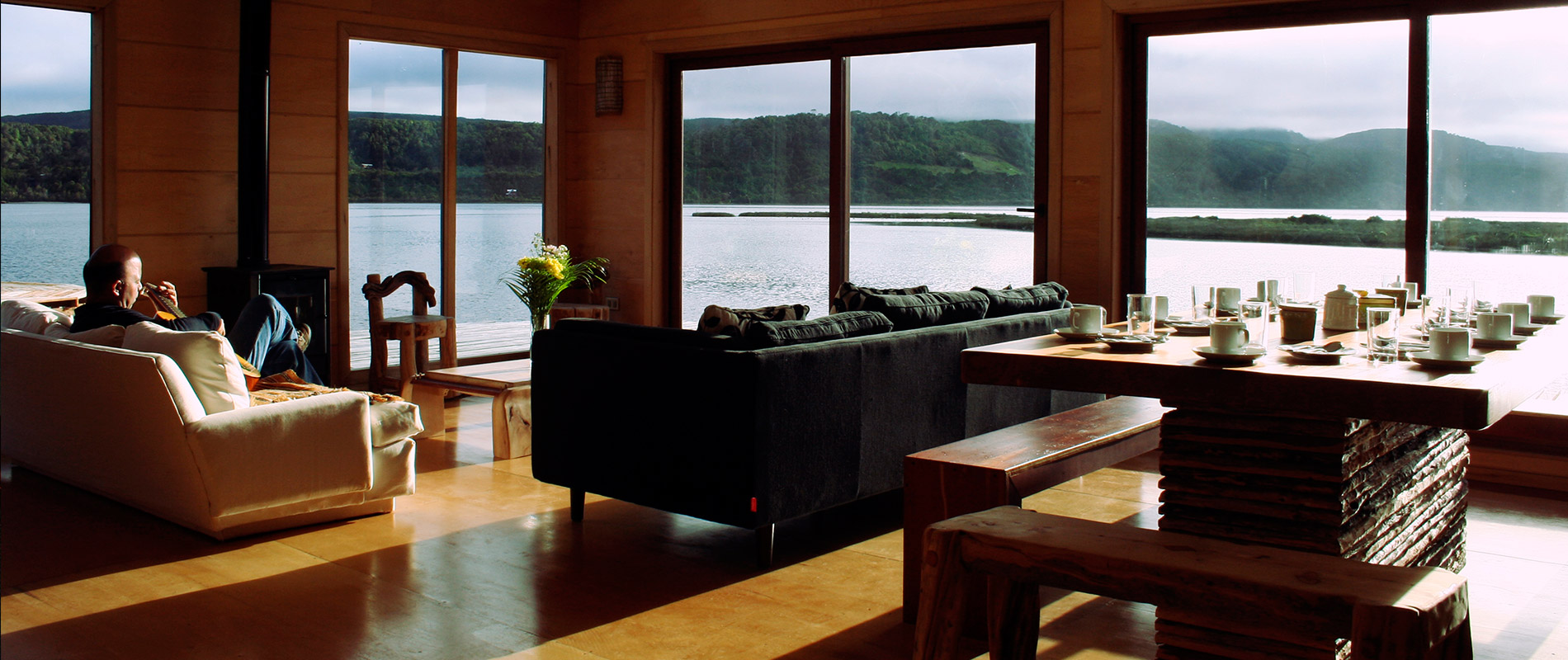
Palafito hostel in Castro opened 2008 putting this city on the backpacker radar for the first time. Comparatively expensive at CAD $34 for a dorm bed, it’s well worth it.
A proposed multi-million dollar bridge which would increase tourism is still opposed by many on the island. They value their unique heritage and culture.
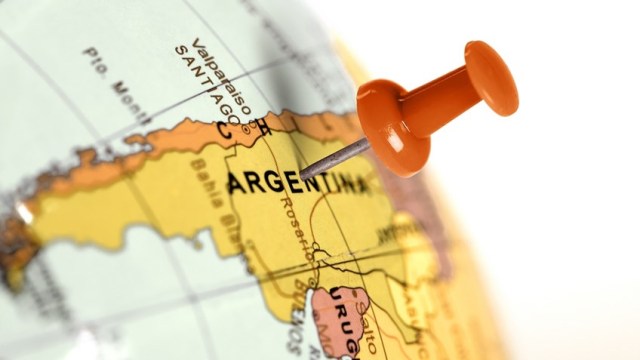
If it wasn’t for wonderful outdoors adventure, I’d have no reason to travel to Argentina.
It’s a hassle.
Once the 5th richest nation by GDP / person, today Argentina is #55.
It’s a huge, rich, fertile land … yet government mismanagement continues to ruin the economy.
Inflation for 2017 was 24.8%. Almost every financial transaction here is a hassle due to that instability. ATM machines don’t work consistently. Supplementary fees are added unexpectedly. Tourist are frustrated that credit cards aren’t accepted. Chile and Uruguay are far easier.
Despite the world’s current BOOM economy, here’s a recent headline.












 A proposed multi-million dollar bridge which would increase tourism is still


 Rick McCharles