Towards the end of the Second World War, Charles Hayward is in Cairo and falls in love with Sophia Leonides, a smart, successful Englishwoman who works for the Foreign Office. They put off getting engaged until the end of the war when they will be reunited in England.
Hayward returns home and reads a death notice in The Times: Sophia’s grandfather, the wealthy entrepreneur Aristide Leonides, has died, aged 85.
Due to the war, the whole family has been living with him in a sumptuous but ill-proportioned house called “Three Gables”, the crooked house of the title.
The autopsy reveals that Leonides was poisoned with his own eserine-based eye medicine via an insulin injection.
Sophia tells Charles that she can’t marry him until the matter is cleared up. …
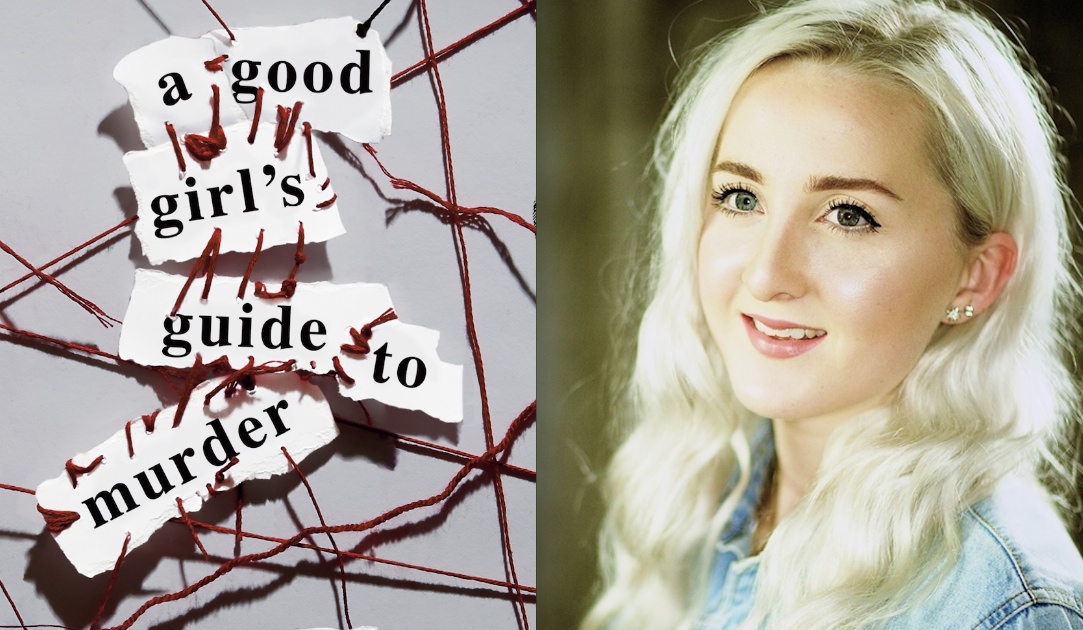
… 17-year old true crime enthusiast Pippa “Pip” Fitz-Amobi, a high school student in the fictional town of Little Kilton, Buckinghamshire (or Fairview, Connecticut in the US version).
In the novel, Pip plans to investigate a five-year-old murder-suicide case involving the murder of popular student Andrea “Andie” Bell and the suicide of her perpetrator Salil “Sal” Singh under the guise of a school project.
Her objectives are to exonerate Sal, whom she is convinced was falsely accused of killing Andie Bell, and to uncover the true perpetrator, whom Pip believes is still at large. …
I appreciate the plot based so much on smart phones and technology. It feels very contemporary.
William Wooler is a family man, on the surface. But he’s been having an affair, an affair that ended horribly this afternoon at a motel up the road. So when he returns to his house, devastated and angry, to find his difficult nine-year-old daughter, Avery, unexpectedly home from school, William loses his temper.
Hours later, Avery’s family declares her missing.
Suddenly Stanhope doesn’t feel so safe. And William isn’t the only one on his street who’s hiding a lie. As witnesses come forward with information that may or may not be true, Avery’s neighbors become increasingly unhinged.
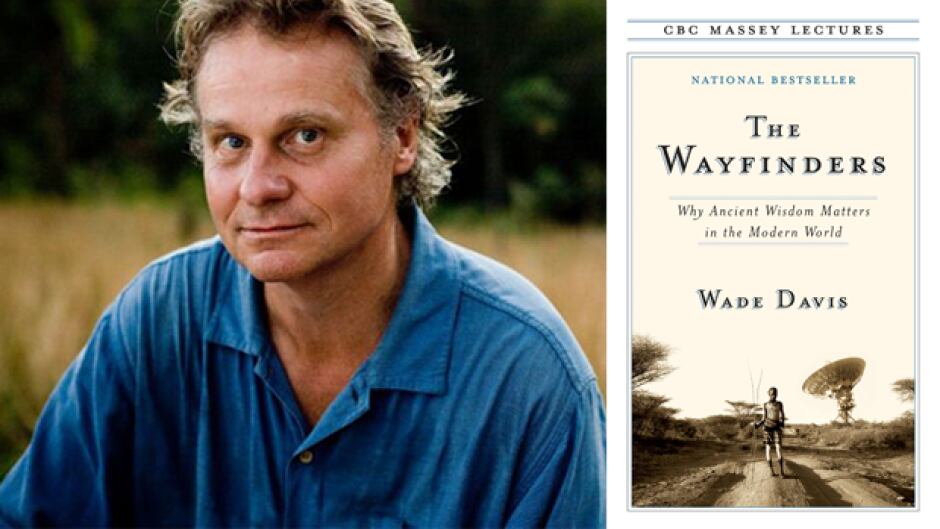
Davis compares cultures quickly and easily, looking for lessons for us who haven’t lived with Amazon tribes for years.
Of the thousand key point, one really struck me. His discussion of how the British — on arrival — could not understand the Australian aborigines.
These are and were a people with no notion of linear time.
Theirs was one of the great experiments in human thought. The notion that the world existed as a perfect whole, and that the singular duty of humanity was to maintain through ritual activity the land precisely as it existed when the Rainbow Serpent embarked on the journey of creation.
… But in life there is only the Dreaming, in which every thought, every plant and animal, are inextricably linked as a single impulse, the inspiration of the first dawning.
Had humanity followed this track, it is true that we would have never placed a man on the moon.
But we would most certainly not be speaking of our capacity to compromise the life support of the planet. I have never in all of my travels been so moved by a vision of another possibility, born literally 55,000 years ago.
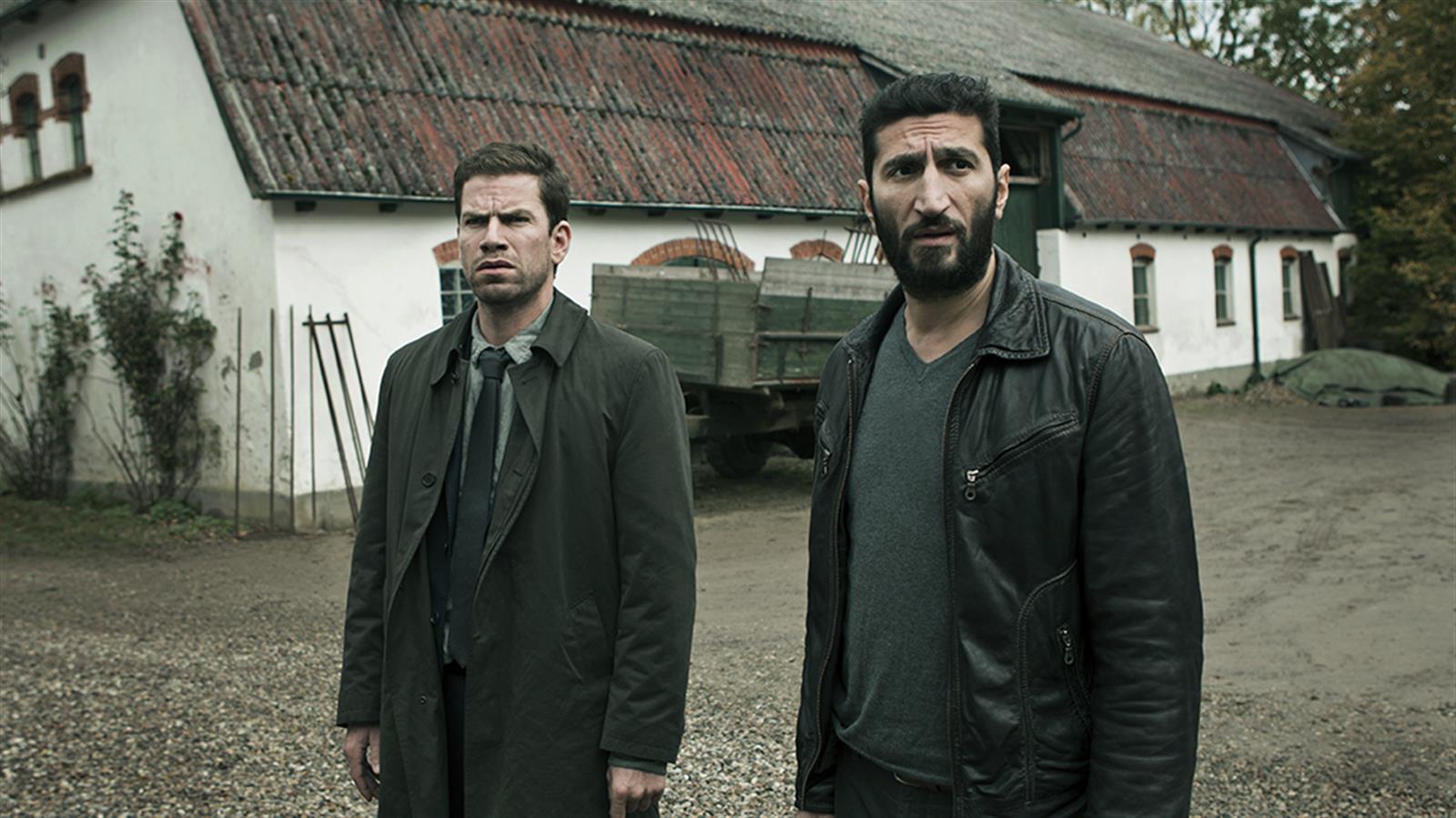
Carl Mørck used to be one of Denmark’s best homicide detectives. Then a hail of bullets destroyed the lives of two fellow cops, and Carl—who didn’t draw his weapon—blames himself.
So a promotion is the last thing he expects. But Department Q is a department of one, and Carl’s got only a stack of cold cases for company.
His colleagues snicker, but Carl may have the last laugh, because one file keeps nagging at him: a liberal politician vanished five years earlier and is presumed dead. But she isn’t dead…yet.
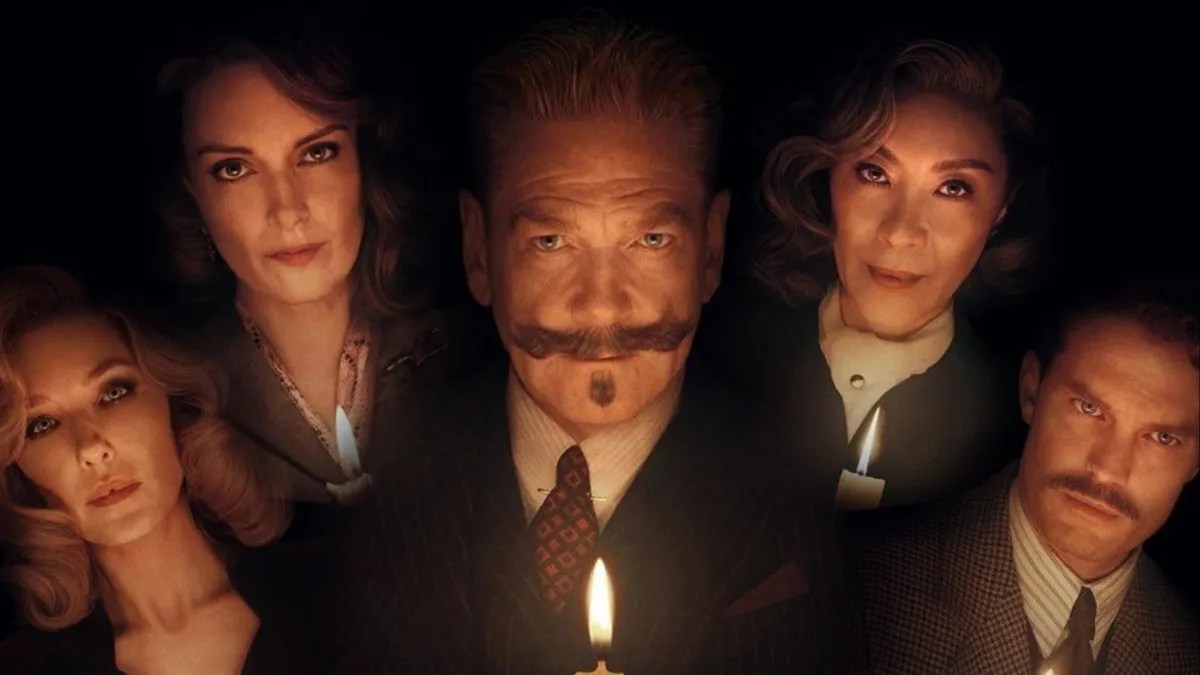
Though not as good as Nile, I do have a lot of respect for the 3rd film. It feels true to the Agatha Christie formula.
Film students should study the cinematography and audio.
Branagh portrays the Belgian detective Hercule Poirot. An ego trip.
Tina Fey is Ariadne Oliver, Poirot’s friend and a crime novelist (something like Christie).
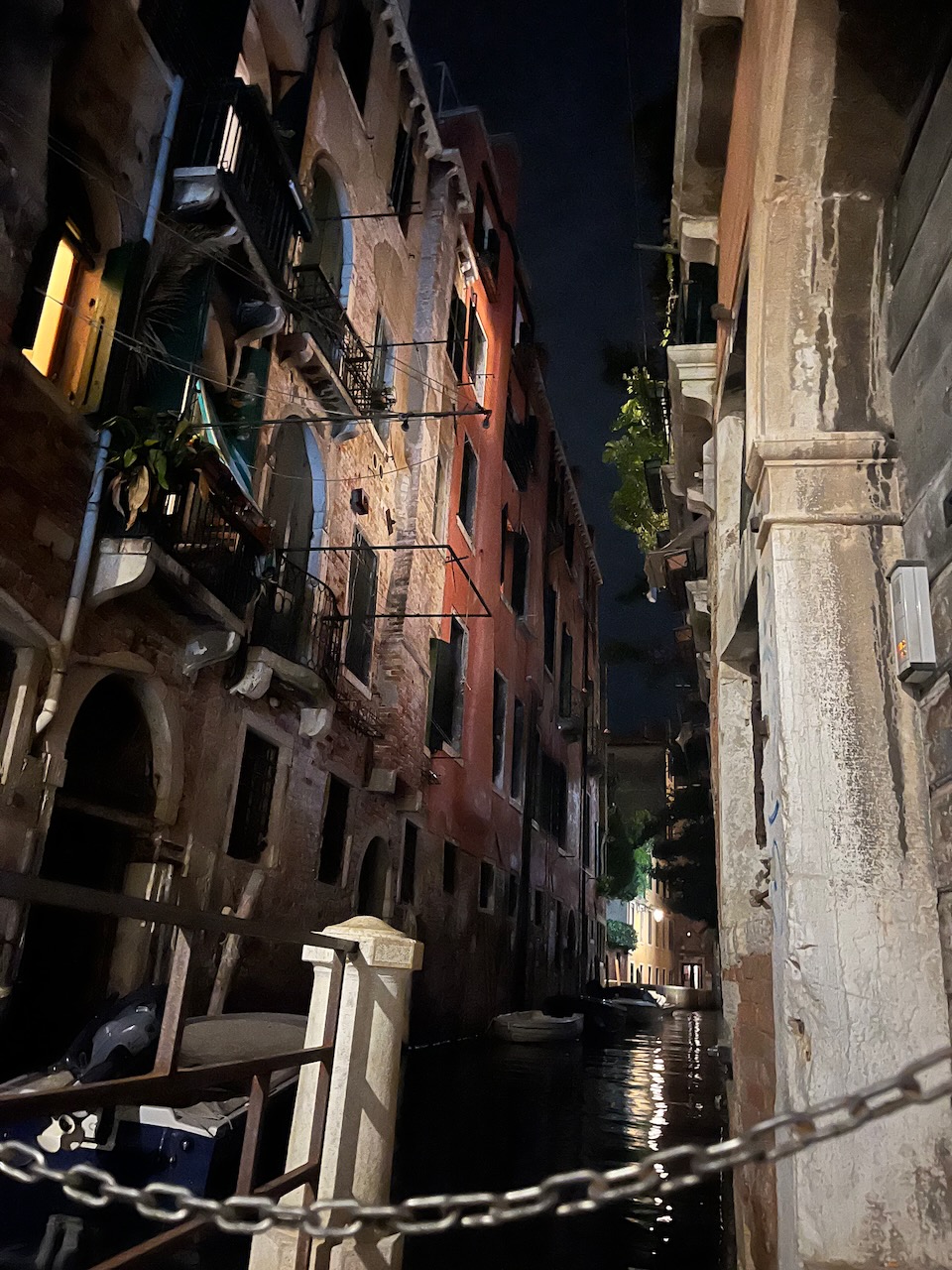
Having lost faith in God and humanity, Detective Hercule Poirot lives in retirement in post-war Venice, employing ex-police officer Vitale Portfoglio as a bodyguard.
On Halloween, novelist Ariadne Oliver convinces Poirot to attend a séance at the palazzo of opera singer Rowena Drake and help expose medium Joyce Reynolds as a fraud. …
Gathering the other guests together, Poirot exposes _______ as the murderer. …
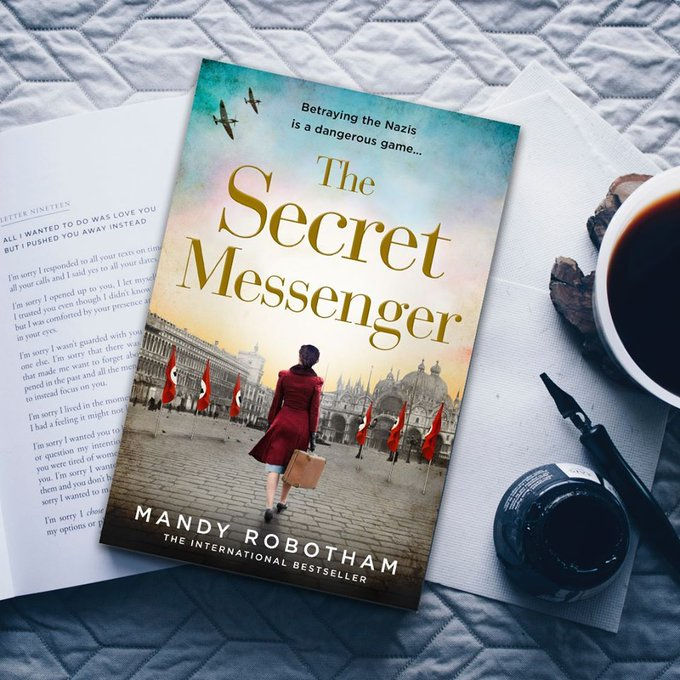
Venice, 1943: Stella Jilani is leading a double life, working as a typist in the 3rd Reich Office, but smuggling out information for the Italian Resistance and using her old typewriter to produce an underground newspaper.
Her life becomes even more complicated when she crosses paths with two very different men – the cultured, enigmatic Cristian De Luca, her immediate superior at work, and friendly Jack (Giovanni), an injured British-Italian parachutist, who needs her help. …
A second story line is set 2017 — Stella’s granddaughter stumbles on an old typewriter and a box of mementoes. Determined to connect with her Venetian heritage, she begins an obsessive quest to find out what happened to her grandmother following WW II.
Not a bad book. But not great.
It was interesting to learn how the Italian underground operated under dictator Mussolini and the NAZIs.
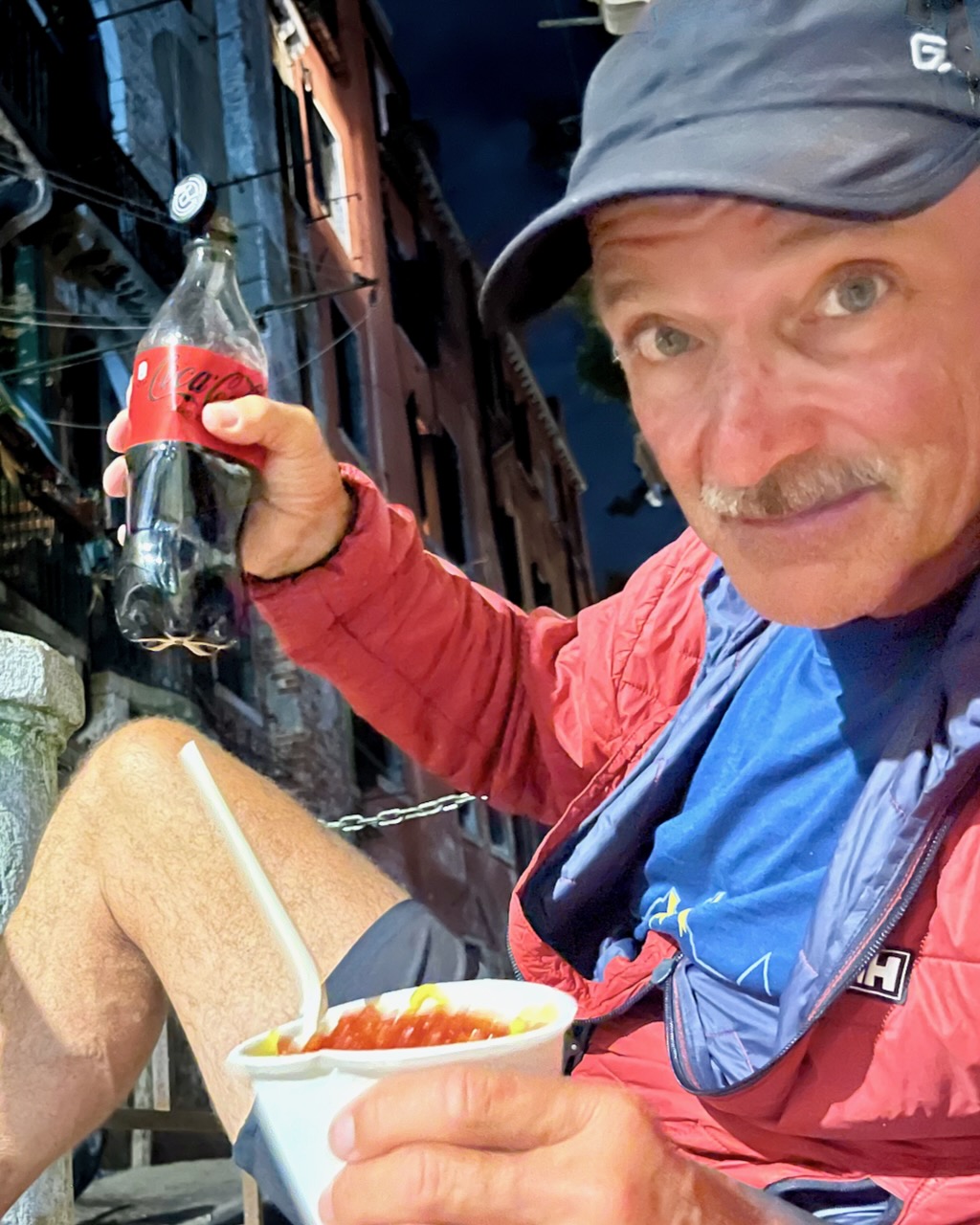
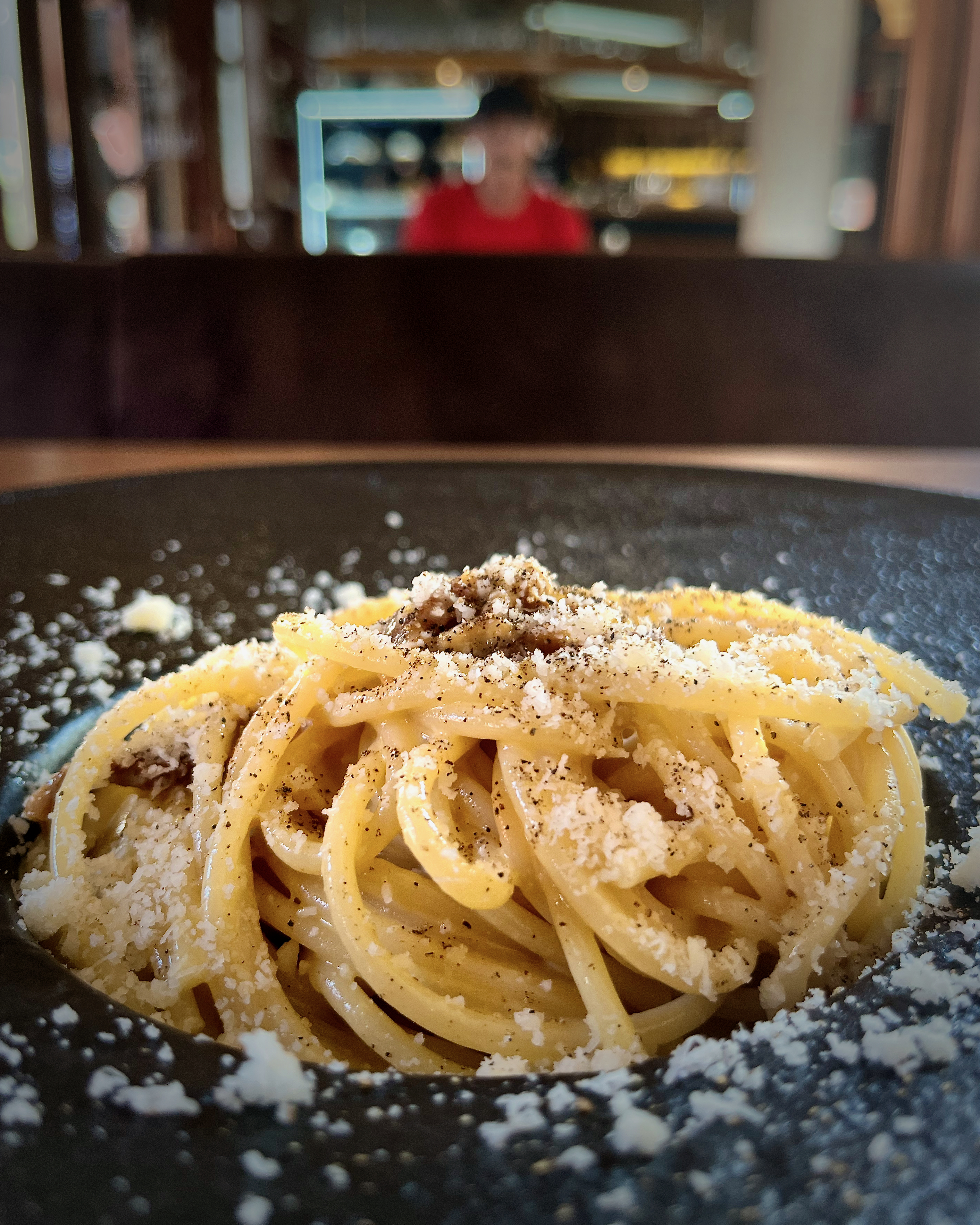
I tried a super popular local restaurant near a train station. AMERICAN portions.
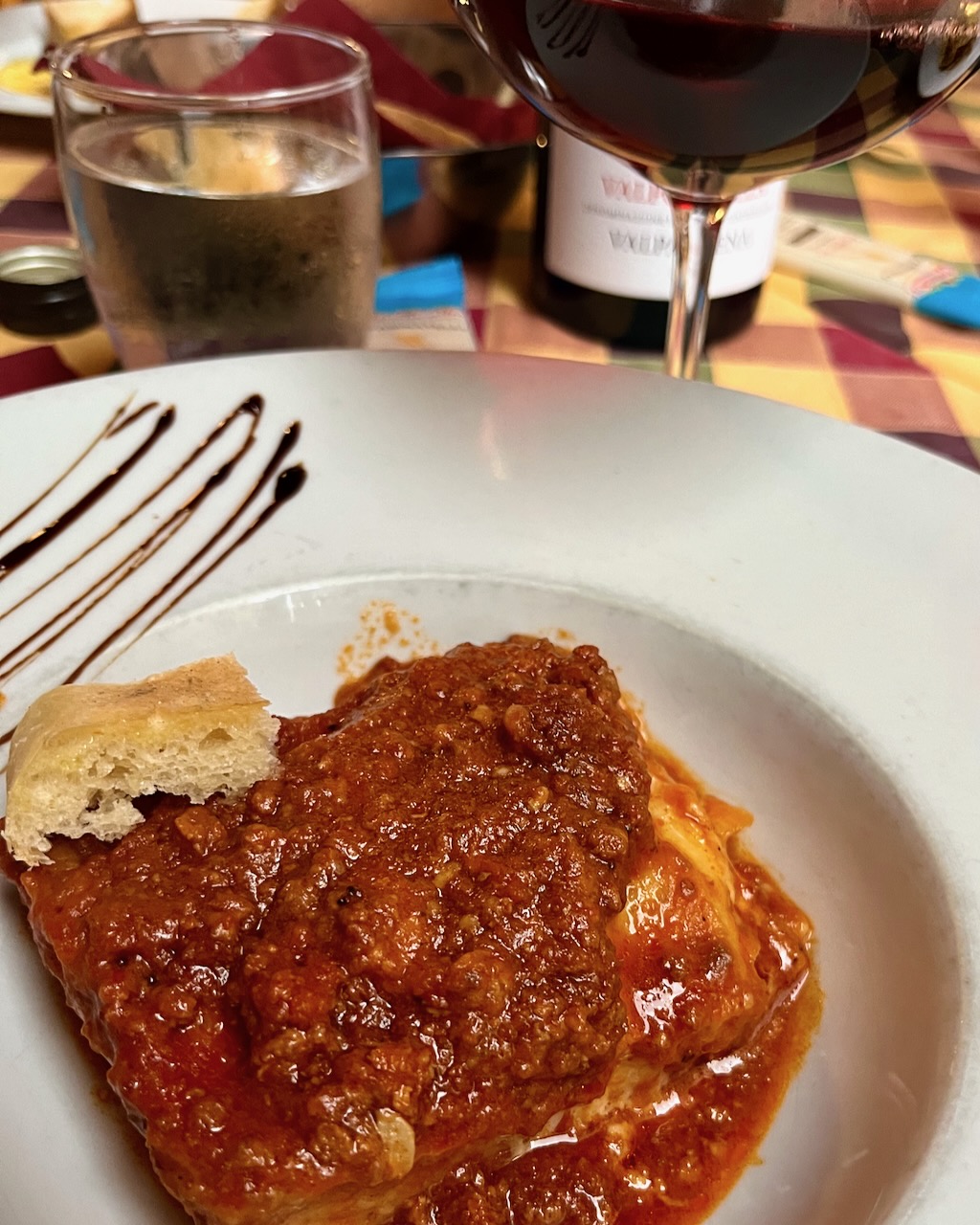
Tastiest of all — however — was a small portion of lasagna I had with Les and Tam at a random tourist restaurant in Venice. I couldn’t recall better.
Bologna
Outside Italy, the phrase “Bolognese sauce” is often used to refer to a tomato-based sauce to which minced meat has been added. As kids in Canada we ate spaghetti and meatballs — thinking it a kind of spaghetti bolognese.












 Rick McCharles