The Wire – season 2

The second season, along with its ongoing examination of the drug problem and its effect on the urban poor, examines the plight of the blue-collar urban working class as exemplified by stevedores in the city port, as some of them get caught up in smuggling drugs and other contraband inside the containers that their port receives. …

The Wire (season 2)

Click PLAY or watch the opening on YouTube.

I’d never thought much about ports or stevedores before watching this series. Fascinating subculture.

On to season 3.

Though that season was 10yrs ago, the issues are still very contemporary.

What measures should law enforcement be allowed to catch and deter crime?

Boston GlobeSurveillance cameras a tool for deterrence:

GOOD CAMERA work played a key role in the identification of the suspects in Monday’s bombings. But the reliance on store-mounted cameras and cellphone video from the public suggests that Boston Police could benefit from updating their approach to surveillance cameras — particularly by placing cameras more systematically at sporting events and other locations where large numbers of people gather. …

more security, less privacy

Like pretty much everyone, I’m pissed off.

Pissed off that two yahoos had the freedom to maim and kill innocents.

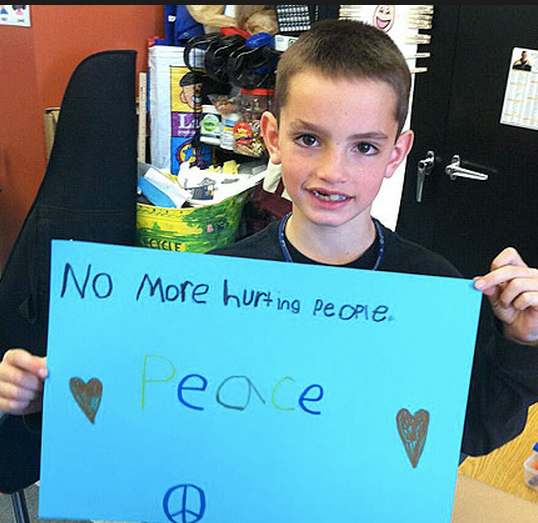
Martin

I, for one, am willing to have less freedom in exchange for more security.

Yes I know that authorities will abuse that power. I’m willing to chance it.

More cameras. More intercept of communication.

Drones I’m less certain about. But probably yes to drone surveillance, as well.

Martin Richard’s Family ‘Applauds’ Boston’s Heroes

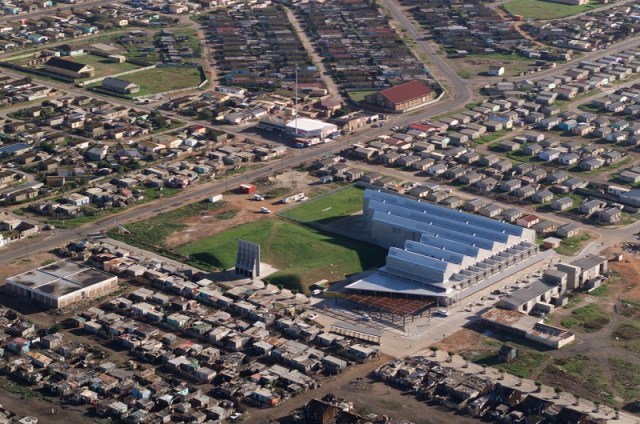
Red Location museum, South Africa

The Red Location Museum is an Apartheid museum in New Brighton township of Port Elizabeth, South Africa.

… the floor space contains various “memory boxes”, each one exhibiting the life story or perspective of people or groups who fought against the Apartheid regime. …

Red Location

It’s in the middle of one of the Townships, a place where the poor live.

We visited at night, a private tour after closing.

Very impressive.

Very moving.

… Many prominent political and cultural leaders were either born or lived in Red Location and a number of significant “struggle” (umZabalazo) events occurred here. …


official website

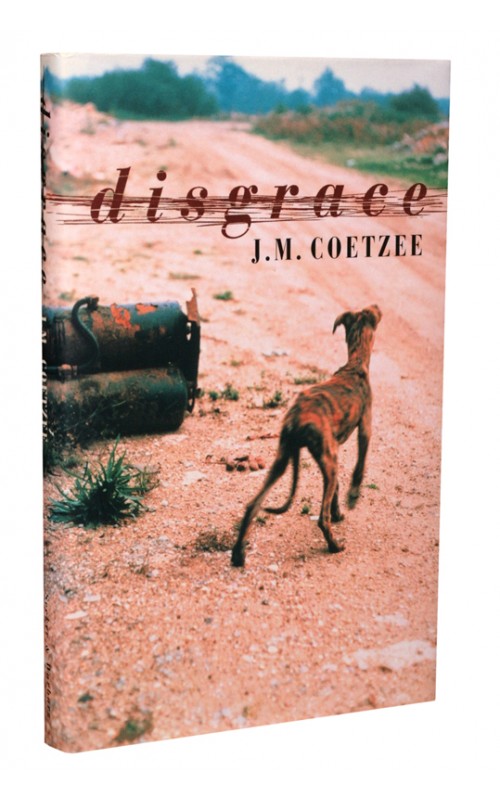
Disgrace by J. M. Coetzee

Disgrace is a novel by J. M. Coetzee, published in 1999. It won the Booker Prize. The writer was also awarded the Nobel Prize in Literature four years after its publication.

David Lurie is a South African professor of English who loses everything: his reputation, his job, his peace of mind, his good looks, his dreams of artistic success, and finally even his ability to protect his own daughter. …

His “disgrace” comes when he almost forcibly seduces one of his more vulnerable students which is thereafter revealed to the school and a committee is convened to pass judgement on his actions. David refuses to apologize in any sincere form and so is forced to resign from his post. …

… he takes refuge on his daughter’s farm in the Eastern Cape. For a time, his daughter’s influence and natural rhythms of the farm promise to harmonise his discordant life. But the balance of power in the country is shifting. Shortly after becoming comfortable with rural life, he is forced to come to terms with the aftermath of an attack on the farm in which his daughter is raped and impregnated and he is violently assaulted. …

disgrace

Dark.

Thought provoking.

Very well written.

Fast paced, succinct and compelling to read.

I wouldn’t recommend you read it, however. Pick a more uplifting book.

The Power of One, perhaps.

related – The film Disgrace, starring John Malkovich as the professor, premiered at the 2008 Toronto International Film Festival, where it was awarded the Prize of the International Critics.

District 6 Museum – Cape Town

District Six … is the name of a former inner-city residential area in Cape Town, South Africa. It is best known for the forced removal of over 60,000 of its inhabitants during the 1970s by the apartheid regime. …

joyceMUST see attraction.

After World War II, during the earlier part of the apartheid era, District Six was relatively cosmopolitan. Situated within sight of the docks, it was made up largely of coloured residents which included a substantial number of coloured Muslims, called Cape Malays. There were also a number of black Xhosa residents and a smaller numbers of Afrikaans, whites, and Indians.

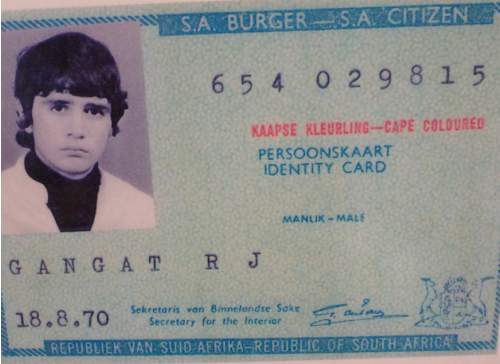
identity card

Government officials gave four primary reasons for the removals.

In accordance with apartheid philosophy, it stated that interracial interaction bred conflict, necessitating the separation of the races. They deemed District Six a slum, fit only for clearance, not rehabilitation. They also portrayed the area as crime-ridden and dangerous; they claimed that the district was a vice den, full of immoral activities like gambling, drinking, and prostitution.

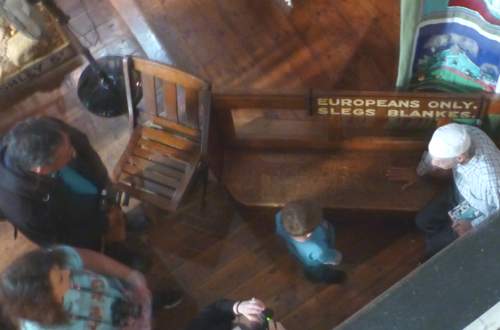
Eurpeans only

Though these were the official reasons, most residents believed that the government sought the land because of its proximity to the city center, Table Mountain, and the harbor.

On 11 February 1966, the government declared District Six a whites-only area under the Group Areas Act …

white persons only

… in 1994 the District Six Museum came into being. It serves as a remembrance to the events of the apartheid era as well as the culture and history of the area before the removals.

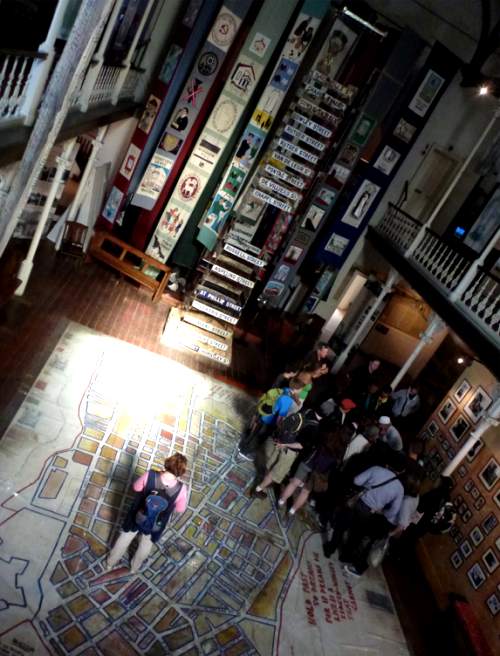
Floor

The ground floor is covered by a large street map of District Six, with handwritten notes from former residents indicating where their homes had been; other features of the museum include street signs from the old district, displays of the histories and lives of District Six families, and historical explanations of the life of the District and its destruction.

In addition to its function as a museum it also serves as a memorial to a decimated community, and a meeting place and community center for Cape Town residents who identify with its history. …

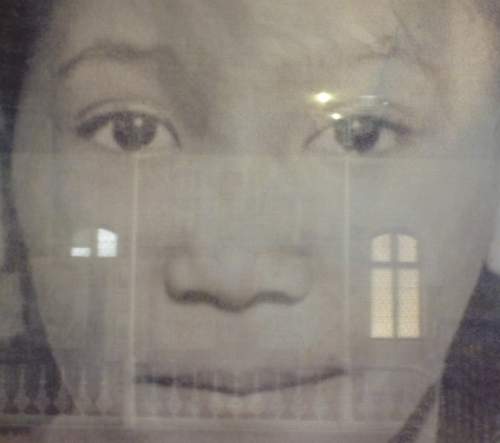
Face

District 9 is a 2009 science fiction film produced by Peter Jackson and directed by Neill Blomkamp. Although set in an alternate Johannesburg, it is inspired by the events surrounding District Six. …

“Nollywood” – Black November

by Nigerian filmmaker, Jeta Amata.

… “Black November” is a drama about Nigeria’s Niger-Delta region. The film is weighing into the 50-year history of western exploitation of the region’s oil resources, local collusion and violent resistance to it.

Nigeria’s Niger Delta region is the world’s third largest wetland but decades of oil drilling have turned it into one of the most oil-polluted places on earth. …

… The film has a cast that include Mickey Rourke, Kim Bassinger, Hakeem Kae-Kazim and Enyinna Nwigwe.
It also features Mbong Amata, Jeta’s wife; his father, Zack and his uncle, Fred. …

read more

Click PLAY or watch a trailer on YouTube.

official website of the film

… The cinema of Nigeria grew quickly in the 1990s and 2000s to become the second largest film industry in the world in terms of number of annual film productions, placing it ahead of the United States and behind the Indian film industry.

… The average film costs between US$17,000 and US$23,000, is shot on video in just a week—selling up to 150,000–200,000 units nationwide in one day. …

… about “1,200 films are produced in Nigeria annually.” And more and more filmmakers are heading to Nigeria because of “competitive distribution system and a cheap workforce.”

the truth about Jessica Lynch

In war, truth is the first casualty.

Aeschylus

41606996-jessica-lynch

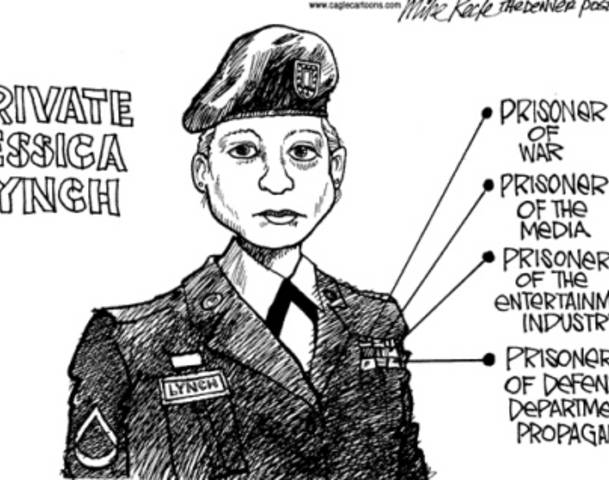
Jessica Lynch (born April 26, 1983) is a former United States Army soldier who served in Iraq during the 2003 invasion by U.S. and allied forces.

On March 23, 2003, Private First Class Lynch was serving as a unit supply specialist with the 507th Maintenance Company when her convoy was ambushed by Iraqi forces during the Battle of Nasiriyah. …

… Actually, she was in a convoy of cooks and mechanics who got lost driving at night, sadly driving right into the heart of Iraqi controlled Nasiriyah. By accident.

Many were killed unnecessarily. Her friend, Lori Piestewa, leading the convoy was one of them.

Lynch was seriously injured and captured. Her subsequent recovery by U.S. Special Operations Forces on April 1, 2003 received considerable media coverage and was the first successful rescue of an American prisoner of war since Vietnam and the first ever of a woman.

Of course the rescue wouldn’t have been necessary if a U.S. convoy could read a map. Follow the GPS.

Bush press aid Jim Wilkinson was blamed for spinning and exaggerating the story. Later he was cleared of most of the blame for headlines like this.

Lynch kept firing until she ran out of ammo

lynch_headline_post

The media, quick to accept unsubstantiated reports, are more to blame.

… On April 24, 2007, she testified in front of Congress that she had never fired her weapon; her M16 rifle jammed, and that she had been knocked unconscious when her vehicle crashed. Lynch has been outspoken in her criticism of the original stories reported regarding her combat experience. When asked about her heroine status, she stated “That wasn’t me. I’m not about to take credit for something I didn’t do… I’m just a survivor.” …

I believe she’s a teacher now. And a Mom.

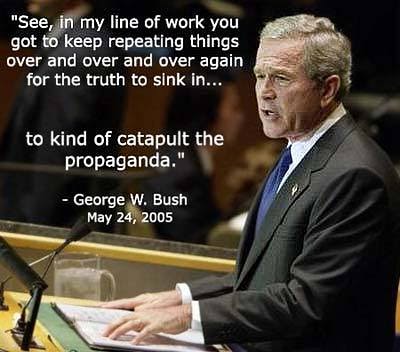
Don’t trust politicians. Especially in times of war. Especially this guy.

Bush catapulg

Catapult the propoganda. (VIDEO)

In war, casualties are the second casualty.

related – I Am a Soldier, Too: The Jessica Lynch Story

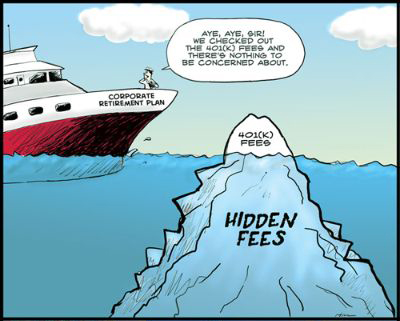
send HSBC bankers to PRISON

In the USA people get sent to jail for the most trivial of reasons. They have the highest rate of incarceration in the world. By far.

I don’t get why bankers are immune.

Appearing at a Senate Banking Committee hearing Thursday, Sen. Elizabeth Warren (D-MA) grilled officials from the Treasury Department over why criminal charges were not filed against officials at HSBC who helped launder hundreds of millions of dollars for drug cartels.

The HSBC scandal resulted in the Department of Justice and Treasury announcing a record $1.92 billion fine after finding that the international bank repeatedly helped the world’s most violent drug gangs move at least $881 million in ill-gotten gains through numerous countries the U.S. has economic sanctions against.

“HSBC paid a fine, but no one individual went to trial, no individual was banned from banking, and there was no hearing to consider shutting down HSBC’s activities here in the United States,” Warren said. “So, what I’d like is, you’re the experts on money laundering. I’d like an opinion: What does it take — how many billions do you have to launder for drug lords and how many economic sanctions do you have to violate — before someone will consider shutting down a financial institution like this?”..

read more – A question that has not been answered

If I was an American politician, I wouldn’t be droning on about drones. I’d be campaigning for throwing decision makers at criminal banks in prison.

I’d start with this guy, Stuart Gulliver, the chief executive of HSBC.

Gulliver

He was paid $11.1 million last year, despite missing cost and profit targets and a record money laundering fine.

I don’t care if he’s guilty or not. The captain goes down with the ship.

The political gain I’d get from personally dragging him by the ear into prison would far outweigh the years of court battles.

When people ask me why I think Obama’s a lousy President, his gutlessness in dealing with those who most caused the crash of 2008 is high on my list of reasons.

Iceland arrested corrupt bankers. … How did that work out for them? 🙂

related:

HSBC money laundering: too big to jail

HSBC Bankers Get No Jail Time for Terrorist Financing While Somali Sentenced for Charity

In Defense of Drones

They’re the worst form of war, except for all the others.

By William Saletan in Slate

… Drones kill fewer civilians, as a percentage of total fatalities, than any other military weapon. …

read more

I agree.

obama-1

The main downside … when terrorists get drones. Public figures will then have to stay out of sight 24/7.

Lance Armstrong: Cheating Scumbag

I wasn’t all that big a Tour de France fan.

Not like Dave Adlard.

Dave relates with and concurs with this missive from a real hero, Alastair Humphreys:

Lance Armstrong broke my heart. Or a tiny little bit of it, anyway. …

Then when Lance gave Ullrich “the look” on Alpe d’Huez on 2001 I was completely smitten. Shortly after that I set off to cycle round the world. I thought of Lance often. When I was struggling up long mountain passes I’d get up out of the saddle, give my imaginary opponents “the look” and put on a sprint. …

Click PLAY or watch it on YouTube.

Through all the years of allegations about Lance’s drug use I defended him strongly. I secretly suspected that he might be up to something. But I hoped -I really hoped- that he was clean. That he was the inspirational figure he always loudly proclaimed himself to be. He passed hundreds of tests. I wanted to believe. So I believed. I felt sorry for all the cynics. Sorry they couldn’t believe in miracles. …

The only regret Lance Armstrong appears to feel, since he was left with no option but to admit to having cheated in every single one of his Tour victories, is that he got caught.

Cheating was one thing. Showing no remorse is another. …

Lance Armstrong: Cheating Scumbag

All true.

But I have to add the usual disclaimer. The Cheating Scumbag is a superb athlete. I would love to have seen what he could have done without the drugs.