Internet speed and reliability in southern Africa is crappy. As bad as I’ve seen anywhere in the world.
We postulate that there are not enough cables running under the ocean …
NOT SO.
Oh sure: cables in the Atlantic have a higher capacity than a cable going down the coast of East Africa. … Not to say the cables in Africa are less useful, in fact many are newer…
Africa is in pretty good shape because multiple new cables have been laid so capacity can grow for many years to come, and cables are designed to last for a minimum 25 years.
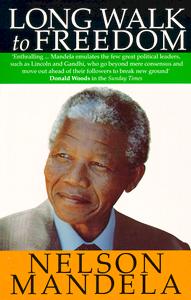
Long Walk to Freedom is an autobiographical work written by South African President Nelson Mandela, and published in 1995 …
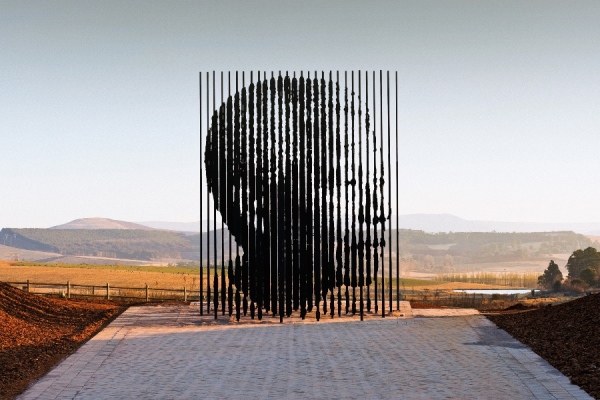
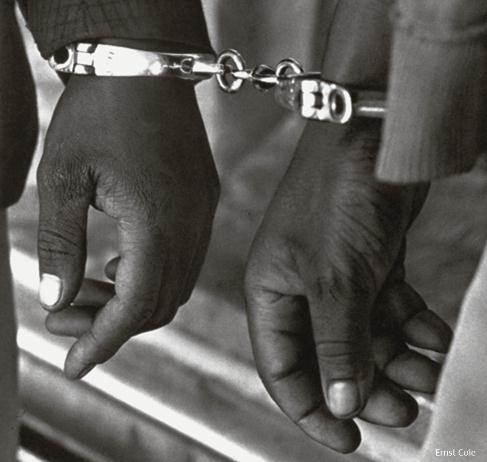
The book profiles his early life, coming of age, education and 27 years in prison. Under the apartheid government, Mandela was regarded as a terrorist and jailed on the infamous Robben Island for his role as a leader of the then-outlawed ANC. He has since achieved international recognition for his leadership as president in rebuilding the country’s once segregated society. The last chapters of the book describe his political ascension, and his belief that the struggle continues …
His childhood name was Rolihlahla, which is loosely translated as “pulling the branch of a tree”, or a euphemism for “troublemaker“.
Indeed, many of the most winning anecdotes are stories of how the now sainted man bungled, cheated or lied.
Mandela oversaw the formation of a Truth and Reconciliation Commission to investigate crimes committed under apartheid by both the government and the ANC, appointing Desmond Tutu as its chair. To prevent the creation of martyrs, the Commission granted individual amnesties in exchange for testimony of crimes committed during the apartheid era. Dedicated in February 1996, it held two years of hearings detailing rapes, torture, bombings, and assassinations, before issuing its final report in October 1998. …
Though Mandela was influenced by his older contemporary, Gandhi, he did not subscribe to Gandhi’s non-violence. Nelson felt that non-violence worked in India because the British government was reasonable. But that it would not work in South Africa government.
Mandela said that he actually didn’t know Gregory very well. But did state:
“He was one of the most refined warders. Well-informed and courteous with everybody. Soft spoken. Very good observations. I developed a lot of respect for him.”
The viciously-cutthroat protagonist of Netflix’s hit political thriller House of Cards often breaks the fourth wall to provide viewers with merciless advice.
Kiev’s central square looks like the aftermath of a war, with rubble strewn across the streets and smoke pouring out of a trade-union building that served as the protesters’ headquarters. …
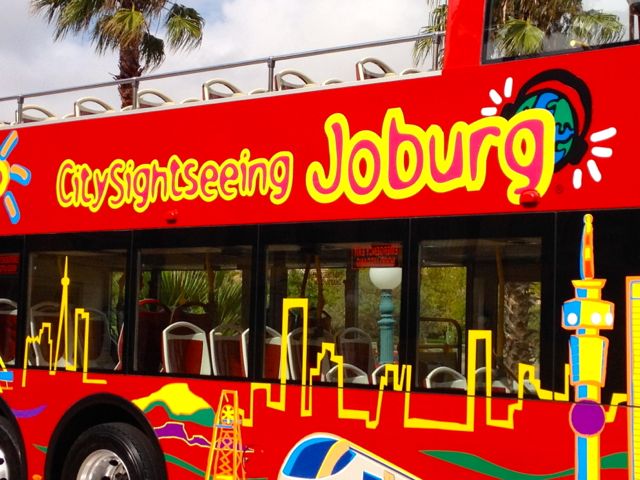
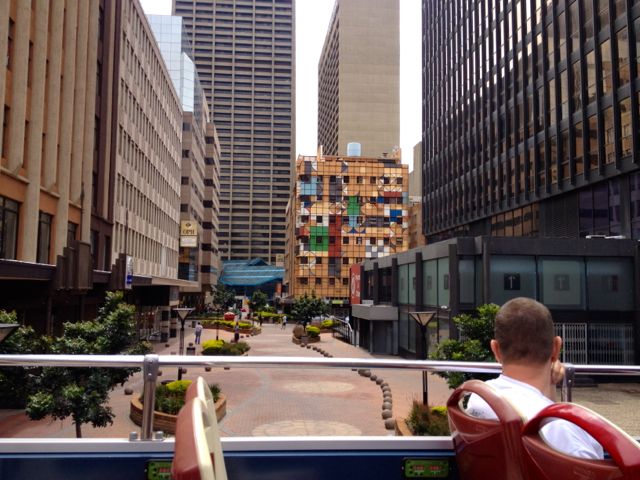
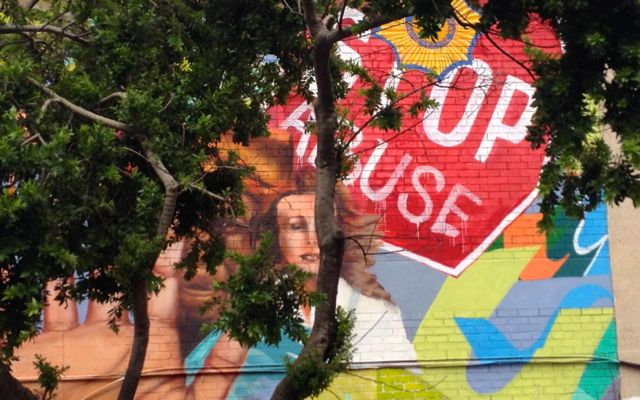
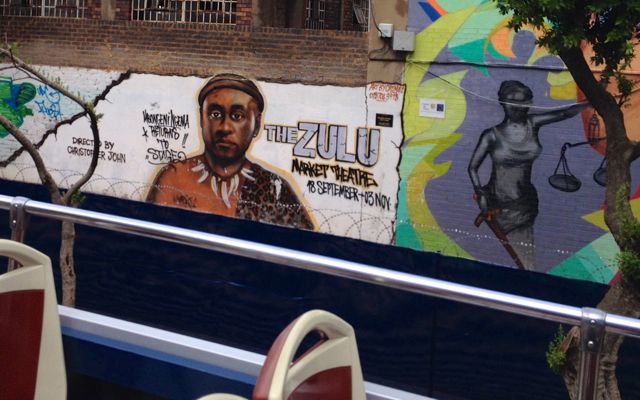
Melani and I took a bus tour of her home town, Johannesburg.
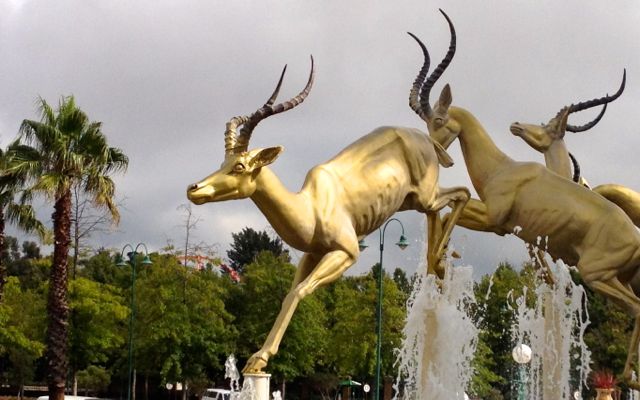
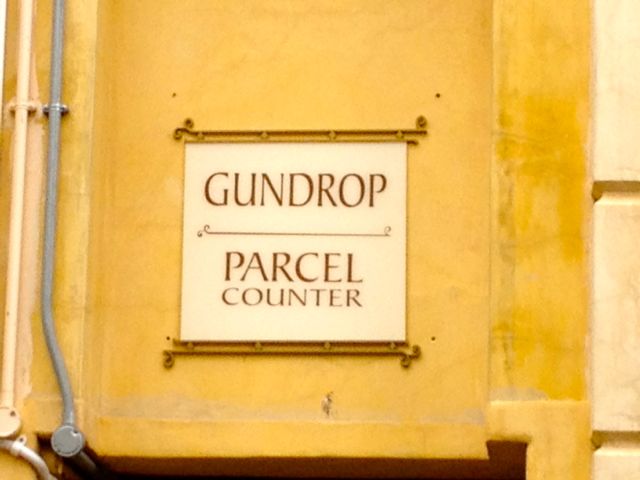
We started at the Gold Reef City casino.
Bus tours are the fastest way to get a feel for a big city.
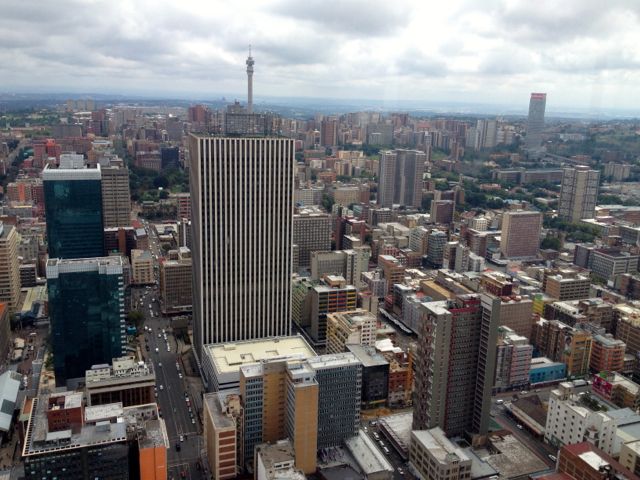
We took an elevator to the Roof of Africa, the top of the Carlton, Africa’s highest building.
JoBurg is sprawling, one of the sprawlingest cities in the world. 8 million people plus by some estimates.
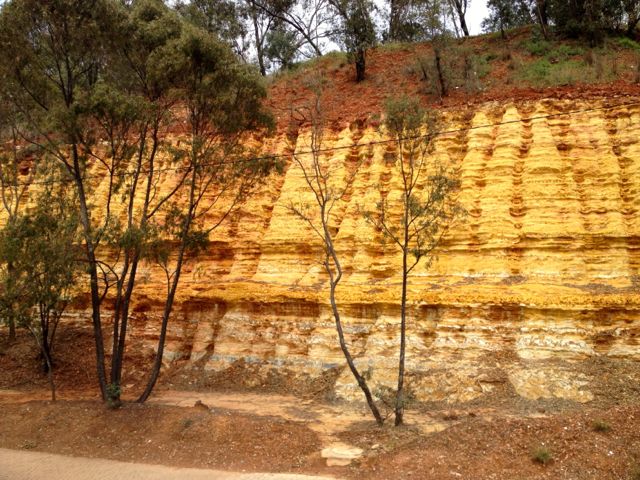
This is the largest city in the world NOT on a river, lake or coast. The only reason the city grew here was gold. You are reminded when passing gold coloured tailing piles.
Gold was discovered on the Langlaagte farm in 1886. … By 1896 Johannesburg had become a city of over 100,000 inhabitants …
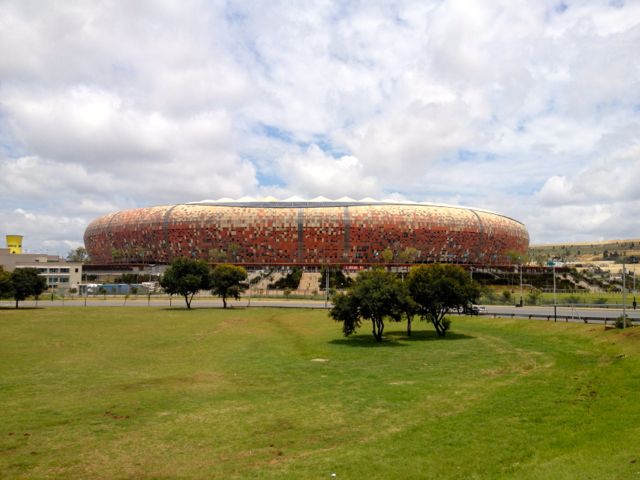
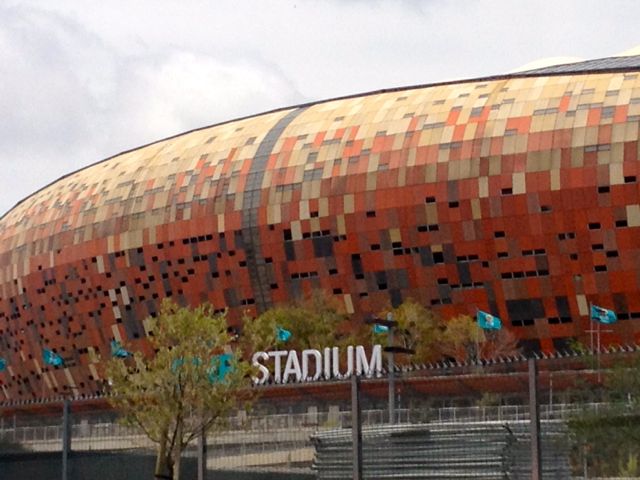
Soccer City, the main stadium of the 2010 World Cup.
Melani and I both enjoyed the tour. I recommend it. Especially the Apartheid museum.
On another day, William took me to his office in Johannesburg CBD (Central Business District). Nearby were “highjacked” buildings filled with squatters.
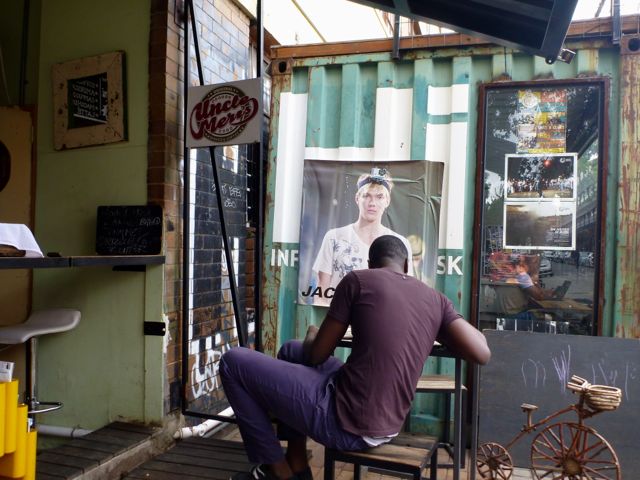
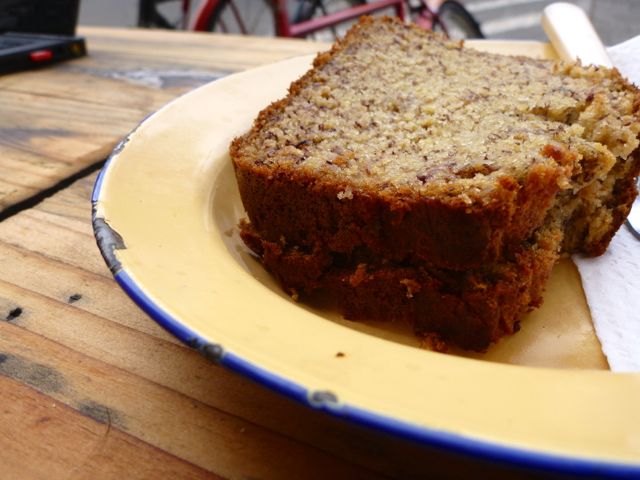
William’s building and other parts of the old city are being renovated and rejuvenated. We had coffee at Uncle Mere’s, a trendy new streetside bistro in the hip Maboneng district.
… the accomplishments that most deserve commendation, we think, are path-breaking reforms that do not merely improve a single nation but, if emulated, might benefit the world.
Gay marriage is one such border-crossing policy, which has increased the global sum of human happiness at no financial cost. Several countries have implemented it in 2013—including Uruguay, which also, uniquely, passed a law to legalise and regulate the production, sale and consumption of cannabis. This is a change so obviously sensible, squeezing out the crooks and allowing the authorities to concentrate on graver crimes, that no other country has made it. If others followed suit, and other narcotics were included, the damage such drugs wreak on the world would be drastically reduced.
Better yet, the man at the top, President José Mujica, is admirably self-effacing. With unusual frankness for a politician, he referred to the new law as an experiment. He lives in a humble cottage, drives himself to work in a Volkswagen Beetle and flies economy class. Modest yet bold, liberal and fun-loving, Uruguay is our country of the year. ¡Felicitaciones!
… have wealth equal to that of half the population: report
Just how rich are they? According to a new report by Oxfam, their total fortunes are equal to as much as half of that of the world’s population.
The report, which analyzes a number of studies to highlight the world’s growing economic inequality, was intended as a precursor to the World Economic Forum, which begins in Switzerland this week.
… the wealth of the richest keeps growing, while the bottom 90 per cent (i.e. most of the rest of us) keeps shrinking. …
This kind of headline is bad news for the Tea Party crowd. It’s damage control time for the extreme right wing. Drudge linked to a conservative site claiming the actual statistic is that the 85 richest people own about 0.7% of the world’s wealth.
That must change if they hope to regain the Presidency.
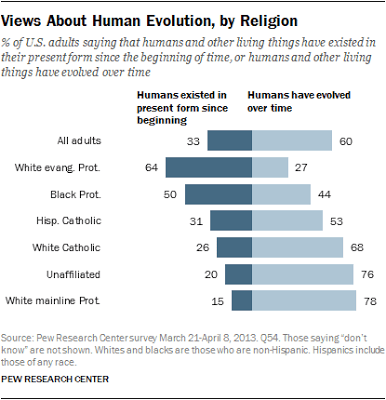
In 2009, 54% of Republicans and 64% of Democrats said humans have evolved over time, a difference of 10 percentage points. Today, 43% of Republicans and 67% of Democrats say humans have evolved, a 24-point gap.
Only 43 percent of Republicans believe in evolution compared with 72 percent for American college graduates. Scientists overwhelming accept evolution as the dominant scientific theory of biological diversity.





 Rick McCharles