I’d first tried to start in Porto — but couldn’t find a bike to rent on short notice.
In Santiago itself I found Cycling the Camino, a shop that pretty much NEVER runs out of rentals.
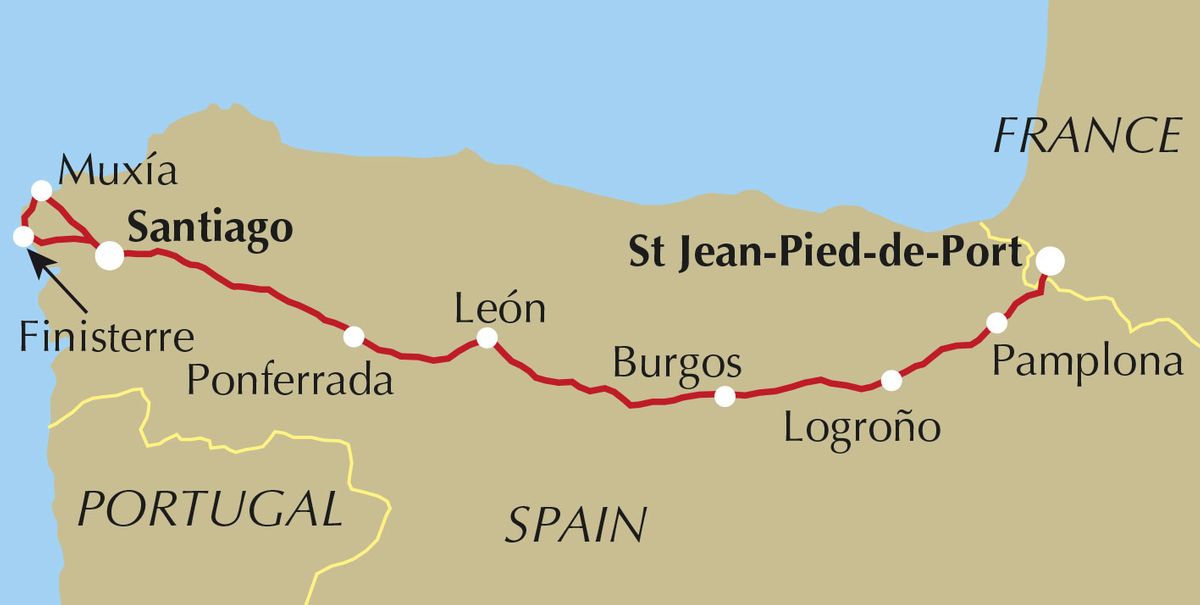
I took the train to León, picking up the rental there. They will deliver almost anywhere you want to start — charging additional shipping to mainland Spain (30€/bike), Portugal (37€/bike) and France (65€/bike).
The cost of the bike itself is around 30€/day.
Inexpensive, in my opinion. And WAY easier than flying your own bike.
I booked 7 days to make the 300+km return which I assumed would be EASY. I did make it in 6 days, finding the adventure more challenging than expected. I was on the bike about 6-7 hours each day.
My short video includes a LOT of drone footage as that’s the easiest way to show the landscape.
Compared with most long distance cycling routes, this one is very civilized. Regular folks have been walking it for over 1000 years. The infrastructure very well developed.
It’s very social with both walkers and cyclists meeting up each evening.
Folks of all ages and fitness levels are pilgrims on The Way.
Though no book, map or app is needed, I did carry a paper copy of the newest Cicerone guidebook.
Menú del día, or menu of the day, is a menu served by Spanish restaurants during lunch, one of the largest meals of the day …
… typically between 1:30 to 4:30 p.m.
This is a cheap, economic meal, typically with good food.
Problema for ME is that it includes all-you-can-drink wine. They leave a full bottle on the table for you.
I’m pretty much buzzed for the day — at lunch.
Typically they come with soup, bread, drink, dessert and main course. I paid 12 Euro for this feast.
Seafood soup appetizer on the Santiago Camino
HEY – the Interterritorial Health Council, made up of doctors and other health professionals, had suggested that alcohol be dropped from the menús del día. I highly doubt that’s going to happen.
I took the train to León where I’d be starting a week long cycling trip to Santiago de Compostela on the French Camino. A pilgrimage people have been doing for over 1000 years.
It’s very walkable, a small city with most of the attractions close together.
León’s Cathedral is one of the finest in Europe.
Panorama of Plaza de Regla and Leon Cathedral, Castile and Leon, SpainMe and the cops.
My official start is this Cathedral. I’ll finish at the Cathedral in Santiago.
After hiking the West Coast Trail for the first time in 1999, I decide to switch to what I called destination travel. I’d travel to do something specific — a specific hike, for example. I’d travel less, but with a GOAL.
The first blogging I did was on WordPress.org, launched 2003. For a couple of years before that I hand coded HTML which was difficult.
Matthew Kepnes — Nomadic Matt — started traveling abroad in 2005 and quickly became one of the most popular on the web. The site is still going strong as Matt hired a team of 5 people to keep it going.
Matt traveled nearly non-stop for 10 years. And then wrote a memoir.
Coimbra is a popular stop for tourists coming to visit the archaeological structures dating back to the Roman era, especially the well-preserved aqueduct and cryptoporticus.
I bought a ticket to see the Joanine Library (Biblioteca Joanina), continuing my quest to visit all the most beautiful bookstores and libraries in the world.
It’s small, but well gilded. 😀
The most interesting part of the story is that this is one of the Portuguese libraries that encourages bats to make residence. The thinking is that they eat insects that might damage the ancient treasures.
Library on the left. By Dicklyon – Own work, CC BY-SA 4.0.
Biggest man on campus. King Joao III (John III) 1521 – 1557.
Though King John accomplished a lot, the Inquisition was introduced into Portugal in 1536. Just like in Spain, the Inquisition was placed under the authority of the king.
In Portugal the first Grand Inquisitor was Cardinal Henry, the king’s brother
If Belgium was the most horrific European nation for brutalizing people in their colonies, Portugal and Spain were next worst. I blame the Catholic Church out of Italy equally.
BACK in Lisbon to have a tooth implant installed, I posted some Instagrammy pics on Instagram.
Having visited most of the major tourist sites last year, I looked for less visited photo ops this time.
For example, I caught the ferry over to the former industrial suburb city Barreiro. I saw no other tourists wandering the streets that day. Augusto Cabrita, local photographer, cinematographer and film director is celebrated with this massive wall portrait.
Not Portugal. BUT I wanted to travel to Portugal for hiking and cycling in November. Also, it’s one of the most vaccinated large nations in the world during a pandemic.
I booked a FREE assessment appointment on my birthday:
November 2 ~ free assessment
November 4 ~ cleaning and measurement for ‘flipper‘ (temporary replacement tooth)
November 11 ~ implant surgery and placement of the flipper
November 15 ~ final checkout
The last 4 days in Lisbon were in case of complications. And that allows time to adjust the flipper, if needed.
Happily I had no infection nor swelling. And the flipper looks pretty good. Can you tell which top front tooth is now removable?
In fact, I’m as good looking as ever. … Ladies? 😀
I’ll return to Lisbon in 4-6 months to have the permanent fake screwed in.
The Institute of Implantology is not cheap. Price everything included for me will be about CAD $5000 (US$4000, EUR3490). Here are some of the major costs:
€160 CT Scan
€ 160 Extraction
€ 890 Implant placement
€ 650 Bone Graft
€ 280 Flipper
€ 695 Instillation of implant
The bonegraft encourages regeneration of bone and increases the odds that the tooth will stay in my skull for life.
My surgeon was Dr. GonçaloCaramês. Trained in Los Angeles, he married another dentist. They planned to set up practice in Seattle but he opted instead to return to Portugal because of the pandemic.
The facility itself is impressive. Chic. Very modern technology.