Liverpool-based veteran cop DI Colette Cunningham uproots to Dublin when she learns that her estranged daughter, Stacey, has taken her own life.
Once there, Colette meets her two teenage grandchildren for the first time.
Despite having never known of their existence she’s their named guardian. Determined to do right by her daughter in her death, Colette joins the local Dublin Police and cares for the kids.
However, not everything about Stacey’s life is what it seems. Colette sets out to uncover the truth.
In July 2021 amidst the COVID-19 pandemic, private investigator Holly Gibney mourns the death of her mother, with whom she had a complicated and strained relationship.
Despite taking a break from work, Holly is contacted by Penelope Dahl, whose daughter Bonnie disappeared earlier that month. Holly is intrigued by Penelope’s message and agrees to work on the case. …
Holly is a damaged and flawed individual. BUT you can’t help cheering for her.
Stephen King is one of the most popular critics of Trump online.
In this book, Holly’s mom dies of covid. She had been a rapid MAGA ReTrumplican.
You can criticize the amount of anti-MAGA sentiment in this book. You could call it preachy.
I’m OK with it myself, as I agree with King that Trump is the worst thing that’s happened to the USA in a long, long time.
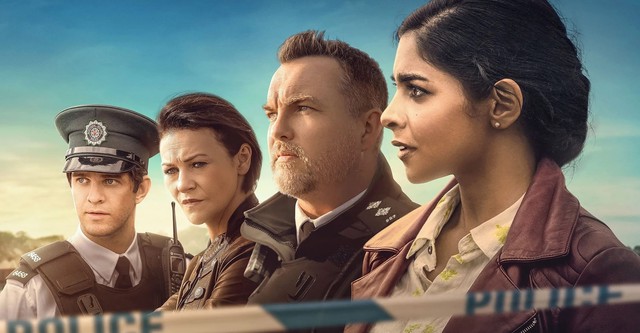
The first series sees the sudden arrival of DC Leila Hussain (Amara Karan) in the fictional Northern Irish town of Port Devine.
The local residents question the reason behind her arrival; only Inspector Finn O’Hare knows why Leila has been transferred, but is keeping it to himself. …
Too long. Too slow. But still worth reading as are all the books in the series aside from Ink Black Heart. Do NOT bother with Ink Black Heart. It’s gawd awful.
Well … perhaps slightly less irritating as he’s quit drinking and has lost weight, due to health concerns.
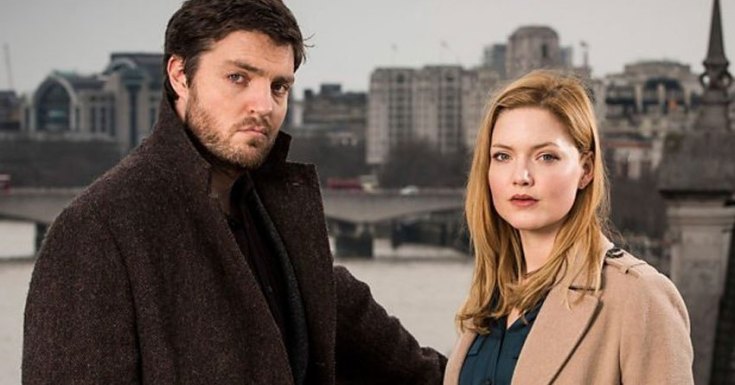
We still can’t imagine why partner Robin Ellacott likes him as a boss — or for possible romance.
I would have preferred if these two had finally got together. They don’t … quite … in this book.
But their detective agency is finally successful.
In this book they investigate the Universal Humanitarian Church (UHC) — a cult.
At one point Strike realizes it was formed on the site of a 1960s to 1980s commune, one of the places he, and his half-sister Lucy, had lived as a child, as his mother Leda Strike drifted around the country. The commune had closed after its leaders were arrested for child sexual abuse. Lucy was one of those abused.
Robin volunteers to infiltrate the modern UHC …
It made no sense to me that she stays so long. Not much was learned from her undercover weeks.
Rowling tries to defend the harm she’s done by attacking people who happen to be born transgender.
I’ve read some of her written defences, as well.
Rowling believes she’s defending feminists. It started by her defending Maya Forstater, who was fired for arguing against transgender people the right to live the life opposite their birth gender.
Rowling believes that you should be allowed to say that biological sex cannot be changed, even if that turns out to be wrong. Rowling believes in freedom of speech on that issue.
Most agree that after a wonderful life, it’s a disappointment that such a wonderful writer and billionaire picked this issue as the hill to die on.
I’m disappointed in Rowling, too.
This controversy is a big part of her legacy.
That said — I’m not cancelling Rowling. She’s 95% good. 5% bad.
In some ways having such a famous person talking about the issue is bringing daylight. We have a long way to go yet in terms of making life fair for transgender citizens.
I’d say the most convincing character is Toby Jones as David Pilcher.
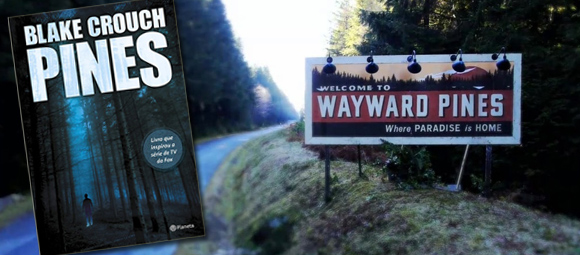
The plot of Crouch’s first novel in the trilogy, Pines (2012), is covered over the first five episodes of the TV series. The second and third novels, Wayward (2013) and The Last Town (2014), make up the remaining five episodes.
I’d say the writers did quite a good job translating the longer, more convoluted trilogy into 10 hour long episodes that make more sense. Changes were for the good.
This book is a series of short stories. Some better than others.
This pandemic — the Arctic Plague — starts in 2030 when a prehistoric female came to light having melted out of a glacier in Siberia.
A previously unidentified pathogen from the past was reactivated — and quickly spreads around the world.
How High We Go in the Dark is made up of more than a dozen discrete episodes, separate beads along the narrative timeline from the discovery and release of the virus, through the worst years of the pandemic, on into its lingering aftermath.
The book then leaps 6,000 years ahead, revealing how decisions taken now might lead to radically divergent futures. …
The first story is of an amusement park — City of Laughter —where children infected can enjoy one last, fun-filled day before riding a roller coaster designed to kill them.
The second story is excellent. A pig used in plague research learns how to talk.
After that … none of the other short stories jumped out for me. I skipped some.
Very popular. So weird, it’s actually entertaining to watch.
James Walton of The Daily Telegraph commented, “Theoretically, this should add up to a right old mess. In practice, it makes for a thumpingly enjoyable piece of television …
… the plot is based on the ambiguity of Tyler’s predicament and the lack of clarity, to both the audience and the character, whether he has died, become comatose or travelled in time. …
The methodology and techniques of modern policing that Sam Tyler employs during Life on Mars lead him into clashes with other characters.
Gene Hunt and the rest of the CID appear to favour brutality and corruption to secure convictions, as shown by their willingness to physically coerce confessions and fabricate evidence …
Police who worked Manchester in the 1970s said the show got everything wrong: clothing, slang, procedures. 😀 Artistic licence.
The suicide of Christian Habersaat, a recently retired police sergeant from Bornholm, Denmark, kicks off Jussi Adler-Olson’s underwhelming sixth Department Q novel …
Det. Insp. Carl Mørcks looks into an unsolved case from 17 years earlier that consumed Habersaat’s life—the hit-and-run death of high school student Alberte Goldschmid. …
The story becomes more complicated when Habersaat’s grown son, Bjarke, kills himself and young women start disappearing from the Nature Absorption Academy, a sun cult.
The female characters are gratingly one-note: nearly all their narratives revolve around stealing men or getting revenge on the women who stole their men. …





 Rick McCharles