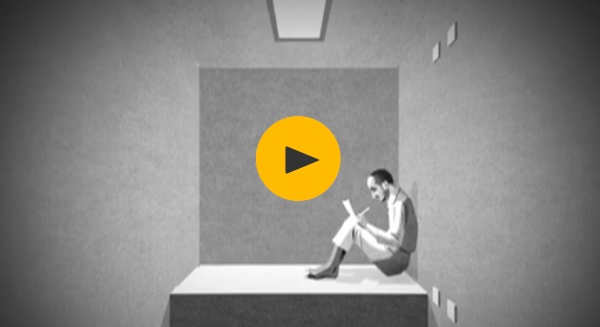
Mohamedou Ould Slahi – torture and detention without charge 😦
On or about Sept. 11, 2001, American character changed.
What Americans had proudly flaunted as “our highest values” were now judged to be luxuries that in a new time of peril the country could ill afford.
Justice, and its cardinal principle of innocent until proven guilty, became a risk, its indulgence a weakness.
Asked recently about an innocent man who had been tortured to death in an American “black site” in Afghanistan, former Vice President Dick Cheney did not hesitate.
“I’m more concerned,” he said, “with bad guys who got out and released than I am with a few that, in fact, were innocent.”
In this new era in which all would be sacrificed to protect the country, torture and even murder of the innocent must be counted simply “collateral damage.”
“Guantánamo Diary” is the most profound account yet written of what it is like to be that collateral damage. …
I visited Vietnam for the first time in 2014, almost 50 years after the end of the American War.
The nation is thriving. Tourists love the country. 🙂
The Fall of Saigon was the capture of Saigon, the capital of South Vietnam, by the People’s Army of Vietnam and the National Liberation Front of South Vietnam (also known as the Việt Cộng) on April 30, 1975. The event marked the end of the Vietnam War …
The city was renamed Hồ Chí Minh City, after the Democratic Republic’s President Hồ Chí Minh. …
The fall of the city was preceded by the evacuation of almost all the American civilian and military personnel in Saigon, along with tens of thousands of South Vietnamese civilians associated with the southern regime. The evacuation culminated in Operation Frequent Wind, the largest helicopter evacuation in history. …
Evacuation of CIA station personnel by Air America on the rooftop of 22 Gia Long Street in Saigon on April 29, 1975. Photo: Hubert van Es / UPI
Academy Award®-winner for Best Documentary Feature, THE FOG OF WAR is the story of America as seen through the eyes of the former Secretary of Defense under President Kennedy and President Johnson, Robert S. McNamara.
The title derives from the military concept of the “fog of war” depicting the difficulty of making decisions in the midst of conflict.
Robert McNamara’s 11 lessons from Vietnam
From Robert McNamara’s 1995 book “In Retrospect: The Tragedy and Lessons of Vietnam“:
We misjudged then — and we have since — the geopolitical intentions of our adversaries … and we exaggerated the dangers to the United States of their actions.
We viewed the people and leaders of South Vietnam in terms of our own experience … We totally misjudged the political forces within the country.
We underestimated the power of nationalism to motivate a people to fight and die for their beliefs and values.
Our misjudgments of friend and foe, alike, reflected our profound ignorance of the history, culture, and politics of the people in the area, and the personalities and habits of their leaders.
We failed then — and have since — to recognize the limitations of modern, high-technology military equipment, forces, and doctrine. We failed, as well, to adapt our military tactics to the task of winning the hearts and minds of people from a totally different culture.
We failed to draw Congress and the American people into a full and frank discussion and debate of the pros and cons of a large-scale military involvement … before we initiated the action.
After the action got under way, and unanticipated events forced us off our planned course … we did not fully explain what was happening, and why we were doing what we did.
We did not recognize that neither our people nor our leaders are omniscient. Our judgment of what is in another people’s or country’s best interest should be put to the test of open discussion in international forums. We do not have the God-given right to shape every nation in our image or as we choose.
We did not hold to the principle that U.S. military action … should be carried out only in conjunction with multinational forces supported fully (and not merely cosmetically) by the international community.
We failed to recognize that in international affairs, as in other aspects of life, there may be problems for which there are no immediate solutions … At times, we may have to live with an imperfect, untidy world.
Underlying many of these errors lay our failure to organize the top echelons of the executive branch to deal effectively with the extraordinarily complex range of political and military issues.
The USA lost the Vietnam war. It was un-winnable from the start.
I’d argue that they’ve lost the wars in the Middle East since. None of McNamara’s lessons were learned.
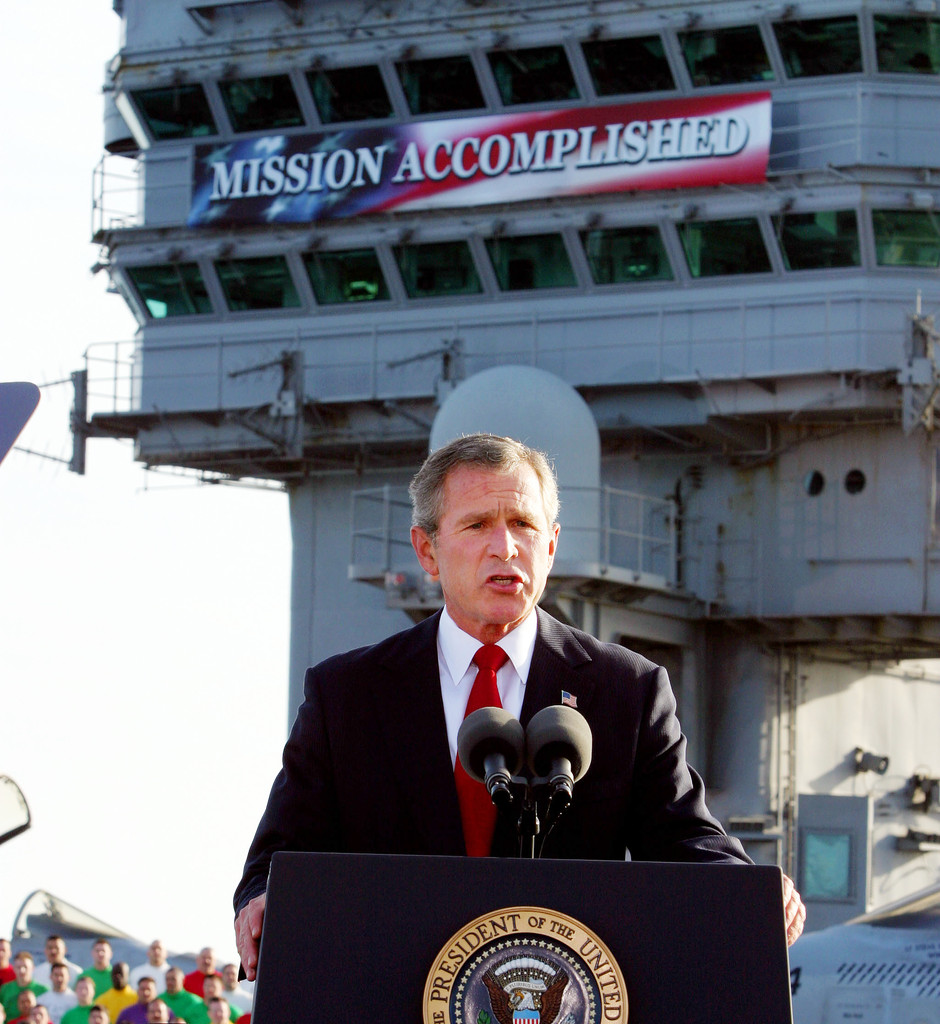
G.W. Bush is most to blame for the stupidity and waste of military action.
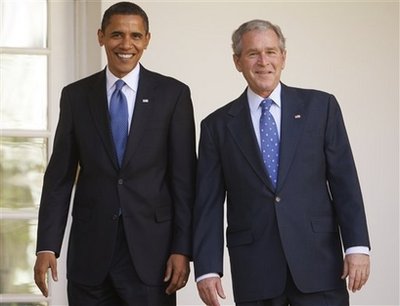
I’m disappointed Obama did not do more to reverse the damage wrought during the Bush years.
… more than 2,100 documented cases of suicide bombings from 1980 to 2009 and concluded that most of the perpetrators were acting in response to U.S. intervention in the Middle East.
The best thing the USA, Canada and the rest of the nations who have troops on the ground in the Middle East could do is … QUIT the Middle East.
Go home and focus on Home Security.
The American intervention is not appreciated by the majority of citizens there. Why stay?
Review:
… compelling analysis of the root causes of suicide terrorism.
The authors challenge the assumption that Islamic fundamentalism generates the peculiar phenomenon of suicide terrorism, suggesting instead that military occupation is the proximate cause. …
Robert A. Pape is professor of political science at the University of Chicago and the author of Dying to Win: The Strategic Logic of Suicide Terrorism and Bombing to Win: Air Power and Coercion in War.
James K. Feldman has taught decision analysis and economics at the Air Force Institute of Technology and defense policy analysis at the School of Advanced Airpower Studies.
Professor Pape:
“… the sustained presence of heavy American combat forces in Muslim countries is likely to increase the odds of the next 9/11. …”
The state is giving homeless people homes. It’s a solution that might sound too simple, but it’s working. The program, called “Housing First”, has origins in New York. Utah started its own pilot of the program in 2005 with 17 people. The state took them off the street and put them into housing for twenty-two months. After the state saw that all 17 people remained housed and stable during that time, the project was expanded. …
Housing First, which is distinct and separate from “rapid re-housing”, is a relatively recent innovation in human service programs and social policy regarding treatment of the homeless and is an alternative to a system of emergency shelter/transitional housing progressions.
Rather than moving homeless individuals through different “levels” of housing, known as the Continuum of Care, whereby each level moves them closer to “independent housing” (for example: from the streets to a public shelter, and from a public shelter to a transitional housing program, and from there to their own apartment in the community) Housing First moves the homeless individual or household immediately from the streets or homeless shelters into their own apartments.
Housing First approaches are based on the concept that a homeless individual or household’s first and primary need is to obtain stable housing, and that other issues that may affect the household can and should be addressed once housing is obtained. …
The right wing media in 2015 is demonizing all Muslims. Rupert #RupertsFault Murdoch, FOX News boss, for example.
It reminds me of the days when Americans demonized the Ruskies. All Russians were evil in the 1970s, you may recall. But I was a gymnast. Russian gymnasts and coaches were my heroes.
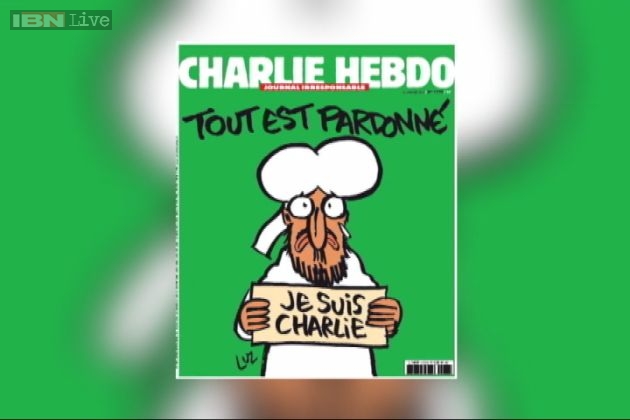
Today Muslims are the Ruskies. A few fanatics were furious with a French satirical paper. And lashed out.
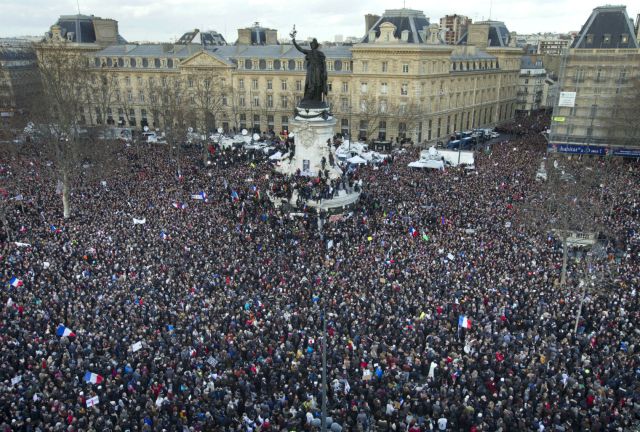
More than three million people have taken part in unity marches across France after 17 people died during three days of deadly attacks in Paris. …
In Madrid, several hundred Muslims held banners saying “Not in our name” next to the train station where in 2004 Islamist bombings killed nearly 200 people. …
… “Our values are liberty, equality and fraternity and we cannot allow terrorists to dictate to us,” …
I believe in freedom of speech. Societies should have as few restrictions as possible.
However, every government restricts speech to some degree. Common limitations on speech relate to: libel, slander, obscenity, pornography, sedition, hate speech, incitement, fighting words, classified information, copyright violation, trade secrets, non-disclosure agreements, right to privacy, right to be forgotten, public security, public order, public nuisance, and campaign finance reform.
The magazine Charlie Hebbo seems to try to push many of those limits.
I’ve never read Charlie Hebbo and never will. But I respect their freedom of speech, within the limits of French law.
One last point. Rule of law is even more important to me than freedom of speech. Security of citizens is paramount.
It gives Wyoming the same number of votes as California, with roughly 70 times the population. …
The Electoral College is flawed, Four times in American history, presidents have been elected despite failing to win a plurality of the popular vote: 1824 John Quincy Adams, 1876 (Rutherford B. Hayes), 1888 (Benjamin Harrison) and 2000 (George W. Bush). …
Yale professor Robert A. Dahl sees a problem with an American tendency towards worship of the Constitution itself. …
I’m critical of “constitutional fundamentalists”, blindly citing the document as a distraction to actually discussing modern issues.
In fiscally conservative, redneck Calgary, we love our Mayor. 🙂
World Mayor Prize nominee Naheed Nenshi emerged from the 2013 Alberta floods with folk hero status and a range of t-shirts and posters in his honour
Born to South Asian immigrants from Tanzania, Nenshi became the first Muslim mayor of a major north American city in 2010.
Famously approachable, compulsively communicative and a digital native, Nenshi ran an insurgent grassroots campaign that stunned Calgary’s political establishment, squeaking into office past more established political figures with just under 40% of the vote in a divided field. …
Three years later, Nenshi was re-elected with a crushing 74% of the vote, after winning almost universal support for leading Calgary through one of its most difficult episodes of recent times: a catastrophic set of floods in June 2013 …



 Right wing American politicians are fond of citing the Constitution.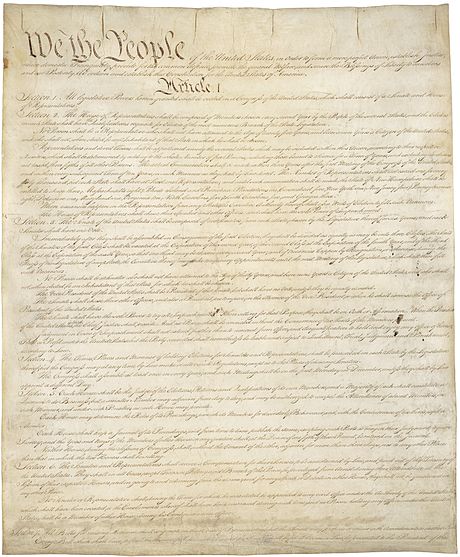

 Rick McCharles