What would you say is the most dangerous animal on Earth? Sharks? Snakes? Humans?
Of course the answer depends on how you define dangerous. Personally I’ve had a thing about sharks since the first time I saw Jaws. But if you’re judging by how many people are killed by an animal every year, then the answer isn’t any of the above. It’s mosquitoes. …
… but they are far, far better than the alternative.
When a global effort to end polio was launched in 1988, the disease crippled more than 200,000 children every year in India. Almost two decades later, in 2009, India still reported half of the world’s new cases — 741 out of 1,604.
The development of the Salk and Sabine vaccines helped lead to eradication of polio in the United States in 1979. In India, too, vaccination was critical. …
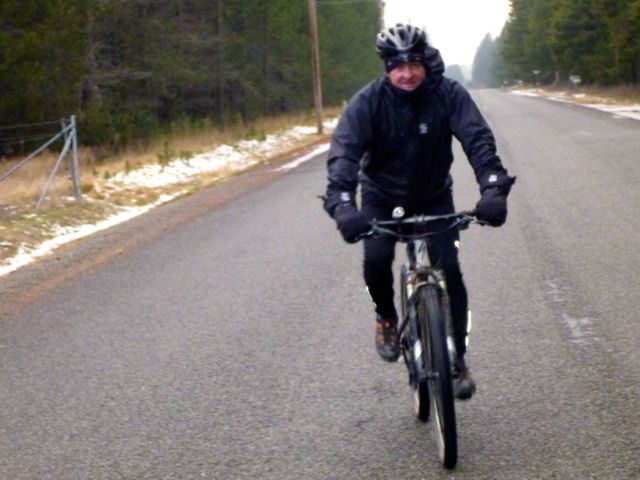
Lake Windermere is has the longest maintained ice surface in British Columbia, named ‘The Whiteway‘ this ice surface is used by skaters, skiers, anglers, cyclists, pedestrians, and more. Over the winter months each year the lake plays host to curling bonspiels, hockey tournaments, snow golfers and recreational users.
The video features an original score by local band the Dandelions, called “Take Me There”.
The Zambezi (also spelled Zambeze and Zambesi) is the fourth-longest river in Africa …
The Zambezi’s most noted feature is Victoria Falls. …
The river flows swiftly through the Batoka Gorge, the current being continually interrupted by reefs. It has been described as one of the world’s most spectacular whitewater trips …
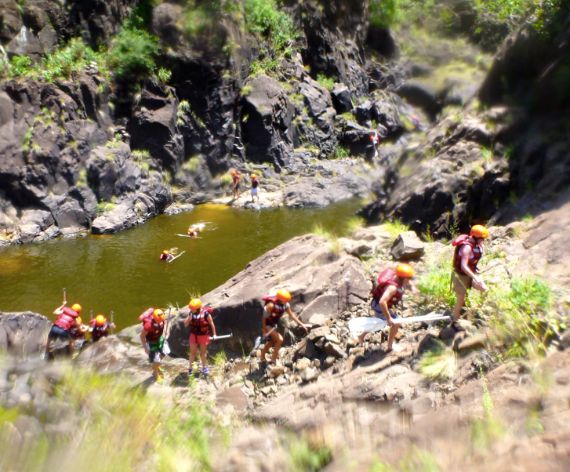
March is very high water. The first 10 rapids after the falls too dangerous, all that water quickly compressed between towering walls of black basalt.
We put in at rapids #11. Came out by cable car near rapids #24.
One portage was required, around a dangerous bend.
Here’s a promo video from this epic adventure. Click PLAY or watch it on Vimeo.
… PBS Frontline documentary “Hunting the Nightmare Bacteria” brings to light the reach and magnitude of antibiotic resistance.
Through first-hand accounts tracking personal brushes with so-called “superbugs” – bacteria resistant to most known forms of antimicrobial treatment – the documentary shows how the problem has catapulted the international medical community into crisis.
The entire documentary is now available to watch online.
A complete edited transcript of the interview can be found here. …
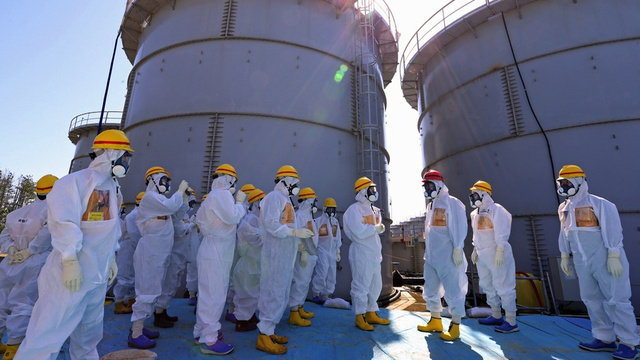
Holidays are slowing yet another wave of hysteria over the Fukushima risk.
The newest update in the highly disconcerting series of devastating failures that is the Fukushima cleanup effort is troubling to say the least.
Tepco has confirmed that (unexplained) plumes of steam have been rising from the mangled remains of Reactor Building 3. In other words, there’s a chance Fukushima could be in the middle of another meltdown. …
What do real experts — who have no profit motive for alarming the world public — have to say?
Kim Martini, a Physical Oceanographer at the Joint Institute for the Study of Atmosphere and Ocean at the University of Washington, would like to put the (grossly exaggerated) danger in perspective:
Deep Sea News:
On March 11th, 2011 the Tōhoku earthquake and resulting tsunami wreaked havoc on Japan. It also resulted in the largest nuclear disaster since Chernobyl when the tsunami damaged the Fukushima Daiichi Nuclear Power Plant. Radioactive particles were released into the atmosphere and ocean, contaminating groundwater, soil and seawater which effectively closed local Japanese fisheries.
Rather unfortunately, it has also led to some wild speculation on the widespread dangers of Fukushima radiation on the internet. Posts with titles like “Holy Fukushima – Radiation From Japan Is Already Killing North Americans” and ”28 Signs That The West Coast Is Being Absolutely Fried With Nuclear Radiation From Fukushima” (which Southern Fried Science has already throughly debunked ) keep popping up on my facebook feed from well-meaning friends.
I’m here to tell you that these posts are just plain garbage. …