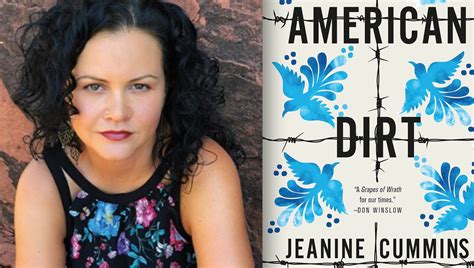
American Dirt is a 2020 novel by American author Jeanine Cummins, about the ordeal of a Mexican woman who had to leave behind her life and escape as an undocumented immigrant to the United States with her son.
Lydia and her eight-year-old son Luca are the only survivors of the backyard barbecue massacre of her family by a drug cartel.
Her husband had been a journalist who was reporting the crimes.
Mother and son become two of the countless undocumented immigrants from Latin America who undertake the dangerous journey to the United States.
American Dirt debuted on New York Times best sellers list as the #1 on the list for the week of February 9, 2020.
The novel has been optioned for a film adaptation.
Oprah loved the book. I’d agree.
But many, especially Mexican writers, accused the author (American, born in Spain) of exploitation and inaccuracy in her portrayals of both Mexico and the migrant experience. A planned book tour was cancelled.
Personally, the book was insightful for me. It’s the closest I’ve ever come to appreciating the experience of a migrant trying to cross the Mexican border illegally.
Wade Davis is a Colombian / Canadian professor of anthropology and the BC Leadership Chair in Cultures and Ecosystems at Risk at the University of British Columbia.
One brilliant man.
A recent article of his in Rolling Stone sums up how COVID-19 signals the end of the American era.
In a dark season of pestilence, COVID has reduced to tatters the illusion of American exceptionalism. …
No empire long endures, even if few anticipate their demise …
In 1940, with Europe already ablaze, the United States had a smaller army than either Portugal or Bulgaria. Within four years, 18 million men and women would serve in uniform, with millions more working double shifts in mines and factories that made America, as President Roosevelt promised, the arsenal of democracy.
When the Japanese within six weeks of Pearl Harbor took control of 90 percent of the world’s rubber supply, the U.S. dropped the speed limit to 35 mph to protect tires, and then, in three years, invented from scratch a synthetic-rubber industry that allowed Allied armies to roll over the Nazis. At its peak, Henry Ford’s Willow Run Plant produced a B-24 Liberator every two hours, around the clock. Shipyards in Long Beach and Sausalito spat out Liberty ships at a rate of two a day for four years; the record was a ship built in four days, 15 hours and 29 minutes. A single American factory, Chrysler’s Detroit Arsenal, built more tanks than the whole of the Third Reich.
In the wake of the war, with Europe and Japan in ashes, the United States with but 6 percent of the world’s population accounted for half of the global economy, including the production of 93 percent of all automobiles. …
COVID-19 didn’t lay America low; it simply revealed what had long been forsaken.
As the crisis unfolded, with another American dying every minute of every day, a country that once turned out fighter planes by the hour could not manage to produce the paper masks or cotton swabs essential for tracking the disease. The nation that defeated smallpox and polio, and led the world for generations in medical innovation and discovery, was reduced to a laughing stock as a buffoon of a president advocated the use of household disinfectants as a treatment for a disease that intellectually he could not begin to understand.
… With less than four percent of the global population, the U.S. soon accounted for more than a fifth of COVID deaths. …
Odious as he may be, Trump is less the cause of America’s decline than a product of its descent. As they stare into the mirror and perceive only the myth of their exceptionalism, Americans remain almost bizarrely incapable of seeing what has actually become of their country. …
If Trump were gone tomorrow, the USA is still screwed because of FOX News and right wing media. And the GOP.
If a vaccine were available tomorrow, half of Americans would refuse to take it.
Wade Davis:
… even should Trump be resoundingly defeated, it’s not at all clear that such a profoundly polarized nation will be able to find a way forward. For better or for worse, America has had its time. …
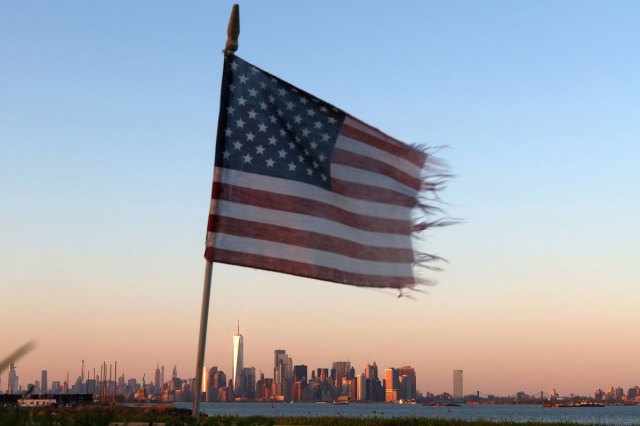
BAYONNE, NJ – MAY 3: A wind blown American flag at the Tear Drop 9/11 Memorial flies over the skyline of New York City as the sun sets on May 3, 2020 in Bayonne, New Jersey. (Photo by Gary Hershorn/Getty Images)
She studied at Stanford, University of Michigan, and Oxford.
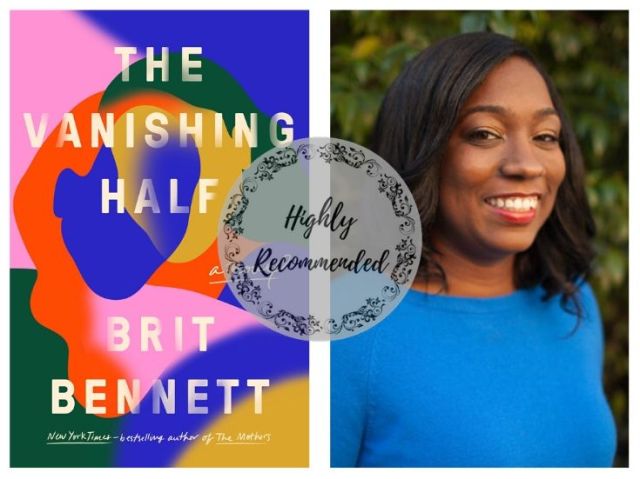
The Vanishing Half was #1 on the New York Times best-seller list June 2020.
But I read it as recommended for privileged white people trying to better understand the African American experience.
#BlackLivesMatter
Spanning nearly half a century, from the 1940s to the 1990s, the novel focuses on twin sisters, Desiree and Stella Vignes, who were raised in Mallard, Louisiana, a (fictional) small town conceived of by their great-great-great grandfather — after being freed by the father who once owned him — as an exclusive place for light-skinned blacks like him.
“In Mallard, nobody married dark,” Bennett writes starkly.
Over time, its prejudices deepened as its population became lighter and lighter, “like a cup of coffee steadily diluted with cream.” The twins, with their “creamy skin, hazel eyes, wavy hair,” would have delighted the town’s founder.
Yet fair skin did not save their father, whose vicious lynching by a gang of white men marks the girls irrevocably.
Nor did it save their mother from an impoverished existence cleaning for rich white people in a neighboring town, and it won’t save the twins from an equally constricted life if they stay in Mallard.
We learn in the first few pages that at 16, Desiree and Stella ran off to New Orleans, two hours away, but “after a year, the twins scattered, their lives splitting as evenly as their shared egg.
Stella became white and Desiree married the darkest man she could find.” …
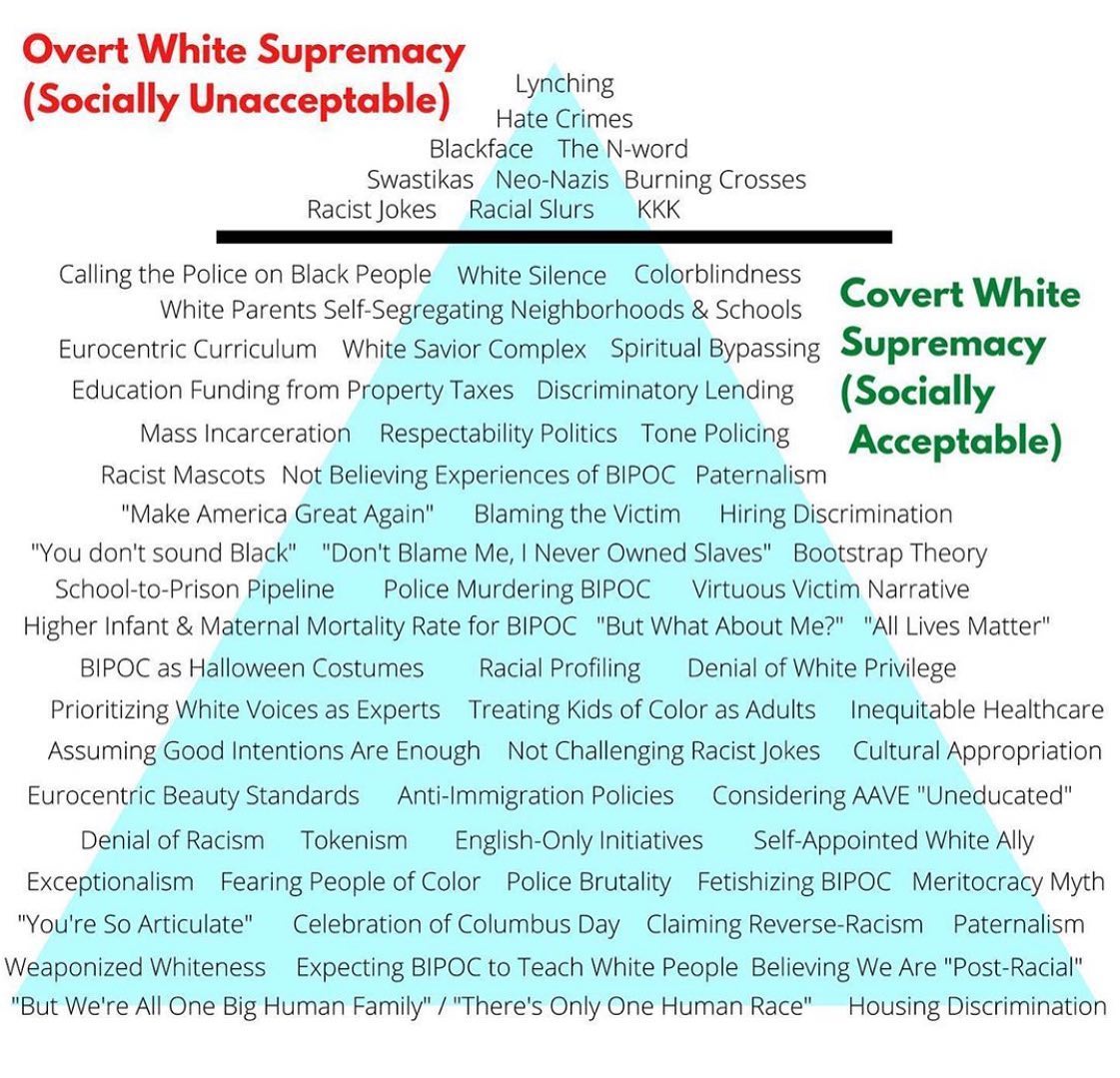
According to professor David Theo Goldberg, “All Lives Matter” reflects a view of “racial dismissal, ignoring, and denial”.
On Real Time with Bill Maher, Bill Maher expressed support for use of the “Black Lives Matter” phrase, stating that “‘All Lives Matter’ implies that all lives are equally at risk, and they’re not”. …
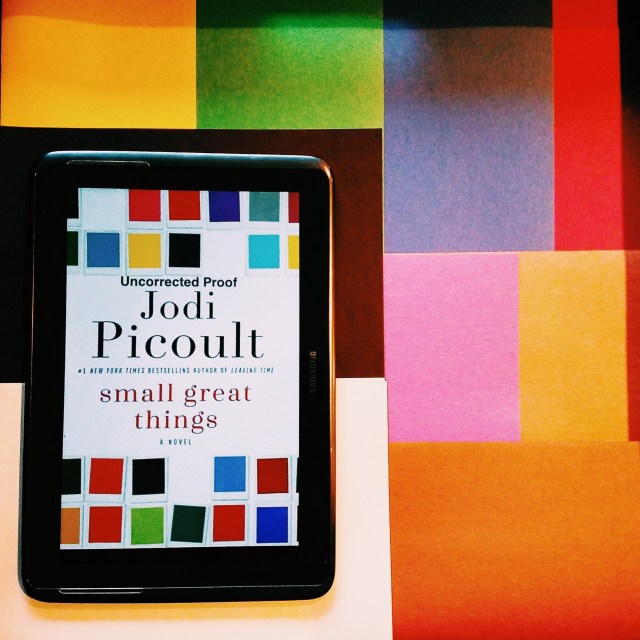
Small Great Things (2016) was recommended for those who want to learn more about racism.
The American author, Jodi Picoult, is a white woman.
I’m a super privileged white man.
And I did learn from this book. Especially many of the subtle instances where Black Americans are stereotyped by oblivious whites. It made me wonder how many times I’ve done the same things. I am often oblivious of the feelings of those around me.
The story concentrates on an African-American labor/delivery (L&D) nurse, Ruth Jefferson, in charge of newborns at a Connecticut hospital.
Ruth is ordered not to touch or go near the baby of a white supremacist couple. After the baby dies in her care, Ruth is charged with murder, and taken to court.
I happened to have recently read a big chunk of The Innocents Abroad (1869) by Mark Twain, one of the best-selling travel books of all time. Of course Twain was a humorist, skilled at making me laugh.
He’s an American imperialist abroad, mocking everyone and everything he finds abroad. It was off-putting. Later in life he became an ardent anti-imperialist.
Twain was an adamant supporter of the abolition of slavery and the emancipation of slaves, even going so far as to say, “Lincoln‘s Proclamation … not only set the black slaves free, but set the white man free also”. Yet in his travel book you have to call him a racist.
That I found also off-putting.
The only instance of praise for anyone in the first part of the book, however, was for an African American tour guide working in Europe. The only good guide they had in months.
Radicalized is a collection of 4 novellas released on March 19, 2019 as a reaction to Trump government chaos.
The issues discussed are very current.
It’s one of the books contending in the Canada Reads 2020 contest. I’m slightly surprised at that as one of the four is a rant against the American non-health care system.
I recommend it IF you are interested in these themes:
… American medical care, immigration, white male rage and technological monopolies …
Those who did not like the book consider it too preachy.
I quite liked the first story, “Unauthorized Bread“ – A refugee, Salima, confronts the software controlling installed in her kitchen appliances after the companies who created those appliances suddenly cease operations.
Cory Doctorow is one of the Tech gurus I’ve been following as long as I’ve been following Boing Boing, which won the Bloggies for Weblog of the Year, in 2004 and 2005. The web version launched January 2000, a “directory of wonderful things“.
In February 2020, Cory Doctorow left Boing Boing to start Pluralistic.net, a blog that brands itself as having “No trackers, no ads.” Of course I’m now following it too.





 Rick McCharles