Food-makers should have to prove the validity of their health claims …
In March the U.S. Food and Drug Administration issued warning letters to 17 food and beverage manufacturers concerning false or misleading health and nutrition claims on their products. It was an unusually expansive crackdown for the agency, whose regulatory power over food companies has declined over the past decades, thanks to Congress and the courts, which have tended to come down on the side of the food companies. …
In 2006 Europe began holding food makers to rigorous scientific standards. Since then, the European Food Safety Authority has rejected, on the basis of insufficient evidence, a whopping 80 percent of the more than 900 claims they have assessed thus far. …
Differences between the lenient U.S. system and the more restrictive European system are easily apparent. For instance, visitors to the Web site for Activia (www.activia.com)—a yogurt product from Dannon—will have a very different experience depending on which country they indicate they are from. The U.S. version prominently displays the product’s putative health benefits, asserting that it can “help regulate your digestive system by helping reduce long intestinal transit time.” …
But I’m a bit disappointed with a couple of the options I’ve tried on my Mac linked to calendars.
• Google calendar → too few features
• Apple iCal → too few features and it’s very inflexible
Right now I’m logging specific minutes on each project using timeEdition, a free, desktop programme with a convenient widget.
That should be ALL I need. Yet when I go to print reports and use the invoice generator, there are glitches. And glitches within a hidden database cannot be debugged. (The user manual was last updated in 2006. That’s a problem, too.)
Therefore … from timeEdition I’m exporting to Excel. And reformatting to get a decent report for the client. If something goes wrong in Excel, at least I can fix it.
Leave a comment if there’s a better solution you use.
I returned it for the more full featured Canon FS300. … It’s OK.
Online product registration for the Canon is fairly painless for American customers. But the Canadian equivalent requires me “signing up” for Canon. … No Thanks.
At the grocery yesterday I could buy grapes for $99/lb … or $2.99/lb.
They look and taste identical to me.
Is it true that the cheaper grapes are plucked by slaves. … And that they cause Global Warming?
… I’m a skeptic.
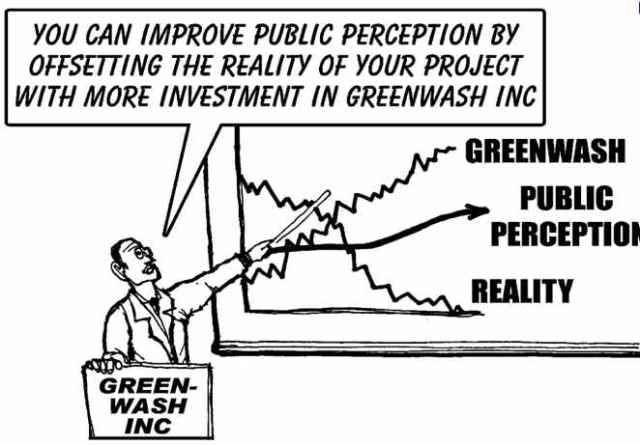
Recall the TerraChoice study in 2007 that found that all but one of 1,018 products that made environmental claims, were misleading. Call it Greenwashing.
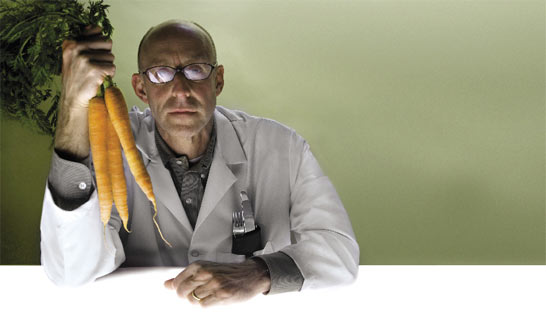
For a movement that’s always been touchy about being labeled elitist, the food movement has been surprisingly outspoken lately about the virtues of expensive food. In a recent Wall Street Journal article, Michael Pollan sang the praises of sustainable eggs that cost eight dollars a dozen and delectable peaches that go for $3.90 each.
Such prices would seem less shocking, he assured readers, if conscientious consumers were willing to “pay more, eat less.” Likewise, when asked to explain how average (i.e., not famous and rich) consumers could actually be expected to spend more on food in the midst of a recession, Alice Waters was as clear as she was unabashed: “Make a sacrifice on the cell phone or the third pair of Nike shoes.” So there.
Needless to say, the backlash—as Pollan and Waters must have known it would be—was swift. Anthony Bourdain, who dedicates a full chapter of his latest book, Medium Raw, to attacking Waters’s airy idealism, scoffs at the idea that people should be willing to spend more on food: …
Man has been studying the stars since the beginning.
Right?
No wonder we trust horoscopes:
… Researchers at the University of Wales interviewed 34,000 youngsters aged 13-15 last year and found that nearly as many of them believed in horoscopes as believe in God.
In America, over 125 million people say they believe in astrology and at least seven in ten check their horoscope regularly. …
My friend K checks hers every day and has even saves them for me when she found them particularly apt.
But horoscopes in newspapers began only in in August 1930 in the Sunday Express:
… just after the birth of Princess Margaret. Editor John Gordon wanted a story on her birth but with a new angle, so Cheiro (then the biggest name in astrology) was asked to do her horoscope. Cheiro was unavailable, so the job went to R H Naylor, one of his assistants. The result was “What the stars foretell for the new princess” (24 August 1930 page 11) …
It took off from there.
Idiots everywhere consult these things now. Yeesh, we deserve extinction.



 In 2010 it should be a no-brainer.

 Rick McCharles