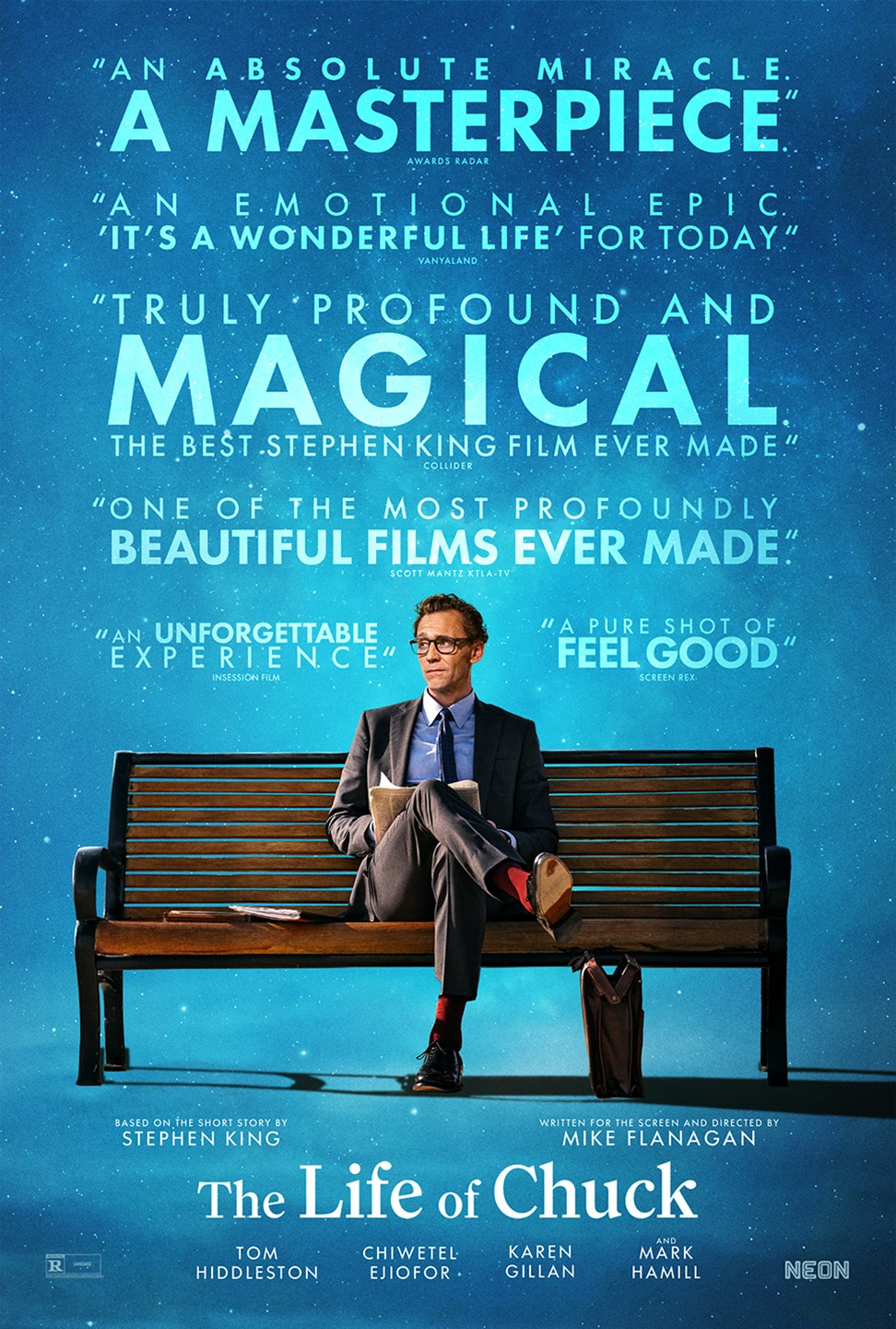
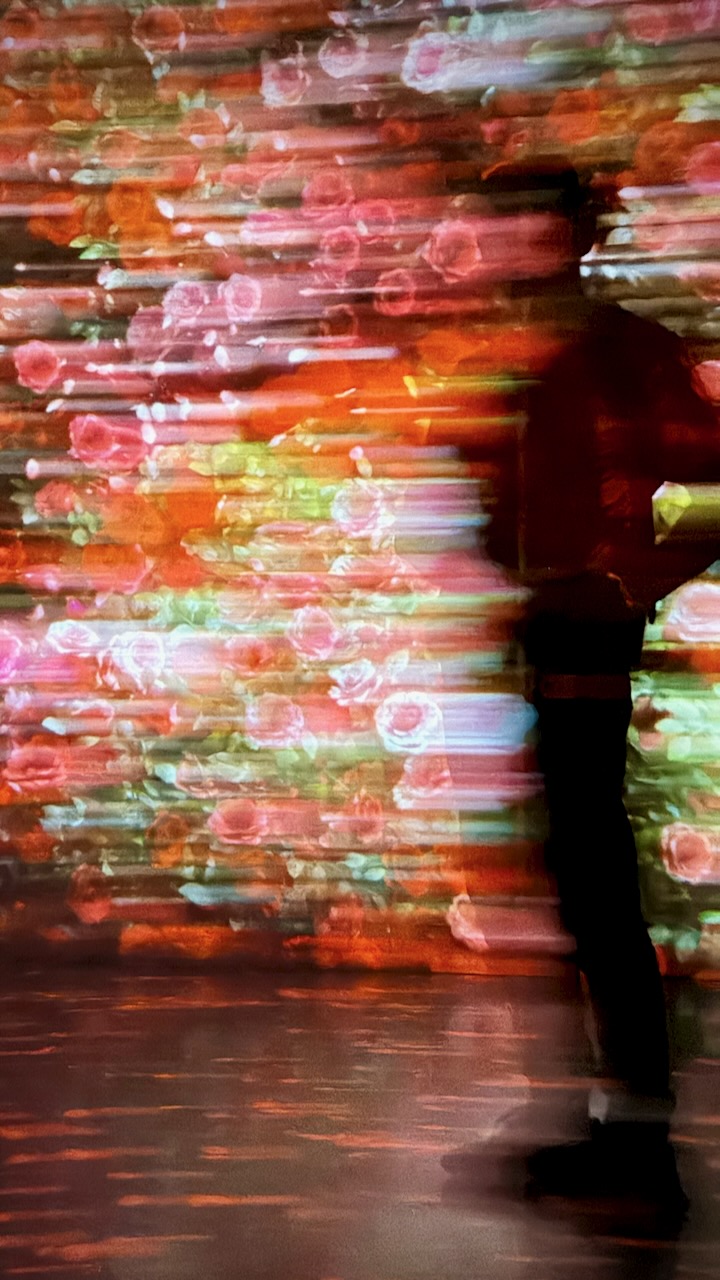
The Life of Chuck is a 2024 fantasy-drama film written, directed, and edited by horror auteur Mike Flanagan.
Moving away from his signature macabre horror style, Flanagan delivers a life-affirming, emotionally resonant adaptation of Stephen King’s 2020 novella of the same name.
The film took home the prestigious People’s Choice Award at the Toronto International Film Festival (TIFF).
The movie explores the life of an ordinary accountant named Charles “Chuck” Krantz through an unconventional reverse three-act structure:
Act III: Thanks, Chuck! – The film opens during a surreal, crumbling apocalypse where infrastructure fails and the world is slowly ending. Mysteriously, massive billboards and TV ads appear everywhere thanking an ordinary man named Chuck for “39 great years,” baffling local residents.
Act II: Busking – The narrative jumps back to Chuck’s adulthood, capturing a profound, spontaneous, and joyous street-dance sequence during a business trip that celebrates pure human connection.
Act I: Childhood – The final act explores Chuck’s upbringing by his grandparents after his parents die. He grapples with a love for dancing versus his grandfather’s practical accounting expectations, all while living in a home with a supernatural, prophetic secret hidden in the attic.
The underlying thesis reveals that the global “apocalypse” in Act III is actually the fading consciousness and brain decay of Chuck himself as he lies dying in a hospital bed.
The film acts as a metaphor for the Walt Whitman philosophy that every single human “contains multitudes” and holds an entire pocket universe within their mind.
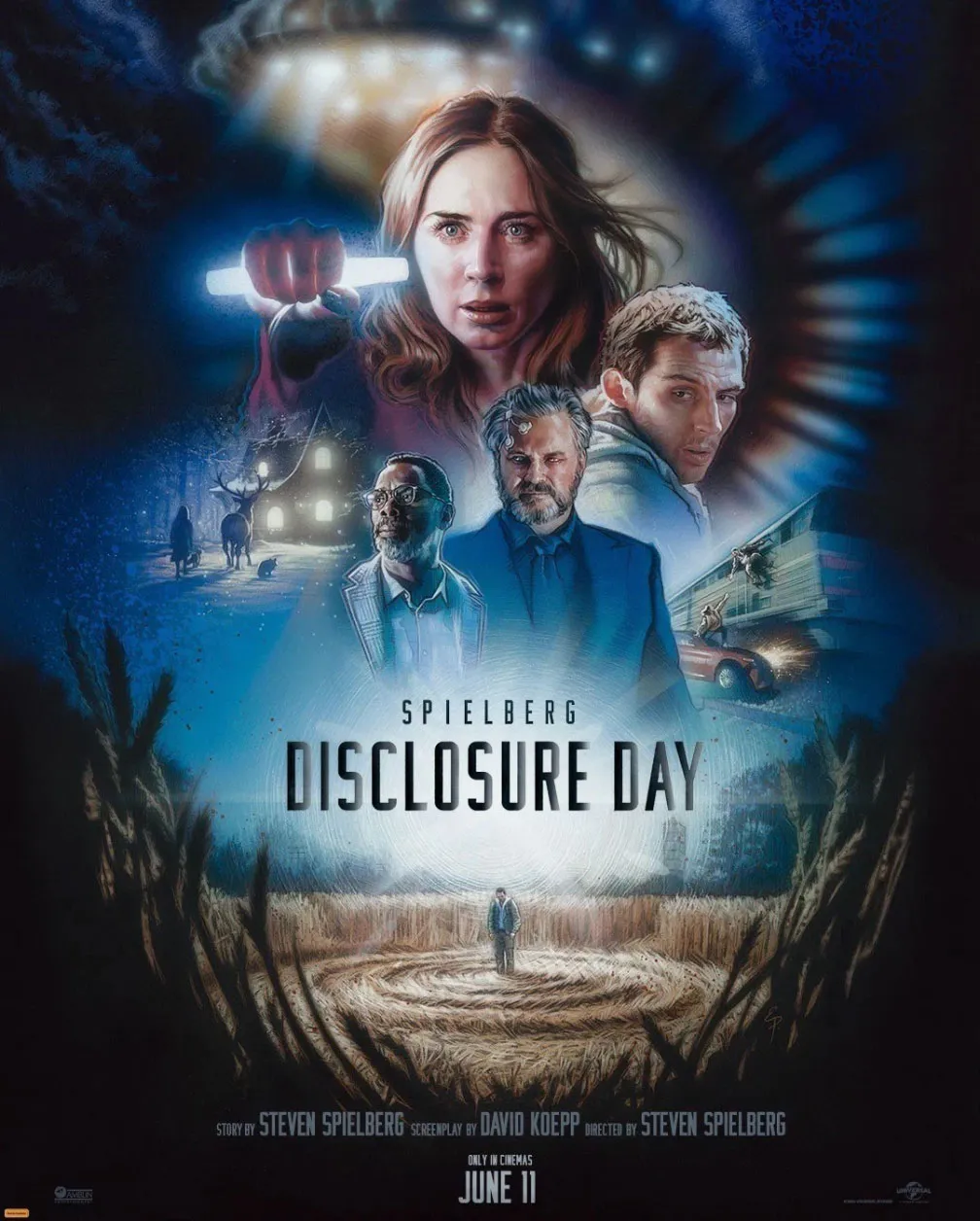
I enjoy some of the small touches, however. For example, Emily Blunt’s character (Margaret Fairchild) has a musician boyfriend named Jackson, who is played by Wyatt Russell. That character is funny and believable.
Pegg stars as Nicholas Angel, an elite police officer who is reassigned to a West Country village and investigates a series of gruesome deaths. Nick Frost co-stars as Police Constable Danny Butterman, Angel’s partner. …
Wright and Pegg spent eighteen months writing the script.
The first draft took eight months to develop, and after watching 138 cop-related films for dialogue and plot ideas
Influenced by American movies like Raising Arizona ,Bad Boys, & Point Break, the cinematography in Hot Fuzz (2007), shot by Jess Hall, parodies Hollywood action movies by applying a blockbuster visual style to a sleepy English village.
High-contrast lighting, wide-angle lenses, and rapid-fire editing.
The film features over 5,500 edits. Fast cuts connect quick “insert shots” (close-ups of objects like a gun, a pen, or a badge) with wide shots. This turns mundane chores into high-intensity action.
Director Edgar Wright frequently cuts to extreme close-ups of eyes, boots, and weapons to build dramatic tension.
The “Whip Pan”: The camera rapidly swings to the side. This creates a blur effect.
The “Crash Zoom”: The camera violently zooms into a character’s face during moments of sudden realization. It is a classic 1970s and 1980s cop-movie trope used for comedic effect.
I do like these immersive audio video attractions.
Arte Museum is a South Korean immersive art franchise.
… self-guided exhibits spread across thousands of square feet. They use projection mapping, multi-image control, and sensor-based interaction technology …
I wandered the many rooms for about an hour.
When I visited their Las Vegas location in 2026, the current exhibit was partnering with the band BTS.
One room feature a 15-minute montage of some of the boy band hits. Visuals great. I wasn’t much impressed by the music, however.
As of September 2025, Arte Museum had received over 10 million visitors globally.
A free public trial on the Strip has been ongoing since September 2025 running only 2 fixed loops.
They are symmetrical and bi-directional, meaning it’s not obvious which direction they will travel next.
I felt very safe over my 25 minute ride. But there have been accidents. Collisions with bicycles and scooters. A Zoox hit a car door while the driver was opening it, injuring the driver.
Certainly they are far, far safer than human operated vehicles.