The perfect surface for jogging, me thinks.
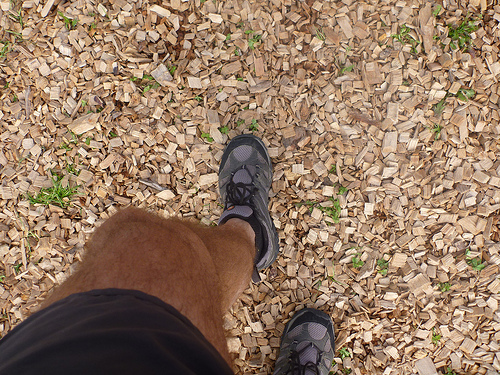
That photo is from Lausanne, Switzerland. But my favourite memories are of running the chip trails along the South Saskatchewan river in Saskatoon.

The perfect surface for jogging, me thinks.
That photo is from Lausanne, Switzerland. But my favourite memories are of running the chip trails along the South Saskatchewan river in Saskatoon.
… a mainer to my vein
Click PLAY or watch it on YouTube.
I can QUIT coffee any time. I’ve done it a dozen times.
Thanks Warren.
Your brain surgeon should be very well paid.
But why should a dentist be a millionaire?
by Sarah Lorge Butler for CBS MoneyWatch.com:
Cost of the (2) crowns: $1,395 apiece. Cost of foundation fillings, or “cores” to put the crowns on: $326 apiece. Total bill, if you’re scoring at home: $3,442.
His dentist sold him membership into an office savings plan for $319 for the year. So that saves him 20% on all dental procedures and gives him two free cleanings. Knock off 20% (but add back in the $319) and we’re down to $3072.60 on this bit of drilling.
When I look at this bill, I wonder why I obsess about the weekly price fluctuations of Cheerios or the shrinking size of a can of tuna. All the economical choices a family makes in a year can be wiped out by a trip to the dentist. No wonder people are going to Thailand and Mexico for dental work. …
 Is $3000 over-priced for 2 crowns?
What is the cost for the materials?
How much are those working on your crowns paid?
How much does the dentist pocket?
If we knew those numbers, I’m guessing that we’d agree our dentist is ripping us off.
There are over 1000 comments on that post, most feeling ripped off.
A stranger recently contacted me for advice on my dentist, Dr. Lorenia Estrada, in La Paz, Mexico. I enthusiastically recommended her.
If you suspect your dentist is ripping you off, get a quote from Mexico. … The only down side is that you have very little recourse if unhappy with the work there.
Thanks Dana.
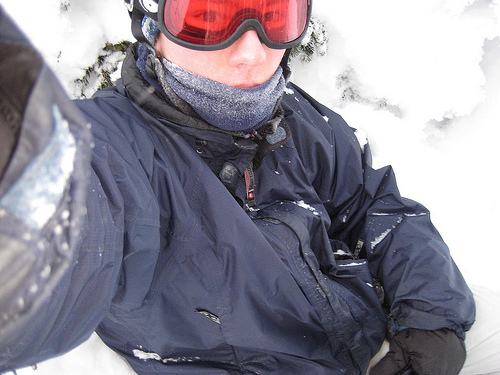
Here’s how I skied the LAST DAY EVER on my old boots.

Completely unlatched, I could feel the wind.
(I have bunions and any pressure at all on them is agony.)
My ancient skis and bindings have had it, too.
Any advice on where to shop for skis in the Calgary area?
Good end-of-season sell offs?
I don’t think I’ve ever seen as much snow at Sunshine. Rocco cannot recall this much snow in the Banff Rockies ever.
Here’s one of the slave Aussie staff shoveling snow off the roof of a building at the base of Goat’s Eye Mountain.

And the snow is still falling. They’ve had 30cm over the past 72hrs as I post.

Ski on week days, if you can. The runs were empty today.
Doctor, my eyes have seen the years / And the slow parade of fears …
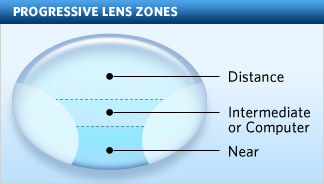
… As people age, their ability to focus is lessened and many decide to use multiple-focus lenses, which can be bifocal or even trifocal, to cover all the situations in which they use their sight. Traditional multifocal lenses have two or three distinct horizontal viewing areas, each requiring a conscious effort of refocusing. Some modern multifocal lenses, such as progressive lenses (known as “no-line bifocals”), give a smooth transition between these different focal points …
It was time. Time to get either Bifocals or Progressives.
Yet I knew a dozen people who couldn’t get used to progressive lenses. … They’re sitting on the shelf.
Click PLAY or see how they work on YouTube.
Happily, I’m getting used to them quite rapidly.
The worst thing I can report is that I need to have a ‘head on a stick’ (vague sports cliché) … For each focal length I need adjust my head position exactly. When I get it wrong, the world is plenty blurry.
Imagine yourself on a ship in stormy seas, drunk. … That’s what progressive lenses are like when you don’t focus.
I do find myself fatigued end of day after concentrating so much positioning my head.
Also, lens cleaner is essential with these, once or twice a day.
Leave a comment if you’ve an opinion on them.
How ‘advanced’ is your country?
Red is bad.

via Peter and Warren Long.
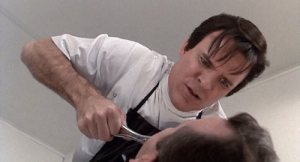
I’ve never been more powerless and vulnerable than when lying on the dentist’s chair.
But having had so much practice over the years, I believe I’ve gotten quite skilled at being a compliant patient.
Today I had 3 of the 4 corners of my mouth frozen prepping for the installation of permanent bridges. My dentista popped the question: … while we’re here, do you want to fix the 4th corner?
… Why not.
I’m very happy with Dr. Lorenia Estrada, my lady dentist from La Paz, Baja. (I’ve written of my Stockholm syndrome for her before.)
One new thought came to mind on the death bed this time. I believe women make better dentists than men, on average.
They are more empathetic and gentle.
Male dentists are dead to me from here on in.
My cost for all the dental work I’ve had done in La Paz is about $4800.
Estrella Damm is a Spanish pilsener. It has been brewed in Barcelona since 1876.
It’s now available in the USA, stocked by retailers such as Whole Foods, Publix, Harris Teeter, Total Wine & Spirits and BevMo.
Rockin’ can get it in Vancouver and strongly recommends it.

I think it tastes Damm Fine.
I’ve almost never felt “lonely”.
It’s a condition I know nothing about.
Film critic Roger Ebert, a bit of an internet shut-in himself, has read 80,000 comments on his blog. Many, he tells, are from lonely people looking for connection with strangers.
… For days I’ve been reading waves of messages from the lonesome, the shy, the alone, the depressed. Some who live as virtual hermits. Some who have few or no friends. Some who rarely speak with their families. Some who have never dated, or ever had sex. Some who consider it a good day when they never speak to anyone. Some who are sad to be alone. Some who are relieved. Some who can’t do it any other way. …

He reflects on loneliness in that post, and an earlier one – All the lonely people.
… After all that, Roger’s not sure whether or not the internet actually helps the lonely.

