“Listen for the Lie,” (2024) … Stephen King called “a world-class whodunit” …
It’s a comedy, as well. Laughs on every page.
It follows Lucy Chase, a woman believed to have killed her best friend years prior.
Lucy, who has amnesia about the entire incident, was never officially charged or arrested for the murder, though it is generally believed that she did it.
When Ben Owens, a true crime podcaster, digs up the cold case again for his podcast five years later, Lucy joins in helping him uncover who the true killer is.
The comic actor returns as the worst-informed person on TV for a one-off that tackles the big issues – and quite possibly causes permanent damage to the baffled academics she interviews …
As ever, she interviews a variety of experts “to ask some of the most significant questions you can ask with a mouth”. …
Prime Suspect — the book — was published by Lynda La Plante in 2019, long after the end of the TV series.
Not nearly as good.
I found DCI Jane Tennison mostly annoying.
The pace too slow.
Not recommended.
When a prostitute is found murdered in her bedsit, the Metropolitan police set to work finding the perpetrator of this brutal attack. DNA samples lead them straight to known criminal George Marlow. The police think they’ve found their man, but things are not quite what they seem….
Desperate to remove all doubt around her suspect, Tennison struggles to make the charges stick. And then a second body turns up.
With the team against her, DCI Jane Tennison is in a race against time to catch a dangerous criminal - and prove she’s just as tough as any man.
A glutton for punishment, I next read Prime Suspect 3 – Silent Victims (2019).
Better — but I still wanted to push Jane Tennison into the river.
When a body is found in one of London’s poorest districts, the coroner’s report identifies the victim as young, black and female, but impossibly anonymous.
One thing is clear to Detective Chief Inspector Jane Tennison about this victim – that news of her murder will tear apart a city already cracking with racial tensions, hurling Scotland Yard and Tennison herself into a maelstrom of shocking accusations and sudden, wrenching violence.
As London’s brutal killer remains at large, Tennison is locked in a struggle to overcome her station house’s brutal chauvinism and insidious politicking. And as the department’s deeply rooted racism rears its head and threatens to overshadow every facet of her new investigation, the trail of her prime suspect is growing colder.
I didn’t get very far into Prime Suspect 2 – A Face in the Crowd.
I streamed season 3 of Shetland because I’d seen a few pundits saying it was best of the 9 seasons, so far.
Shetland is critically acclaimed for good reason. The acting and writing is superb.
But it is hard to watch, at times.
For example, the rape aftermath depicted in season 3 even disturbedAnn Cleeves, the author of the books on which this TV drama is based.
DI Jimmy Perez faces a gripping new single mystery.
When a young man disappears on the overnight ferry to Shetland, the team embark on a challenging case that leads them from the suspicious close-knit communities of the remote Shetland Islands to Perez’s old stomping grounds in Glasgow.
As they start to unpick this increasingly complex conspiracy, Perez is aided by, and becomes romantically involved with, enigmatic police official Asha.
But he is unprepared for the ruthlessness of his adversaries, who are willing to take an appalling step to protect their interests: one that will have a devastating effect on them all.
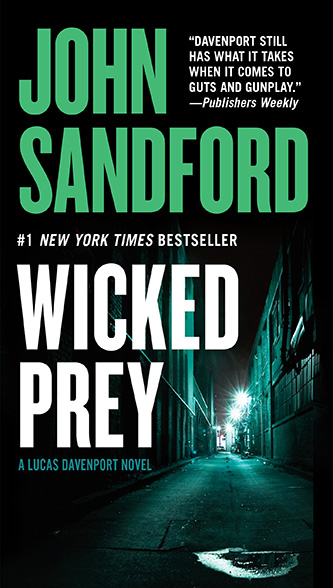
Wicked Prey is 19th in the Lucas Davenport “Prey” series.
Another good read.
The Republicans are coming to St. Paul for their convention. John McCain will be getting the nomination.
Throwing a big party is supposed to be fun, but crashing the party are a few hard cases the police would rather stayed away.
Chief among them is a crew of professional stick-up men who’ve spotted several lucrative opportunities, ranging from political moneymen with briefcases full of cash, to that convention hotel with the weakness in its security system. …
And then there’s the young man with the .50-caliber sniper rifle and the right-wing-crazy background, roaming through a city filled with the most powerful politicians on earth…
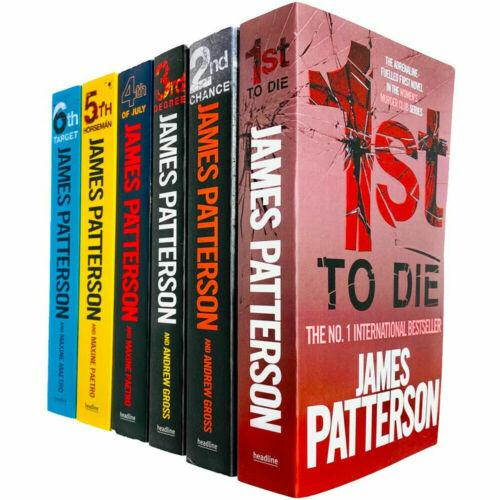
Having got hooked on the books, the only place I could find to watch the TV series was on YouTube in low resolution. Surprisingly, I liked the show just as much as the books.
Angie Harmon was a terrific choice to play Lindsay Boxer, the main protagonist. She has the gravitas — though Lindsay in the books is a blonde.
I laughed out loud many times. A bit of a black comedy.
Eleanor Oliphant, our heroine, is a disaster. Anti-social. Disconnected from society and culture. A functioning alcoholic. Potentially suicidal. Perhaps slightly autistic.
Her only previous relationship was abusive — ex-husband putting her in the hospital multiple times.
Somehow … you can’t help but cheer for Eleanor.
She lives in Glasgow, Scotland, and works as a finance clerk for a graphic design company.
The novel deals with themes of isolation and loneliness, and depicts Eleanor’s transformational journey towards a fuller understanding of self and life.
It’s modern. Exploring loneliness in an internet age, the vulnerability of being uncoupled in a culture that prizes relationships.
The character I liked best in this book is Raymond Gibbons, an I.T. help desk co-worker who awkwardly tries to help Eleanor.
Uniquely, the most important relationship in this novel is friendship.
Name another hit novel without some kind of romance central to the plot.
Jenny Colgan, reviewing for The Guardian, described the novel as “a narrative full of quiet warmth and deep and unspoken sadness” with a “wonderful, joyful” ultimate message. …
Sarah Gilmartin of The Irish Times called the title character “one of the most unusual and thought-provoking heroines of recent contemporary fiction”. …
I’m not smart enough to explain his thinking — but here’s a ChatGPT summary of the non-fiction tomb.
Main Focus: Nexus explores the intersection of technology, human evolution, and the future of societies, emphasizing the merging of biological and digital realms.
Technological Convergence: Harari examines how advancements in genetic engineering, artificial intelligence, and biotechnology are changing humanity’s relationship with itself and the world.
Human Enhancement: A central theme is the idea that humans may soon be able to enhance their biological and mental capacities through technology, leading to “post-human” forms of existence.
Ethical Implications: The book raises questions about the ethics of altering human biology, creating artificial life, and the consequences of tampering with the essence of what it means to be human.
Social and Economic Impact: Harari discusses how these technological advancements could lead to social divides, with some individuals or groups gaining access to powerful enhancements while others are left behind.
Surveillance and Control: A significant concern is the potential for increased surveillance and control over individuals’ minds and bodies, both by governments and corporations.
Evolution of Consciousness: Harari reflects on how human consciousness may evolve or change in response to these new technologies, as well as the philosophical questions surrounding free will and identity.
End of Homo Sapiens: The book suggests that humanity might be on the verge of an epochal shift, where Homo sapiens could be replaced by a new, technologically-enhanced species—either through natural evolution or deliberate engineering.
Uncertainty of the Future: Harari emphasizes the unpredictability of the future, acknowledging that the developments discussed could lead to both utopian and dystopian outcomes.





 Rick McCharles