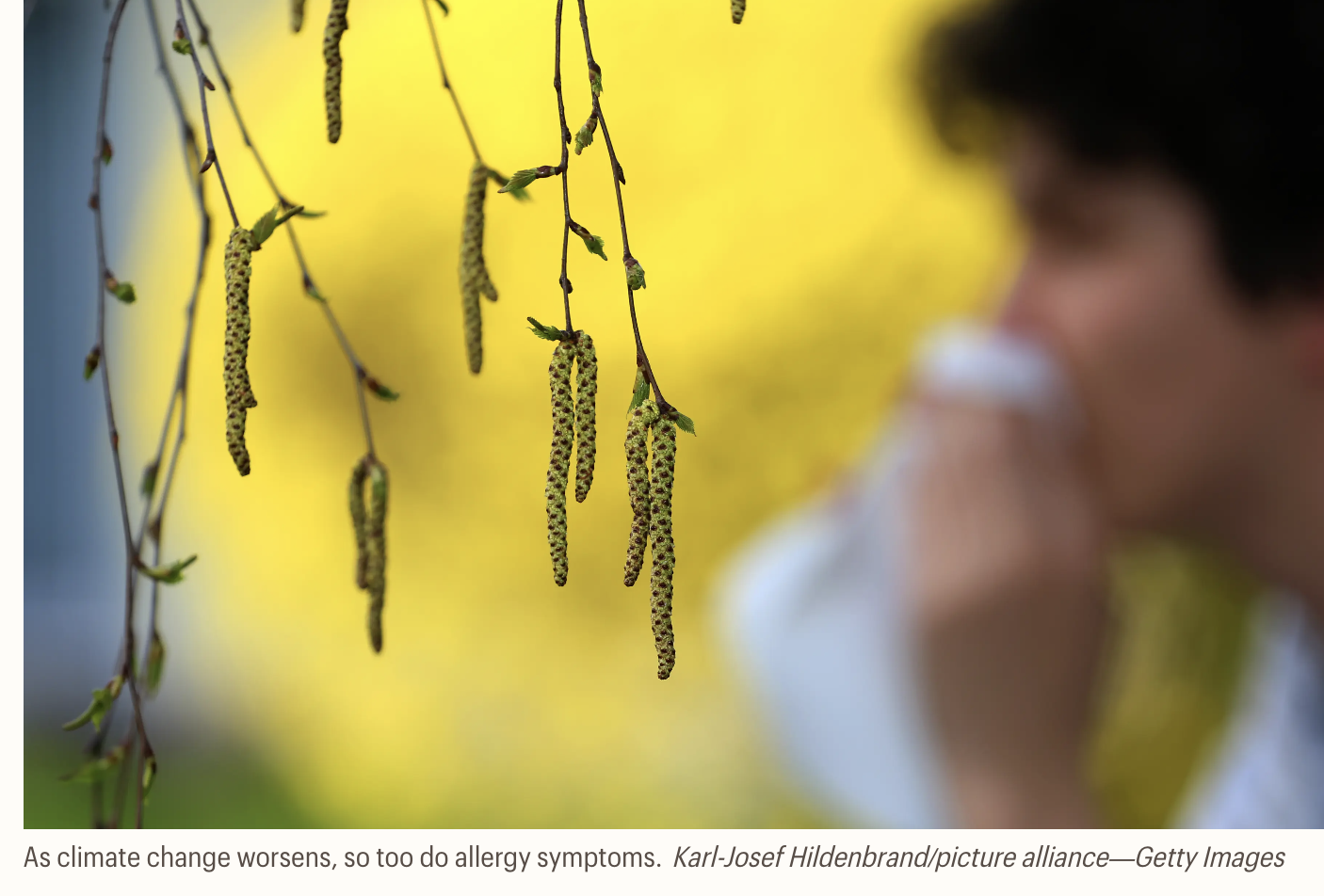
Warmer temperatures and longer growing seasons are causing plants to produce more pollen, and this increased pollen load is contributing to longer and more intense allergy seasons.
I’m not smart enough to explain his thinking — but here’s a ChatGPT summary of the non-fiction tomb.
Main Focus: Nexus explores the intersection of technology, human evolution, and the future of societies, emphasizing the merging of biological and digital realms.
Technological Convergence: Harari examines how advancements in genetic engineering, artificial intelligence, and biotechnology are changing humanity’s relationship with itself and the world.
Human Enhancement: A central theme is the idea that humans may soon be able to enhance their biological and mental capacities through technology, leading to “post-human” forms of existence.
Ethical Implications: The book raises questions about the ethics of altering human biology, creating artificial life, and the consequences of tampering with the essence of what it means to be human.
Social and Economic Impact: Harari discusses how these technological advancements could lead to social divides, with some individuals or groups gaining access to powerful enhancements while others are left behind.
Surveillance and Control: A significant concern is the potential for increased surveillance and control over individuals’ minds and bodies, both by governments and corporations.
Evolution of Consciousness: Harari reflects on how human consciousness may evolve or change in response to these new technologies, as well as the philosophical questions surrounding free will and identity.
End of Homo Sapiens: The book suggests that humanity might be on the verge of an epochal shift, where Homo sapiens could be replaced by a new, technologically-enhanced species—either through natural evolution or deliberate engineering.
Uncertainty of the Future: Harari emphasizes the unpredictability of the future, acknowledging that the developments discussed could lead to both utopian and dystopian outcomes.
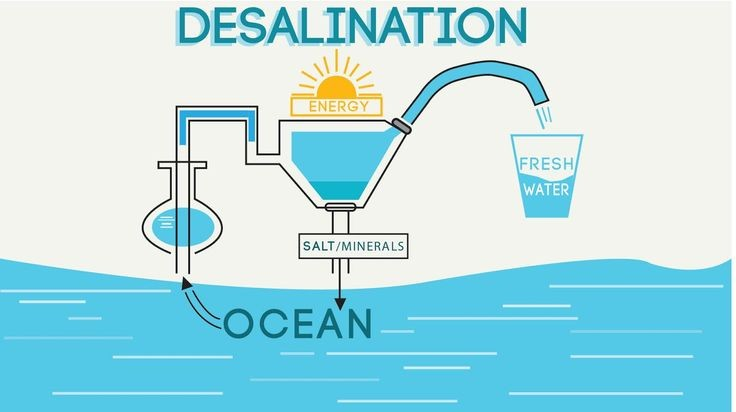
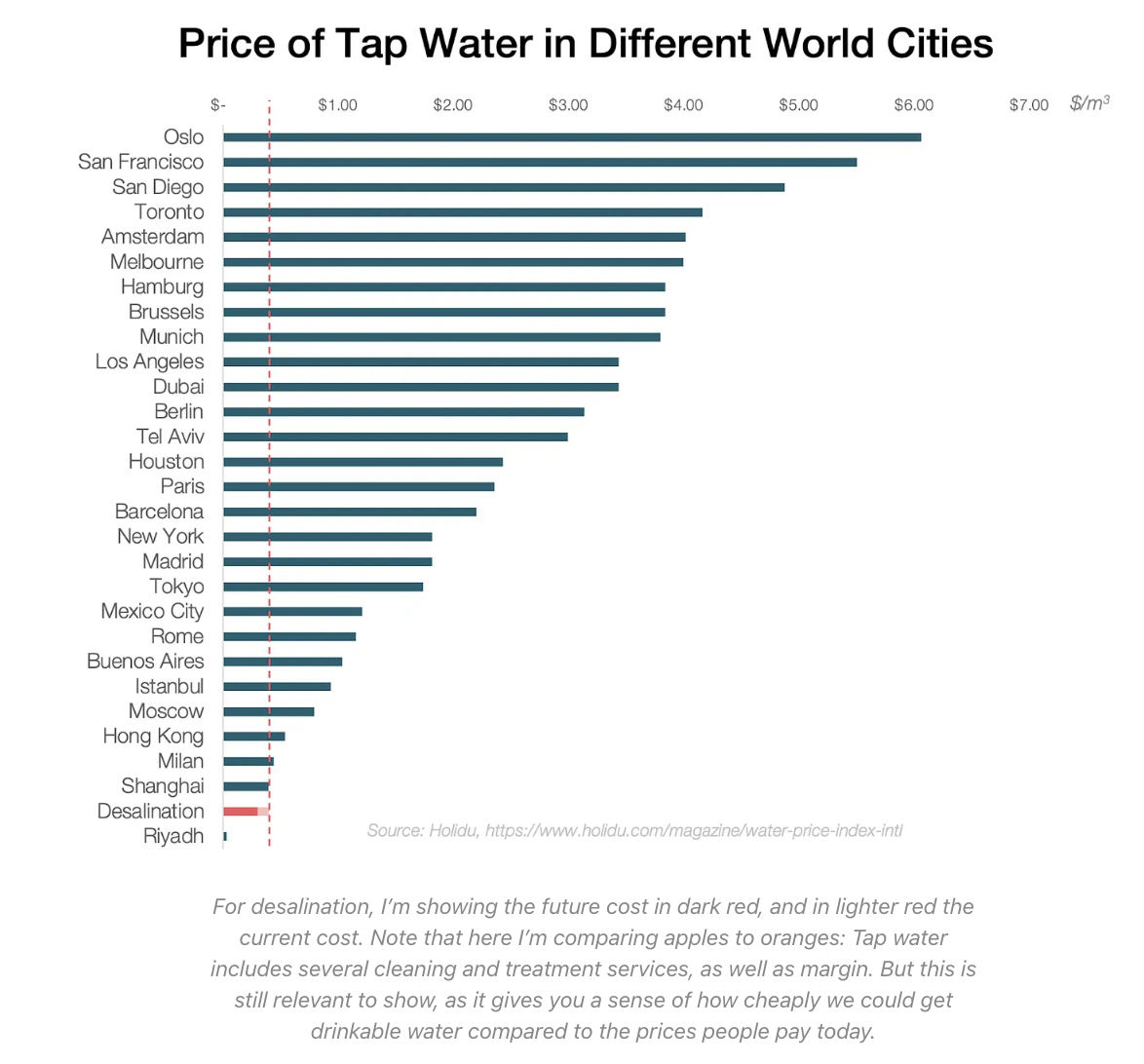
For countries where water is plentiful (Canada) and industries where water is a huge fraction of costs, desalination is probably not viable for industry.
BUT for countries where water is already scarce, or for industries that don’t depend mainly on water, bringing desalinated water is completely plausible. Prices continue to drop.
I recall having a hot shower in Saudi Arabia. Great water pressure. … Wondering where the H2O was coming from.
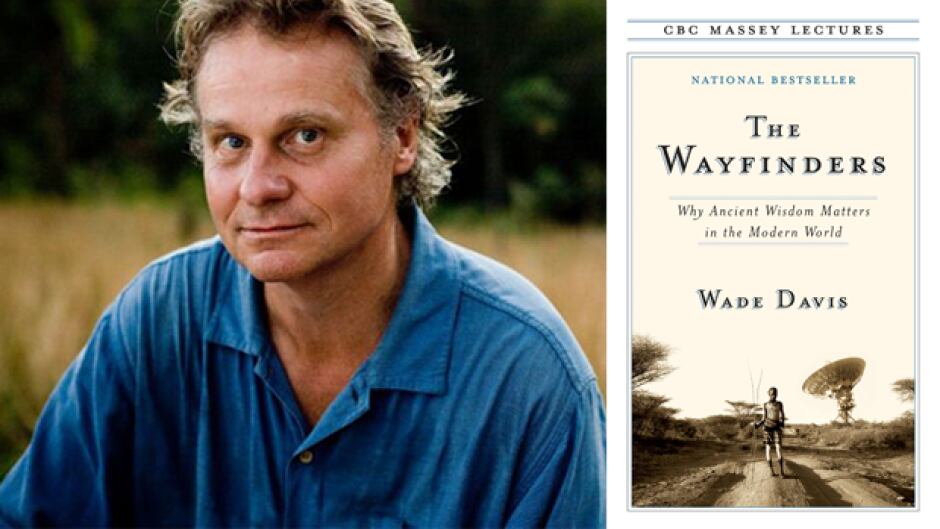
Davis compares cultures quickly and easily, looking for lessons for us who haven’t lived with Amazon tribes for years.
Of the thousand key point, one really struck me. His discussion of how the British — on arrival — could not understand the Australian aborigines.
These are and were a people with no notion of linear time.
Theirs was one of the great experiments in human thought. The notion that the world existed as a perfect whole, and that the singular duty of humanity was to maintain through ritual activity the land precisely as it existed when the Rainbow Serpent embarked on the journey of creation.
… But in life there is only the Dreaming, in which every thought, every plant and animal, are inextricably linked as a single impulse, the inspiration of the first dawning.
Had humanity followed this track, it is true that we would have never placed a man on the moon.
But we would most certainly not be speaking of our capacity to compromise the life support of the planet. I have never in all of my travels been so moved by a vision of another possibility, born literally 55,000 years ago.
the number of people older than 80 is expected to increase sixfold by 2100
while being less productive, seniors also consume substantially more public resources
USA already spends 40% of total tax dollars on people 65 and up
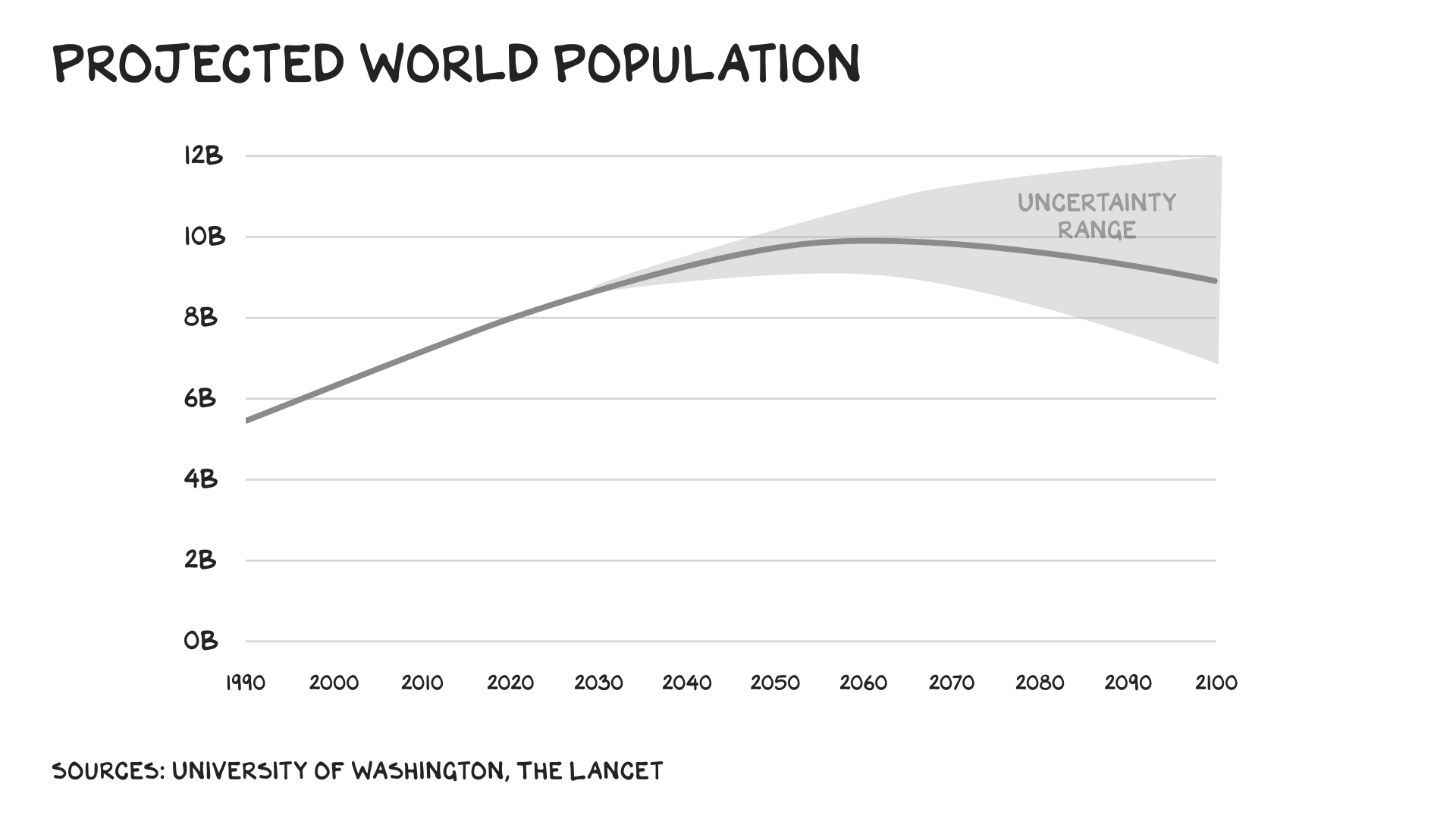
China, Japan, Germany, Italy, Greece, Portugal, and many Eastern European nations are shrinking in 2023. Researchers project the global population will peak in 2064.
Net population growth requires a fertility rate slightly greater than two births per woman. America’s fertility rate is 1.8; the average for high income countries. And dropping.
It’s increasingly difficult for young people to be able to afford to get married, buy a house, and have kids.
The obvious solution is to increase immigration of young people. Galloway feels increased immigration still won’t be enough to solve the problem.
I’d put Blake Crouch in a group of speculative fiction writers including Michael Crichton and Robert Sawyer.
Crichton doomsday. Sawyer looking at the potential upsides of ever changing technology.
Personally, I was super psyched by Jennifer Doudna, one of the co-creators of CRISPR, an astonishing new technology. Precisely editing DNA.
BUT it turns out Doudna had nightmares about someone like Hitler getting hold of CRISPR.
This book is set a few years from now in a dystopian future. Climate change flooded New York. Wildfires have devastated many parts of the world.
Lead character, Logan Ramsey, is the adult son of a defamed scientist whose CRISPR-like technology caused millions of people to die. His Mom was trying to change DNA for the better — but the unintended side effects were catastrophic. Famine.
In hiding, his Mom decides to hack her own children — Logan and his sister.
Logan becomes an “upgraded” version of himself: he can focus better, read faster, and operate on a lot less sleep. But his upgrade comes at a cost.
Ultimately the book is a look at whether or not our species will survive on Earth.
And should we try to improve our odds by changing our DNA?
Karmod Prefabricated Building Technologies is a leading Turkish company founded in 1986 and has since been running projects in more than 100 countries around the world.
In the near future we’ll have more refugees, not fewer. And they’ll be more desperate.
Afraid to return home. Willing to risk death to escape.
Of course each nation should have a system for handling claims for asylum. But only a small percentage will be granted entry. As populations are getting older, many nations — starting with Japan — need MORE young people to migrate.
BEST of many bad options for refugees not chosen for asylum is to stay on the border. Months. Perhaps years.
There are about 700 refugee camps worldwide, as I post.
Who should pay?
I’d first look to organizations like the Gates Foundation. And to other billionaires who have far more money than they could ever spend.
Life in camp should be minimal. But safe. Police. Schools. Clean water. Medical facilities.
Transportation home should be offered.
If possible, there should be opportunities to work and volunteer.
Some will be under age-18. They should have special protection as should anyone with physical or mental challenges.
Venezuela — 4.6 million refugees, asylum-seekers, and migrants
Afghanistan — 2.7 million refugees and asylum seekers
South Sudan — 2.4 million refugees and asylum-seekers
Myanmar – 1.2 million refugees and asylum-seekers
Trump and his political ilk around the world don’t want to help refugees. Instead, they use the problem to anger people — hoping to motivate them to vote for right wing political parties.
That’s much easier than motivating regular people to HELP refugees.
I’m often critical of Elon Musk. Turned off by his egomania.
Disappointed in his juvenile comments from the bully pulpit of Twitter. One of the richest and most powerful men in the world attacking and mocking people who are unable to fight back.
I’m disappointed that a guy who claims he doesn’t care about money is so reluctant to pay more in taxes though his businesses have received billions of dollars in tax subsidies.
That said, I admire almost everything else. His work ethic. His companies, especially Boring and Starlink.
Elon Musk does much more good for the world than bad. He’s scientific and well aware of the risks of climate change. He calls for a carbon tax. Musk endorsed Andrew Yang and expressed support for his proposed universal basic income.
Though the headlines shout that Elon is a “free speech absolutist”, Musk himself says Twitter must abide by the laws of each nation. I doubt much will change in terms of Twitter policy in Canada or the USA.
In fact, I’m guessing Twitter will be better for me with Musk as owner.
Warren had me watch this recent interview. Elon defends his life and ethics quite well.


 Rick McCharles