Billions in Change is a movement to save the world by creating and implementing solutions to the most basic global problems – water, energy and health. Doing so will raise billions of people out of poverty and improve the lives of everyone – rich and poor.
That’s the mission of founder philanthropist Manoj Bhargava, born in India, educated in the U.S.
I unexpectedly found myself in transit in downtown Seattle. I stayed at City Hostel since the Green Tortoise was full.
Caught the @QuickShuttle bus to Vancouver, Canada. Not the cheapest option at US$43 one way. But more convenient. Free WiFi. Good service. I’d take it again.
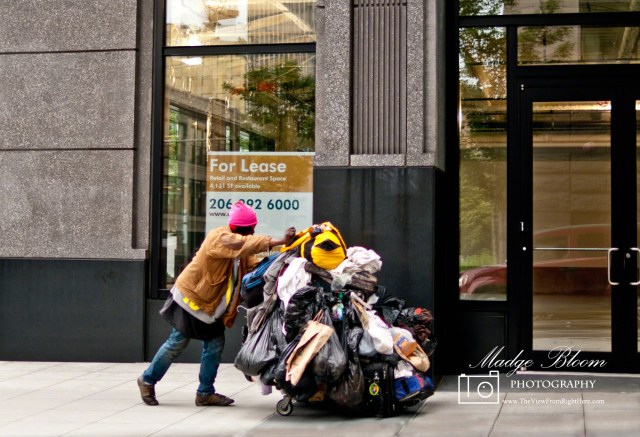
Late Friday night and early Saturday morning I wandered the streets. It’s appealingly unrefined for a major city. Homeless, intoxicated and deranged citizens are everywhere. One decided to punch me with his garbage bag of old clothes. He does that to everyone, I assume. I didn’t take it personally. 🙂
There are missions and homeless shelters. People still on the street don’t like the rules.
I don’t own a car. Love public transport. And cycle commute as much as I can.
Sadly, our world promotes motor vehicles. Not bicycles. 😦
Bikes vs Cars depicts a global crisis that we all deep down know we need to talk about: climate, earth’s resources, cities where the entire surface is consumed by the car. An ever-growing, dirty, noisy traffic chaos.
The bike is a great tool for change, but the powerful interests who gain from the private car invest billions each year on lobbying and advertising to protect their business. In the film we meet activists and thinkers who are fighting for better cities, who refuse to stop riding despite the increasing number killed in traffic.
… On Rotten Tomatoes, the film has a rating of 87%, based on 163 reviews …
The New York Times‘s “UpShot” series stated The Big Short offered the “strongest film explanation of the global financial crisis.” …
I’d agree. This film is entertaining. And it also provided me with the clearest insight yet as to the insanity of the American banks bringing down the world economy. If I’d lost money in that debacle, I’d be plenty pissed off. 😦
Pope Francis led the world’s 1.2 billion Roman Catholics into Christmas on Thursday, urging those “intoxicated” by possessions and superficial appearances to return to the essential values of life.
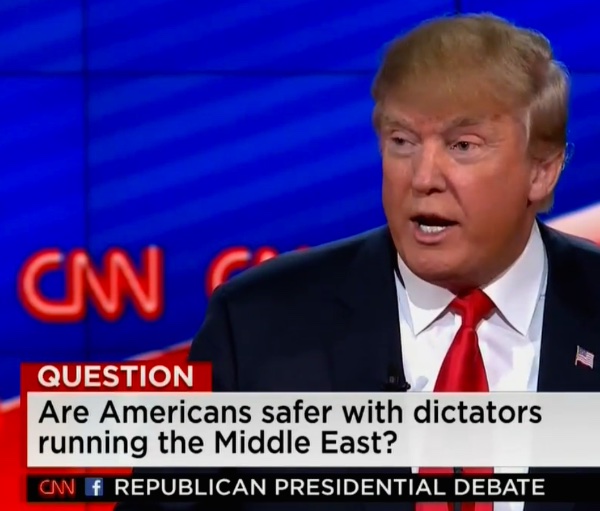
With his random, jumbled blurting … it was going to happen sooner or later.
… “We’ve spent $4 trillion trying to topple various people that, frankly, if they were there and if we could have spent that $4 trillion in the United States to fix our roads, our bridges, and all of the other problems — our airports and all the other problems we have — we would have been a lot better off, I can tell you that right now.
We have done a tremendous disservice not only to the Middle East — we’ve done a tremendous disservice to humanity. The people that have been killed, the people that have been wiped away — and for what? It’s not like we had victory. It’s a mess. The Middle East is totally destabilized, a total and complete mess. I wish we had the 4 trillion dollars or 5 trillion dollars. I wish it were spent right here in the United States …
Palm trees, Vegas-style clubs, tax-free salaries, perfectly manicured promenades. Something about Dubai, the most famous of the seven kingdoms that make up the United Arab Emirates, makes living in the desert seem exotic and luxurious. …
About 80% of Dubai’s 2 million or so residents are foreigners …
Even though salaries are comparable with their European and North American counterparts, you won’t pay income taxes, which means you’ll be earning about 40% more. …
The expats I know in Riyadh and Doha are happy with conditions, overall. Our Gymnasium caretaker in Riyadh is now home in India for a 2 month holiday, for example. He has no plans to leave Saudi.
Doha, Qatar
Here’s the other side of the story. 😦 The horror stories are mostly low paid construction workers.
Qatar’s failure to enact meaningful reforms for its kafala (sponsorship) system leaves hundreds of thousands of low-paid migrant workers at serious risk of forced labor and other abuses. Reforms announced on October 27, 2015, still require low-paid migrant workers to get their employer’s permission to change jobs or to leave the country, a system that that prevents workers from leaving abusive employers.
The new sponsorship law, law no. 21 of 2015, refers to “recruiters” instead of “sponsors” but it leaves the fundamentally exploitative characteristics of the kafala system in place. …
I’m in Paris today with several world leaders for a big announcement on energy and climate change. It is deeply moving to be in this city just two weeks after the horrific attacks here, and I am inspired by the way the French people have persevered in such a difficult time.
Two related initiatives are being announced at today’s event. One is Mission Innovation, a commitment by more than ten countries to invest more in research on clean energy. The other is theBreakthrough Energy Coalition, a global group of private investors who will support companies that are taking innovative clean-energy ideas out of the lab and into the marketplace. Our primary goal with the Coalition is as much to accelerate progress on clean energy as it is to make a profit.